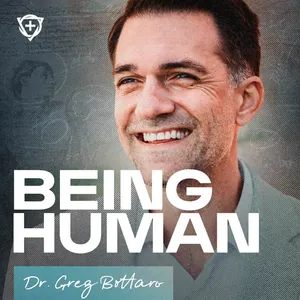
Free Daily Podcast Summary
Being Human: Daily Summaries Delivered
by Dr. Gregory Bottaro
Get key takeaways, quotes, and insights from Being Human in a 5-minute read. Delivered straight to your inbox.
Latest Episodes
The most recent episodes — sign up to get AI-powered summaries of each one.
- Today37 min
Episode 279: Stop Diagnosing Your Kids: Rethinking "Behavior Problems" Through Development and Love
The meltdown. The defiance. The constant "look at me." It's easy to wonder if something is wrong. But most of the time, these aren't signs of a disorder — they're signs of development still in progress. In this episode, Dr. Greg explores what's really underneath "behavior problems," why children can't be diagnosed with personality disorders, and why the question that changes everything isn't "what's wrong with my child?" — but "what does my child need from me right now?" Key Topics: Why children cannot be diagnosed with personality disorders — and what's actually happening when their behavior looks like one How emotional regulation is learned, not innate — and what co-regulation actually looks like Why a child's dramatic, self-centered, or defiant behavior is often developmentally appropriate What it means when a child borrows a parent's nervous system — and why that steadiness is the foundation Why the patterns we see in our kids so often point back to something in us How a parent's own unhealed wounds shape the environment a child grows up inside Why admitting our own imperfection is one of the most formative things we can give our children Learn More: CatholicPsych Newsletter - Sign up to stay connected and hear the latest developments! Start of the Being Human series on the Histrionic Defense Patterns: Ep. #274: To Be Loved Is to Perform: Inside the Histrionic Compulsion for Attention and Validation Start of the Being Human series on the Borderline Defense Patterns: Ep. #269: BORDERLINE: The Push-Pull Between a Fear of Abandonment and Annihilation Start of the Being Human series on the Dependent Defense Patterns: Ep. #265: Jerry Maguire, Gollum, and the Fear of Not Existing Start of the Being Human series on the Narcissistic Defense Patterns: Ep. #261: Narcissism and the Terror of Being Ordinary Pilgrimage to Poland - Learn more about this journey with St. John Paul II Summit of Integration 2026 - Sign up to learn more about this year's event! Healing Retreat in Wyoming - Learn more about our upcoming retreat experience. The Stages of Spiritual Development - Previous Being Human episode on how the stages of human development are interrelated to the stages of spiritual development. Need help? Schedule a free CatholicPsych consultation Want to help? Learn more about our <a href= "https://catholicpsych.com/cpmapinfo?utm_source=being-human-po
- 1 weeks ago31 min
Episode 278: Better than 20 Billion Dollars: A Litany For Mental Health
$20 billion in research. Suicide rates 32% higher than the year 2000. Something is deeply wrong — and it isn't a lack of effort. In this episode, Dr. Greg makes the case that the mental health crisis isn't a funding problem or an awareness problem. It's a standard problem. Without a vision of what a healthy human person actually looks like, the best we can do is manage symptoms. And he introduces something new: a Mental Health Litany and Novena beginning May 15th — nine days of prayer leading into Pentecost, naming the specific fears and lies beneath our patterns and bringing them before Christ. Key Topics: Why decades of funding and awareness haven't moved mental health in the right direction Why the absence of symptoms is not the same thing as health What Catholic anthropology offers that the mental health industry doesn't have Why the Church has been slow to speak into mental suffering — and what that silence has cost How a litany does something that silence and symptom-management can't What it looks like to bring anxiety, depression, and trauma into Catholic prayer — by name Learn More: Download the Mental Health Litany and join the Novena: catholicpsych.com/litany Bad Therapy by Abigail Shrier: The book Dr. Greg references that argues our current mental health treatments may be making the problems worse Start of the Being Human series on the Histrionic Defense Patterns: Ep. #274: To Be Loved Is to Perform: Inside the Histrionic Compulsion for Attention and Validation Start of the Being Human series on the Borderline Defense Patterns: Ep. #269: BORDERLINE: The Push-Pull Between a Fear of Abandonment and Annihilation Start of the Being Human series on the Dependent Defense Patterns: Ep. #265: Jerry Maguire, Gollum, and the Fear of Not Existing Start of the Being Human series on the Narcissistic Defense Patterns: Ep. #261: Narcissism and the Terror of Being Ordinary Need help? Schedule a free CatholicPsych consultation Want to help? Learn more about our Certification in Professional Accompaniment Follow Us on Socials: Instagram | Facebook | YouTube | Twitter (X) | LinkedIn
- 2 weeks ago42 min
Episode 277: Boring Is Healing: Embracing Hiddenness and Alleviating Histrionic Patterns
Healing isn't about changing your personality. It's about being freed from the compulsions that drive it. In this final episode of the histrionic series, Dr. Greg explores what the path from performance to presence actually looks like — why hiddenness feels terrifying but works like medicine, and why the deepest fear underneath this pattern can only be answered by God. Key Topics: Why healing doesn't mean losing what makes you magnetic — and what actually does need to change How a room falling silent can feel like ceasing to exist — and why that's the wound, not the cure Why hiddenness feels like punishment but acts like medicine What it means when provoking a reaction feels more real than having a real conversation Why no amount of being seen by other people ever quite reaches the thing underneath Why real connection becomes possible only when you stop needing to be the most interesting person in the room Learn More: Need help? Schedule a free CatholicPsych consultation Being Human series on the Histrionic Defense Patterns: Ep. #276: Back to Eden: Overcoming the Fear of Being Alone Through Divine Love Ep. #275: Hiding the Real You: The Histrionic Battle for Intimacy Ep. #274: To Be Loved Is to Perform: Inside the Histrionic Compulsion for Attention and Validation Previous episode on attachment theory: Ep. #63: Attachment Theory: What It Is, What It Isn't, and How It Affects Your Relationships Previous episodes on parts work (IFS): Ep. #34: A New Theory! w/ a Catholic Lens Ep. #35: Why Do I Feel Like I Have Conflicting Thoughts? w/ Dr. Peter Malinoski The Jeweler's Shop by Karol Wojtyla (Pope John Paul II) — the play Dr. Greg references on the theater of the word and the freedom of love God Is Love: St. Teresa Margaret — Her Life — the book Dr. Greg discovered in college about the Carmelite mystic whose life of radical hiddenness is a model for this healing path Saint Elizabeth of the Trinity: The Complete Works, Volume One — the Carmelite mystic Dr. Greg credits with introducing him to St. Teresa Margaret Summit of Integration 2026 — Coming to Dallas this October, celebrating the Year of John Paul II Start of the Being Human series on the Borderline Defense Patterns: Ep. #269: <a href= "https://beinghuman.catholicpsych.com/playlist/VAL2jXK1L8/file/4Ny41EYKDa?utm_sourc
- 3 weeks ago44 min
Episode 276: Back to Eden: Overcoming the Fear of Being Alone Through Divine Love
Being seen is not the same as being known. The life of the party can be the most isolated person in the room — filling every silence, commanding every gaze, and going home to an emptiness no audience has ever touched. In this episode, Dr. Greg goes into the loneliest part of the histrionic pattern: why the most socially active person in the room can also be the most profoundly alone, and why only God can reach what no human mirror ever could. Key Topics: Why being the most social person in the room can also leave you the most alone What it reveals when provoking a reaction starts to feel more real than having a real conversation How early wounds teach you that your existence depends on other people's responses Why heat is not warmth — and reaction is not connection What Henri Nouwen's I-Thou relationship reveals about why an audience never actually fills you Why no parent was ever meant to give you what you most deeply need Why God is not just the answer to this wound — but the only one it makes sense to bring it to Learn More: Need help? Schedule a free CatholicPsych consultation Being Human series on the Histrionic Defense Patterns: Ep. #275: Hiding the Real You: The Histrionic Battle for Intimacy Ep. #274: To Be Loved Is to Perform: Inside the Histrionic Compulsion for Attention and Validation Gaudium et Spes — See paragraph 22 for the full quote of "Christ reveals man to himself and makes his supreme calling clear" Henri Nouwen Society — explore Henri Nouwen's writings on the I-Thou relationship Start of the Being Human series on the Borderline Defense Patterns: Ep. #269: BORDERLINE: The Push-Pull Between a Fear of Abandonment and Annihilation Start of the Being Human series on the Dependent Defense Patterns: Ep. #265: Jerry Maguire, Gollum, and the Fear of Not Existing: A Deep Dive into the Dependent Defense Pattern Start of the Being Human series on the Narcissistic Defense Patterns: Ep. #261: Narcissism and the Terror of Being Ordinary: Why Real Change Happens through Love not Willpower Want to help? Learn more about our Certification in Professional Accompaniment Follow Us on Socials: Instagram | Facebook | YouTube |</st
- 4 weeks ago50 min
Episode 275: Hiding the Real You: The Histrionic Battle for Intimacy
What if the person who lights up every room is actually living in fear and darkness? The humor, the charisma, the ease with which they hold attention - beneath the surface, there's often a fragile system always scanning for the next signal that they're still seen. In this episode, Dr. Greg explores how anxious attachment shapes the histrionic pattern - why performance becomes protection, why real closeness can feel threatening even when intimacy is desperately wanted, and how this plays out in relationships and in the spiritual life. Key Topics: Why you can light up every room and still feel completely alone How charm can be a defense, not a personality trait Why real closeness can feel more threatening than rejection How anxiety, not vanity, drives the need to be seen Why any reaction, even a negative one, feels better than being ignored Why boredom feels existentially threatening, not just uncomfortable How intensity gets mistaken for intimacy, and what keeps real closeness out of reach Learn More: Need help? Schedule a free CatholicPsych consultation. Previous episode in this series - Histrionic Part 1: Ep. #274: To Be Loved Is to Perform: Inside the Histrionic Compulsion for Attention and Validation Home of the Being Human podcast – Easily search 250+ episodes on topics of interest. Amoris Laetitia – Post-Synodal Apostolic Exhortation by Pope Francis on Love and the Family Summit of Integration 2026 – Sign up to learn more about this year's event! The Personalist Cure – Upcoming new book by Dr. Greg Bottaro Don't Be Afraid of Screwing Up Your Kids - Because You Already Are – Dr. Greg's guest appearance on the Messy Family Podcast Start of the Being Human series on the Borderline Defense Patterns: Ep. #269: BORDERLINE: The Push-Pull Between a Fear of Abandonment and Annihilation Start of the Being Human series on the Dependent Defense Patterns: Ep. #265: Jerry Maguire, Gollum, and the Fear of Not Existing Start of the Being Human series on the Narcissistic Defense Patterns: Ep. #261: Narcissism and the Terror of Being Ordinary Previous episodes on parts work: Ep. #34: <a href= "https://beinghuman.catholicpsych.com/playlist/VAL2jXK1L8/file/G6Db01Qbqz?utm_source=being-human-podcast&utm_medium=podcast&utm_term=275&utm_content=ep34&ut
- Apr 14, 202634 min
Episode 274: To Be Loved Is to Perform: Inside the Histrionic Compulsion for Attention and Validation
"Unless someone notices you, you don't matter." For some people, that's not a passing fear — it's the operating system. In this episode, Dr. Greg opens a new series on histrionic personality patterns, exploring what's really underneath the compulsion for attention and validation: not vanity, not drama, but a terror of non-existence so deep it shapes everything. Key Topics: Why attention-seeking can be less about selfishness and more about survival How identity gets built from the outside in — and what gets lost in the process Why the funniest, most entertaining person in the room may be the loneliest What it means when emotional intensity gets mistaken for intimacy How family systems shape and reward the role of the one who keeps everyone watching Why solitude feels so threatening — and what that reveals about all of us How the spiritual life can become its own kind of performance Learn More: Need help? Schedule a free CatholicPsych consultation Video reflection from James Van Der Beek (Dawson from Dawson's Creek) on identity, suffering, and faith Start of the Being Human series on the Borderline Defense Patterns: Ep. #269: BORDERLINE: The Push-Pull Between a Fear of Abandonment and Annihilation Start of the Being Human series on the Dependent Defense Patterns: Ep. #265: Jerry Maguire, Gollum, and the Fear of Not Existing Start of the Being Human series on the Narcissistic Defense Patterns: Ep. #261: Narcissism and the Terror of Being Ordinary Previous episodes on parts work: Ep. #34: A New Theory! w/a Catholic Lens Ep. #35: Why Do I Feel Like I Have Conflicting Thoughts? w/ Dr. Peter Malinoski Ep. #49: Internal Family Systems & External Family Tensions Previous episode on attachment theory: Ep. #63: Attachment Theory: What It Is, What It Isn't, and How It Affects Your Relationships Want to help? Learn more about our Certification in Professional Accompaniment Follow Us on Socials: Instagram | Facebook | YouTube | Twitter (X) | LinkedIn
- Apr 7, 202645 min
Episode 273: Why Borderline Patterns Are So Hard to Heal (But Not Impossible)
Borderline patterns are notoriously hard to treat — but the problem isn't a lack of research. It's that the secular framework approaches healing from a disintegrated view of the person. In this final episode of the series, Dr. Greg explores why lasting healing goes deeper than symptom management, what conditions actually make transformation possible, and how the Catholic understanding of the person changes everything. Key Topics: Why secular treatment can reduce symptoms but can't reach the wound underneath How projective identification, emotional projection, and crisis bonding emerge from a fragmented self — not from bad character Why healing has to happen in relationship, because that's where the wound began What it actually means to rebuild a coherent sense of self from the inside out Why lasting healing requires stable, unidirectional support over time — and why a romantic relationship can't provide it How faith, psychology, and science work together to restore integration and agency Learn More: Need help? Schedule a free CatholicPsych consultation Love and Responsibility by St. John Paul II Correcting Aquinas: JP2's Truth Bomb on Gender and Human Dignity (Ep. #197) — why marriage can't be a place of healing when the power dynamics are built on a lie Previous episode in this series on the Borderline Defense Patterns: Ep. #272: You Are Not Your Feelings: From Borderline Chaos to Inner Coherence Ep. #271: Forgive, Explode, Repeat: Humanizing Borderline Personality with St. John Paul II Ep. #270: I Hate You, Don't Leave Me: The Chaos of the Disorganized Attachment Ep. #269: BORDERLINE: The Push-Pull Between a Fear of Abandonment and Annihilation Start of the Being Human series on the Dependent Defense Patterns: Ep. #265: Jerry Maguire, Gollum, and the Fear of Not Existing Start of the Being Human series on the Narcissistic Defense Patterns: Ep. #261: Narcissism and the Terror of Being Ordinary Want to help? Learn more about our Certification in Professional Accompaniment Follow Us on Socials: Instagram | Facebook | YouTube | Twitter (X) | LinkedIn
- Mar 31, 20261h 2m
Episode 272: You Are Not Your Feelings: From Borderline Chaos to Inner Coherence
Breathing exercises help. But they have a ceiling. For someone whose interior world is constant emotional chaos, no amount of skill-building will reach the level where real healing happens. In this episode, Dr. Greg unpacks what actually transforms borderline patterns — not DBT techniques or symptom management, but the kind of sustained, stable relationship that reorganizes the subconscious and restores a coherent sense of self. Key Topics: Why skills like DBT can help but can't replace what's actually missing What it feels like to be subject to your emotions rather than the one having them Why healing looks like forming a continuous "I" — not feeling better in the moment How a consistent, stable relationship quietly rewires the interior life over time Why the same patterns that made life chaotic can become a superpower in healing What it means to move from surviving to true encounter — and why that distinction matters Learn More: Need help? Schedule a free CatholicPsych consultation Previous episode in this series on the Borderline Defense Patterns: Ep. #271: Forgive, Explode, Repeat: Humanizing Borderline Personality with St. John Paul II Ep. #270: I Hate You, Don't Leave Me: The Chaos of the Disorganized Attachment Ep. #269: BORDERLINE: The Push-Pull Between a Fear of Abandonment and Annihilation Start of the Being Human series on the Dependent Defense Patterns: Ep. #265: Jerry Maguire, Gollum, and the Fear of Not Existing Start of the Being Human series on the Narcissistic Defense Patterns: Ep. #261: Narcissism and the Terror of Being Ordinary Stop Walking on Eggshells – A guide for navigating relationships affected by borderline personality patterns Want to go deeper into discernment? Explore our Discernment of Spirits course. Want to help? Learn more about our Certification in Professional Accompaniment Follow Us on Socials: Instagram | Face
Get Being Human summaries in your inbox
Free AI-powered daily recaps. Key takeaways, quotes, and mentions — in a 5-minute read.
Get Free Summaries →Free forever for up to 3 podcasts. No credit card required.
You Might Also Like
Listeners also like.
Being Human
Relate Malaysia

The Being Human Podcast with Richard Atherton
Richard Atherton
Being Human
Talk with Jenna

On Being Human Religiously
Dr. John Gilmore D.Min.

How to Be Human
Anna Toonk

Being Human
Christopher Lewis Romero

Humanize Me
Bart Campolo
Being Human
Michelle C.
Being Well with Forrest Hanson and Dr. Rick Hanson
Rick Hanson, Ph.D., Forrest Hanson

Interior Integration for Catholics
Peter T. Malinoski, Ph.D.

back from the borderline
mollie adler

You Must Be Some Kind of Therapist
Stephanie Winn
About Being Human
At the CatholicPsych Institute, we're doing something new when it comes to therapy. In the Being Human podcast, Dr. Greg Bottaro, Founder and Director of the CatholicPsych Institute, shares with you his vision for Catholic therapy and a revolutionary approach that is focused, finally, on what it means to be human.
Customized Recaps
AI-powered recaps with compact key takeaways, quotes, and insights.
Straight to Your Inbox
Get key takeaways from Being Human in a 5-minute read.
Save Hours Every Week
Stay current on your favorite podcasts without falling behind.
Frequently Asked Questions
What is Podzilla's Being Human daily summary?
It's a free AI-powered email that summarizes new episodes of Being Human as soon as they're published. You get the key takeaways, notable quotes, and links & mentions — all in a quick read.
How does the Being Human podcast summary work?
When a new episode drops, our AI transcribes and analyzes it, then generates a personalized summary tailored to your interests and profession. It's delivered to your inbox every morning.
Is this an official Being Human product?
No. Podzilla is an independent service that summarizes publicly available podcast content. We're not affiliated with or endorsed by Dr. Gregory Bottaro.
Can I get summaries of other podcasts too?
Absolutely! The free plan covers up to 3 podcasts. Upgrade to Pro for 15, or Premium for 50. Browse our full catalog at /podcasts.
How often does Being Human release new episodes?
Being Human publishes weekly. Our AI generates a summary within hours of each new episode.
What topics does Being Human cover?
Being Human covers topics including Fitness, Religion & Spirituality, Spirituality, Christianity, Health & Fitness, Mental Health. Our AI identifies the specific themes in each episode and highlights what matters most to you.
Start getting Being Human summaries tomorrow morning.
Free forever for up to 3 podcasts. No credit card required.
Free forever for up to 3 podcasts. No credit card required.