Free Daily Podcast Summary
Teach Me How To Adult: Daily Summaries Delivered
by Gillian Berner
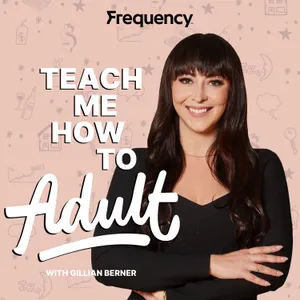
Teach Me How To Adult tackles the deep questions that help us know ourselves, and each other, a little better… how do we have better conversations? How do we grow together in our relationships, instead of apart? How do we stay optimistic when the world is a dumpster fire? Are we really in a loneliness epidemic? How do we cultivate more awe? Why are everyone’s hormones so out of whack? Is everyone having more sex than me? Join host and writer Gillian Berner every week for expert interviews and meaningful conversations on the growth, changes, and transitions of adulthood. Wherever you are on your journey, we’re here to figure out the messiness of being human, together.
Latest Episodes
The most recent episodes — sign up to get AI-powered summaries of each one.
- Yesterday7 min
ICYMI: Why You Feel Lonely Even Though You Have Friends, with Psychologist Dr. Elisabeth Crain
We’re lonelier and more disconnected than ever, and yet… on average, we have a lot of friends, and we know a lot of people. So what’s missing?Welcome to today’s ICYMI, where we kick off the week with a quick game-changing tip from one of our guests that you might have missed.It turns out, the problem might not be that you need more friends — it’s that you need deeper, more reciprocal friendships. Adult friendships can be complicated, so we’re throwing it back to advice from friendship expert and psychologist, Dr. Elisabeth Crain, on why so many of us feel alone even when we have an active social life, how fear of rejection can keep our friendships stuck, and why finding your people requires real discernment. Plus, the value of taking your time in relationships and taking small emotional risks that allow people to reveal themselves.Watch our full episode with Dr. Elisabeth.Tune in every Monday for an expert dose of life advice in under 10 minutes.Follow Dr. Elisabeth Crain:https://www.drelisabethcrain.com/https://www.instagram.com/dr.elisabeth.crain Subscribe to my Substack:teachmehowtoadult.substack.comFollow us on the ‘gram:@teachmehowtoadultmedia@gillian.bernerFollow on TikTok: @teachmehowtoadultSubscribe on YouTube Hosted by Simplecast, an AdsWizz company. See pcm.adswizz.com for information about our collection and use of personal data for advertising.
- 6 days ago34 min
The Art of Getting Emotionally Naked: The 7 Levels of Emotional Intimacy & How They Create Closeness
The real secret to intimacy? Letting someone see the parts you usually hide.We all deeply want to feel known, understood, and loved for who we really are... but are we actually letting people fully know us? You can spend years in a relationship or friendship without ever feeling truly seen. So what does it take to build deeper relationships and experience real emotional intimacy?This week, I’m breaking down Matthew Kelly’s Seven Levels of Intimacy — a framework for understanding how relationships move from surface-level small talk to genuine vulnerability, emotional connection, and feeling deeply known. We explore why we hide parts of ourselves, how fear of rejection and people-pleasing can prevent us from creating meaningful connections, and why learning to communicate our needs might be the most important (and surprisingly difficult) part of intimacy.The question I can't stop thinking about: Are the people closest to you getting to know the real you, or just the version of yourself you think they’ll accept?Whether you’re dating, in a long-term relationship, or hoping to build deeper friendships, these seven levels will help you understand what creates closeness — and how to bring more honesty, vulnerability, and connection to the relationships that matter most.Tune in to hear about:Matthew Kelly’s Seven Levels of Intimacy and what each level reveals Why you can have a busy social life but still feel lonely and disconnectedHow to move beyond small talk and build deeper, more meaningful connectionsWhy conflict avoidance and fear of rejection keep us from closer connectionHow to share your real opinions, values, and dreams The difference between knowing what someone thinks and understanding how they feelHow to become a better listener and stead of trying to "fix" everythingWhy sharing your fears, faults, and failures is essential to emotional intimacyThe surprising seventh level of intimacy, and how to meet each other's needsSimple questions you can ask to create more emotional intimacy in your relationshipsGet Matthew Kelly's book, The Seven Levels of IntimacyFor advertising and sponsorship inquiries, please contact Frequency Podcast Network. Subscribe to my Substack:teachmehowtoadult.substack.comFollow us on the ‘gram:@teachmehowtoadultmedia@gillian.bernerFollow on TikTok: @teachmehowtoadultSubscribe on YouTube Hosted by Simplecast, an AdsWizz company. See pcm.adswizz.com for information about our collection and use of personal data for advertising.
- 1 weeks ago7 min
ICYMI: Hacks To Balance Your Blood Sugar & Improve Insulin Resistance (Without Giving Up Carbs!), with Abbey Sharp
It turns out you CAN improve your blood sugar and insulin resistance without giving up carbs. Welcome to today’s ICYMI, where we kick off the week with a quick game-changing tip from one of our guests that you might have missed.We're throwing it back to this balanced and super doable advice from dietitian Abbey Sharp on the science of blood sugar, insulin resistance, and how small changes to the way we eat and move can make a difference. We’re talking the surprising power of retrogradation (AKA cooling your carbs), how food order and pairing can help reduce blood sugar spikes, and simple, sustainable strategies to support your hormone health and glucose levels without deprivation.Abbey is a Registered Dietitian (RD), a cookbook author, a TV nutrition expert, a YouTuber, host of the podcast Bite Back, and the founder of Abbey’s Kitchen. She dismantles diet culture with science and sass, and her core philosophy is that a pleasurable relationship with food, your body and your self is the fundamental secret to good health.Listen to our full episode with Abbey.Tune in every Monday for an expert dose of life advice in under 10 minutes.Follow Abbey:Abbey's KitchenAbbey's Podcast: Bite BackOn IG: @abbeyskitchen/ Subscribe to my Substack:teachmehowtoadult.substack.comFollow us on the ‘gram:@teachmehowtoadultmedia@gillian.bernerFollow on TikTok: @teachmehowtoadultSubscribe on YouTube Hosted by Simplecast, an AdsWizz company. See pcm.adswizz.com for information about our collection and use of personal data for advertising.
- 1 weeks ago23 min
Why You Take Everything Personally (And How To Stop Believing It’s Always About You)
Why do we take everything so personally? Do you overthink text messages, assume someone's upset with you when they're just having a bad day, or interpret feedback as proof you're not good enough? If you constantly read into other people's behaviour and assume the worst, this episode is a must-listen.This week, I share how I've been working on taking things less personally, managing rejection sensitivity, and overcoming the social hypervigilance that can cause us to read into every single interaction.I explore the psychology behind why we’re so quick to perceive rejection and criticism, even when it has literally nothing to do with us.We cover practical strategies and reframes to stop taking things personally, including how to separate facts from the stories you're telling yourself, assuming positive intent, and getting curious about the other, instead of immediately turning inward and overanalyzing.The goal definitely isn't to stop being a sensitive person or pretend you don't have feelings (I really do believe my sensitivity is a superpower)… it's to stop interpreting every unanswered text, cancelled plan, or bad mood as evidence that you aren’t loved, accepted, or included.Ultimately, not everything is about you—and that’s a good thing. Remembering that it’s usually not personal can free up SO MUCH mental energy and allow you to be more present in your life. You can be a sensitive person who cares deeply about your relationships without taking responsibility for every little thing people do.Tune in to learn about:Why some people are more sensitive to perceived rejection, criticism, and exclusionRejection sensitivity and social hypervigilance: why we monitor other people's moods and behaviourThe impact on taking things personally in every pillar of lifeThe spotlight effect and why we overestimate how much other people notice usHow to separate what actually happened from the stories and assumptions you're creatingWhy we fall into mind-reading, overthinking, and rumination when we feel rejected or insecureThe power of assuming positive intent and considering other person’s circumstancesWhy getting curious, asking questions, and communicating directly changes everythingHow to manage emotional reactivity without suppressing your feelingsPractical questions to help challenge anxious assumptionsFor advertising and sponsorship inquiries, please contact Frequency Podcast Network. Subscribe to my Substack:teachmehowtoadult.substack.comFollow us on the ‘gram:@teachmehowtoadultmedia@gillian.bernerFollow on TikTok: @teachmehowtoadultSubscribe on YouTube Hosted by Simplecast, an AdsWizz company. See pcm.adswizz.com for information about our collection and use of personal data for advertising.
- 2 weeks ago7 min
ICYMI: Stuck In Dating? A Framework To Overcome Common Self-Sabotaging Patterns, with Amy Chan
If modern dating feels like an episode of Black Mirror, you're not alone. So we're throwing it back to dating advice that can help you date smarter and build healthy relationships that last. Welcome to today’s ICYMI, where we kick off the week with a quick game-changing tip from an episode that you might have missed. Relationship expert Amy Chan breaks down the toxic dating patterns that can keep people from finding the relationships they want, the mistakes singles are most commonly making, and how to stop self-sabotaging your love life. Plus, Amy’s Dating Funnel framework for approaching your dating life with clarity and confidence. Amy has been a trusted voice in modern relationships for almost two decades. She’s the author of UNSINGLE: How to Date Smarter and Create Love that Lasts (which comes out this April 28th!) and her popular first book, Breakup Bootcamp: The Science of Rewiring Your Heart, was featured in The New York Times. She’s the founder Renew Breakup Bootcamp, the world's first heartbreak retreat, and she’s on faculty at Esalen and The Omega Institute.Listen to the full episode with Amy here!Tune in every Monday for an expert dose of life advice in under 10 minutes.Follow Amy on Instagram and her website. You can order her new book, Unsingle, here. Subscribe to my Substack:teachmehowtoadult.substack.comFollow us on the ‘gram:@teachmehowtoadultmedia@gillian.bernerFollow on TikTok: @teachmehowtoadultSubscribe on YouTube Hosted by Simplecast, an AdsWizz company. See pcm.adswizz.com for information about our collection and use of personal data for advertising.
- 2 weeks ago1h 12m
How to Stop Overthinking Decisions and Trust Yourself, with Therapist Jenna Overbaugh
Why is it so damn hard to make decisions? And why are we so afraid of making the wrong choice? If you overthink every option, struggle with decision anxiety, second-guess yourself, or feel like you’re always chasing 100% certainty, this episode is for you.Whether you’re questioning your relationship, contemplating a career change, navigating a major life transition, or struggling with everyday choices, the fear of making the wrong decision can feel paralyzing. So I called in licensed therapist, Jenna Overbaugh, to talk about overcoming analysis, ending the anxiety loop that keeps us stuck in decision-making, and building the confidence and self-trust to stick to our decisions… even when we feel uncertain. My biggest takeaway? Self-trust isn't knowing you'll make the "perfect" decision — it's knowing you can handle the consequences of an imperfect one.We explore the fantasy of the “perfect life”, why endlessly researching, analyzing, and seeking reassurance can worsen decision anxiety, how cognitive distortions can skew our perception of our options, and how to build your tolerance for uncertainty.The goal isn't to make decisions you’ll never regret. It’s to become someone who trusts themselves to handle uncertainty, discomfort, and whatever happens next. By the end of this episode, I hope you’ll have a roadmap for developing self-trust, without waiting until you feel completely ready.Jenna Overbaugh is an internationally recognized expert in OCD, anxiety disorders, and intrusive thoughts. She has worked at world-renowned treatment facilities, and her work reaches hundreds of thousands of people through her courses, her popular social media channels, and her podcast/Substack. Her debut book, Making Peace With A Noise Mind, is coming this February.Tune in to learn about:Decision anxiety and analysis paralysis: why we get stuck trying to find the perfect choiceHow to overcome the fear of making the wrong decision, and choose based on your valuesHow to distinguish your feelings and intuition from your anxietyHow to build self-trust and increase your tolerance discomfortWhat to do when your brain gets stuck in “what if” thinkingHow to tell the difference between productive problem-solving and overthinking or ruminationHow to navigate doubts about big life choices, like your partner, your career, or your kidsUnderstanding cognitive distortions, like black-and-white thinking and mental filteringWhat exposure and response prevention (ERP) is and how it can help with anxiety, OCD, and uncertaintyWhy you don't need to feel completely ready or confident before making a meaningful changeResources mentioned:https://jennaoverbaughlpc.com/ The Yerkes Dodson CurveFor advertising and sponsorship inquiries, please contact Frequency Podcast Network. Subscribe to my Substack:teachmehowtoadult.substack.comFollow us on the ‘gram:@teachmehowtoadultmedia@gillian.bernerFollow on TikTok: @teachmehowtoadultSubscribe on YouTube Hosted by Simplecast, an AdsWizz company. See pcm.adswizz.com for information about our collection and use of personal data for advertising.
- 3 weeks ago12 min
ICYMI: The 3 Stages Of Relationships, And How To Move From Enmeshment To Differentiation To Interdependence, with Baya Voce
Are you deep in the infatuation stage? Or is your relationship stuck in the power struggle of trying to change each other, trying to protect your independence, or falling into an avoidant-pursuer dynamic? It turns out, we all have to go through that phase. Welcome to today’s ICYMI, where we kick off the week with a quick game-changing tip from an episode that you might have missed. We're throwing it back to invaluable advice from renowned relationship repair expert Baya Voce, MSW, on how to move through the three stages of relationships to land in the healthy spaciousness of interdependence. We talk about the journey from infatuation, to power struggle, to disillusionment, to interdependence, with proven tools and insights for transforming conflict into deeper connection.If you’re in love, want love, or care about love, this is the guide we all need for working towards interdependence, and creating love that lasts.With an MSW from Columbia University, Baya specializes in couples counselling and MDMA-assisted couples therapy research, and is supervised by Esther Perel. Her work has been featured in a TED Talk, on Vice, Forbes, MTV, and ABC, and her videos on everything from boundaries, to using AI for therapy, to navigating jealousy, have been viewed by millions.Listen to the full episode with Baya here!Tune in every Monday for an expert dose of life advice in under 10 minutes.Resources & Links:Follow Baya on Instagram: @bayavoceBaya’s website: https://bayavoce.com/ Subscribe to my Substack:teachmehowtoadult.substack.comFollow us on the ‘gram:@teachmehowtoadultmedia@gillian.bernerFollow on TikTok: @teachmehowtoadultSubscribe on YouTube Hosted by Simplecast, an AdsWizz company. See pcm.adswizz.com for information about our collection and use of personal data for advertising.
- 3 weeks ago14 min
The Psychology of Trauma Responses: Freezing, Fawning, and The Unconscious Ways We Survive Traumatic Experiences
Trigger warning: This episode discusses sexual assault, trauma, and survivor experiences. Please take care of yourself and skip this one if you need to.I’ve been thinking a lot about the Cornell 7 case recently, and how, a decade after the #MeToo movement, we’re still seeing the same backlash, criticism, victim-blaming, and lack of understanding about what actually happens to so many people during and after a traumatic experience.So today, in hopes of creating more compassion and understanding in how we respond to victims who experience trauma, we’re unpacking the psychology of trauma responses — and why the ways people react to fear and coercion are so often misunderstood.We hear a lot about the fight-or-flight response, but what happens when your body freezes, shuts down, or tries to appease the threat? In this episode, we explore the two lesser-understood survival responses: freeze and fawn. Fawning is when someone tries to stay safe by placating, appeasing, or complying with a threat. Freezing is a mental or physical shutdown that can involve immobility, silence, numbness, or dissociation.These trauma responses are not conscious choices. When someone freezes instead of fights, that isn’t evidence of consent. These are involuntary responses to perceived danger, shaped by our nervous system, past experiences, and the circumstances we find ourselves in.Whether you’re trying to make sense of your own experience, support someone you love, or better understand the psychology of trauma responses, I hope this offers some clarity and compassion.Tune in to learn about:How trauma responses actually workWhy survivors of a traumatic experience may freeze, shut down, dissociate, or be unable to fight backWhat fawning is, why we appease or comply when we feel threatened, and how people-pleasing can become a survival responseThe shame, guilt, and self-blame that often accompanies freezing or fawningHow social conditioning around politeness and people-pleasing can shape women's responses to threatening situationsWhy processing and reporting sexual assault is so difficultHow to respond with more compassion and understanding when someone shares a traumatic experienceIf you’re struggling with a traumatic experience, please talk to someone you love and trust, or visit a resource like RAINN.org for support.For advertising and sponsorship inquiries, please contact Frequency Podcast Network. Subscribe to my Substack:teachmehowtoadult.substack.comFollow us on the ‘gram:@teachmehowtoadultmedia@gillian.bernerFollow on TikTok: @teachmehowtoadultSubscribe on YouTube Hosted by Simplecast, an AdsWizz company. See pcm.adswizz.com for information about our collection and use of personal data for advertising.
Get Teach Me How To Adult summaries in your inbox
Free AI-powered daily recaps. Key takeaways, quotes, and mentions — in a 5-minute read.
Get Free Summaries →Free forever for up to 3 podcasts. No credit card required.
You Might Also Like
Listeners also like.

Imperfect Love
A psychologist answers real-life questions on love, self-acceptance, and personal growth using a mindfulness-based approach.

The Tamsen Show
A journalist explores health, reinvention, and relationships with experts and women reshaping their lives.

After Bedtime with Big Little Feelings
Honest conversations about modern parenting challenges with practical advice and emotional support from experienced guides.

The Liz Moody Podcast
Liz Moody explores science-based wellness topics with experts to help listeners improve their health, mindset, and daily lives.
Pulling The Thread with Elise Loehnen
Elise Loehnen examines human behavior, self-understanding, and meaningful living through conversations with thinkers and experts.

Becoming You with Suzy Welch
A podcast exploring personal growth, career choices, and life decisions with candid conversations and practical insights.

Growth Mindset Psychology: The Science of Self-Improvement
Explores the science behind lasting self-improvement through psychology, neuroscience, and timeless wisdom traditions.

Normalize It Forward
Discusses mental health during college, focusing on reducing stigma and supporting young adults, parents, and therapists.

How Hard Can It Be? with Diana Maria Riva
A weekly conversation for GenX women navigating midlife challenges, from empty nesting to self-identity, with humor and honesty.

The Sabrina Zohar Show
Explores modern dating, anxious attachment, and personal growth through raw conversations on healing and self-discovery.
A Bit of Optimism
Conversations with thinkers and doers exploring what drives purpose, growth, and meaning in life.

Adulting with Michelle Buteau and Jordan Carlos
Exactly Right and iHeartPodcasts
About Teach Me How To Adult
Teach Me How To Adult tackles the deep questions that help us know ourselves, and each other, a little better… how do we have better conversations? How do we grow together in our relationships, instead of apart? How do we stay optimistic when the world is a dumpster fire? Are we really in a loneliness epidemic? How do we cultivate more awe? Why are everyone’s hormones so out of whack? Is everyone having more sex than me? Join host and writer Gillian Berner every week for expert interviews and meaningful conversations on the growth, changes, and transitions of adulthood. Wherever you are on your journey, we’re here to figure out the messiness of being human, together.
Customized Recaps
AI-powered recaps with compact key takeaways, quotes, and insights.
Straight to Your Inbox
Get key takeaways from Teach Me How To Adult in a 5-minute read.
Save Hours Every Week
Stay current on your favorite podcasts without falling behind.
Frequently Asked Questions
What is Podzilla's Teach Me How To Adult daily summary?
It's a free AI-powered email that summarizes new episodes of Teach Me How To Adult as soon as they're published. You get the key takeaways, notable quotes, and links & mentions — all in a quick read.
How does the Teach Me How To Adult podcast summary work?
When a new episode drops, our AI transcribes and analyzes it, then generates a personalized summary tailored to your interests and profession. It's delivered to your inbox every morning.
Is this an official Teach Me How To Adult product?
No. Podzilla is an independent service that summarizes publicly available podcast content. We're not affiliated with or endorsed by Gillian Berner.
Can I get summaries of other podcasts too?
Absolutely! The free plan covers up to 3 podcasts, any in the catalog. Basic raises that to 15, Pro to 40 and Max to 100. Browse our full catalog at /podcasts.
How often does Teach Me How To Adult release new episodes?
Teach Me How To Adult publishes 2x weekly. Our AI generates a summary within hours of each new episode.
What topics does Teach Me How To Adult cover?
Teach Me How To Adult covers topics including Education, Business, Careers, Fitness, Health & Fitness, Mental Health, Self-Improvement. Our AI identifies the specific themes in each episode and highlights what matters most to you.
Start getting Teach Me How To Adult summaries tomorrow morning.
Free forever for up to 3 podcasts. No credit card required.
Free forever for up to 3 podcasts. No credit card required.