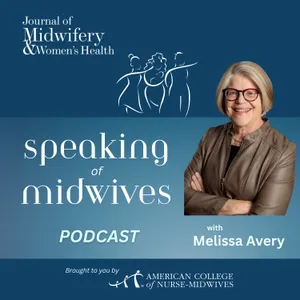
Free Daily Podcast Summary
Speaking of Midwives: Daily Summaries Delivered
by Melissa Avery PhD, CNM, FACNM
Welcome to Speaking of Midwives! We are the official podcast of the Journal of Midwifery & Women's Health and the American College of Nurse-Midwives. I'm Melissa Avery, and every episode we sit down with the midwife researchers and innovators whose work is shaping the future of reproductive healthcare in America.
Latest Episodes
The most recent episodes — sign up to get AI-powered summaries of each one.
- 3 days ago14 min
Interprofessional Collaboration Between Midwives and Obstetrician-Gynecologists
Recorded live at the American College of Nurse-Midwives (ACNM) Annual Meeting in Kansas City, in this episode our host Melissa Avery sits down with Myra DeLuca a practicing midwife, PhD student at Penn State, and former midwifery practice director.Myra breaks down her recent comprehensive review article published in the Journal of Midwifery & Women's Health focusing on interprofessional collaboration between midwivesand physicians. Together, they explore the structural barriers, communication gaps, and liability misconceptions that hinder teamwork, while highlighting the powerful impact of shared leadership, joint patient visits, and interprofessional education on reducing provider burnout and expanding maternity care access.Keywords: Speaking of Midwives podcast, Myra DeLuca, Interprofessional Collaboration, Midwife-Physician Collaboration, Journal of Midwifery and Women's Health, Maternity Care Deserts, Rural Midwifery, Interprofessional Education, ACNM Annual Meeting.Hashtags: #SpeakingOfMidwives #InterprofessionalCollaboration #MaternalHealth #Midwifery #HealthcareLeadership #OBGYN #ACNM #JMWHGuest: Myra DeLuca, MSN, CNM, FACNMwww.linkedin.com/in/myra-deluca-cnmMjj113@psu.eduThe article:Interprofessional Collaboration Between Certified Nurse‐Midwives/Certified Midwives and Obstetrician‐Gynecologist Physicians: A State of the Science Review - DeLuca - Journal of Midwifery & Women's Health - Wiley Online Library
- 2 weeks ago26 min
Teaching Every Brain: Neurodivergence and Midwifery Education
Recorded live at the ACNM Annual Meeting in Kansas City!!If roughly 30% of our students are neurodivergent, and many never say so, what does that ask of us as educators and preceptors?Kelly Walker, Senior Associate Dean for Academic Affairs at NYU, and Jane Houston, clinical associate professor at the University of Central Florida, join us to talk about their research on neurodivergence in midwifery education. Their work grew out of a trauma-informed pedagogy session where learners began quietly sharing their own stories. They discuss why accommodation-by-appointment can leave students stigmatized and exhausted, and what universal design for learning looks like in practice. They also cover how to bring preceptors in as true faculty, and why supporting learners is also about keeping midwives in the profession.It’s a candid, funny, and hopeful conversation about centering students the way we center families, and building a workforce where more midwives can thrive and stay.Keywords: Speaking of Midwives podcast, Kelly Walker NYU, Jane Houston UCF, Neurodivergence in Midwifery Education, Universal Design for Learning, Trauma-Informed Pedagogy, ACNM Annual Meeting, Midwifery Workforce Retention, Nursing Education, Clinical Preceptors.Hashtags:#SpeakingOfMidwives #MidwiferyEducation #Neurodivergence #UDL #NurseMidwife #MaternalHealth #ACNM #ClinicalPreceptorGuests: Jane F. Houston, DNP, CNM, FACNMKelly C. Walker, DNP, CNM, FACNM
- Oct 12, 202659 min
Beloved Birth Black Centering
What happens when Black midwives design their dream model of perinatal care? At Alameda Health System in California, Black families in Beloved Birth had an 8% preterm birth rate, compared with about 14% for Black families in the same health system who didn’t receive this care. NICU admissions dropped from 12% to 5%.Our host, Melissa Avery, PhD CNM talks with Jyesha Wren, CNM founding director and Maya Combs, CNM about their 2025 Journal of Midwifery & Women’s Health article, “A Community-Centered and Anti-Racist Model of Whole Person Perinatal Care.”They describe how Beloved Birth Black Centering layers evidence-based strategies on top of midwifery-led group prenatal care, including racially concordant care, wraparound services, and what they call the “gold package of Black love.” They also share how they fund services Medicaid doesn’t cover and how to start building a model like this where you are.Keywords: Black maternal health, birth equity, group prenatal care, Black midwives, racially concordant care, culturally reverent care, midwifery-led care, preterm birth disparities, reproductive justice, Medicaid reimbursementHashtags: #SpeakingOfMidwives #BelovedBirth #BlackMaternalHealth #BirthEquity #BlackMidwives #GroupPrenatalCareGuests: Jyesha Wren, CNM, MSNJyesha Wren, Nurse Midwife | LinkedInMaya Combs, CNM, MSN, RNMaya Combs,MSN,RN, CNM-BC | LinkedInArticle: A Community‐Centered and Antiracist Model of Whole‐Person Perinatal Care: Beloved Birth Black Centering - De Ornelas - 2025 - Journal of Midwifery & Women's Health - Wiley Online Library@Beloved Birth Black Centering Official: Instagram, Facebook, Twitter | LinktreeBelovedbirth.org
- Sep 28, 202640 min
Postpartum Follow-up After Hypertensive Disorders of Pregnancy
Blood pressure often peaks after patients have already gone home; yet fewer than half of people with hypertensive disorders of pregnancy receive the recommended blood pressure check within 7 to 10 days of birth. Follow-up is even lower for Black and Hispanic patients, who also face a disproportionate burden of severe complications. Why is that happening, and what can we do about it?In this episode, we speak with Jill Doyle, CNM, PhD candidate and predoctoral fellow at the Boston College Connell School of Nursing, about her integrative review on the subject. Jill draws on 15 years of midwifery practice and her own experience of postpartum preeclampsia and hospital readmission to reframe missed follow-up as a systems problem rather than a patient one.We discuss what ACOG recommends and how it differs from the traditional six-week postpartum visit, how remote blood pressure monitoring works, and what an intersectionality lens reveals about who gets timely care. Jill also walks through the patient, provider, and health system-level barriers and facilitators she found.Whether you're a midwife, nurse, OB, or primary care clinician, you'll leave with practical steps you can use in your next clinic day and a clearer view of how to design postpartum care that meets people where they are.In this episode:-Why early postpartum blood pressure surveillance matters, and what the guidelines recommend?-Remote vs. home blood pressure monitoring: what's the difference?-Using an intersectionality framework to understand inequities in follow-up.-Barriers and facilitators at the patient, provider, and health system levels.-Practical steps clinicians can take now, and the policy and research needed next.Guest: Jill Doyle, MS, CNM, PhD CandidateArticle: Doyle JC, Lee CS, & Canty L. Barriers and facilitators to early postpartum blood pressure follow-up after hypertensive disorders of pregnancy: An integrative review. J Midwifery Womens Health. 2026;71(3):330-343. doi:10.1111/jmwh.70091LinkedIn: https://www.linkedin.com/in/jill-doyle-cnm-ms-6136b419/Keywords: Midwifery care, Hypertensive Disorders of Pregnancy, Preeclampsia, Postpartum Blood Pressure, Postpartum Health Disparities, Black Maternal Health, Telehealth Postpartum Care, Journal of Midwifery & Women's Health.Hashtags: #SpeakingOfMidwives #Midwifery #MaternalHealth #Preeclampsia #ReproductiveHealth #PostpartumCare #HealthEquity
- Sep 14, 202642 min
Implementation Science for Midwifery Integration
We know midwifery care works. So why isn't it everywhere?In this episode, host Dr. Melissa Avery sits down with Brie Thumm, CNM, PhD, midwife and assistant professor at the University of Colorado Anschutz College of Nursing, to explore this game-changing question: not whether midwifery care improves outcomes, but how to get it adopted, sustained, and equitably integrated across every setting in the U.S?Dr. Thumm breaks down implementation science, which is the study of how to translate proven interventions into everyday practice. She reframes the midwifery model of care itself as an evidence-based intervention ready for rigorous, systematic adoption.In this episode, you'll learn:-What implementation science is (and why it's different from effectiveness research)-How theories, models, and frameworks create shared language for studying midwifery across wildly different settings-Why "positive deviance" studying practices already succeeding may be the key to spreading what works-The four levels of barriers and facilitators to integration: patient, provider, organization, and system-Practical steps any clinician can take today to identify and share what's working in their own practiceWhether you're a clinician, researcher, or midwifery advocate, this conversation offers a roadmap for moving midwifery care from proven to prevalent!Listen now and subscribe to Speaking of Midwives, brought to you by the Journal of Midwifery & Women's Health.Credentials: Brie Thumm, PhD, CNM, RN, MBA, FACNMArticle: A Synthesis of Principles and Approaches From the Field of Implementation Science for Studying Midwifery Integration in the United States - Thumm - Journal of Midwifery & Women's Health - Wiley Online LibraryRelated article mentioned during the episode Curran, G. M. (2020). Implementation science made too simple: a teaching tool. Implementation science communications, 1(1), 27. Social Media: LinkedIn: www.linkedin.com/in/e-brie-thumm-b5580249#Midwifery #ImplementationScience #MaternalHealthEquity #MidwiferyIntegration #JMWH #WomensHealth #NurseMidwife #HealthEquity #MaternalHealth
- Aug 31, 202631 min
Innovations in Preconception Care
The U.S. lags behind other developed nations in maternal and infant health outcomes; and Dr. Cynthia Nypaver, midwife, associate professor, and program director at the University of Cincinnati College of Nursing, believes preconception care is a missing piece of the puzzle.In this episode, Dr. Nypaver joins us to unpack her latest article synthesizing the research on preconception health innovations. We explore why care before pregnancy matters as much as care during it, the individual, provider, and structural barriers keeping people from accessing it, and the exciting new tools changing the landscape. F-rom AI-powered conversational agents like "Gabby" to mobile apps, chatbots, and electronic health record prompts that make preconception screening part of routine care.We also dig into policy-level solutions for closing gaps in maternity care deserts, the role of telehealth in reaching rural communities, and practical, ways clinicians can start normalizing preconception care starting tomorrow. Whether you're a midwife, OB, family medicine provider, or nurse practitioner, this conversation offers a roadmap for treating preconception care as what it truly is: primary care for people of reproductive age.In this episode:-Why preconception care affects outcomes across generations-Screening tools every provider should know (reproductive life plan, PHQ-9, IPV screening)-New digital health innovations, from apps to virtual conversational agents-Community and population-level interventions that have workedGuest Credentials: Cindy Nypaver PhD, APRN-CNM, WHNP-BC, FACNMArticle: Innovations in Preconception Care: Optimizing Health for AllIndividuals - Nypaver - 2024 - Journal of Midwifery & Women's Health -Wiley Online LibraryWebsite of interest: https://beforeandbeyond.org/
- Aug 17, 202643 min
Reproductive Justice and Community Care Fellowship for Black Midwives
In this episode of Speaking of Midwives, our host talks with Dr. Nikia Grayson, midwife, chief clinical officer at CHOICES Center for Reproductive Health in Memphis and Carbondale, and associate professor at UCSF, about her article, "The Choices Black Midwifery Fellowship: An Innovative Model for Training Midwives in Reproductive Justice and Community-Centered Care."Dr. Grayson describes how CHOICES, a nonprofit reproductive healthcare organization serving Memphis for over 50 years, and now Carbondale, Illinois as well, built a fellowship grounded in Black feminist thought and reproductive justice to address a gap she experienced firsthand: what happens after graduation, when new midwives need support translating clinical knowledge into confident practice.She walks through the fellowship's five pillars: full-scope reproductive health education, Black feminist thought, leadership and mentorship, neonatal/postnatal care, and community-centered care. She shares candid insights on funding a program that pays fellows a real, livable salary; embedding policy engagement into clinical training; and building an intentionally Black-led midwifery workforce in the South.The conversation also touches on lessons for midwifery faculty and preceptors everywhere: the need for structured mentorship, training beyond hospital-based medicalized settings, and reframing midwifery as inseparable from advocacy and social change.Tune in for a compelling look at what it takes to build a training model designed for midwives to not just enter the profession, but stay, lead, and transform it.CHOICESWebsite: www.yourchoices.orgInstagram: @yourchoicesclinicsFacebook: www.facebook.com/yourchoicesclinicsLinkedIn: linkedin.com/company/your-choicesDr. Grayson's Social Media: Instagram: @nikiagrayson_midwifeLinkedIn: www.linkedin.com/in/nikiagraysonFacebook: www.facebook.com/nikiagraysonArticles:Grayson N, Quinones N, Oseguera T. A Model of True CHOICES: Learnings from a Comprehensive Sexual and Reproductive Health Clinic in Tennessee that Provides Abortions and Opened the City's First Birth Center. J Midwifery Womens Health. 2022;67(6): 689-695. https://doi.org/10.1111/jmwh.13448The CHOICES Black Midwifery Fellowship: An Innovative Model for Training Midwives in Reproductive Justice and Community‐Centered Care - Grayson - 2026 - Journal of Midwifery & Women's Health - Wiley Online Library
- Aug 3, 202631 min
Rethinking the VBAC Calculator: Observed vs Predicted VBAC Outcomes
The tools we use to counsel patients aren't always keeping pace with reality. In this episode, midwife-researcher Ann Ledbetter joins us to discuss her study, Observed versus Predicted Vaginal Birth After Cesarean for Patients of a Community Health Center, published in the Journal of Midwifery & Women's Health.Ann shares findings from 507 labors after cesarean at a Milwaukee community health center serving a predominantly Latina population. The numbers challenge assumptions baked into the widely used VBAC calculator. Her team found actual VBAC success rates outpaced predictions across the board, with the calculator proving especially inaccurate for patients with higher BMIs and no prior vaginal birth.We dig into what these findings mean for clinical counseling, the risks of discouraging TOLAC based on probability scores alone, and why Ann believes the conversation needs to shift from "fixing the calculator" to examining hospital-level practices driving cesarean variability. She also makes the case for continued midwifery support as a driver of improved VBAC rates, and outlines the research she'd like to see next.A thoughtful, data-driven conversation about equity, autonomy, and trusting birthing people's bodies.Articles:Considering Labor After Cesarean in a Woman with Class 3 Obesity - Ledbetter - 2020 - Journal of Midwifery & Women's Health - Wiley Online LibraryObserved Versus Predicted Vaginal Birth After Cesarean for Patients of a Community Health Center - Ledbetter - 2025 - Journal of Midwifery & Women's Health - Wiley Online LibraryAnn's Substack: A Moderate Midwife | Ann Ledbetter | SubstackAnn is featured on Emily Oster's newsletter Parent DataVBAC: Risks, Benefits, & How to Prepare
Get Speaking of Midwives summaries in your inbox
Free AI-powered daily recaps. Key takeaways, quotes, and mentions — in a 5-minute read.
Get Free Summaries →Free forever for up to 3 podcasts. No credit card required.
You Might Also Like
Listeners also like.

Previa Alliance Podcast
Discusses perinatal mental health through conversations with survivors and professionals.

Evidence Based Birth
Discusses research evidence on pregnancy and childbirth to empower birth workers and families with accurate information.
Frankly Speaking About Family Medicine
Discusses current topics and developments in primary care and family medicine.

Red Pill Your Healthcast
Two healthcare providers discuss overlooked health issues and empower listeners to make informed decisions for their families.
The Birth Experience with Labor Nurse Mama
A labor nurse provides medical guidance on pregnancy, childbirth, and postpartum care to help expecting mothers prepare for delivery and newborn care.

Psychiatry & Psychotherapy Podcast
Explores psychiatry and psychotherapy through interviews with experts, trainees, and individuals sharing lived mental health experiences.
Everyday Wellness: Midlife Hormones, Menopause, and Science for Women 35+
A nurse practitioner shares science-based strategies for managing midlife hormones, menopause, and women's health.

M Is for Mama Podcast
Discussions on motherhood, biblical perspectives on cultural issues, and practical tips for managing home life with humor and faith.

Health Discovered
Doctors explore surprising stories to uncover insights about health and well-being.

Hello Hormones with Dr. Carrie Jones
A functional medicine doctor explains how hormonal changes affect women’s health and offers science-based solutions to manage symptoms.

Spotlight: Women Sharing Their Stories
Women share personal stories of struggle, triumph, and hope to connect and support one another through lived experience.

The Middle School Mary Poppins Podcast
Practical strategies for supporting kids ages 10–15 through the challenges of early adolescence.
About Speaking of Midwives
Welcome to Speaking of Midwives! We are the official podcast of the Journal of Midwifery & Women's Health and the American College of Nurse-Midwives. I'm Melissa Avery, and every episode we sit down with the midwife researchers and innovators whose work is shaping the future of reproductive healthcare in America.
Customized Recaps
AI-powered recaps with compact key takeaways, quotes, and insights.
Straight to Your Inbox
Get key takeaways from Speaking of Midwives in a 5-minute read.
Save Hours Every Week
Stay current on your favorite podcasts without falling behind.
Frequently Asked Questions
What is Podzilla's Speaking of Midwives daily summary?
It's a free AI-powered email that summarizes new episodes of Speaking of Midwives as soon as they're published. You get the key takeaways, notable quotes, and links & mentions — all in a quick read.
How does the Speaking of Midwives podcast summary work?
When a new episode drops, our AI transcribes and analyzes it, then generates a personalized summary tailored to your interests and profession. It's delivered to your inbox every morning.
Is this an official Speaking of Midwives product?
No. Podzilla is an independent service that summarizes publicly available podcast content. We're not affiliated with or endorsed by Melissa Avery PhD, CNM, FACNM.
Can I get summaries of other podcasts too?
Absolutely! The free plan covers up to 3 podcasts, any in the catalog. Basic raises that to 15, Pro to 40 and Max to 100. Browse our full catalog at /podcasts.
What topics does Speaking of Midwives cover?
Speaking of Midwives covers topics including Medicine, Fitness, Health & Fitness. Our AI identifies the specific themes in each episode and highlights what matters most to you.
Start getting Speaking of Midwives summaries tomorrow morning.
Free forever for up to 3 podcasts. No credit card required.
Free forever for up to 3 podcasts. No credit card required.