Free Daily Podcast Summary
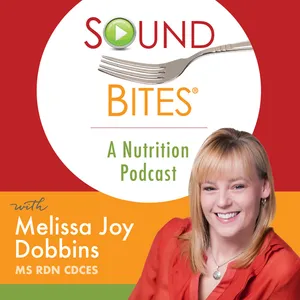
Sound Bites A Nutrition Podcast: Daily Summaries Delivered
by Melissa Joy Dobbins, MS, RD, CDE
Hosted by award-winning Registered Dietitian Nutritionist, Melissa Joy Dobbins, the Guilt-Free RD - "because food shouldn't make you feel bad!" Join Melissa's conversations with a variety of experts on topics ranging from fad diets to farming and gain credible information to help you make your own, well-informed food decisions based on facts, not fear. For more information visit www.SoundBitesRD.com.
Latest Episodes
The most recent episodes — sign up to get AI-powered summaries of each one.
- 6 days ago37 min
318: Healthy Cooking Hacks, Teaching Kitchens & Medically Tailored Meals – Chef Abbie Gellman
Full shownotes, transcript, and resources here: https://soundbitesrd.com/318 Knowing what to eat is one thing. Finding the time, skills and ingredients to make it happen is another. In this episode, we explore how culinary nutrition turns healthy intentions into practical, delicious meals with time-saving shortcuts, versatile pantry and freezer staples, and simple cooking techniques. You'll also discover how teaching kitchens, medically tailored meals and grocery programs are helping make nutritious food more accessible in homes and communities. Tune in to this episode to learn about: Simple shortcuts that save time without sacrificing nutrition, including frozen vegetables, rotisserie chicken, canned seafood, and pre-cooked grains Easy ways to use canned and frozen seafood Pantry and freezer staples that make breakfast, lunch, dinner, and snacks easier, including cereal, overnight oats, frozen waffles, and pancakes What teaching kitchens are and how they combine cooking education, community, food skills, and nutrition education What medically tailored meals and groceries are, and how they are designed for people with specific health or food access needs
- 2 weeks ago49 min
317: Beyond Protein and Low-Carb Diets: Why Whole Grain Foods Still Matter - Dr. Julie Miller Jones & Alex Turnbull
Full shownotes, transcript, and resources here: https://soundbitesrd.com/317 Disclosure: This episode is sponsored by General Mills Bell Institute of Health and Nutrition and offers 1 Free continuing education credit for RDNs. See more details below. The Whole Grain Gap: Benefits, Myths and Easy Ways to Eat More Whole grain recommendations – and the science behind them – have remained remarkably consistent for decades, yet only two percent of Americans are getting enough. In today's wellness and social media landscape, carbohydrates and grain foods are often oversimplified, misunderstood or unfairly vilified. Yet, consumers are actively seeking many of the benefits whole grain foods support, including fiber intake, gut health, cardiometabolic health, satiety, and overall diet quality. This podcast episode explores the disconnect between the perception of grain foods and the reality of what they offer, discussing the science behind recommendations, as well as the challenges people face when it comes to getting the recommended intake. Listeners will learn from nutrition experts on how they can help close the whole grain gap by leveraging insights and accessible strategies. Whether you're looking to understand the latest research or get practical tips for bringing whole grains back into the nutrition conversation (and your diet), this episode delivers evidence-based, real-world tips to transform your approach to whole grains. Tune in to learn more about: definition of whole grains and their components health benefits of whole grains including disease risk reduction common misconceptions and confusion about grains how to understand food labeling strategies for increasing whole grain intake in daily life the impact of trends like low-carb and high-protein diets on grain consumption emerging research on gut health and antioxidants in whole grains practical tips for food shopping and meal planning <span style="font-family: 'Ari
- Aug 12, 202650 min
316: The Habit Window: How GLP-1 Insights Can Help Anyone Change Behavior – Charles Duhigg
Full shownotes, transcript, and resources here: https://soundbitesrd.com/316 In this episode, Charles Duhigg, a Pulitzer Prize-winning journalist and author, shares insights on how recent research into GLP1s is transforming our understanding of habit formation, weight management, and behavioral change. Discover practical strategies for leveraging the habit window created by GLP1 therapy and applying the science of identity to foster lasting health improvements. Insights on habits and behavior change can benefit any listener, not just those taking GLP1s. Tune in to this episode to learn about: The science behind habit formation: cues, routines, rewards, and the habit loop How GLP1 medications create a flexible "habit window" for behavior change The role of the basal ganglia in automating habits and reducing reliance on willpower The importance of keystone habits and identity shifts in maintaining weight loss Practical steps for habit diagnosis, change, and maintenance using structured systems like Noom or a Registered Dietitian How to plan for and sustain habits after discontinuing GLP1 therapy The significance of self-monitoring, recognizing failure points, and implementing "if-then" plans The psychological impact of identity reinforcement through behavioral consistency Insights from behavioral experiments: the marshmallow test and habit cues Bonus: Communication science and the "matching principle" for better relationships
- Jul 29, 202654 min
315: Burnout and Brain Health: Why Nutrition & Resilience Matter
Full shownotes, transcript, and resources here: https://soundbitesrd.com/315 From Burnout to Resilience: Science-Backed Strategies for Brain Health What is burnout, and how is it different from stress or depression? Learn how burnout affects the brain, why it impacts memory, focus, mood, and decision-making, and what the science says about nutrition, lifestyle, and practical strategies to build resilience and support recovery from burnout as well as supporting brain health in general. Tune in to this episode to learn about: definition and signs of burnout impact of burnout on brain structure and function nutrition and lifestyle strategies for brain health the 3S framework: Self-align, Signals, Systems research gaps and future directions in burnout science practical tips for managing stress and supporting resilience
- Jul 15, 202659 min
314: Restorative Treats: The Science of Feeling Good Through Food – Kevin Ryan
Full shownotes, transcript, and resources here: https://soundbitesrd.com/314 Resetting the Rules of Indulgence We often think of food choices as an all-or-nothing equation: healthy eating requires effort and discipline, while treats feel like guilty pleasures or even cheating. But what if treating yourself could actually support your health goals? Today we're talking with food anthropologist Kevin Ryan about restorative treats and the rise of functional foods that go beyond indulgence. We'll explore how new rituals can help us reset habits, rethink the way we define treats, and discover that feeling good may not come from permission to indulge – it may come from giving ourselves the fuel to feel better.
- Jun 25, 20261h 3m
313: Stopping GLP-1 Meds: What It Takes to Keep the Weight Off – Dr. Holly Wyatt
Full shownotes, transcript, and resources here: https://soundbitesrd.com/313 Many individuals are turning to GLP-1 medications for weight loss, but what happens when they stop? In this episode, we delve into the complexities of maintaining weight loss once these medications are discontinued. Dr. Holly Wyatt, an expert in obesity medicine, shares her insights on why understanding metabolic flexibility is crucial for long-term weight management. This episode will empower you with actionable strategies to redefine success in weight loss and maintain a healthy lifestyle. Tune in to this Sound Bites® Podcast episode with Dr. Holly Wyatt to learn about: · understanding weight loss vs. maintenance · metabolic flexibility vs. adaptation · insights from the National Weight Control Registry · the connection between behavior and biology · challenges of discontinuing GLP-1 medications · the book: Losing the Weight Loss Meds · biological changes after stopping GLP-1s <span style= "font-size:
- Jun 10, 202648 min
312: Public Health Misinformation & Communication: How to Build Trust for Behavior Change – Dr. Jessica Steier
Full shownotes, transcript, and resources here: https://soundbitesrd.com/312 We're surrounded by headlines, health advice and hot takes that can make it feel like science changes every week. Public health recommendations can seem confusing, and social media often turns nuanced science into click-worthy certainty. So how do we make sense of it all? How do we separate evolving evidence from exaggerated headlines, skepticism from cynicism, and facts from fear? Today we're diving into the world of public health, trust, and science communication with an expert who helps us understand not just what we hear about health and nutrition—but how we should think about it. Tune in to this Sound Bites® Podcast episode with Dr. Jessica Steier to learn about: · public health and science communication · the origins and evolution of Unbiased Science · trust and the Deficit Model in public health · nuance in science communication · understanding the attraction of conspiracy theories · the shift from paternalism to empathy <span style= "font-size: 10.0pt; mso-bidi-font-size: 12.0pt; font-family: Symbol; mso-fareast-font-family: Symbol
- May 27, 202658 min
311: Food Noise, Appetite Regulation & Calorie Intake: What Really Influences How We Eat? – Dr. Rick Mattes
Full shownotes, transcript, and resources here: https://soundbitesrd.com/311 We hear a lot of bold claims about food and eating behavior: certain foods are "addictive," ultraprocessed foods are driving obesity, and eating something sweet only makes you crave more sweets. We're also told we can retrain our taste buds for things like salt and sugar, but is that really true? With the rise of GLP-1 medications and growing conversations around "food noise," it's becoming clear that appetite, cravings, and weight regulation are far more complex than many people realize. So what's really driving our eating behaviors? How much is shaped by biology versus our environment or psychology? And what factors influence hunger, fullness, food preferences, and ultimately—how much we eat? Tune in to this Sound Bites® Podcast episode with Dr. Rick Mattes to learn about: the concept of palatability and hyperpalatability the truth about "addictive" foods the role of appetite in GLP-1 medication effects the importance and generality of hedonic shifts various aspects of appetite regulation sensory science, taste function, texture and food form food noise vs. food cue reactivity brand new research on protein and satiety
About Sound Bites A Nutrition Podcast
Hosted by award-winning Registered Dietitian Nutritionist, Melissa Joy Dobbins, the Guilt-Free RD - "because food shouldn't make you feel bad!" Join Melissa's conversations with a variety of experts on topics ranging from fad diets to farming and gain credible information to help you make your own, well-informed food decisions based on facts, not fear. For more information visit www.SoundBitesRD.com.
Customized Recaps
AI-powered recaps with compact key takeaways, quotes, and insights.
Straight to Your Inbox
Get key takeaways from Sound Bites A Nutrition Podcast in a 5-minute read.
Save Hours Every Week
Stay current on your favorite podcasts without falling behind.
Frequently Asked Questions
What is Podzilla's Sound Bites A Nutrition Podcast daily summary?
It's a free AI-powered email that summarizes new episodes of Sound Bites A Nutrition Podcast as soon as they're published. You get the key takeaways, notable quotes, and links & mentions — all in a quick read.
How does the Sound Bites A Nutrition Podcast podcast summary work?
When a new episode drops, our AI transcribes and analyzes it, then generates a personalized summary tailored to your interests and profession. It's delivered to your inbox every morning.
Is this an official Sound Bites A Nutrition Podcast product?
No. Podzilla is an independent service that summarizes publicly available podcast content. We're not affiliated with or endorsed by Melissa Joy Dobbins, MS, RD, CDE.
Can I get summaries of other podcasts too?
Absolutely! The free plan covers up to 3 podcasts. Upgrade to Pro for 15, or Premium for 50. Browse our full catalog at /podcasts.
How often does Sound Bites A Nutrition Podcast release new episodes?
Sound Bites A Nutrition Podcast publishes biweekly. Our AI generates a summary within hours of each new episode.
What topics does Sound Bites A Nutrition Podcast cover?
Sound Bites A Nutrition Podcast covers topics including Arts, Food, Nutrition, Fitness, Health & Fitness. Our AI identifies the specific themes in each episode and highlights what matters most to you.
Start getting Sound Bites A Nutrition Podcast summaries tomorrow morning.
Free forever for up to 3 podcasts. No credit card required.
Free forever for up to 3 podcasts. No credit card required.