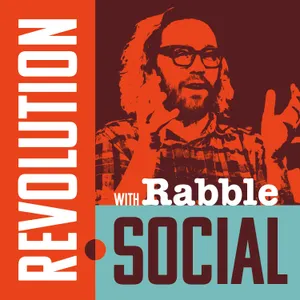
Free Daily Podcast Summary
Revolution.Social: Daily Summaries Delivered
by Rabble a.k.a. Evan Henshaw-Plath
A podcast about the future of social media and reclaiming our digital communities. Revolution.Social is hosted by technologist and community advocate Rabble, a.k.a. Evan Henshaw-Plath — who was Twitter’s first employee and hired Jack Dorsey. In weekly interviews, Rabble will interview thought leaders, technologists, academics, and more about the need for a new social media "bill of rights." Just as the original Bill of Rights protected individual freedoms from government overreach, we need fundamental protections from corporate control and surveillance capitalism. This is the start of a conversation about what developers are building, how they're building it, and what consumers need to be asking for. Guests will include Jack Dorsey (former CEO & co-founder of Twitter); Kara Swisher (host of On with Kara Swisher, co-host of Pivot); Cory Doctorow (science fiction author & former editor of Boing Boing); and Taylor Lorenz (founder of User Mag, host of Power User).
Latest Episodes
The most recent episodes — sign up to get AI-powered summaries of each one.
- Jul 23, 202630 min
What if Social Media Was Good for You? Taylor Lorenz, Reggie COUZ, and Rabble
At VidCon 2026, journalist Taylor Lorenz, sat down with Rabble and creator, Reggie COUZ, to discuss social media’s bad reputation and explore whether it’s possible for social media to actually be good for you. In their chat, they make a case for a different path forward not just for creators, but for anyone who spends time on the internet. Reggie shares the disorienting experience of having his content flagged with no explanation and with no recourse, which Rabble points out is because the social media giants have consolidated all of the power to just a few key players. The conversation covers what podcasting got right,, the difference between using AI as a creative tool and AI slop, and why providing people with ownership of their audiences, and content, is crucial to building a better internet.Show notes:Taylor Lorenz YouTube channel: @TaylorLorenz Reggie COUZ YouTube channel: @ReggieCOUZOfficialFollow Rabble on Bluesky: https://bsky.app/profile/rabble.nzFollow the podcast: https://episodes.fm/1824528874Our executive producer is Alice Chan from Flock Marketing.To learn more about Rabble’s social media bill of rights, and sign up for our newsletter, visit https://revolution.social/
- Jul 16, 202632 min
Learning from Twitter’s Chaos for Divines Comeback!
The tables have turned! In this episode, CEO of VidCon Jim Louderback asks Rabble about his time as Twitter’s first employee, the chaotic rise of social media, and what the future of a decentralized social media world can look like. Rabble talks about what he learned and how he's using those learnings to revive Vine in a way where creators keep ownership of their content, their audience, and their income. He talks about Twitter's early days, why podcasting never fell into the same trap as the rest of internet media, and what Divine is doing to give creators the control they lost.Show notes:Jim Louderback on Twitter: https://x.com/jlouderbFollow Rabble on Bluesky: https://bsky.app/profile/rabble.nzFollow the podcast: https://episodes.fm/1824528874Our executive producer is Alice Chan from Flock Marketing.To learn more about Rabble’s social media bill of rights, and sign up for our newsletter, visit https://revolution.social/
- Jul 9, 20261h 19m
Rebuilding Social Media From Scratch!
What happens when the person who once architected one of social media’s biggest platforms decides it needs to be entirely re-thought?From day one Blaine Cook helped build Twitter creating the @ mention, OAuth, and numerous technologies that still quietly power the internet. Disillusioned by what social media has become, he stepped back to rethink it entirely. In this episode, he chats with Rabble about Twitter's early chaos, the decisions that shaped it, and why he refuses to accept that these platforms can't be changed. Today he’s building a better approach to online community called Roundabout, Blaine explains why he's betting on people to get this right.Show notes:Blaine Cook on Twitter: @blaineBlaine Cook on Bluesky: @blaine.bsky.socialBlaine Cook on Mastodon: @blaine@mastodon.socialRoundabout app: https://joinroundabout.com/New_ Public foundation: https://newpublic.org/Follow Rabble on Bluesky: https://bsky.app/profile/rabble.nzFollow the podcast: https://episodes.fm/1824528874Our executive producer is Alice Chan from Flock Marketing.To learn more about Rabble’s social media bill of rights, and sign up for our newsletter, visit https://revolution.social/
- Jun 25, 20261h 4m
Is the Saudification of America Underway?
From sitting next to Bezos to fighting from outside The Washington Post, Karen Attiah refuses to give up.Karen Attiah went from a grad student cheering on the Arab Spring to The Washington Post’s Global Opinions editor who hired Jamal Khashoggi. When she was fired over benign comments about Charlie Kirk she took to the internet and continued to use her knowledge of technology to speak truth to power. In this episode, she chats with Rabble about how social media brought her to journalism, institutional power, the rise of authoritarianism, and how we could all use a little more fun in our lives. Now teaching, writing, and tweeting on multiple social media platforms of her own, Karen explains why it’s important to keep fighting.Show notes:Karen’s Twitter: @KarenAttiahResistance Summer School: https://www.resistancestudiesseries.com/The Golden Hour Substack: https://karenattiah.substack.com/Follow Rabble on Bluesky: https://bsky.app/profile/rabble.nzFollow the podcast: https://episodes.fm/1824528874This episode was executive produced by Alice Chan from Flock Marketing.To learn more about Rabble’s social media bill of rights, and sign up for our newsletter, visit https://revolution.social/
- Jun 11, 20261h 3m
Vine Was Chaos. That’s Why It Worked.
What happens when you take Larry King’s studio, a crack production team, improv comedy, internet chaos, and the earliest generation of Vine creators?You got Behind The Vine.Eric Artell, the former host of Behind the Vine, joins Rabble for a deep dive into the golden age of Vine, the birth of creator culture, and the internet before every platform became an engagement machine. From interviewing rising Vine stars to witnessing the mental health realities behind online fame, Eric shares stories from one of social media’s weirdest and most influential eras.But most importantly: will we perhaps get a “Behind Divine” sequel? In this episode: 07:39 How “Behind The Vine” captured a generation of creators before influencers became an industry15:35 Why authenticity still beats polished content, even in an algorithm-driven internet23:39 What happened to Vine stars after the app disappeared, and how internet fame changed their lives31:55 Can Divine bring back the creativity and community that made Vine special?33:58 Why audiences connect more deeply with creators who feel human instead of optimized35:47 The missing ingredient in today’s content economy: genuine human connection40:40 The mental health realities creators face behind the pressure of constant visibility46:11 Why social media platforms need stronger protections and healthier spaces for younger users51:34 How Vine went from internet phenomenon to shutdown cautionary tale almost overnight56:29 The future of content creation, creator ownership, and building platforms beyond the algorithmEric’s Instagram: https://www.instagram.com/ericartell/Behind The Vine on YouTube: https://www.youtube.com/channel/UCCauu8QfE8Z4uvkTS2l9vNw NerdHQ helps provide therapy for those who can’t afford it: https://nerdhq.org/ 80-year Harvard mental health study showing that community leads to happier lives: https://news.harvard.edu/gazette/story/2017/04/over-nearly-80-years-harvard-study-has-been-showing-how-to-live-a-healthy-and-happy-life/Learn more about Divine: https://about.divine.video/ And download Divine in the App Store: https://apps.apple.com/us/app/divine-video/id6747959501or Google Play: https://play.google.com/store/apps/details?id=co.openvine.app
- May 28, 202650 min
OG Viner on How the Creator Economy is Broken
He hit a million followers on Vine before “creator” was even a job title. Now Reggie Couz (an OG Viner) sits down with Rabble to answer the question that haunts every creator: Wwhat happens when the platform you built your career on decides it doesn’t need you anymore?From mustaches and wigs in his mom’s New Jersey house to Vine Meetups in LA, Reggie traces how he became an internet star and why he’s now leaning in on decentralization and the revival of 6-second looping videos on Divine. It’s a conversation about creativity, community, ownership, and refusing to keep renting your own followers back from Big Tech.In this episodeChapters4:05 How Reggie talked his mom into taking a “gap year” that became his life to chase six-second fame—and hit a million followers before that year was up11:11 Why Vine was six seconds (hint: it was a phone limitation, not a creative choice)12:22 The secret history of how platforms actually get built—Twitter from protest text messages, Instagram from an abandoned check-in game, Vine from “what can we do with video?”15:38 The Hollywood actors’ union as a blueprint for creator solidarity24:09 Divine: rebuilding Vine on an open, decentralized protocol where you own your identity, your audience, and your work26:45 What “enshittification” really means, and why creators are the value platforms keep extracting41:43 What social media should look like in 2026 — and how to “just get weird again”
- May 14, 20261h 15m
How Social Media Platforms Use Regulation To Stifle Competition
Are we regulating the wrong tech problems? Many opponents of Big Tech cheered recent lawsuits that found Meta and YouTube liable for violating consumer protection laws and designing their products to addict kids and teens. But in the battle over user safety, is free expression going to end up as a casualty? In this episode of Revolution.Social, Rabble (Twitter’s first employee) sits down with two influential voices in digital media: Mike McCue (CEO of Flipboard) and Mike Masnick (Founder of Techdirt). McCue and Masnick explain why social media regulations could have unintended consequences. Masnick cites a 2016 carveout to Section 230 of America's Communications Decency Act, known as FOSTA-SESTA, that was supposed to crack down on online sex trafficking. In reality, it made it harder for police to track down sex traffickers, and pushed sex workers into taking more dangerous offline work. Today on the podcast: - Why is Section 230 — which provides limited immunity to online platforms for content posted by their users — the most misunderstood law on the internet? - Could regulations aimed at punishing Meta actually kill off its competitors? - And should governments be responsible for checking the power of AI giants? Plus: Why the right to exit has prevented Gmail from becoming "enshittified." Chapters: 0:00 Introduction 2:45 Section 230 and Regulatory Moats 7:10 The History of Moral Panics and Technology 10:25 From AOL Centralization to the Open Web 15:26 The Hidden Costs of Losing Section 230 22:17 GDPR and Unintended Consequences 27:36 Lessons from the Meta Privacy and Safety Trials 33:24 Internal Research Is Not a Scandal 38:22 How Content Moderation Gets Weaponized 45:31 The Case for Profile Portability 53:21 Regulating Incentives vs. Mandates 1:03:56 AI Regulation and the Risk of New Walled Gardens 1:10:38 Replicating the Open Web's Success Flipboard Techdirt Follow Rabble on Bluesky Follow the podcast This episode was produced and edited by Eric Johnson from LightningPod.fm. Alice Chan, Flock Marketing, is our exec producer. To learn more about Rabble’s Social Media Bill of Rights, and sign up for our newsletter, visit https://revolution.social/
- Apr 30, 202657 min
Can We Bring Vine Back From the Dead?
Is 2026 the new 2016? Back then, we didn't know that Facebook could win or lose elections, and become weaponized, that Gamergate-style harassment would take over politics, or that we were about to lose the creative, absurd, and sometimes brilliant short-form video platform Vine. Here's the good news: We're going to try to recapture the magic of Vine. Rabble’s new app, Divine, is available now at Divine.video and the links below. To celebrate Divine's launch, we brought back two of our favorite podcast guests: journalist & founder of User Mag, Taylor Lorenz; and the host of the podcast "There Are No Girls on the Internet," Bridget Todd. They talk with Rabble about the rise of Vine, why it failed as a business and got shut down by Twitter, and how that rise & fall rippled throughout the creator economy. Taylor & Bridget have spent years documenting the evolution of social platforms from the inside out, and Rabble adds some behind the scenes color about the big brains and egos at Twitter. They also talk about what makes Divine different from Vine and existing apps like TikTok and Snapchat. Here's to a joyful, creative, open internet. Join us on Divine! The link to download the app is below. Download the app: App Store Google Play ZapStore Chapters: 00:00 Introduction 01:42 The Rise and Impact of Vine 04:05 Simplicity and the Outward-Facing Camera 07:02 Evolution of the Proto-Influencer 11:27 Black Culture and Subverting Power Dynamics 15:08 Curation vs Algorithmic Feeds 20:21 Why Vine Collapsed 23:27 The Culture Gap Between Tech and Creators 28:13 Competition and the Birth of TikTok 33:14 Hope and the Future of Social Media 38:42 Decentralization and User Control 50:26 Bridging Humanity and Technology Taylor’s Substack, User Mag Her podcast, “Power User” Bridget’s Instagram Her podcast, “There Are No Girls on the Internet” Follow Rabble on Bluesky Follow the podcast This episode was produced and edited by Eric Johnson from LightningPod.fm, and executive produced by Alice Chan from Flock Marketing. To learn more about Rabble’s Social Media Bill of Rights, and sign up for our newsletter, visit https://revolution.social/
Get Revolution.Social summaries in your inbox
Free AI-powered daily recaps. Key takeaways, quotes, and mentions — in a 5-minute read.
Get Free Summaries →Free forever for up to 3 podcasts. No credit card required.
You Might Also Like
Listeners also like.
Taylor Lorenz’s Power User
Examines how technology and internet culture reshape society, fame, and free speech through weekly deep dives and policy discussions.
What Future with Joshua Topolsky
Explores modern culture through reflective monologues and eclectic conversations with thinkers, experts, and outliers.

Solutions with Henry Blodget
Henry Blodget interviews experts in business, tech, and politics about practical solutions for building a better future.

Tech Won't Save Us
A critical look at the tech industry’s influence on society and the political consequences of its promises.

On with Kara Swisher
Kara Swisher conducts candid, in-depth interviews with influential figures in tech, business, media, and politics.
There Are No Girls on the Internet
Bridget Todd documents how marginalized communities have influenced and shaped internet culture from its early days.
Terms of Service with Clare Duffy
Explains emerging technologies like AI and social media algorithms in accessible terms and explores their impact on daily life.

More or Less
Four tech insiders with deep experience at major Silicon Valley companies and startups discuss the industry's biggest trends and debates.
Uncanny Valley | WIRED
A weekly look at Silicon Valley’s tech, power, and influence through interviews and insider reporting from WIRED journalists.

Pivot
Sharp, unfiltered analysis of tech, business, and politics with bold predictions and lively debate.

The Kevin Rose Show
Conversations with experts in tech, science, and performance to uncover unconventional wisdom for personal and professional growth.

The AI XR Podcast.
Industry insiders interview top founders and executives on AI, spatial computing, VR/AR, and synthetic media.
About Revolution.Social
A podcast about the future of social media and reclaiming our digital communities. Revolution.Social is hosted by technologist and community advocate Rabble, a.k.a. Evan Henshaw-Plath — who was Twitter’s first employee and hired Jack Dorsey. In weekly interviews, Rabble will interview thought leaders, technologists, academics, and more about the need for a new social media "bill of rights." Just as the original Bill of Rights protected individual freedoms from government overreach, we need fundamental protections from corporate control and surveillance capitalism. This is the start of a conversation about what developers are building, how they're building it, and what consumers need to be asking for. Guests will include Jack Dorsey (former CEO & co-founder of Twitter); Kara Swisher (host of On with Kara Swisher, co-host of Pivot); Cory Doctorow (science fiction author & former editor of Boing Boing); and Taylor Lorenz (founder of User Mag, host of Power User).
Customized Recaps
AI-powered recaps with compact key takeaways, quotes, and insights.
Straight to Your Inbox
Get key takeaways from Revolution.Social in a 5-minute read.
Save Hours Every Week
Stay current on your favorite podcasts without falling behind.
Frequently Asked Questions
What is Podzilla's Revolution.Social daily summary?
It's a free AI-powered email that summarizes new episodes of Revolution.Social as soon as they're published. You get the key takeaways, notable quotes, and links & mentions — all in a quick read.
How does the Revolution.Social podcast summary work?
When a new episode drops, our AI transcribes and analyzes it, then generates a personalized summary tailored to your interests and profession. It's delivered to your inbox every morning.
Is this an official Revolution.Social product?
No. Podzilla is an independent service that summarizes publicly available podcast content. We're not affiliated with or endorsed by Rabble a.k.a. Evan Henshaw-Plath.
Can I get summaries of other podcasts too?
Absolutely! The free plan covers up to 3 podcasts. Upgrade to Pro for 15, or Premium for 50. Browse our full catalog at /podcasts.
How often does Revolution.Social release new episodes?
Revolution.Social publishes weekly. Our AI generates a summary within hours of each new episode.
What topics does Revolution.Social cover?
Revolution.Social covers topics including News, Technology, Business, Politics. Our AI identifies the specific themes in each episode and highlights what matters most to you.
Start getting Revolution.Social summaries tomorrow morning.
Free forever for up to 3 podcasts. No credit card required.
Free forever for up to 3 podcasts. No credit card required.