Free Daily Podcast Summary
Odessa: Daily Summaries Delivered
by The New York Times
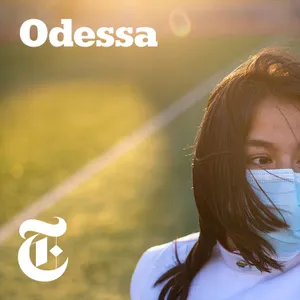
A failing school system. An oil bust. A marching band determined to keep playing through a pandemic. This is the story of one Texas high school in crisis — and trying to reopen its doors. Subscribe today at nytimes.com/podcasts or on Apple Podcasts and Spotify. You can also subscribe via your favorite podcast app here https://www.nytimes.com/activate-access/audio?source=podcatcher. For more podcasts and narrated articles, download The New York Times app at nytimes.com/app.
Latest Episodes
The most recent episodes — sign up to get AI-powered summaries of each one.
- Apr 30, 202142 min
Part 4: Wellness Check
This episode contains references to mental health challenges, including eating disorders.Joanna Lopez, the high school senior we met in our first episode of Odessa, has turned inward: staying in her bedroom, ghosting friends and avoiding band practice. But playing with the marching band at the last football game of her high-school career offers a moment of hope that maybe, one day, things will get better.In the finale of our four-part series, we listen as the public health crisis becomes a mental health crisis in Odessa. Subscribe today at nytimes.com/podcasts or on Apple Podcasts, Spotify and Amazon Music. You can also subscribe via your favorite podcast app here https://www.nytimes.com/activate-access/audio?source=podcatcher. For more podcasts and narrated articles, download The New York Times app at nytimes.com/app. Hosted by Simplecast, an AdsWizz company. See pcm.adswizz.com for information about our collection and use of personal data for advertising.
- Apr 9, 202136 min
Part 3: The Band Bus Quarantine
Last fall, as Odessa High School brought some students back to campus with hybrid instruction, school officials insisted mask wearing, social distancing and campus contact tracing would keep students and faculty safe. And at the beginning of the semester, things seemed to be going OK. But then a spike in coronavirus cases hit town, putting the school’s safety plan to the test. In part three of our four-part series, we follow what happened when a student quarantine stretched the school’s nurses to capacity, fractured friendships and forced some marching band members to miss a critical rite of passage: the last football game of their high school career. Subscribe today at nytimes.com/podcasts or on Apple Podcasts, Spotify and Amazon Music. You can also subscribe via your favorite podcast app here https://www.nytimes.com/activate-access/audio?source=podcatcher. For more podcasts and narrated articles, download The New York Times app at nytimes.com/app. Hosted by Simplecast, an AdsWizz company. See pcm.adswizz.com for information about our collection and use of personal data for advertising.
- Mar 12, 202143 min
Part 2: Friday Night Lights
In 1988, a high school football team in Odessa, Texas, was so good that it became the inspiration for a book, movie and, eventually, the television series “Friday Night Lights.” And in the decades since, as West Texas has weathered the unsettling undulations of the oil industry, football has remained steady. So after the pandemic hit, the town did what it could to make sure the season wasn’t disrupted. And at Odessa High School, where the football team struggles to compete against local rivals, the members of their award winning marching band were relieved they could keep playing. In Part 2 of Odessa, we follow what happened when the season opened — and how the school weighed the decision to start against the possible risks to students’ physical and mental health. Subscribe today at nytimes.com/podcasts or on Apple Podcasts, Spotify and Amazon Music. You can also subscribe via your favorite podcast app here https://www.nytimes.com/activate-access/audio?source=podcatcher. For more podcasts and narrated articles, download The New York Times app at nytimes.com/app. Hosted by Simplecast, an AdsWizz company. See pcm.adswizz.com for information about our collection and use of personal data for advertising.
- Feb 26, 202138 min
Part 1: The School Year Begins
Odessa is a four-part audio documentary series about one West Texas high school reopening during the pandemic — and the teachers, students and nurses affected in the process.For the past six months, The New York Times has documented students’ return to class at Odessa High School from afar through Google hangouts, audio diaries, phone calls and FaceTime tours. And as the country continues to debate how best to reopen schools, Odessa is the story of what happened in a school district that was among those that went first. Subscribe today at nytimes.com/podcasts or on Apple Podcasts, Spotify and Amazon Music. You can also subscribe via your favorite podcast app here https://www.nytimes.com/activate-access/audio?source=podcatcher. For more podcasts and narrated articles, download The New York Times app at nytimes.com/app. Hosted by Simplecast, an AdsWizz company. See pcm.adswizz.com for information about our collection and use of personal data for advertising.
Get Odessa summaries in your inbox
Free AI-powered daily recaps. Key takeaways, quotes, and mentions — in a 5-minute read.
Get Free Summaries →Free forever for up to 3 podcasts. No credit card required.
You Might Also Like
Listeners also like.

The Daily
A daily news podcast covering major global stories with in-depth reporting from The New York Times.
Interesting Times
Explores global shifts and emerging trends through interviews and analysis on the evolving world order.

Nice White Parents
Examines how white parents’ choices and privileges have shaped the trajectory of American public education.

The Headlines
A daily news podcast offering global headlines and analysis from New York Times reporters.

Matter of Opinion
New York Times Opinion

Popcast
A weekly discussion on pop culture featuring interviews and analysis from New York Times critics Jon Caramanica and Joe Coscarelli.

Cannonball with Wesley Morris
Critic Wesley Morris explores cultural moments with writers and artists through personal, nuanced conversations.

The Book Review
Top authors and critics discuss the week’s most notable books and literary news with The New York Times Book Review.

Boomtown
A journalist follows the lives of people caught up in a West Texas oil boom, from billionaires to laborers, and its impact on the planet.

The Opinions
Analysis and commentary on current news events, released twice weekly.

Animal
A writer travels the world exploring human connections with animals through intimate encounters and philosophical reflection.
The Kids of Rutherford County
A Tennessee county jailed hundreds of children illegally over a decade, and two lawyers work to stop it.
About Odessa
A failing school system. An oil bust. A marching band determined to keep playing through a pandemic. This is the story of one Texas high school in crisis — and trying to reopen its doors. Subscribe today at nytimes.com/podcasts or on Apple Podcasts and Spotify. You can also subscribe via your favorite podcast app here https://www.nytimes.com/activate-access/audio?source=podcatcher. For more podcasts and narrated articles, download The New York Times app at nytimes.com/app.
Customized Recaps
AI-powered recaps with compact key takeaways, quotes, and insights.
Straight to Your Inbox
Get key takeaways from Odessa in a 5-minute read.
Save Hours Every Week
Stay current on your favorite podcasts without falling behind.
Frequently Asked Questions
What is Podzilla's Odessa daily summary?
It's a free AI-powered email that summarizes new episodes of Odessa as soon as they're published. You get the key takeaways, notable quotes, and links & mentions — all in a quick read.
How does the Odessa podcast summary work?
When a new episode drops, our AI transcribes and analyzes it, then generates a personalized summary tailored to your interests and profession. It's delivered to your inbox every morning.
Is this an official Odessa product?
No. Podzilla is an independent service that summarizes publicly available podcast content. We're not affiliated with or endorsed by The New York Times.
Can I get summaries of other podcasts too?
Absolutely! The free plan covers up to 3 podcasts, any in the catalog. Basic raises that to 15, Pro to 40 and Max to 100. Browse our full catalog at /podcasts.
What topics does Odessa cover?
Odessa covers topics including Education, Documentary, Culture, Society & Culture. Our AI identifies the specific themes in each episode and highlights what matters most to you.
Start getting Odessa summaries tomorrow morning.
Free forever for up to 3 podcasts. No credit card required.
Free forever for up to 3 podcasts. No credit card required.