Free Daily Podcast Summary
Nice White Parents: Daily Summaries Delivered
by Serial Productions & The New York Times
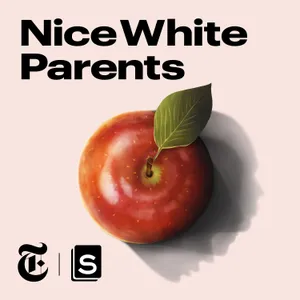
If you want to understand what’s wrong with our public schools, you have to look at what is arguably the most powerful force in shaping them: white parents. A five-part series from the makers of Serial and The New York Times. Hosted by Chana Joffe-Walt.
Latest Episodes
The most recent episodes — sign up to get AI-powered summaries of each one.
- Feb 25, 20224 min
The Trojan Horse Affair - Trailer
A mysterious letter detailing a supposed Islamist plot to take over schools shocked Britain in 2014. But who wrote it? From Serial Productions and The New York Times, “The Trojan Horse Affair,” an investigation that became bigger than we ever imagined. All eight parts are available now, wherever you get your podcasts. Subscribe today at nytimes.com/podcasts or on Apple Podcasts and Spotify. You can also subscribe via your favorite podcast app here https://www.nytimes.com/activate-access/audio?source=podcatcher. For more podcasts and narrated articles, download The New York Times app at nytimes.com/app. To find out about new shows from Serial Productions, and get a look behind the scenes, sign up for our newsletter at nytimes.com/serialnewsletter. Have a story pitch, a tip, or feedback on our shows? Email us at serialshows@nytimes.com
- Aug 20, 202052 min
5: ‘We Know It When We See It’
This episode contains strong language.Chana has traced the history of the school from its founding and come to the present. But now: One unexpected last chapter. Last year, the school district for BHS mandated a change in the zoning process to ensure all of middle schools will be racially integrated. No longer can white families hoard resources in a few select schools. Black and Latino parents have been demanding this change since the late 1950s. The courts have mandated it. Chana asks: How did this happen? And is this a blueprint for real, systemic change? Subscribe today at nytimes.com/podcasts or on Apple Podcasts and Spotify. You can also subscribe via your favorite podcast app here https://www.nytimes.com/activate-access/audio?source=podcatcher. For more podcasts and narrated articles, download The New York Times app at nytimes.com/app.To find out about new shows from Serial Productions, and get a look behind the scenes, sign up for our newsletter at nytimes.com/serialnewsletter.Have a story pitch, a tip, or feedback on our shows? Email us at serialshows@nytimes.com
- Aug 13, 202048 min
4: 'Here’s Another Fun Thing You Can Do'
Public schools are inequitable because the school systems are maniacally loyal to white families. We can’t have equitable public education unless schools limit the disproportionate power of white parents. But is that even possible? Chana finds two schools that are trying to do just that, and both are actually inside the 293 building. One is downstairs in the basement, where a charter school called Success Academy opened about 7 years ago. The other is upstairs at BHS, the newly renamed SIS. Subscribe today at nytimes.com/podcasts or on Apple Podcasts and Spotify. You can also subscribe via your favorite podcast app here https://www.nytimes.com/activate-access/audio?source=podcatcher. For more podcasts and narrated articles, download The New York Times app at nytimes.com/app.To find out about new shows from Serial Productions, and get a look behind the scenes, sign up for our newsletter at nytimes.com/serialnewsletter.Have a story pitch, a tip, or feedback on our shows? Email us at serialshows@nytimes.com
- Aug 6, 202045 min
3: ‘This Is Our School, How Dare You?’
Chana Joffe-Walt explores how white parents can shape a school — even when they aren’t there.She traces the history of I.S. 293, now the Boerum Hill School for International Studies, from the 1980s through the modern education reforms of the 2000s. In the process, Chana talks to alumni who loved their school and never questioned why it was on the edge of a white neighborhood. To them, it was just where everyone went. But she also speaks to some who watched the school change over the years and questioned whether a local community school board was secretly plotting against 293. Subscribe today at nytimes.com/podcasts or on Apple Podcasts and Spotify. You can also subscribe via your favorite podcast app here https://www.nytimes.com/activate-access/audio?source=podcatcher. For more podcasts and narrated articles, download The New York Times app at nytimes.com/app.To find out about new shows from Serial Productions, and get a look behind the scenes, sign up for our newsletter at nytimes.com/serialnewsletter.Have a story pitch, a tip, or feedback on our shows? Email us at serialshows@nytimes.com
- Jul 30, 202051 min
2: 'I Still Believe in It'
Chana Joffe-Walt searches the New York City Board of Education archives for more information about the School for International Studies, which was originally called I.S. 293.In the process, she finds a folder of letters written in 1963 by mostly white families in Cobble Hill, Brooklyn. They are asking for the board to change the proposed construction of the school to a site where it would be more likely to be racially integrated.It’s less than a decade after Brown v. Board of Education, amid a growing civil rights movement, and the white parents writing letters are emphatic that they want an integrated school. They get their way and the school site changes — but after that, nothing else goes as planned. Subscribe today at nytimes.com/podcasts or on Apple Podcasts and Spotify. You can also subscribe via your favorite podcast app here https://www.nytimes.com/activate-access/audio?source=podcatcher. For more podcasts and narrated articles, download The New York Times app at nytimes.com/app.To find out about new shows from Serial Productions, and get a look behind the scenes, sign up for our newsletter at nytimes.com/serialnewsletter.Have a story pitch, a tip, or feedback on our shows? Email us at serialshows@nytimes.com
- Jul 30, 20201h 2m
1: The Book of Statuses
It’s 2015 and one Brooklyn middle school is about to receive a huge influx of new students.In this episode, Chana Joffe-Walt, a reporter, follows what happens when the School of International Studies’ 6th grade class swells from 30 mostly Latino, Black and Middle Eastern students, to 103 — an influx almost entirely driven by white families.Everyone wants “what’s best for the school” but it becomes clear that they don’t share the same vision of what “best” means. Subscribe today at nytimes.com/podcasts or on Apple Podcasts and Spotify. You can also subscribe via your favorite podcast app here https://www.nytimes.com/activate-access/audio?source=podcatcher. For more podcasts and narrated articles, download The New York Times app at nytimes.com/app.To find out about new shows from Serial Productions, and get a look behind the scenes, sign up for our newsletter at nytimes.com/serialnewsletter.Have a story pitch, a tip, or feedback on our shows? Email us at serialshows@nytimes.com
- Jul 17, 20202 min
Introducing: Nice White Parents
If you want to understand what’s wrong with our public schools, you have to look at what is arguably the most powerful force in shaping them: White parents. A five-part series from Serial Productions, a New York Times Company. Hosted by Chana Joffe-Walt.For more information about this show, visit nytimes.com/nicewhiteparents Subscribe today at nytimes.com/podcasts or on Apple Podcasts and Spotify. You can also subscribe via your favorite podcast app here https://www.nytimes.com/activate-access/audio?source=podcatcher. For more podcasts and narrated articles, download The New York Times app at nytimes.com/app.To find out about new shows from Serial Productions, and get a look behind the scenes, sign up for our newsletter at nytimes.com/serialnewsletter.Have a story pitch, a tip, or feedback on our shows? Email us at serialshows@nytimes.com
Get Nice White Parents summaries in your inbox
Free AI-powered daily recaps. Key takeaways, quotes, and mentions — in a 5-minute read.
Get Free Summaries →Free forever for up to 3 podcasts. No credit card required.
You Might Also Like
Listeners also like.
The Kids of Rutherford County
A Tennessee county jailed hundreds of children illegally over a decade, and two lawyers work to stop it.

Serial
A true crime podcast that investigates a single case over multiple episodes with deep reporting and narrative storytelling.
S-Town
A man in rural Alabama asks a journalist to investigate a rumored murder, leading to a deeper exploration of secrets, treasure, and his own life.

The Improvement Association
A reporter investigates persistent election fraud allegations in rural North Carolina and the group at the center of the controversy.

The Daily
A daily news podcast covering major global stories with in-depth reporting from The New York Times.
Raising Parents with Emily Oster
An economist examines data-driven approaches to modern parenting challenges, from child independence to teen mental health.

Two Parents & A Podcast
Two parents navigate raising kids, building a relationship, and tackling topics from entrepreneurship to dental industry critiques.

Cannonball with Wesley Morris
Critic Wesley Morris explores cultural moments with writers and artists through personal, nuanced conversations.

The Coldest Case In Laramie
A reporter investigates a decades-old murder in her Wyoming hometown after a former police officer is arrested.

Rabbit Hole
An exploration of how the internet shapes human behavior, society, and identity through investigative storytelling.

Interesting Times
Explores global shifts and emerging trends through interviews and analysis on the evolving world order.

Modern Love
Real people share intimate stories of love, heartbreak, and relationships, drawn from The New York Times column.
About Nice White Parents
If you want to understand what’s wrong with our public schools, you have to look at what is arguably the most powerful force in shaping them: white parents. A five-part series from the makers of Serial and The New York Times. Hosted by Chana Joffe-Walt.
Customized Recaps
AI-powered recaps with compact key takeaways, quotes, and insights.
Straight to Your Inbox
Get key takeaways from Nice White Parents in a 5-minute read.
Save Hours Every Week
Stay current on your favorite podcasts without falling behind.
Frequently Asked Questions
What is Podzilla's Nice White Parents daily summary?
It's a free AI-powered email that summarizes new episodes of Nice White Parents as soon as they're published. You get the key takeaways, notable quotes, and links & mentions — all in a quick read.
How does the Nice White Parents podcast summary work?
When a new episode drops, our AI transcribes and analyzes it, then generates a personalized summary tailored to your interests and profession. It's delivered to your inbox every morning.
Is this an official Nice White Parents product?
No. Podzilla is an independent service that summarizes publicly available podcast content. We're not affiliated with or endorsed by Serial Productions & The New York Times.
Can I get summaries of other podcasts too?
Absolutely! The free plan covers up to 3 podcasts. Upgrade to Pro for 15, or Premium for 50. Browse our full catalog at /podcasts.
What topics does Nice White Parents cover?
Nice White Parents covers topics including Education, Culture, Society & Culture. Our AI identifies the specific themes in each episode and highlights what matters most to you.
Start getting Nice White Parents summaries tomorrow morning.
Free forever for up to 3 podcasts. No credit card required.
Free forever for up to 3 podcasts. No credit card required.