Free Daily Podcast Summary
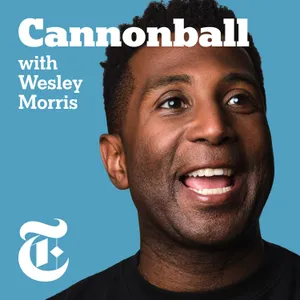
Cannonball with Wesley Morris: Daily Summaries Delivered
by The New York Times
Conversations about the culture that moves us – the good, the bad and whatever’s in between. Every week, critic Wesley Morris talks with writers and artists about the moment we’re in. Surprisingly personal and never obvious.
Latest Episodes
The most recent episodes — sign up to get AI-powered summaries of each one.
- 3 days ago45 min
Who Keeps On Choosin’ Texas?
Singer-songwriter Ella Langley’s country tune “Choosin’ Texas” entered the Billboard Hot 100 chart last November, and it hasn’t left. It’s just tied the record for the most nonconsecutive weeks at No. 1: 22 . (Sorry, Mariah Carey.)Wesley Morris is a student of the chart and he’s noticed that in recent years certain songs seem to hang around for a long, long time. These chart toppers are starting to feel more like chart cloggers. Why is this happening?His curiosity cannot be contained for another week. So he’s going to Chris Molanphy, a pop music critic and the host of Slate’s “Hit Parade” podcast, for answers. Together, they recall chart trends, think about Billboard’s tracking metrics, and consider what kind of choice “Choosin’ Texas” is. Subscribe today at nytimes.com/podcasts or on Apple Podcasts, Spotify and Amazon Music. You can also subscribe via your favorite podcast app here https://www.nytimes.com/activate-access/audio?source=podcatcher. Hosted by Simplecast, an AdsWizz company. See pcm.adswizz.com for information about our collection and use of personal data for advertising.
- 1 weeks ago50 min
How 9/11 Changed Comedy
It has been 25 years since the attacks on Sept. 11, 2001, and Wesley has been reflecting on what has changed since then — particularly when it comes to comedy.The first film he saw in theaters after the attacks was “Zoolander,” which opened to mediocre box office numbers and mixed reviews. The movie became a flashpoint as the world wrestled with questions about what was funny and when it would be OK to be funny again. And that uncertainty about what American comedy is, whom it’s aimed at and whether it can be therapeutic may never have gone away.This week, The Times’s comedy critic, Jason Zinoman, sits down with Wesley to remember the debates about comedy in the aftermath of the attacks, and to think through how that period changed the art form in ways that we’re still experiencing today. Subscribe today at nytimes.com/podcasts or on Apple Podcasts and Spotify. You can also subscribe via your favorite podcast app here https://www.nytimes.com/activate-access/audio?source=podcatcher. Hosted by Simplecast, an AdsWizz company. See pcm.adswizz.com for information about our collection and use of personal data for advertising.
- 3 weeks ago46 min
Take Me Back to the Summer of ’86
This year’s summer movie season proved that the “Toy Story” franchise still has some juice, that “The Odyssey” can spark endless debates, and that “The Invite” might be the sleeper film of the year. But according to Wesley Morris, we’re still in a summer movie drought. He can’t help himself! His nostalgia for the movies of summers past is as strong as it was last year. So, once again, Wesley invites Sam Anderson, staff writer for The New York Times Magazine, to go back in time. This week, they travel to 1986, where the multiplex marquee reads: “Ruthless People” and “Ferris Bueller’s Day Off.” Subscribe today at nytimes.com/podcasts or on Apple Podcasts and Spotify. You can also subscribe via your favorite podcast app here https://www.nytimes.com/activate-access/audio?source=podcatcher. Hosted by Simplecast, an AdsWizz company. See pcm.adswizz.com for information about our collection and use of personal data for advertising.
- Aug 20, 202651 min
Caught Up in the Rapture of Anita Baker
Anita Baker’s second album, “Rapture,” was released in 1986 and became a breakout hit for the R & B singer from Detroit, winning two Grammys and selling eight million copies worldwide. The album’s eight tracks defined her signature sound — what Baker liked to call “fireside love songs with jazz overtones” — and solidified her as a giant of the Quiet Storm radio era. But while the singer went on to produce four more albums, most notably her follow-up, “Giving You the Best That I Got,” in 1988, she hasn’t maintained the mainstream presence of her “Rapture” years. Today, Wesley wonders: Is Baker underrated, properly rated, or just kind of … forgotten? He brings these questions to Danyel Smith, former editor at Billboard and editor in chief of Vibe Magazine. Together, they luxuriate in Anita Baker’s “Rapture” while wrestling with her legacy. Subscribe today at nytimes.com/podcasts or on Apple Podcasts and Spotify. You can also subscribe via your favorite podcast app here https://www.nytimes.com/activate-access/audio?source=podcatcher. Hosted by Simplecast, an AdsWizz company. See pcm.adswizz.com for information about our collection and use of personal data for advertising.
- Aug 13, 202646 min
The Bicentennial Was Better!
What did we get for our country’s 250th birthday, a.k.a. the semi-quincentennial? An Ultimate Fighting Championship cage match on the White House lawn? A sparsely attended Great American State Fair? An underwhelming logo? The last time we had an anniversary this massive, it was 1976 — the bicentennial — and the celebration was everywhere: in our movies, in our books, in our Saturday morning cartoons. What happened this year? Wesley Morris is perplexed. Jennifer Schuessler, a Times reporter who covers intellectual life and ideas, has talked to state planners and historians alike, and attended semi-quincentennial events across the country. Together, she and Wesley mull over the circumstances that led this year’s birthday bash to fall flat, and they celebrate the bicentennial gifts that keep on giving, 50 years later. Subscribe today at nytimes.com/podcasts or on Apple Podcasts and Spotify. You can also subscribe via your favorite podcast app here https://www.nytimes.com/activate-access/audio?source=podcatcher. Hosted by Simplecast, an AdsWizz company. See pcm.adswizz.com for information about our collection and use of personal data for advertising.
- Aug 6, 202649 min
Madonna Returns as Queen of the Club
When Madonna’s new album, “Confessions II,” dropped in early July, it went straight to the top of the Billboard 200 (her 10th No. 1 album). Many of the 16 tracks plumb her own history for lessons learned along the way. On “Bizarre,” the blue Shelby Cobra she gave her first husband, Sean Penn, “wasn’t meant to last.” On “The Test,” she tells her daughter Lola Leon, with whom she sings: “I wish I knew the pain I’ve caused.” And on “Danceteria,” she takes us to the New York City clubs of the 1980s and the moment when a D.J. “played my tape ‘Everybody’ ” and launched her career. Wesley Morris describes the album as “post-nostalgia,” with Madonna using an idea of her past as a slingshot into some kind of future. “Confessions II” is also a dance record that reminds us of the impact she has had on club culture and gay culture. Wesley sits down with one of the biggest Madonna fans he knows — Jacob Bernstein, a writer for The Times’s Styles section and a former club kid in New York City — to talk about her new record and the immense influence Madonna has had on their lives. Subscribe today at nytimes.com/podcasts or on Apple Podcasts and Spotify. You can also subscribe via your favorite podcast app here https://www.nytimes.com/activate-access/audio?source=podcatcher. Hosted by Simplecast, an AdsWizz company. See pcm.adswizz.com for information about our collection and use of personal data for advertising.
- Jul 23, 202651 min
Nolan’s Been Making ‘The Odyssey’ All Along
If you haven’t seen Christopher Nolan’s “The Odyssey” yet, good luck. The hit of the summer is selling out showtimes around the country. Wesley Morris initially thought he didn’t need this adaptation. Then, Matt Damon was cast as Odysseus. Curiosity piqued. Fast forward to him in a packed theater (IMAX 70mm, of course) excited by the prospect of an old-fashioned all-star-cast movie. But with Nolan’s filmmaking, it’s never that simple. There’s a lot going on within the nearly three-hour epic that’s fascinated moviegoers and critics alike. And so, whenever there’s a big movie that everybody is talking about, Wesley wants to hear from his pal, Sean Fennessey. Fennessey is head of content at The Ringer and a co-host of the podcast “The Big Picture.” Together, Wesley and Sean go deep on the “The Odyssey” and the evolution of Nolan’s career. Subscribe today at nytimes.com/podcasts or on Apple Podcasts and Spotify. You can also subscribe via your favorite podcast app here https://www.nytimes.com/activate-access/audio?source=podcatcher. Hosted by Simplecast, an AdsWizz company. See pcm.adswizz.com for information about our collection and use of personal data for advertising.
- Jul 16, 202646 min
The World Cup Is This Summer’s Blockbuster
After five weeks of action, the World Cup is finally coming to an end, a tournament that will be remembered as much for its feats of athleticism — the precision passes and laserlike goals — as for the passionate fans and spirited team rivalries. No wonder soccer is called the beautiful game. Wesley and his guest, Pablo Torre, host of the podcast “Pablo Torre Finds Out,” also see the action on the pitch as something more: pure cinema. They tick down a list of reasons the matches — and the culture surrounding them — are theatrical. Cue the lights, the cameras and the Viking score. These games have proved more than ready for their Oscar-worthy close-up. Don’t forget the pomade! Subscribe today at nytimes.com/podcasts or on Apple Podcasts and Spotify. You can also subscribe via your favorite podcast app here https://www.nytimes.com/activate-access/audio?source=podcatcher. Hosted by Simplecast, an AdsWizz company. See pcm.adswizz.com for information about our collection and use of personal data for advertising.
Get Cannonball with Wesley Morris summaries in your inbox
Free AI-powered daily recaps. Key takeaways, quotes, and mentions — in a 5-minute read.
Get Free Summaries →Free forever for up to 3 podcasts. No credit card required.
You Might Also Like
Listeners also like.

Popcast
A weekly look at the latest in pop music, featuring criticism, interviews, and cultural trends from New York Times journalists.
The Book Review
Top authors and critics discuss the week’s most notable books and literary news with The New York Times Book Review.

The Daily
A daily news podcast covering major global stories with in-depth reporting from The New York Times.
The Interview
In-depth interviews with influential figures across culture, politics, business, and sports exploring their motivations and impact.
Modern Love
Real people share intimate stories of love, heartbreak, and relationships, drawn from The New York Times column.
Interesting Times
Explores global shifts and emerging trends through interviews and analysis on the evolving world order.

Rabbit Hole
An exploration of how the internet shapes human behavior, society, and identity through investigative storytelling.

The Headlines
A daily news podcast offering global headlines and analysis from New York Times reporters.

The Ezra Klein Show
Conversations on pressing political, social, and cultural issues with experts and thinkers.
The Wirecutter Show
A practical guide to choosing everyday products, based on expert testing and real-world use.
The Press Box
A roundtable discussion of major media stories with a focus on sports, politics, and cultural news.
Animal
A writer travels the world exploring human connections with animals through intimate encounters and philosophical reflection.
About Cannonball with Wesley Morris
Conversations about the culture that moves us – the good, the bad and whatever’s in between. Every week, critic Wesley Morris talks with writers and artists about the moment we’re in. Surprisingly personal and never obvious.
Customized Recaps
AI-powered recaps with compact key takeaways, quotes, and insights.
Straight to Your Inbox
Get key takeaways from Cannonball with Wesley Morris in a 5-minute read.
Save Hours Every Week
Stay current on your favorite podcasts without falling behind.
Frequently Asked Questions
What is Podzilla's Cannonball with Wesley Morris daily summary?
It's a free AI-powered email that summarizes new episodes of Cannonball with Wesley Morris as soon as they're published. You get the key takeaways, notable quotes, and links & mentions — all in a quick read.
How does the Cannonball with Wesley Morris podcast summary work?
When a new episode drops, our AI transcribes and analyzes it, then generates a personalized summary tailored to your interests and profession. It's delivered to your inbox every morning.
Is this an official Cannonball with Wesley Morris product?
No. Podzilla is an independent service that summarizes publicly available podcast content. We're not affiliated with or endorsed by The New York Times.
Can I get summaries of other podcasts too?
Absolutely! The free plan covers up to 3 podcasts. Upgrade to Pro for 15, or Premium for 50. Browse our full catalog at /podcasts.
How often does Cannonball with Wesley Morris release new episodes?
Cannonball with Wesley Morris publishes weekly. Our AI generates a summary within hours of each new episode.
What topics does Cannonball with Wesley Morris cover?
Cannonball with Wesley Morris covers topics including News, Arts, Commentary, Culture, Society & Culture. Our AI identifies the specific themes in each episode and highlights what matters most to you.
Start getting Cannonball with Wesley Morris summaries tomorrow morning.
Free forever for up to 3 podcasts. No credit card required.
Free forever for up to 3 podcasts. No credit card required.