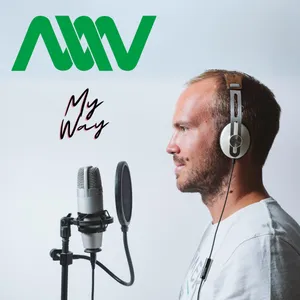
Free Daily Podcast Summary
My Way Marketing: Daily Summaries Delivered
by Ivan
Get key takeaways, quotes, and insights from My Way Marketing in a 5-minute read. Delivered straight to your inbox.
Latest Episodes
The most recent episodes — sign up to get AI-powered summaries of each one.
- Feb 7, 20261h 11m
You’re Not Bad at Marketing. You’re Playing the Wrong Game - with Hattie the PMM
Layoffs in tech feel personal.But most of the time, they’re not.In this episode of My Way Marketing, I sit down with Hattie the PMM to unpack why smart, hardworking marketers keep getting laid off — and why it’s rarely about talent or effort.The real issue?Most marketers are playing checkers in a world that rewards chess players.We talk about why marketing is still treated as a cost center, how people-pleasing quietly destroys careers, and the hidden rules that determine who survives when budgets tighten.This isn’t a motivational pep talk.It’s a clear-eyed conversation about career leverage, visibility, and ownership — and how to stop confusing hard work with real value.If you’ve ever felt undervalued, disposable, or stuck in a loop of burnout → layoffs → self-doubt, this episode will help you reframe the game you’re playing.What You’ll LearnWhy layoffs are usually structural, not personalThe difference between doing great work and being perceived as valuableWhy marketers are often trained to play the wrong gameHow people-pleasing keeps you invisibleWhat “career profitability” actually meansWhy soft skills now matter more than everHow to move from execution to ownership without burning outKey TakeawaysBeing busy is not the same as being valuableVisibility and judgment matter more than effort in downturnsCareers stall because of misalignment, not lack of skillPlaying the game consciously beats pretending it doesn’t existThe most resilient marketers invest in becoming, not just doingStandout Quotes“You’re not bad at marketing. You were just playing checkers in a chess game.”“The game is being played whether you play it or not.”“Careers don’t collapse because of effort. They collapse because of invisibility.”“If another person has done it, it means you can too.”Who This Episode Is ForB2B marketers with 5–15+ years of experienceProduct marketers, growth leads, heads of marketingAnyone expected to own outcomes, not just deliver workMarketers navigating layoffs, burnout, or career stagnationPeople who want leverage, not hustleMy Way PerspectiveMost advice teaches you how to execute better.This episode helps you think more clearly — and build a career that compounds instead of resets.ResourcesVisit www.productmarketers.comSubscribe to my newsletter: www.ivanburic.com/subscribe
- Jan 23, 202640 min
Shayne De La Force - Marketing starts in the Market
The conversation covers a wide range of topics, including personal branding, marketing, and the role of product marketing. Shane De La Force shares insights on the importance of personal branding, the impact of diverse experiences on marketing, and the significance of understanding target audiences. He also discusses the role of product marketing in driving growth and the value of a holistic approach to marketing.TakeawaysPersonal branding is crucial for professionals and can be a valuable asset when transitioning between roles.Understanding target audiences and their needs is essential for effective marketing strategies.Product marketing plays a pivotal role in driving growth and should be aligned with the overall marketing strategy.Chapters00:00 Introduction and Diverse Experiences in Marketing06:07 Understanding Target Audiences and Marketing Strategies11:04 AI in Marketing and the Human Element17:40 The Four Ps of Marketing and Branding30:51 The Role of Product Marketing in the Marketing Organization42:21 Personal Branding and Career Development47:37 Personal Values and Decision-Making
- Jan 3, 202644 min
Silvia Román - Influence Without Authority
In this episode, I’m joined by Silvia Román, Senior Product Marketing Manager at Booking.com and leadership mentor, for a deep and practical conversation on product marketing, leadership, and influence without authority.Silvia shares her journey from Latin America to Amsterdam, from marketing generalist to product marketing leader, and how working inside a global company shaped her approach to leadership, growth, and inclusion.We explore what product marketing really looks like inside a large organization like Booking.com, especially on the B2B and B2B2B side, and why the true value of product marketing sits at the intersection of product, market, and commercial teams.A big part of the conversation focuses on leadership. Silvia breaks down what it means to influence without authority, how trust and self-awareness outperform hierarchy, and why leadership is fundamentally about relationships, not titles.This episode is packed with practical frameworks, real-world examples, and actionable advice on:Product marketing at scale in global organizationsInfluence without authority and stakeholder managementLeading diverse and international teamsBuilding a realistic personal development planManaging underperformance with empathy and clarityThe difference between leadership and mentorshipSilvia also shares insights from her leadership programs and mentoring work, designed to help new and aspiring managers build confidence and lead with intention.This episode is for product marketers, leaders, and anyone navigating growth, leadership, and complexity inside modern organizations.
- Nov 25, 202558 min
Theresa Gschwandtner - Innovating in Product Marketing
In this episode, I sit down with Theresa Gschwandtner, an Austrian-born product marketing powerhouse who built her career across cities like London, Boston, New York, Dublin, and Paris. From scaling LinkedIn’s product marketing to founding Kundra, a startup tackling parental leave, Theresa shares how diverse cultural experiences, authentic leadership, and structure have shaped her career.We dive into:Global product marketing & cultural localizationStructuring and scaling PMM teamsBuilding in public as a founderPublic speaking and leadership as learnable skillsThe unseen challenges of parental leave in the workplaceNotable Quotes“Public speaking is a skill you can learn—and should. Especially in Europe, we don’t emphasize it enough.”— Theresa Gschwandtner“A good PMM should think like a founder. You own the narrative, the research, the launch, the customer.”“People don’t buy from companies. They buy from people.”“Kundra is me, and I am Kundra. That’s why I decided to build in public.”Connect with TheresaLinkedIn: Theresa GschwandtnerWebsite: kundra.aiPodcast: Kundra (on Spotify & Apple Podcasts)Substack: Kundra NotesInstagram: @kundra.ai
- Aug 21, 202547 min
Anna Borbotko — Building Intellectual Property, Not Just Skills
In this episode, I talk with Anna Borbotko, product marketer turned enablement leader at TomTom. Anna’s career is anything but linear — from dreaming of becoming a journalist, to procurement, to product marketing, and now enablement. Along the way, she has built a strong presence on LinkedIn and launched her own newsletter, Product Marketing Pulse.We dive into the future of work, the skills that really matter, and why creating your own intellectual property will define careers in the years ahead.What we talked about:How Anna got her role at TomTom during COVID thanks to “the click” with her hiring manager.Why she looks beyond hard skills when hiring, and what she really pays attention to in junior candidates.The unusual interview question she asks everyone: “If you see a wall in front of you, what would you do?”Why product launches aren’t where the real value lies — and why the post-launch phase matters more.How TomTom successfully pivoted from B2C to B2B and what it means for product marketers.The shift from “skilled labor” to intellectual property — and why the future belongs to those who turn their knowledge into scalable assets.Why Anna doesn’t believe in traditional training, and how she’s building a framework for enablement that focuses on learning by doing.How building visibility on LinkedIn (even without a big strategy) led to speaking invites, collaborations, and new opportunities.Why consistency and presence matter more than going viral.Anna’s perspective on AI, why she calls herself a “dinosaur” in adoption, and how she sees enablement evolving into managing AI agents.One of my favorite quotes from Anna:“Careers are jungle gyms, not ladders. The winners will be those who keep adapting.”📌 Connect with Anna:LinkedIn: https://www.linkedin.com/in/product-marketing-amsterdam/Newsletter: ex Product Marketing Pulse, now rebranded as Lines & Leaps. (https://www.linkedin.com/newsletters/7037060648253431809/)If you’re interested in product marketing, enablement, or simply how to future-proof your career in the age of AI, this is an episode you don’t want to miss.
- Aug 10, 202542 min
Jane Portman - Mastering SaaS Email Marketing
In this episode of MyWay, I sit down with Jane Portman — co-founder of Userlist, host of two long-running podcasts (UI Breakfast and Better Done Than Perfect), and a veteran UI/UX designer turned SaaS founder. Jane shares her journey from running a solo design consultancy to building a SaaS product in one of the most competitive markets: email marketing automation for SaaS companies.We dive into the evolution of design’s role in SaaS, why user onboarding should be every founder’s top priority, the truth about “behavior-based” email marketing, and the biggest mistakes companies make when moving from simple newsletters to advanced automation. Jane also reveals her Atomic Emails framework, a practical system to overcome creative block and design email sequences that actually convert.And because she’s been podcasting for over a decade, we also talk about what it takes to keep a show running consistently for 10+ years, what she’s learned from hundreds of guests, and why podcasting is her favorite long-term marketing asset.Episode Highlights:Why great UI/UX is an advantage, not always a necessity — and when it is a must-have.The difference between SaaS email marketing and “generic” email automation.The two foundational workflows every SaaS company should have: onboarding and paying-customer retention.Best practices for nurturing campaigns — and the common mistake of overthinking them.How the Atomic Emails framework turns existing content into high-performing campaigns.The technical and creative skills needed to execute behavior-based email marketing.How Userlist uses roadmapping sessions to bridge the gap between marketing and engineering.What Jane has learned from over 400 podcast episodes — and the systems that keep her consistent.Quote of the Episode“Email is just a channel — not a silver bullet. But it’s basic business hygiene to be messaging your users. It shows you care.” — Jane PortmanKey LearningsDesign is powerful, but context matters. Great design can give you a competitive edge, but many SaaS businesses succeed before perfecting UI/UX.SaaS email marketing is data-driven. It requires product usage tracking, segmentation, and triggers — far beyond standard email campaigns.Start simple before going advanced. Complex systems evolve from simple ones; most companies only need advanced automation after a couple of years.Onboarding is universal. No matter the pricing model, activating new users is the highest-leverage email workflow you can build.Deliverability is earned. Authenticate your domain, separate cold outreach from product emails, and respect unsubscribe preferences.Podcasting longevity comes from systems. Consistency is easier when production is a repeatable, team-supported process.
- Jun 27, 202534 min
Michal Lasman - From Product Marketing to People-First Leadership
Michal Lasman – Leading with Empathy, Coaching & CommunicationIn this episode, I sat down with Michal Lasman, a product marketing leader turned executive coach, to talk about the human side of leadership—and why soft skills might be your strongest asset in today’s workplace.Michal’s background spans B2B marketing, tech startups, and team building, but what stood out most is how much he values listening, clarity, and care. We talked about how marketing roles evolve, why communication is often the root of most problems, and how coaching (done right) can unlock real performance and fulfillment for individuals and entire teams.If you’re a product marketer, people manager, or just someone who wants to lead with more intention, this episode will speak to you.Key Takeaways✅ Soft skills aren’t “nice to have” anymore—they’re business-critical. ✅ Clarity is a gift you give your team. Don’t underestimate how powerful aligned language can be. ✅ Most performance issues aren’t skill gaps—they’re communication gaps. ✅ Leadership isn’t a title—it’s how you show up for others. ✅ Coaching isn’t about giving advice. It’s about creating space for people to discover their own answers. ✅ Building trust as a leader starts with how you listen, not just what you say. ✅ You don’t have to “perform” leadership. The best managers are grounded, self-aware, and honest.💬 Quote from Michal“We often think we have to show up as some kind of ideal leader. But most people just want someone real—someone who listens, someone who cares, someone who communicates clearly.”⏱️ Episode Chapters00:00 – Intro & Michal’s background 03:10 – Why Michal shifted from product marketing to coaching 06:30 – What most managers get wrong about communication 10:00 – How language alignment impacts execution 14:40 – Coaching vs managing: what’s the difference? 18:10 – Giving feedback that builds trust (not fear) 22:30 – Building leadership skills through self-awareness 27:00 – Michal’s approach to listening in high-pressure roles 32:20 – Lessons from coaching startup teams 36:10 – Leadership as a practice, not a personality 40:30 – How Michal works with clients and what he's seeing in the market 44:00 – Advice for PMMs and team leads who want to grow into stronger leaders 48:00 – Book recs, resources, and next steps 51:00 – Where to connect with Michal 🔗 Connect with Michal: https://www.linkedin.com/in/michallasman/ - https://www.michallasman.com/ 📩 Subscribe to the newsletter: https://ai4pmms.com/subscribe 🔗 Follow me on LinkedIn: https://www.linkedin.com/in/ivanburic/
- May 29, 202553 min
Barney O’Kelly – Be Seen, Make Friends: Build a Brand That Opens Doors
In this episode, I sat down with Barney O’Kelly, Head of Solutions & Product Marketing at Alex Partners, to talk about the career strategy behind one of his favorite mantras: “Be seen, make friends.”Barney believes personal branding isn’t about going viral or building a huge audience. It’s about being intentional with how you show up—inside your company, on LinkedIn, and in your network.We talked about what visibility really means, how to shape your professional identity, and why your brand is already saying something—even if you haven’t touched your profile in years.Key Takeaways✅ Your job title is not your story. Who you are and how you do your work matters more than what your role is.✅ “Be seen, make friends” is a mindset shift—visibility + relationships are the foundation of career growth.✅ You don’t need to be loud or post daily to build a personal brand. Start with a clear profile, strong photo, and a story worth reading.✅ Personal brand isn’t just external—it helps your colleagues understand who you are, what you care about, and where you want to go.✅ LinkedIn is your digital first impression. Use it intentionally—even if you’re not looking for a job.✅ The best way to grow your network isn’t to promote yourself, but to connect others and create value.Quote from Barney“Your job title is the least interesting thing about you. What you do, how you do it, and why—that’s where your story lives.”Episode Chapters00:00 – Intro & Barney’s current role 02:00 – “Be Seen, Make Friends”: where it comes from 05:00 – Why personal brand matters (even when you’re not job hunting) 07:30 – LinkedIn as a runway, not a resume 10:00 – The elements of a strong profile: photo, headline, about section 13:00 – Finding your story and refining your positioning 17:00 – How internal brand builds influence at work 22:00 – The difference between self-promotion and storytelling 27:00 – Advice for introverts: how to network without shouting 33:00 – Helping others shape their voice 37:00 – What Barney looks for when hiring 42:00 – Can your brand evolve as you grow? 47:00 – Where to start if you're building from scratch 50:00 – Connect with Barney 🔗 Connect with Barney: https://www.linkedin.com/in/barneyokelly/ 🔗 Follow Ivan: https://www.linkedin.com/in/ivanburic/
Get My Way Marketing summaries in your inbox
Free AI-powered daily recaps. Key takeaways, quotes, and mentions — in a 5-minute read.
Get Free Summaries →Free forever for up to 3 podcasts. No credit card required.
You Might Also Like
Listeners also like.
Marketing Pack Leaders
Josh Porter
Building Better CMOs and Marketing Leaders
MMA Global / LightningPod
Your Marketing Big Sister
ANA ROGERSON
Everyone Hates Marketers | No-BS Marketing & Brand Strategy Podcast
Louis Grenier | Marketing & Branding
Don't Say Content
Devin Bramhall & Margaret Kelsey

The WorkPlay Podcast
WorkPlay Branding
Marketing Made Simple
StoryBrand.com

The Russell Brunson Show
Russell Brunson | YAP Media
The NO BULL$H!# Marketing Podcast
Dave Mastovich
Simple Marketing
Mostafa Hosseini

I Love Marketing
Joe Polish and Dean Jackson

If You Market
Sky Cassidy (CEO) of MountainTop Data
About My Way Marketing
Welcome to the My Way Podcast, a captivating journey where the principles of product marketing and sportsmanship collide with real-life scenarios. Here, we dive into the heart of meaningful stories, leveraging insightful conversations with experts and diverse guests.
Customized Recaps
AI-powered recaps with compact key takeaways, quotes, and insights.
Straight to Your Inbox
Get key takeaways from My Way Marketing in a 5-minute read.
Save Hours Every Week
Stay current on your favorite podcasts without falling behind.
Frequently Asked Questions
What is Podzilla's My Way Marketing daily summary?
It's a free AI-powered email that summarizes new episodes of My Way Marketing as soon as they're published. You get the key takeaways, notable quotes, and links & mentions — all in a quick read.
How does the My Way Marketing podcast summary work?
When a new episode drops, our AI transcribes and analyzes it, then generates a personalized summary tailored to your interests and profession. It's delivered to your inbox every morning.
Is this an official My Way Marketing product?
No. Podzilla is an independent service that summarizes publicly available podcast content. We're not affiliated with or endorsed by Ivan.
Can I get summaries of other podcasts too?
Absolutely! The free plan covers up to 3 podcasts. Upgrade to Pro for 15, or Premium for 50. Browse our full catalog at /podcasts.
How often does My Way Marketing release new episodes?
My Way Marketing publishes biweekly. Our AI generates a summary within hours of each new episode.
What topics does My Way Marketing cover?
My Way Marketing covers topics including Business. Our AI identifies the specific themes in each episode and highlights what matters most to you.
Start getting My Way Marketing summaries tomorrow morning.
Free forever for up to 3 podcasts. No credit card required.
Free forever for up to 3 podcasts. No credit card required.