Free Daily Podcast Summary
Integrative Mental Health Therapy with Dr. Tiffany: Daily Summaries Delivered
by Dr. Tiffany Brown-Bush
A functional medicine, functional neurology and holistic psychology approach to healing the brain and mental health struggless
Latest Episodes
The most recent episodes — sign up to get AI-powered summaries of each one.
- Oct 19, 202610 min
Episode 44- Read Your Data Without Spiraling
In episode 44 of the "Integrative Mental Health Therapy with Dr. Tiffany," Dr. Tiffany discusses how to effectively interpret sleep data without becoming overwhelmed. Building on the insights from her book, "Running On Empty: What Sleep Data Reveals About Autoimmune Fatigue and How to Recover," she provides a framework to help listeners approach their sleep data with confidence. Here is the tracker:https://bit.ly/baselinetracker **Overview of Sleep Data:**Many individuals have devices like Whoop bands, Oura rings, or smart mattresses that track their sleep metrics. Dr. Tiffany emphasizes that people often either ignore this data or react too strongly to it. Instead, she encourages a balanced approach through her framework of "noise, nudge, and signal."1. **Noise:** This represents minor fluctuations in sleep data caused by external factors like late dinners, alcohol consumption, or disturbances from pets or partners. One poor night is noise; it's vital to acknowledge it but not obsess over it. Dr. Tiffany advises against spiraling, as that stress can negatively impact future data.2. **Nudge:** A nudge occurs when there are two or three consecutive days of similar data trends, such as elevated resting heart rates or decreased heart rate variability (HRV). This is a gentle sign from your body that something may need attention. Dr. Tiffany stresses the importance of self-check-ins during these times, pointing out that adjustments should be made to protect well-being before it becomes critical.3. **Signal:** A signal is when various metrics indicate a consistent pattern over several days, and you physically feel unwell. Here, the body is signaling a need for substantial support. Dr. Tiffany suggests prioritizing rest and, if there are concerns, consulting a healthcare provider.Dr. Tiffany reassures listeners that sleep data should be used as informational prompts, not as definitive diagnoses. Understanding these patterns helped her manage her own health conditions effectively.**Everyday Data Interpretation:**To utilize this framework without becoming excessively reliant on technology, Dr. Tiffany introduces a second method: "Check, Name, and Choose." - **Check:** Each morning, review three specific numbers: HRV, deep sleep, and resting heart rate. These metrics derive directly from your physiology and are pivotal in tracking health.- **Name:** Tune into personal feelings by summarizing how you feel in just one word (e.g., rested, foggy, achy). Your physical sensations provide valuable context to the data.- **Choose:** Select one small adjustment for the day based on your feelings and data. This can be as simple as taking a more leisurely morning or adjusting bedtime. Small changes can help prevent significant setbacks later, illustrated through a client example where a minor schedule adjustment positively impacted her metrics.#IntegrativeMentalHealth #DrTiffany #SleepData #AutoimmuneFatigue #HealthySleep #CheckNameChoose #SleepMetrics #WellnessJourney #SleepHealth #MindfulTracking #BodySignals #SelfCare #DataInterpretation #autoimmune #chronicfatigue #energywebsite: https://www.docbrownbush.comAuthor site: Running On Empty by Dr. Tiffany Brown-Bush
- Sep 28, 202613 min
E43 - I wrote a book Running On Empty
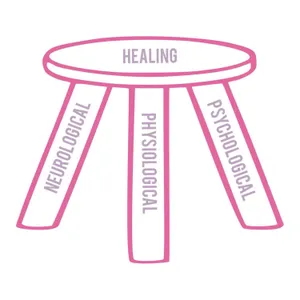
Dr. Tiffany announces her new book, Running on Empty, and explains how she uses wearable sleep data (HRV, oxygenation, interruptions) alongside trauma-informed psychotherapy to understand and treat autoimmune fatigue, chronic fatigue, and fibromyalgia, including her personal journey putting lupus into remission.The episode summarizes the book’s chapters: listening to your body, nervous system and ACEs, decoding ring data, sleep for healing, lifestyle and supplements, staying on track, and building a personalized plan, plus upcoming read-along sessions and downloadable tracking guides.Running On Empty by Dr. Tiffany Brown-BushTranscript:00:00:00.514 --> 00:00:06.319Welcome to episode 43 of Integrative Mental Health Therapy with Dr. Tiffany.00:00:06.824 --> 00:00:12.600And I am excited to be here talking to you about how I wrote a book.00:00:13.717 --> 00:00:20.934Running on Empty, What Sleep Data Reveals About Autoimmune Fatigue and How to Recover is on Amazon.00:00:21.375 --> 00:00:26.697And as of today, as you're able to listen to this podcast, it is available not00:00:26.697 --> 00:00:32.817only as a Kindle, but it is available as a paperback, which I'm super excited00:00:32.817 --> 00:00:35.806about because it is an appropriate book for paperback.00:00:36.276 --> 00:00:41.367And it is going to be available over the next few months.00:00:41.367 --> 00:00:44.777It's going to take me a second as an Audible as well.00:00:44.777 --> 00:00:52.177So I am very, very excited about the fact that this book is now available to00:00:52.177 --> 00:00:56.557my clients, to the world, to my family.00:00:56.957 --> 00:01:00.790I'm also really pleased that I was able to get all of this out of my head.00:01:01.241 --> 00:01:06.597Many of you who use wearable technology with me and my practice and the work00:01:06.597 --> 00:01:12.806that we do know that I have strong feelings about utilizing HRV sleep data,00:01:13.374 --> 00:01:20.347you know, oxygenation, sleep interruptions, just overall sleep quality when00:01:20.347 --> 00:01:22.967it comes to applying the Dr.00:01:22.967 --> 00:01:27.134Grambush method. So looking at brain-body-mind relationships,00:01:27.878 --> 00:01:33.527Because, you know, that three-leg stool has transitioned to a four-leg stool over the past two years.00:01:34.049 --> 00:01:40.935And you know that I take seriously monitoring, you know, what's affecting your HRV.00:01:41.683 --> 00:01:47.835Where is it? What is the backdrop of, you know, your overnight heart rate?00:01:48.287 --> 00:01:51.955As you're telling me about how your stress management is, as you're talking00:01:51.955 --> 00:01:55.309to me about your autoimmune symptoms, as you're talking to me about00:01:55.669 --> 00:01:59.994feeling foggy and fatigued and all of those things and trying to heal,00:02:00.342 --> 00:02:04.376we have always talked about what those numbers look like.00:02:04.806 --> 00:02:09.605And so my last episode was a couple months ago, I think almost three months00:02:09.605 --> 00:02:17.278ago, as I was in the editing phase of the book and really kind of mired in just00:02:17.528 --> 00:02:19.612edit over edit after edit.00:02:20.155 --> 00:02:25.185It was a lot. And then trying to run the practice and take care of my health00:02:25.185 --> 00:02:28.605and drop into joy in my own personal life.00:02:28.605 --> 00:02:35.315So I've been juggling blogging, trying to keep the podcast going, and then focusing on.00:02:35.315 --> 00:02:44.019It has been an extremely busy year in the practice, unusually so throughout the year to be busy.00:02:44.379 --> 00:02:52.275And then I have participated in my own three-day psychological intensive, working on my own parts.00:02:52.615 --> 00:02:57.715I flew to Nashville to do that and worked with three amazing therapists for00:02:57.715 --> 00:02:59.90124 hours to do my own work.00:03:00.3
- Jul 7, 202626 min
Episode 42 - Why Am I Stuck.mp3
https://www.docbrownbush.com
- May 22, 202625 min
E41 - Grief.mp3
For many people, pets are far more than companions; they become part of the nervous system’s sense of safety. For individuals with a history of childhood trauma, the human–animal bond can provide a form of connection that feels emotionally consistent, nonjudgmental, and regulating. Trauma often leaves the brain and body in states of hypervigilance, chronic stress, or emotional shutdown. The calming presence of an animal can help shift the nervous system out of survival mode and into greater regulation through touch, routine, attunement, and emotional connection. One biological reason for this is the release of oxytocin, often called the “bonding hormone,” which supports feelings of safety, connection, and calm while also helping reduce stress hormones like cortisol. This connection can become especially important for individuals living with chronic illness, autoimmune conditions, or long-term stress-related health symptoms. Chronic activation of the stress response impacts not only emotional well-being, but also inflammation, immune function, sleep, digestion, hormones, and pain sensitivity. For many people, animals provide grounding, emotional co-regulation, and a reason to remain engaged in daily life during difficult seasons of physical or emotional struggle. During menopause, when hormonal fluctuations can contribute to anxiety, mood changes, sleep disruption, and nervous system sensitivity, the comfort and predictability of a pet can offer profound emotional stabilization. The simple acts of petting an animal, hearing a familiar sound, or engaging in caregiving routines can create moments of regulation that support both mental and physical health. Because these bonds are so neurologically and emotionally significant, the grief associated with losing a beloved pet can be profound. Pet loss is not “just losing an animal”; for many people, it is the loss of safety, companionship, emotional attunement, routine, and unconditional connection. Trauma survivors, especially, may have found a pet to be one of the safest relationships they have ever experienced. The nervous system does not measure grief based on social status; it responds to attachment, love, and loss. Honoring the depth of that bond and allowing space for genuine grief is an important part of healing. The human–animal connection is deeply therapeutic, biologically regulating, and often profoundly protective across the lifespan. This was a personal perspective on loss and attachment, that I thought relevant to my work and the people whose lives I touch. I hope this podcast speaks to you and resonates with your nervous system. #grief #attachment #autoimnunity #healing #love #Lupus #neuropsychiatriclupus #Lupusawarenessmonth #pets #dogmom #losshttps://www.docbrownbush.com
- Feb 3, 202650 min
E40 - Wk 3, The BWW Masterclass
Week 3 of The Brain Warrior’s Way focuses on sleep and exercise for brain longevity. Learn how rest, movement, detox, and daily habits protect cognition, mood, and long-term health.https://www.docbrownbush.com
- Jan 16, 202657 min
E39 - Wk 2, The BWW Masterclass
So many people try to change habits with a brain that is depleted, inflamed, or dysregulated. When that happens, willpower fails, motivation drops, and self-blame creeps in. This episode explains why supporting the brain biologically must come before expecting behavioral change.https://www.docbrownbush.com
- Jan 2, 202647 min
E38 - Wk 1, The BWW Masterclass
What if your focus issues, anxiety, low mood, or brain fog weren’t “just psychological”?What if they were signals from specific brain systems needing support?This Week 1 The Brain Warriors Way Masterclass episode breaks down brain types, targeted supplementation, nutrition, and why four days of consistency matters for real brain change.https://www.docbrownbush.com
- Dec 23, 202553 min
E37 - Early Christmas Present: Brain Warrior's Way
The fundamentals of brain health, are also the fundamentals of mental health https://www.docbrownbush.com
Get Integrative Mental Health Therapy with Dr. Tiffany summaries in your inbox
Free AI-powered daily recaps. Key takeaways, quotes, and mentions — in a 5-minute read.
Get Free Summaries →Free forever for up to 3 podcasts. No credit card required.
You Might Also Like
Listeners also like.

Psychiatry & Psychotherapy Podcast
Explores psychiatry and psychotherapy through interviews with experts, trainees, and individuals sharing lived mental health experiences.
Treated with Dr. Sara Szal
Dr. Sara Szal explores holistic health solutions through conversations with experts and patients seeking mind, body, and soul healing.
Therapist Uncensored Podcast
Explores mental health and secure relationships through science-backed insights, clinical expertise, and neuroscience.
Mind If We Talk?
Two people share raw, intimate conversations about emotional struggles while a therapist guides understanding and growth.

hol+ with Dr. Taz MD | The Future of Medicine is Holistic
A physician explores holistic health through the interconnected physical, mental, emotional, energetic, and social dimensions of wellness.

hol+ with Dr. Taz MD | The Future of Medicine is Holistic
Explores holistic health by connecting physical, mental, and emotional factors like hormones, inflammation, and stress with expert discussions.

Made for Health | Peptides | Lyme | Chronic Infections | Long Covid | Insulin Resistance | Hypermobility
A physician explores science-based approaches to treating chronic conditions and restoring health.

Therapy for Black Girls
A weekly conversation with a licensed psychologist exploring mental health and personal growth for Black women.
Normalize It Forward
Discusses mental health during college, focusing on reducing stigma and supporting young adults, parents, and therapists.

Rooted in Wellness with Mona Sharma
A holistic nutritionist blends ancient wellness practices with modern science to address mind, body, and soul health.

Decoded | Unlock The Secrets of Human Behavior, Emotion and Motivation
Analyzes subconscious patterns in human behavior and provides methods to change them.

The Dr. Hyman Show
Explores root causes of chronic disease and promotes functional medicine, nutrition, and preventive health through expert discussions.
About Integrative Mental Health Therapy with Dr. Tiffany
A functional medicine, functional neurology and holistic psychology approach to healing the brain and mental health struggless
Customized Recaps
AI-powered recaps with compact key takeaways, quotes, and insights.
Straight to Your Inbox
Get key takeaways from Integrative Mental Health Therapy with Dr. Tiffany in a 5-minute read.
Save Hours Every Week
Stay current on your favorite podcasts without falling behind.
Frequently Asked Questions
What is Podzilla's Integrative Mental Health Therapy with Dr. Tiffany daily summary?
It's a free AI-powered email that summarizes new episodes of Integrative Mental Health Therapy with Dr. Tiffany as soon as they're published. You get the key takeaways, notable quotes, and links & mentions — all in a quick read.
How does the Integrative Mental Health Therapy with Dr. Tiffany podcast summary work?
When a new episode drops, our AI transcribes and analyzes it, then generates a personalized summary tailored to your interests and profession. It's delivered to your inbox every morning.
Is this an official Integrative Mental Health Therapy with Dr. Tiffany product?
No. Podzilla is an independent service that summarizes publicly available podcast content. We're not affiliated with or endorsed by Dr. Tiffany Brown-Bush.
Can I get summaries of other podcasts too?
Absolutely! The free plan covers up to 3 podcasts, any in the catalog. Basic raises that to 15, Pro to 40 and Max to 100. Browse our full catalog at /podcasts.
How often does Integrative Mental Health Therapy with Dr. Tiffany release new episodes?
Integrative Mental Health Therapy with Dr. Tiffany publishes monthly. Our AI generates a summary within hours of each new episode.
What topics does Integrative Mental Health Therapy with Dr. Tiffany cover?
Integrative Mental Health Therapy with Dr. Tiffany covers topics including Education, Fitness, Health & Fitness, Alternative, Self-Improvement. Our AI identifies the specific themes in each episode and highlights what matters most to you.
Start getting Integrative Mental Health Therapy with Dr. Tiffany summaries tomorrow morning.
Free forever for up to 3 podcasts. No credit card required.
Free forever for up to 3 podcasts. No credit card required.