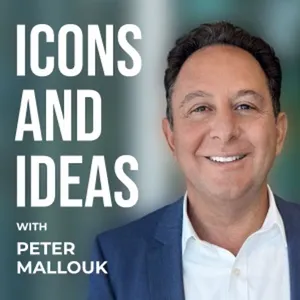
Free Daily Podcast Summary
Icons and Ideas with Peter Mallouk: Daily Summaries Delivered
by Peter Mallouk
Hosted by Peter Mallouk, this series features candid conversations with the world’s leading entrepreneurs, founders, changemakers and leaders. Each episode goes beyond headlines to reveal the choices, risks and habits that drive long-term success. From entrepreneurship and leadership to innovation and everyday money decisions, Peter and his guests unpack the stories and forces shaping how people build, lead and live well.
Latest Episodes
The most recent episodes — sign up to get AI-powered summaries of each one.
- 5 days ago24 min
Inner Excellence Author Jim Murphy: Why Success Isn’t Enough
What if achieving everything you want still doesn’t give you the life you’re looking for? "Inner Excellence" author and former professional baseball player Jim Murphy joins Creative Planning President and CEO Peter Mallouk on Icons and Ideas to explore why achievement, confidence, money and status alone don’t create fulfillment and what it really takes to perform at your best under pressure.Jim shares the remarkable journey that took him from professional baseball and the Chicago Cubs organization to giving away most of what he owned and moving to the Arizona desert in search of a greater purpose. He explains the principles behind “Inner Excellence,” including why presence can be more powerful than confidence, how our attachment to possessions, achievements, looks, money and status can hold us back and why the goals we chase may not be what we truly want.Jim also reflects on the unexpected moment Philadelphia Eagles wide receiver A.J. Brown was seen reading "Inner Excellence" during an NFL playoff game, sending a book that had struggled for 16 years into the spotlight. Through it all, Jim challenges high achievers to redefine success, pursue a fullness of life and devote themselves to something greater than themselves.What You’ll Learn✅ Why presence and belief can be more powerful than confidence under pressure✅ How chasing possessions, achievements, looks, money and status can create an illusion of success✅ What Jim Murphy learned from 16 years of persistence before "Inner Excellence" became a breakout success✅ Why pursuing purpose, unconditional love and a fullness of life can matter more than conventional achievementsSponsored ByThis episode is brought to you by Apollo. Private markets have evolved, and public markets capture only part of the opportunity. Apollo brings more than 35 years of experience across the breadth of private markets. Learn more at Apollo.com/ASPMTimestamps00:00 Jim Murphy on why success isn’t enough01:50 Leaving everything behind for the Arizona desert04:12 How elite athletes perform under extreme pressure06:37 The Three Worlds model and the problem with chasing results08:59 How A.J. Brown changed "Inner Excellence" overnight12:23 PALMS: possessions, achievements, looks, money and status14:06 Why the heart decides and the mind follows16:05 Why presence and belief can be more powerful than confidence19:15 Why even the biggest goals may be too small21:22 Selflessness, fear, love and finding a purpose beyond yourselfKey Takeaways🔹 Success isn’t necessarily fulfillment. Jim believes people often pursue money, status, championships and recognition because of what they think those achievements will make them feel rather than because of the achievements themselves.🔹 Presence can be more powerful than confidence. Confidence is the feeling that you can accomplish something. Jim describes belief as knowing you’ll be okay regardless of the outcome, while presence removes attachment to the past and future.🔹 Focus on what you can control. The four daily goals of "Inner Excellence" are to give your best today, be present, be grateful, and focus on your routines and what you can control.🔹 Purpose goes beyond personal achievement. Jim argues that complete freedom and material success can still leave people feeling empty. He believes a powerful vision and purpose beyond yourself can create a deeper sense of being fully alive. About Jim Murphy #1 New York Times bestselling author Jim Murphy is a Performance Coach to some of the best athletes and leaders in the world. He began his career as a professional baseball player in the Chicago Cubs organization. After experiencing vision issues that ended his playing career, Murphy coached with the Texas Rangers as well as the South African Olympic baseball team. He has worked with some of the world’s best golfers, including world champions, FedEx Cup champions, and world #1s. The majority of Murphy’s clients have the best year of their careers in their first year working with him. In addition to coaching professional athletes and executives, Murphy leads "Inner Excellence" offsite retreats around the globe. He’s the president of the "Inner Excellence" Freedom Project, whose mission is to build communities to alleviate spiritual and physical poverty around the world. Website: Jim Murphy "Inner Excellence" https://innerexcellence.com/ LinkedIn: <a href="https://www.linkedin.com/in/innerexcellence/" rel="noopener norefer
- 2 weeks ago48 min
Vanguard CEO Salim Ramji: The Future of Investing, AI and Private Markets
What does the future of investing look like as artificial intelligence, private markets and speculation reshape finance? Vanguard CEO Salim Ramji joins Creative Planning President and CEO Peter Mallouk on Icons and Ideas to discuss the principles that have made Vanguard one of the most influential investment firms in the world and how those principles are evolving for the next generation of investors. Salim also shares why Vanguard is acquiring Altruist and how the move could expand access to high-quality financial advice while empowering more independent advisors to serve more families. Salim shares how Vanguard is carrying forward Jack Bogle’s legacy of low-cost, diversified, long-term investing while expanding into areas including ETFs, fixed income, private markets and financial advice. He and Peter also explore the growing divide between investing and speculation, Vanguard’s approach to Bitcoin and prediction markets, and why AI could dramatically expand access to high-quality financial advice. Salim also reflects on leadership, Vanguard’s unique culture and the simple advice that changed the trajectory of his career. What You’ll Learn ✅ Why Vanguard continues to prioritize low-cost, diversified and long-term investing ✅ How Salim Ramji thinks about private markets, Bitcoin and the rise of speculative investing ✅ Why AI could transform financial advice and expand access for millions of Americans ✅ How Jack Bogle’s philosophy continues to influence Vanguard’s strategy and culture This episode is brought to you by Blackstone. With proven performance for over 40 years, Blackstone’s investment strategies across private equity, real estate, credit and infrastructure are designed to help investors build wealth by diversifying portfolios beyond stocks and bonds. Learn more at Blackstone.com. Timestamps 00:00 The leadership advice that changed Salim Ramji’s career 01:49 Vanguard announces its acquisition of Altruist 07:00 Jack Bogle’s legacy and the evolution of Vanguard 09:55 The investing principles Vanguard refuses to change 15:38 Becoming the first outsider to lead Vanguard 21:16 Meme stocks and the line between investing and gambling 23:21 Vanguard’s position on Bitcoin and speculative investing 27:47 Why Vanguard is moving into private markets 32:18 Vanguard’s influence on corporate America 36:01 How AI could transform financial advice 45:06 Jack Bogle, mentorship and the future of leadership Key Takeaways 🔹 Vanguard’s products may evolve, but its core principles of low costs, diversification and long-term investing remain central to the firm’s philosophy. 🔹 Salim warns that meme stocks, prediction markets and other forms of speculation risk blurring the important distinction between investing and gambling. 🔹 Private markets could play a role in certain investor portfolios, but Salim believes greater transparency and more client-friendly fees are essential. 🔹 AI has the potential to complement human financial advisors while expanding access to financial advice for Americans who currently can’t afford or access an advisor. About Salim Ramji Salim Ramji is Chief Executive Officer of Vanguard and a member of the firm’s board of directors, leading 20,000 crew dedicated to giving all investors the best chance for investment success. Founded in 1975, Vanguard provides investments, advice and retirement services to more than 50 million individual investors around the world through direct investing, workplace plans and financial intermediaries. Throughout his career, Salim has worked to make investing more accessible and empower investors to prepare for a secure retirement. Prior to joining Vanguard in July 2024, he spent 30 years in leadership roles spanning investments, capital markets and wealth management. Salim holds a bachelor’s degree in economics and politics from the University of Toronto and an M.A. in law from Cambridge University. He’s also a CFA® charterholder. Website: https://investor.vanguard.com/ LinkedIn: https://www.linkedin.com/in/salim-ramji/ Jack Bogle Sponsored By This episode is brought to you by Blackstone. With proven performance for over 40 years, Blackstone’s investment strategies across priva
- Aug 18, 202653 min
Morgan Housel: “The Psychology of Money,” Wealth and What Actually Makes You Rich
What does it actually mean to be wealthy? Bestselling author Morgan Housel joins Peter Mallouk to explore why building wealth has less to do with intelligence and more to do with behavior, independence and understanding what money is really for. Morgan shares the thinking behind “The Psychology of Money,” why every U.S. publisher initially rejected the book, and the stories that shaped his approach to money and investing. He explains why financial success is often driven by behavior rather than knowledge, why getting rich and staying rich require different skills, and why some of the best financial decisions can’t be measured on a spreadsheet. Morgan addresses the difference between being rich and being wealthy, raising kids with healthy money habits, taking risks, dealing with success and defining "enough" in his refreshingly human perspective on building wealth and living a meaningful life. What You'll Learn in This Episode ✅ Why financial behavior can matter more than intelligence when building long-term wealth ✅ The difference between being rich and being truly wealthy and why Morgan defines wealth through independence ✅ Why the mathematically "best" financial decision isn't always the best decision for your life ✅ How risk, expectations, happiness and knowing when you have "enough" can shape financial success This episode is brought to you by Avantis Investors. Broad diversification and thoughtful implementation. Daily oversight and low fees. You don’t have to choose. Start saying “and.” Talk to your advisor about Avantis and visit avantisinvestors.com. Timestamps “The Psychology of Money”, Wealth and What Actually Makes You Rich Why Morgan Housel's writing resonates around the world Why behavior matters more than intelligence with money Why we've “solved” investing but not investor behaviors The avalanche tragedy that changed Morgan's view of risk Why wealthy people can still lose everything The difference between being rich and wealthy Why Morgan paid off a low-interest mortgage How successful investors think about market volatility Teaching kids healthy money habits Key Takeaways 🔹Financial success is behavioral. Intelligence and financial knowledge matter, but how you behave with money can ultimately matter even more. 🔹 Wealth is about independence. Morgan distinguishes being rich from being wealthy by the freedom your financial resources give you over your time and decisions. 🔹 Not every return belongs in a spreadsheet. Peace of mind, stability, flexibility and sleeping well at night can have tremendous value even when they aren't mathematically optimal. 🔹 Lead by example with money. When teaching children about finances, Morgan believes everyday behavior can have more influence than lectures about what they should or shouldn't do. About Morgan Housel Morgan Housel is the New York Times Bestselling author of The Psychology of Money, The Art of Spending Money, and Same As Ever. His books have sold over 12 million copies and have been translated into more than 60 languages. He is a two-time winner of the Best in Business Award from the Society of American Business Editors and Writers, and winner of the New York Times Sidney Award. MarketWatch named him one of the 50 most influential people in markets. He's a partner at The Collaborative Fund and serves on the board of directors at Markel. Website: https://www.morganhousel.com/ X: https://x.com/morganhousel YouTube: https://www.youtube.com/@Morgan-Housel LinkedIn: linkedin.com/in/morgan-housel-5b473821 Sponsored By This episode is brought to you by Avantis Investors. With strategies designed around broad diversification, thoughtful implementation, daily oversight and low fees, Avantis helps investors say “and” instead of “or.” Talk to your advisor about Avantis and visit avantisinvestors.com. This episode includes an advertisement by the sponsor. The advertisement does not constitute or imply an endorsement, recommendation
- Aug 4, 202655 min
Carlyle CEO Harvey Schwartz| Leadership and the Future of Private Markets
The following episode contains discussions about mental health and suicide. Listener discretion is advised. Please visit nami.org for more information or to connect with a mental health professional. What does great leadership look like in today's rapidly changing world? Harvey Schwartz believes it begins with opportunity, resilience, continuous learning and investing in people. On Icons and Ideas, Peter Mallouk sits down with Harvey Schwartz, CEO of Carlyle, to discuss leadership, private markets, investing, artificial intelligence and the mindset needed to succeed in uncertain times. Harvey shares his journey from a challenging childhood to leading one of the world's largest investment firms. He reflects on the mentors and opportunities that shaped his career, lessons from Goldman Sachs and why culture, trust and disciplined decision-making drive long-term success. Peter and Harvey also explore private equity, AI, global markets and the future of investing, offering practical insights for leaders, entrepreneurs, investors and anyone looking to build resilience and lead with purpose. What You'll Learn ✅ The leadership lessons that helped Harvey Schwartz become CEO of Carlyle ✅ Why resilience, mentorship and continuous learning are essential for leadership ✅ How private markets, private equity and AI are reshaping the future of investing ✅ The leadership habits that help organizations succeed during uncertainty This episode is brought to you by State Street Select Sector SPDR ETFs. Invest where you see opportunity with the 11 Select Sector SPDR ETFs. StateStreet.com Timestamps Leadership, Resilience and the Future of Private Markets Growing up with parents battling mental illness The mentors and opportunities that shaped Harvey's life Mental health, resilience and overcoming adversity Harvey's journey from Wall Street to CEO of Carlyle The future of private markets and investing Private credit, diversification and long-term investing Geopolitics, national security and global markets Inflation, interest rates and portfolio strategy Leadership lessons and the future of private capital Key Takeaways 🔹 Leadership isn't about having all the answers. It's about building trust, making thoughtful decisions and learning through adversity. 🔹 Private markets continue to create opportunities for investors seeking diversification, innovation and long-term value. 🔹 Artificial intelligence will transform business, but human judgment, culture and leadership will remain competitive advantages. 🔹 The most successful leaders embrace lifelong learning, seek mentorship and invest in developing great teams. About the Guest Harvey Schwartz is the Chief Executive Officer and a member of the Board of Directors at Carlyle, one of the world's leading global investment firms. Before joining Carlyle in 2023, he spent more than 20 years at Goldman Sachs, where he served as President and Co-Chief Operating Officer, Chief Financial Officer and Global Co-Head of the Securities Division. Harvey is also an advocate for mental health research and leadership development through his work with One Mind. He earned his BA from Rutgers University and his MBA from Columbia University. Carlyle: carlyle.com LinkedIn: LinkedIn Harvey Schwartz Sponsored By: This episode is brought to you by State Street Select Sector SPDR ETFs. Invest where you see opportunity with the 11 Select Sector SPDR ETFs. StateStreet.com This episode includes an advertisement by the sponsor. The advertisement does not constitute or imply an endorsement, recommendation or affiliation between the sponsor and Creative Planning. Connect with Peter Mallouk Website: Peter Mallouk - President & CEO - Creative Planning X (Twitter): @PeterMallouk LinkedIn: Peter Mallouk on LinkedIn Instagram: @peter_mallouk Facebook: Official Peter Mallouk <
- Jun 2, 20261h 9m
Inside the Frame: Platon on What the World's Most Powerful People Reveal When the Camera Clicks
World-renowned photographer Platon joins Peter Mallouk to discuss what the world's most powerful people reveal in front of the camera and what it tells us about human connection. On this episode of Icons and Ideas, Platon, one of the most celebrated portrait photographers alive and the official photographer to presidents, world leaders and cultural icons, shares how a dyslexic kid from a Greek village became the artist JFK Jr. personally brought to New York to help change American photography. The conversation explores what it takes to disarm the world's most guarded people, why vulnerability is a form of strength and how curiosity over judgment can change any room and any relationship. What You'll Learn in This Episode: ✅ How Platon's Greek village childhood and dyslexia shaped his fearless approach to people ✅ What Clinton, Obama, Bush, Trump and Putin are really like behind closed doors ✅ The technique Platon uses to disarm even the most powerful people in the world ✅ Why business leaders, not politicians, are the real champions of our time This episode includes a paid advertisement purchased by a sponsor for placement on a Creative Planning podcast. The advertisement does not constitute or imply an endorsement, recommendation or affiliation between the sponsor and Creative Planning Timestamps Platon on growing up between London and a Greek village Dyslexia, running away from school and the corridor of no man's land Art school, contour drawing and discovering photography How a camera changes the dynamic in any room JFK Jr., George Magazine and the deal that launched a career Photographing President Clinton — and the moment that divided a nation Politics as the new religion and the crisis of polarization Why business leaders are the champions of our time Dustin Hoffman, 200 white roses and people power Photographing Putin — intimidation, the Beatles and a subliminal message Egypt, the Arab Spring and building a studio in Tahrir Square The Little Rock Nine and the photograph that hangs in the Smithsonian Clinton, Obama, Bush, Carter and Trump — the presidents compared The very first shoot: Anthony Hopkins, a panic attack and the lesson that changed everything Key Takeaways 💎 True human connection requires going first — with honesty, openness and courage — regardless of who’s in the room. 💎 Power is a social construct, and the ability to see through it is what allows Platon to capture truth on film. 💎 Vulnerability isn’t weakness — it’s the only currency that creates real trust between people. 💎 Business leaders, not politicians, are the force most capable of pulling a polarized society back together. About the Guest Platon is one of the world's most celebrated portrait photographers, known for his iconic images of presidents, world leaders, activists and cultural figures. Born in London and raised between England and a small Greek village, Platon studied at Central Saint Martins before being discovered by John F. Kennedy Jr. for George Magazine. His work has appeared on the covers of TIME, The New Yorker, Esquire and Rolling Stone. His portrait of Putin is classified as extremist material in Russia — and sits on Putin's desk. He’s a passionate advocate for human rights, authentic connection and the power of curiosity over judgment. Connect With Platon Instagram: @platonphoto Website: platonphoto.com RESOURCES Follow Peter on his social media accounts: X | LinkedIn | Instagram | Facebook Follow Creative Planning’s social media accounts: X | LinkedIn | Instagram | Facebook Browse through all our episodes here. Like the Icons and Ideas podcast? Check out Peter’s other podcasts! <a href="https://open.spotify.com/show/5TrovGmwCeeE6BzLh6TcCl"
- May 19, 20261h 2m
Inside Global Power: Secretary Condoleezza Rice on Leadership and the New World Order
Former U.S. Secretary of State Condoleezza Rice joins Peter Mallouk to discuss leadership, global politics, China, Russia, NATO, 9/11, artificial intelligence and the future of world power. On this episode of Icons and Ideas, Condoleezza Rice, the 66th U.S. Secretary of State and current Tad and Dianne Taube Director of the Hoover Institution at Stanford University, shares how growing up during the Civil Rights Movement shaped her leadership philosophy and reflects on the high-pressure decisions made during 9/11, Iraq, Afghanistan and the evolving Russia-Ukraine conflict. The conversation also explores globalization, China’s rise, artificial intelligence, democracy and the future of international relations in a rapidly changing world. What You Will Learn in This Episode: ✅ How Secretary Condoleezza Rice’s childhood in segregated Birmingham shaped her leadership mindset ✅ The behind-the-scenes decisions made during the first hours of 9/11 ✅ Why China, Russia, NATO and global power dynamics are rapidly changing ✅ How globalization, AI, and populism are reshaping the future economy and workforce This episode is brought to you by BlackRock. What if your portfolio could do more than invest for returns — what if it could help you keep more of what you earn? BlackRock’s Aperio tax-managed solutions are designed to help do just that. Learn more. Timestamps 00:00 Secretary Condoleezza Rice on growing up in segregated Birmingham 02:20 Faith, family, education and overcoming adversity 03:38 Inside the first moments of the 9/11 attacks 07:48 Lessons learned from 9/11 and Homeland Security 09:20 Secretary Condoleezza Rice reflects on Iraq and weapons of mass destruction 12:18 Vladimir Putin, NATO and the Russia-Ukraine conflict 17:13 Trump, Putin and the Russia-Ukraine War: Condoleezza Rice on global conflict, NATO tensions and why Putin refuses to back down 19:14 National security, intelligence and understanding global threats 21:05 Leadership as a Black woman in government and diplomacy 26:50 Israel, Palestine and the challenges of peace negotiations 27:25 China, globalization and the future of world power 35:20 Globalization, populism and the changing world order 39:54 Artificial intelligence, jobs and the future workforce 40:10 President George W. Bush and leadership during crisis Key Takeaways 💎 Secretary Condoleezza Rice believes leadership starts with resilience, personal responsibility and refusing to see yourself as limited by circumstances. 💎 The aftermath of 9/11 fundamentally changed America’s national security infrastructure, intelligence coordination and global strategy. 💎 China’s rise, Russia’s aggression and the breakdown of globalization are reshaping international politics and economic systems. 💎 Rice believes the future of leadership will require balancing military strength, innovation, diplomacy and global cooperation. About the Guest Condoleezza Rice, the 66th U.S. Secretary of State and current Tad and Dianne Taube Director of the Hoover Institution at Stanford University, is a political scientist, diplomat, professor and author who previously served as both United States Secretary of State and National Security Advisor under President George W. Bush. With decades of experience in foreign policy, global security, democracy and international relations, she remains one of the most influential voices in global leadership and world affairs. Rice grew up in Birmingham, Alabama, during the Civil Rights Movement and became one of the most influential women in American political history. She currently serves as Director of the Hoover Institution at Stanford University. Connect with Condoleezza Rice LinkedIn: Condoleezza Rice on LinkedIn Hoover Institution Profile: Condoleezza Rice at Hoover Institution Instagram: @condoleezzarice Facebook: Condoleezza Rice on Facebook This episode includes a paid advertisement purchased by a sponsor for placement on a Creative Planning podcast. The advertisement does not constitute or imply an endorsement, recommendation or affiliation between the sponsor and Creative Planning.
- Apr 9, 202639 min
Franklin Templeton CEO Jenny Johnson: The Rapid Rise of AI, Access to Private Markets and Building Winning Teams
In this episode of Icons and Ideas, Peter Mallouk talks with Franklin Templeton President and CEO Jenny Johnson about the current forces reshaping investing and asset management. Johnson shares her journey from working summer jobs in the firm’s mail room to leading a $1.7 trillion global investment firm. She discusses how artificial intelligence is changing the workplace, why access to private markets is expanding beyond institutions, and what investors should understand about private equity and private credit. They also explore leadership lessons from decades in financial services, how firms evaluate acquisitions and partnerships, and why culture and collaboration matter when building successful teams. This episode includes a paid advertisement purchased by a sponsor for placement on a Creative Planning podcast. The advertisement does not constitute or imply an endorsement, recommendation or affiliation between the sponsor and Creative Planning. Jenny Johnson’s path from the mail room to CEO of Franklin Templeton Career lessons from working across operations, technology and multiple parts of the business AI, workplace change and why companies struggle to adopt new technology Why private markets have grown so quickly and what’s driving the shift Expanding access to private markets and what it could mean for investors Private credit risks and what investors should understand Enterprise software, AI disruption and the future of major platforms AI, blockchain and tokenization: the next wave of financial innovation How leaders evaluate when to acquire and when to build organically The “3 C’s” Jenny looks for in acquisitions: client focus, collaboration and continuous improvement Creating opportunities for women in leadership roles What success looks like for Franklin Templeton in the next decade The challenges and benefits of being a public-facing CEO and representing a global firm RESOURCES Follow Peter on his social media accounts: X | LinkedIn | Instagram | Facebook Follow Creative Planning’s social media accounts: X | LinkedIn | Instagram | Facebook Browse through all our episodes here. Like the Icons and Ideas podcast? Check out Peter’s other podcasts! Signal or Noise Down the Middle
- Mar 10, 202628 min
Schwab CEO Rick Wurster: Crypto, AI and the Shifts Impacting How We Invest
What’s really changing in investing — and what’s just hype? Peter Mallouk sits down with Charles Schwab CEO Rick Wurster to talk through the trends that matter most right now: the rise of convenience as a competitive advantage, what prediction markets actually tell us (and what they don’t), Schwab’s evolving view on digital assets, and whether AI will make financial advice faster and more personal or just harder to trust. They also dig into why the human side of planning still wins when the stakes are high and the decisions are emotional. It’s a candid look at how one of the industry’s biggest players is thinking about your money. Schwab’s client-first approach and what it means for everyday investors The big shifts Rick thinks will shape investors’ decisions Prediction markets: useful signals vs. sports gambling Digital assets: speculation, crypto and what clients are asking for Wurster explains fee increases for its advisor referral program Why Schwab disrupts itself and how “convenience” is changing the industry Blockchain and stablecoins: what might actually be useful AI and financial advice: what may get faster and more personal (and what won’t) What Schwab is building next and why it matters for your money Staying calm and rational as things change RESOURCES Follow Peter on his social media accounts: X | LinkedIn | Instagram | Facebook Follow Creative Planning’s social media accounts: X | LinkedIn | Instagram | Facebook Browse through all our episodes here. Like the Icons and Ideas podcast? Check out Peter’s other podcasts! Signal or Noise Down the Middle
Get Icons and Ideas with Peter Mallouk summaries in your inbox
Free AI-powered daily recaps. Key takeaways, quotes, and mentions — in a 5-minute read.
Get Free Summaries →Free forever for up to 3 podcasts. No credit card required.
You Might Also Like
Listeners also like.
Invest Like the Best with Patrick O'Shaughnessy
Interviews with top investors and business leaders reveal strategies and insights for smarter investing and decision-making.
The Knowledge Project
Conversations exploring mental models, decision-making, and the foundational principles behind success in business and life.

Founder's Story
Real founders share raw stories of building, scaling, and leading companies, revealing the grit and purpose behind entrepreneurial success.

21st Century Entrepreneurship
Founders, CEOs, and business leaders share real-world lessons on building and scaling companies through candid interviews.
Masters of Scale
Business leaders share real-world strategies and experiences scaling innovative companies, from startup to global success.

The Money Mondays
Discusses investments, side hustles, and charity through interviews with entrepreneurs and celebrities in their homes and studios.

David Senra
David Senra hosts conversations with the greatest living founders.

Hacks and Hobbies with Junaid Ahmed
Creators and entrepreneurs discuss turning hobbies into income through podcasting, content, and personal branding.
How Leaders Lead with David Novak
Conversations with top leaders in business, sports, and entertainment reveal actionable insights on leadership and decision-making.

Moonshots with Peter Diamandis
Explores emerging technologies and their potential to transform humanity's future.

The Entrepreneur DNA
Entrepreneurs share lessons on building businesses and personal growth through real experiences and mistakes.
The Learning Leader Show With Ryan Hawk
Conversations with top leaders across industries exploring how continuous learning drives success.
About Icons and Ideas with Peter Mallouk
Hosted by Peter Mallouk, this series features candid conversations with the world’s leading entrepreneurs, founders, changemakers and leaders. Each episode goes beyond headlines to reveal the choices, risks and habits that drive long-term success. From entrepreneurship and leadership to innovation and everyday money decisions, Peter and his guests unpack the stories and forces shaping how people build, lead and live well.
Customized Recaps
AI-powered recaps with compact key takeaways, quotes, and insights.
Straight to Your Inbox
Get key takeaways from Icons and Ideas with Peter Mallouk in a 5-minute read.
Save Hours Every Week
Stay current on your favorite podcasts without falling behind.
Frequently Asked Questions
What is Podzilla's Icons and Ideas with Peter Mallouk daily summary?
It's a free AI-powered email that summarizes new episodes of Icons and Ideas with Peter Mallouk as soon as they're published. You get the key takeaways, notable quotes, and links & mentions — all in a quick read.
How does the Icons and Ideas with Peter Mallouk podcast summary work?
When a new episode drops, our AI transcribes and analyzes it, then generates a personalized summary tailored to your interests and profession. It's delivered to your inbox every morning.
Is this an official Icons and Ideas with Peter Mallouk product?
No. Podzilla is an independent service that summarizes publicly available podcast content. We're not affiliated with or endorsed by Peter Mallouk.
Can I get summaries of other podcasts too?
Absolutely! The free plan covers up to 3 podcasts. Upgrade to Pro for 15, or Premium for 50. Browse our full catalog at /podcasts.
How often does Icons and Ideas with Peter Mallouk release new episodes?
Icons and Ideas with Peter Mallouk publishes monthly. Our AI generates a summary within hours of each new episode.
What topics does Icons and Ideas with Peter Mallouk cover?
Icons and Ideas with Peter Mallouk covers topics including Business, Management, Careers, Investing. Our AI identifies the specific themes in each episode and highlights what matters most to you.
Start getting Icons and Ideas with Peter Mallouk summaries tomorrow morning.
Free forever for up to 3 podcasts. No credit card required.
Free forever for up to 3 podcasts. No credit card required.