Free Daily Podcast Summary
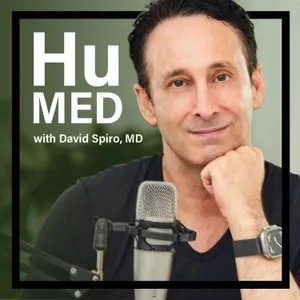
HuMed with David Spiro, MD: Daily Summaries Delivered
by David Spiro
HuMed goes beyond diagnoses and procedures to explore the profound human experiences of medical professionals. Join Dr. Spiro as he engages in deep, candid conversations with fellow doctors, nurses, and other healthcare providers. They share the often-unseen realities of their work in the demanding hospital environment – the challenging cases, the emotional toll, and the ethical dilemmas they navigate daily.
Latest Episodes
The most recent episodes — sign up to get AI-powered summaries of each one.
- 2 days ago37 min
Psychiatrist Dr. Paniz Johari: When a Patient Dies — Grief, Guilt & Radical Acceptance
"One of our social workers knocked on the door and said, so-and-so killed himself. I was just in shock."What do you do with the rest of your day after that? Psychiatrist Dr. Paniz Johari joins Dr. David Spiro to talk about one of the least-discussed parts of medicine — losing a patient, and carrying it afterward.Dr. Johari, an attending psychiatrist at Mather Hospital / Northwell Health, wrote a JAMA "A Piece of My Mind" essay called "On Losing a Patient" that moved David enough to reach out. Together they trace its thread: the shock and disbelief, replaying an encounter that felt "ordinary," the guilt of wondering what you missed, and the long work of separating confidence from certainty — what she calls "radical acceptance," and why accepting the limits of our control "is not surrendering."They also get into how psychiatrists weigh whether a patient is safe to go home, why she chose the field, what's happened to mental health since COVID, the roles of sleep, exercise, and diet, and the stigma that still surrounds psychiatric care.▶ Follow HuMed on Apple Podcasts so you never miss an episode — it's the single best way to support the show.Chapters:0:00 Intro — Dr. Paniz Johari and her essay1:37 Losing a patient: the story3:12 Writing as catharsis4:36 Hearing the news7:41 Assessing who's safe to go home11:09 "How ordinary it felt"14:34 Why she chose psychiatry17:25 Mental health since COVID21:13 Sleep, wearables, and mood25:58 The stigma around psychiatric care27:49 Therapy, exercise, and self-care34:04 "Accepting is not surrendering"If you or someone you know is struggling, call or text 988 — the Suicide & Crisis Lifeline, available 24/7 in the US.HuMed with David Spiro, MD — unveiling the human side of medicine. New episodes weekly on Apple Podcasts, Spotify, and YouTube.podscan_rLPAXfcJVELgUhwcd66rLVyErpUcGFTV
- 6 days ago38 min
Dr. Lois Lee: Protecting Kids from Gun Violence, and the Fight for Their Health
What if the biggest threats to a child's life are also the most preventable? Dr. Lois Lee — pediatric emergency medicine physician and researcher at Boston Children's Hospital, professor of clinical pediatrics at Harvard Medical School, and a candidate for AAP president-elect — joins Dr. David Spiro on HuMed to talk about the work of keeping kids safe: from gun violence and injury prevention to vaccines, Medicaid, and the advocacy that changes policy.Dr. Lee opens with the residency moment that shaped her career — a family forced to choose between buying food and their child's asthma inhaler — and traces how that experience led to decades of research and legislation. She explains why she frames firearm safety the way pediatricians approach drowning prevention, why most firearm deaths are suicides rather than homicides, the "agree to agree" approach to finding common ground, and what worries her most about children's health today. It's a candid, hopeful conversation about how one physician decided to change the system — and how anyone can start.In this episode:– The story that started it all: "food or medicine"– How universal child health insurance changed outcomes– Passing booster-seat and ATV-safety laws– Firearm safety framed as injury and suicide prevention– Why local data changes the conversation on guns– Medicaid, CHIP, and the fallout she fears from HR1– Vaccines and the return of preventable disease– Advice for physicians who want to make changeChapters00:00 "Food or medicine": the moment that shaped a career00:23 Meet Dr. Lois Lee01:44 A family forced to choose between food and medicine03:33 How universal child health insurance changed outcomes06:13 The mentor, airbags, and kids in the front seat07:35 Passing booster-seat and ATV laws in Massachusetts09:35 Did the ATV law actually reduce injuries?10:42 Staying human: balance and boundaries12:07 Music, and returning to the piano at Emory15:15 How music makes a better physician and leader16:27 Firearms: the #1 cause of death for U.S. children17:16 Is it uncomfortable to talk about gun violence?18:41 Firearm safety framed like drowning prevention20:06 "Agree to agree": finding common ground21:14 Secure storage and hunting culture22:56 Advice for doctors who want to change the system25:09 Why most firearm deaths are suicides, not homicides26:33 Mental health in the pediatric ER27:14 What keeps her up at night: Medicaid, CHIP & HR130:04 Vaccines and the return of preventable disease30:49 Telling the truth in an age of misinformation33:56 Should the ER discuss vaccines? Teachable moments36:16 Closing reflections & why she still loves the workHuMed unveils the human side of medicine, hosted by Dr. David Spiro, MD. New episodes on Apple Podcasts, Spotify, and YouTube — please follow and leave a rating, it helps other listeners find the show.If you or someone you know is struggling, call or text the 988 Suicide & Crisis Lifeline (U.S.).
- 1 weeks ago42 min
Navy Anesthesiologist Dr. Zachary Meade: From Childhood Trauma to Becoming a Doctor
Dr. Zachary Meade watched his grandfather shoot his father to save his mother's life. He was a child. He thought it was normal. "Apparently it's not normal."Dr. Meade is a Navy anesthesiologist based in San Diego who took one of the least conventional roads into medicine you will ever hear. Before medical school he was an Army bomb squad technician, a firefighter, an EMT, and an electrical engineer, and he served in the Army, the Air Force, and the Navy. Before any of that he was a kid in Indiana and Florida moving between homes and foster care, failing freshman English, with nobody in his family who had ever done any of this. Today he reaches over 400,000 people online debunking medical misinformation. In this conversation with Dr. David Spiro, he talks about the grandparents who rebuilt his foundation, what the bomb squad taught him about attention to detail ("an 84 essentially meant you died"), the faith that gave him purpose, and the hardest question of the episode: has he forgiven his parents? He shares the phone call that ended contact with his father, the rule that helped his mother get sober, and the "cultural divide" that opens up when you become the first physician in your family. He closes with what he would say to 10-year-old Zach, and Dr. Spiro responds with a story from his own pediatric ER that he says will change how he practices.Chapters: Cold Open: "My Dad Was a Very Violent Man" Welcome & Meet Dr. Zachary Meade "I Never Saw Me Being a Physician" Indiana, Florida, and a Childhood That Wasn't Normal Foster Care and a Greyhound Bus Through Fort Benning Joining the Army at 17: Bomb Squad, Not Chaplain The Grandparents Who Rebuilt His Foundation Bill Henson: Forgiveness, Hard Work, and the Balance Between What the Bomb Squad Taught Him: "An 84 Meant You Died" Wounded Veterans and the Pivot to Engineering Carle Illinois College of Medicine: Building Physician Innovators Landmines in the Woods: The Stateside EOD Mission Why He Chose the Navy How Childhood Trauma Shaped Him as a Physician A Steeper Hill Than His Peers How Faith Shaped Him What It Means to Serve "Have You Forgiven Them?" Married at 20 and Realizing What Normal Was His Father's Relapse and the Phone Call From the NICU "I Can Love Him. I Can Even Forgive Him." The Rule That Helped His Mother Get Sober The Cultural Divide: "I Concur, Doctor" Reaching 400,000 People Online Fighting Misinformation That Can Kill Tommy Martin and Doing Good on Social Media What Would You Tell 10-Year-Old Zach? "This Is Just the Intro Scene to Your Life" Dr. Spiro's Story: "I'm Here Because No One Loves Me" Closing Thoughts and Zach's Question for DavidFollow HuMed so you never miss an episode.
- 2 weeks ago53 min
Dr. Robert Beck: Medical Futility and Who We Decide to Save
Two attending physicians declared medical futility on a man in hislate 40s. He was awake. He was begging for the ICU. He was beggingfor his mother. And the only doctor at his bedside that night wasan intern on his second call shift.Dr. Robert Beck has carried that night for nineteen years.In his second appearance on HuMed, Dr. Beck tells the story of apatient at New Orleans' Charity Hospital in July 2007 — and what ittaught him about paternalism, about abandoning learners, and aboutthe difference between a clinical judgment and a judgment aboutwhose life is worth saving. David asks him directly whether racechanged the outcome, and Dr. Beck's pause before answering is theturning point of the episode.The second half is a practical masterclass: how to deliver badnews, the four questions every patient is actually asking, and howend-of-life care and medical assistance in dying work in theCanadian system where Dr. Beck now practices.ABOUT THE GUESTDr. Robert Beck is an internist. He completed medical school,internal medicine residency, and a chief residency at Tulane, spentten years in private practice in Tennessee, and moved to thePacific Northwest of Canada in 2020. He hosts The Interesting MDpodcast.IN THIS EPISODE00:00 "He wasn't worthy of the care"00:24 Welcome back, Dr. Robert Beck02:03 What counts as a difficult conversation?02:46 July 2007: second call night at Charity Hospital05:13 The patient nobody wanted to touch06:08 Two attendings declare medical futility07:40 "His die is cast"10:02 Alone at the bedside until 4:30am12:28 How it changed the way he supervises residents13:11 "Do you think if he were white it would have been different?"14:04 A pattern of practice15:32 Paternalism vs. shared decision-making19:03 Two white physicians talk about privilege21:10 White flight on his childhood street23:11 "Society was never going to allow him"26:10 How to give bad news: the four questions31:19 Sit down. Eye level. Every time.33:03 Giving bad news in the pediatric ER36:30 Teaching residents to deliver the worst news39:09 When a patient chooses not to treat40:09 Medical assistance in dying in Canada43:14 The four pathways of end-of-life care47:52 How the MAID assessment actually works51:26 How a society treats its most vulnerableA note on content: this episode includes frank clinical descriptionof sepsis, wound infection, and a patient's death.Dr. Beck's podcast, The Interesting MDHuMed is hosted by David Spiro, MD. New episodes weekly. If thisone resonated, the most useful thing you can do is leave a ratingon Apple Podcasts or Spotify — it's how other clinicians find us!
- 3 weeks ago50 min
Pediatric Oncologist Dr. Joana Mack: "I'm Not Bossy, I'm the Boss"
Dr. Joana Mack has been called "bossy" her whole career — in training, at work, even by her own mom. Now, she just says it back differently: "I'm not bossy, I'm the boss."Dr. Mack is a board-certified pediatric hematologist-oncologist, NIH-funded researcher, and mother of five daughters, practicing at Arkansas Children's Hospital and UAMS. In this conversation with Dr. David Spiro, she opens up about the everyday bias she still encounters as a woman in medicine, how artificial intelligence is reshaping (and sometimes eroding) communication between doctors, why she's stopped chasing "work-life balance" in favor of "work-life integration," and the rituals — prayer, permission to cry, a trampoline park at midnight — that get her through the hardest days of treating children with cancer. She also shares a story from Dr. Todd Maxson's Grand Rounds that changed how she trains the next generation of physicians, and reflects on how far childhood leukemia survival has come in her lifetime, from a near-certain death sentence to roughly 90% remission today. Cold Open: "I Went to the Trampoline Park" Welcome & Meet Dr. Joana Mack Called "Bossy" Her Whole Life "I'm Not Bossy, I'm the Boss" Balancing 4 Jobs and 5 Daughters Staying Present as a Working Mom The Email That Calls Everyone "Doctor" Except Her Naming Unconscious Bias at Work Being a Role Model for the Next Generation AI in Medicine: Efficiency vs. Connection From "Google Parents" to AI-Informed Parents Prioritizing Herself and Her Marriage Phones, Sleep, and Circadian Disruption Why She Pours Into Medical Students Dr. Todd Maxson's Grand Rounds Story From a Death Sentence to 90% Survival How She Copes: Prayer, Tears, and the Trampoline Park A Prayer Circle in the ER The Village That Makes It Possible Closing ThoughtsThis episode is also available on video on YouTube and Apple Podcasts. Follow HuMed so you never miss an episode.
- Aug 18, 202644 min
The Science of Stem Cells, Exosomes, and Healthy Aging with Dr. Mari Mitrani
Can regenerative medicine help us live healthier for longer?Physician-scientist and biotech entrepreneur Dr. Mari Mitrani joins Dr. David Spiro to explain the evolving science of stem cells and exosomes—including how these therapies work, where the evidence stands, and why responsible research and regulation are essential.They also explore the foundations of healthy aging that are available to nearly everyone: nutrition, sleep, movement, strength training, hydration, community, and purpose. Dr. Mitrani shares the life-changing experience that led her to medicine, her journey into biotechnology, and her vision for a more compassionate future in healthcare.This conversation is for educational purposes only and does not constitute medical advice.00:00 Meet Dr. Mari Mitrani 02:03 The night that inspired her 07:21 Entering biotechnology 11:11 How stem cells work 18:25 Healthspan versus lifespan 20:38 Foundations of healthy aging 23:15 Community and longevity 27:15 The future of stem cells 30:00 Why exosomes matter 34:02 Could humans live to 125? 35:30 Strength, bones and women’s health 38:07 Veganism and compassionate innovation
- Aug 11, 202639 min
When the Doctor Becomes the Patient: Dr. Adam Bitterman On His Open-Heart Surgery
What happens when a surgeon suddenly finds himself on the other side of the patient–doctor relationship?Dr. Adam Bitterman—orthopedic surgeon, educator, and chair of orthopedic surgery at Huntington Hospital—joins Dr. David Spiro to discuss being diagnosed with an aortic aneurysm and undergoing urgent open-heart surgery.Dr. Bitterman shares the fear of preparing for a seven-hour operation, the atrial fibrillation that required a second procedure, and the challenge of stepping away from his patients, colleagues, and family responsibilities. He also explains how becoming a patient transformed his approach to clinical care, physician health, work-life boundaries, and after-hours calls from frightened patients.This candid conversation explores physician vulnerability, returning to medicine after serious illness, and why health, family, and a trusted support system must come first.HuMed: Human Medicine reveals the human side of healthcare through honest conversations with physicians, patients, and healthcare leaders.
- Aug 4, 202654 min
It’s Not Always Hemorrhoids: Anal Health with Dr. Talar Tejerian
Not every anal health problem is a hemorrhoid. Board-certified general surgeon Dr. Talar Tejerian joins Dr. David Spiro to explain the differences between hemorrhoids and anal fissures—and why persistent pain, bleeding, or other symptoms should not be dismissed.Dr. Tejerian is the founder of Booty MD, a nonprofit dedicated to making anal health education clear, evidence-based, and free from shame. She discusses why anal health remains stigmatized, how gaps in medical training can contribute to misdiagnosis, and why conditions such as fissures, fistulas, inflammatory bowel disease, and anal cancer may sometimes be mistaken for hemorrhoids.The conversation also explores:• The three-minute toilet rule• How prolonged toilet sitting and straining affect hemorrhoidal tissue• The difference between hemorrhoids and anal fissures• Constipation, diet, and bowel health• HPV vaccination and anal cancer prevention• Why a proper examination matters• The risks associated with rectal foreign bodies• How physicians can discuss sensitive health concerns without judgmentCHAPTERS00:00:00 The three-minute toilet rule00:00:29 Meet Dr. Talar Tejerian00:02:38 Why she founded Booty MD00:08:33 Breaking the stigma around anal health00:12:10 Gaps in medical training and examination00:20:11 Anal cancer, colorectal cancer, and HPV00:24:39 Diet, constipation, and anal health00:25:06 Hemorrhoids versus anal fissures00:31:26 Is scrolling on the toilet harmful?00:33:45 Rectal foreign bodies and emergency care00:42:24 The future of Booty MD00:45:39 Health education through social media00:49:38 Authenticity and trust in medicine00:53:50 Closing thoughts
About HuMed with David Spiro, MD
HuMed goes beyond diagnoses and procedures to explore the profound human experiences of medical professionals. Join Dr. Spiro as he engages in deep, candid conversations with fellow doctors, nurses, and other healthcare providers. They share the often-unseen realities of their work in the demanding hospital environment – the challenging cases, the emotional toll, and the ethical dilemmas they navigate daily.
Customized Recaps
AI-powered recaps with compact key takeaways, quotes, and insights.
Straight to Your Inbox
Get key takeaways from HuMed with David Spiro, MD in a 5-minute read.
Save Hours Every Week
Stay current on your favorite podcasts without falling behind.
Frequently Asked Questions
What is Podzilla's HuMed with David Spiro, MD daily summary?
It's a free AI-powered email that summarizes new episodes of HuMed with David Spiro, MD as soon as they're published. You get the key takeaways, notable quotes, and links & mentions — all in a quick read.
How does the HuMed with David Spiro, MD podcast summary work?
When a new episode drops, our AI transcribes and analyzes it, then generates a personalized summary tailored to your interests and profession. It's delivered to your inbox every morning.
Is this an official HuMed with David Spiro, MD product?
No. Podzilla is an independent service that summarizes publicly available podcast content. We're not affiliated with or endorsed by David Spiro.
Can I get summaries of other podcasts too?
Absolutely! The free plan covers up to 3 podcasts. Upgrade to Pro for 15, or Premium for 50. Browse our full catalog at /podcasts.
How often does HuMed with David Spiro, MD release new episodes?
HuMed with David Spiro, MD publishes weekly. Our AI generates a summary within hours of each new episode.
What topics does HuMed with David Spiro, MD cover?
HuMed with David Spiro, MD covers topics including Medicine, Fitness, Health & Fitness. Our AI identifies the specific themes in each episode and highlights what matters most to you.
Start getting HuMed with David Spiro, MD summaries tomorrow morning.
Free forever for up to 3 podcasts. No credit card required.
Free forever for up to 3 podcasts. No credit card required.