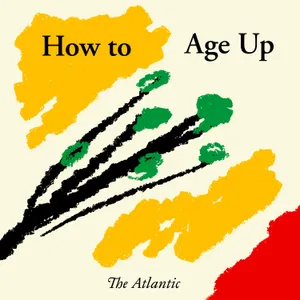
Free Daily Podcast Summary
How to Age Up: Daily Summaries Delivered
by The Atlantic
The science around aging is expanding but are our cultural narratives keeping up?
Latest Episodes
The most recent episodes — sign up to get AI-powered summaries of each one.
- May 12, 202541 min
How to Age Up on a Warming Planet
How should we think about aging when the impacts of climate change can make the future feel so uncertain? That’s a question Sarah Ray, professor and chair of environmental studies at Cal Poly Humboldt, has been helping her students consider. Though climate anxiety can cause some to feel overwhelmed, Ray has tips for how to minimize doom loops and inaction. How to Age Up co-hosts Yasmin Tayag and Natalie Brennan talk about how current climate concerns compare to the existential crises of previous generations, and how to practice hope during uncertain times. Here is a link to the full poem “The Low Road” by Marge Piercy. A passage is referenced in this episode. Learn more about your ad choices. Visit megaphone.fm/adchoices
- May 5, 202531 min
How to Define Old Age
In 2021 Dr. Kiran Rabheru, a professor of psychiatry at the University of Ottawa and a geriatric psychiatrist, found himself at the center of a medical debate. The World Health Organization wanted to officially designate “old age” as a disease, but with more than 40 years of work with aging populations, Rabheru saw this as another example of ageism that needed to be challenged. Dr. Rabheru talks with Yasmin Tayag about how he fought the WHO and about the impact such designations can have on research and our understanding of growing old. Learn more about your ad choices. Visit megaphone.fm/adchoices
- Apr 28, 202536 min
How to Age Up Together
In the next 10 years, our society will become more old than young. How do we leverage this time to build stronger intergenerational connections? Eunice Nichols, the co-CEO of CoGenerate, has spent more than two decades bringing older and younger people together to address issues that affect us cross-generationally. She explains how a history of structural policies, some of them great innovations, have contributed to this age-segregated era and about what a future could look like if people from different generations choose to partner together more often. Learn more about your ad choices. Visit megaphone.fm/adchoices
- Apr 21, 202536 min
How to Fuel Up
Food trends are constantly changing, so can people commit to a long-term nutrition practice? Kera Nyemb-Diop says yes. She is a nutrition scientist focused on breaking down the “rules” of what people think they should eat and focusing instead on being responsive to how our needs change over the course of a life. Co-hosts Yasmin Tayag and Natalie Brennan reconsider their own food habits and which practices are worth hanging on to for the long haul. How do you think about aging? Please leave us a voicemail (at 202-266-7701) with your name, your age, and your answers to the following questions: What aspects of aging are you nervous about? What are you looking forward to as you age? Who do you hope to be like when you are older? Is there someone in your life who has made you excited about getting older? Leaving a voicemail means that you are consenting to the possibility of The Atlantic using your audio in a future episode of How To. Learn more about your ad choices. Visit megaphone.fm/adchoices
- Apr 14, 202539 min
How to Wish You Were 66 Instead of 35
We don’t often talk about the benefits of aging. Dr.Karen Adams has a different perspective. From new beginnings to menopausal zest, the director of the Stanford Program in Menopause & Healthy Aging discusses what women can look forward to as they age up. How do you think about aging? Please leave us a voicemail (at 202-266-7701) with your name, your age, and your answers to the following questions: What aspects of aging are you nervous about? What are you looking forward to as you age? Who do you hope to be like when you are older? Is there someone in your life who has made you excited about getting older? Leaving a voicemail means that you are consenting to the possibility of The Atlantic using your audio in a future episode of How To. Learn more about your ad choices. Visit megaphone.fm/adchoices
- Apr 7, 202539 min
How to Defy Death
Humans have always tried to prolong life and battle mortality, but what do the current influx of biohackers reveal about this era of individual responsibility? Timothy Caulfield, a professor and the research director at the Health Law Institute at the University of Alberta, studies how health and science are represented in the public sphere. The lines between wellness culture, longevity, and biohacking are beginning to blur, and Caulfield offers advice about how to dodge misinformation and unproven theories while still pursuing a long and meaningful life. Listeners, how do you think about aging? Please leave us a voicemail (202-266-7701) with your name, your age, and answers to the following questions: What aspects of aging are you nervous about? What are you looking forward to as you age? Who do you hope to be like when you are older? Is there someone in your life who has made you excited to get older? Leaving a voicemail means that you are consenting to the possibility of The Atlantic using your audio in a future episode of How To. Learn more about your ad choices. Visit megaphone.fm/adchoices
- Mar 10, 20252 min
Introducing: How to Age Up
Our scientific understanding of the aging process may be expanding, but is our cultural thinking about aging keeping up? In the new season of The Atlantic’s popular How To series, co-hosts Yasmin Tayag and Natalie Brennan explore the cultural gamification of aging, the obsession with defying this inevitable process, and how we might shift our understanding of aging to embrace the beauty of being mortal. Just as “leveling up” is a positive notion, How to Age Up challenges listeners to consider how we all, regardless of our specific age, might live better. How do you think about aging? Please send a voice memo to howtopodcast@theatlantic.com with your name, your age, and answers to the following questions: What aspects of aging are you nervous about? What are you looking forward to as you age? Who do you hope to be like when you are older? Is there someone in your life who has made you excited to get older? Sending in a voice note means that you are consenting to the possibility of The Atlantic using your audio in a future episode of How To. Learn more about your ad choices. Visit megaphone.fm/adchoices
- Dec 30, 202438 min
Best of “How To”: Make Small Talk
This new season of How To is a collection of our favorite episodes from past seasons—a best-of series focused on slowing down, making space, and finding meaning in our hectic lives. This episode is the last in the collection and is from our fourth season, How to Talk to People. The episode features host Julie Beck in conversation with hairstylists and self-described socially anxious people about how they overcome the barriers to starting conversations and building relationships. Write to us at howtopodcast@theatlantic.com. Learn more about your ad choices. Visit megaphone.fm/adchoices
Get How to Age Up summaries in your inbox
Free AI-powered daily recaps. Key takeaways, quotes, and mentions — in a 5-minute read.
Get Free Summaries →Free forever for up to 3 podcasts. No credit card required.
You Might Also Like
Listeners also like.
Ageless Athlete — Healthy Aging for a Strong, Capable Life
Discussions with athletes, scientists, and coaches on maintaining strength, mobility, and endurance for lifelong physical capability.

Good Life Project
Explores meaningful living through conversations with experts in science, culture, and the arts.

The Human Upgrade: Biohacking for Longevity & Performance
Discusses biohacking, longevity, and performance with experts in science and medicine.

Crazy/Genius
Explores how the internet shapes society, politics, and reality through discussions on AI, misinformation, and digital culture.

Almost 30
Best friends explore personal growth, wellness, and life transitions through candid conversations and expert interviews.
FoundMyFitness
A podcast exploring health, science, nutrition, aging, and fitness.

Inquiring Minds
Explores the intersection of science and society through critical thinking and in-depth analysis.

The Opinions
Analysis and commentary on current events to help understand the news.

The Psychology of your 20s
Examines the psychology behind common experiences in your twenties, including relationships, mental health, and career development.

The Genius Life
A science-based wellness podcast exploring nutrition, longevity, and health with a focus on practical, evidence-driven insights.

The World, the Universe and Us
Explores big scientific questions about life, consciousness, climate, and the cosmos with expert scientists and New Scientist journalists.
How to Be a Better Human
Conversations exploring practical ways to improve yourself and connect more meaningfully with others, inspired by TED’s Ideas blog.
About How to Age Up
The science around aging is expanding but are our cultural narratives keeping up?
Customized Recaps
AI-powered recaps with compact key takeaways, quotes, and insights.
Straight to Your Inbox
Get key takeaways from How to Age Up in a 5-minute read.
Save Hours Every Week
Stay current on your favorite podcasts without falling behind.
Frequently Asked Questions
What is Podzilla's How to Age Up daily summary?
It's a free AI-powered email that summarizes new episodes of How to Age Up as soon as they're published. You get the key takeaways, notable quotes, and links & mentions — all in a quick read.
How does the How to Age Up podcast summary work?
When a new episode drops, our AI transcribes and analyzes it, then generates a personalized summary tailored to your interests and profession. It's delivered to your inbox every morning.
Is this an official How to Age Up product?
No. Podzilla is an independent service that summarizes publicly available podcast content. We're not affiliated with or endorsed by The Atlantic.
Can I get summaries of other podcasts too?
Absolutely! The free plan covers up to 3 podcasts. Upgrade to Pro for 15, or Premium for 50. Browse our full catalog at /podcasts.
How often does How to Age Up release new episodes?
How to Age Up publishes weekly. Our AI generates a summary within hours of each new episode.
What topics does How to Age Up cover?
How to Age Up covers topics including Science, Education, Culture, Society & Culture, Social Sciences, Self-Improvement. Our AI identifies the specific themes in each episode and highlights what matters most to you.
Start getting How to Age Up summaries tomorrow morning.
Free forever for up to 3 podcasts. No credit card required.
Free forever for up to 3 podcasts. No credit card required.