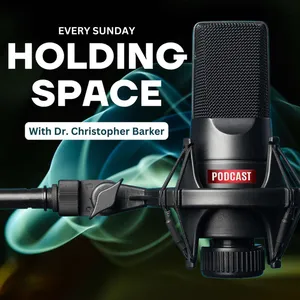
Free Daily Podcast Summary
Holding Space with Dr. Barker: Daily Summaries Delivered
by Dr. Christopher Barker
Holding Space with Dr. Christopher Barker is a psychology podcast focused on how unresolved complex trauma shapes daily life — from childhood through adulthood.Complex trauma isn’t only about major events. It develops through chronic stress, attachment wounds, emotional neglect, and relational instability. Over time, these survival adaptations can show up as ADHD-like symptoms in children, emotional dysregulation, workplace conflict, burnout, leadership struggles, relationship challenges, and intergenerational family patterns.Through the lens of EMDR therapy, attachment theory, neuroscience, and trauma-informed care, Dr. Barker explains how the nervous system learns to survive — and how healing becomes possible.Each episode offers research-based insight and practical tools for regulating triggers, improving relationships, and moving from survival mode to intentional living.Understanding your story is the be
Latest Episodes
The most recent episodes — sign up to get AI-powered summaries of each one.
- 2 days ago8 min
Forgiveness After Betrayal: What It Really Means
Forgiveness is not the same as trust, reconciliation, or giving someone access to your life again.In this solo episode, Dr. Christopher Barker explores what forgiveness can mean after betrayal, abuse, or lasting harm—and why it should never become another obligation placed on the person who was hurt. He discusses accountability, anger, boundaries, and the possibility of building a fuller life even when forgiveness feels impossible. Learn more and find resources at www.drchristopherbarker.com — and if this episode helped you, follow Holding Space with Dr. Barker so you never miss an episode.
- 4 days ago27 min
Grit, Gratitude, and the Courage to Keep Going with Laura Bratton
At nine years old, Laura Bratton was diagnosed with a rare retinal disease. Without a timeline or roadmap, she gradually lost her usable vision and was completely blind by the time she graduated from high school.In this deeply honest episode of Holding Space, Laura joins clinical psychologist Dr. Christopher Barker to discuss the grief, depression, anxiety, and panic attacks that accompanied that transition—and the people and practices that helped her continue moving forward.Laura explains why resilience is rarely smooth or linear, how her family taught her to take life one day at a time, and why being supported does not make someone weak. She also challenges the idea that gratitude means denying pain or pretending everything is positive. Instead, gratitude can help us recognize what continues to sustain us while still honoring how difficult life can be.Together, Laura and Dr. Barker explore healthy interdependence, the healing power of being treated like yourself, finding continuity during trauma, and why a major loss does not have to become your entire identity.Laura’s message is both simple and powerful: regardless of your circumstances, you and your humanity are enough.Learn more about Laura Bratton:https://www.laurabratton.comLearn more about Dr. Christopher Barker and Holding Space:https://drchristopherbarker.com
- 1 weeks ago16 min
The Loneliness of Being the Dependable One
What happens when everyone relies on you, but you do not know who you can rely on?In this solo episode of Holding Space, clinical psychologist Dr. Christopher Barker explores the hidden loneliness of being the dependable one—the person who solves problems, calms others, and carries more than anyone realizes.Dr. Barker examines how this role can begin with parentification, childhood emotional responsibility, family hardship, workplace pressure, or relationships in which being useful becomes closely tied to belonging. He also discusses hyper-independence, burnout, the discomfort of receiving care, and why asking for help can feel riskier than handling everything alone.This conversation offers a compassionate reminder: your needs are not unreasonable, and another person’s inability to support you is not proof that you asked for too much.Learn more about Dr. Christopher Barker, his work, and Holding Space at https://drchristopherbarker.com.
- 2 weeks ago4 min
The Road Ahead Can Be Different: Healing Is Messy—Keep Going
From the rugged trails and waterfalls of Torrin Pools on Scotland’s Isle of Skye, Dr. Christopher Barker reflects on the road behind us—and the one still ahead.Complex trauma can teach us to expect the future to repeat the past. Even when the danger has ended, we may remain in survival mode, waiting for the next bad thing to happen. But the road ahead can also lead toward repair, intimacy, connection, and joy.That does not mean the journey will be smooth. There may still be slippery rocks, unexpected setbacks, and enough mud to ruin a perfectly good pair of jeans. Healing is often complicated and messy—but continuing forward allows us to experience moments we would have missed by staying where we were.Pause. Look around. The road ahead may be difficult, but it does not have to be the same as the road behind.A special two-part reflection from Holding Space on the Road: Scotland.
- 2 weeks ago35 min
Beyond the Diagnosis: C-PTSD, Culture & the Healing Power of Community with Dr. Sandra Evers
What happens when trauma is treated as a diagnosis without fully hearing the life behind it?In this episode of Holding Space, Dr. Christopher Barker speaks with anthropologist, researcher, author, and survivor Dr. Sandra J.T.M. Evers about relational violence, institutional harm, C-PTSD, and the human capacity for resilience.Dr. Evers shares how an abusive relationship left her physically free but still imprisoned by fear, nightmares, and a nervous system prepared for danger. She also explains how lessons from her anthropological work in Madagascar helped her reconnect with community, culture, spirituality, and her own sense of self.Together, they explore:Why leaving an abusive relationship is rarely as simple as “just leave”How trauma can remain active in the body after the danger has passedThe isolation often created by coercive and controlling relationshipsWhy a diagnosis should never replace listening to the whole personHow culture shapes our understanding of trauma, grief, and healingThe importance of community, connection, and moments of relational repairWhy mental healthcare must consider a person’s social and cultural contextHow medication may be one tool without addressing every source of sufferingThis is a conversation about horror, hope, and what becomes possible when people are seen as more than their symptoms.Content note: This episode contains discussions of domestic and sexual violence, coercive control, attempted femicide, psychiatric hospitalization, self-harm, suicide, and euthanasia. Please listen with care.Learn more about Dr. Sandra Evers: sandrajtmevers.nlTo learn more about Dr. Christopher Barker or contact him, visit drchristopherbarker.com.This conversation reflects the guest’s personal experiences and perspectives and is not medical advice. Medication can be beneficial for some people. Never stop or change prescribed medication without consulting a qualified healthcare professional.
- 3 weeks ago8 min
Holding Space on the Road: Scotland — History, Fear & the Path to Healing
Three places. Three reflections. One journey from survival toward healing.Travel through Scotland with Dr. Christopher Barker as he explores how we can honor our history without allowing it to dictate our future, move forward while fear is still present, and rediscover joy along the way.Join clinical psychologist Dr. Christopher Barker for a special Holding Space on the Road episode filmed across Scotland.Outside the historic Dean Castle, Dr. Barker reflects on the stories and experiences we inherit—and why our history does not have to determine our future.From the windswept mountains of Glencoe, he explores what it means to keep moving when fear is present, remain grounded in the pause between past and future, and make room for everything that could go right.Finally, among the many layers of Edinburgh, he considers why healing does not require erasing trauma. The past may always be part of our story, but it does not always have to remain at the forefront of our lives.Together, these reflections explore the journey from survival to a victory mindset—one that allows space for intimacy, beauty, fulfillment, and joy.
- 3 weeks ago31 min
When Trauma Feels Like Love: Breaking Toxic Relationship Patterns
What if what feels like chemistry is actually your nervous system recognizing chaos?After surviving childhood abuse, Anu Verma spent decades disconnected from her emotions and searching outside herself for love, safety, and acceptance. She found herself moving from one unhealthy relationship to another without understanding why the pattern kept repeating.In this deeply personal episode of Holding Space, Anu joins clinical psychologist Dr. Christopher Barker to explore how childhood trauma can shape self-worth, attachment, communication, and the relationships we choose as adults.Together, they discuss:• Why familiar chaos can be mistaken for love• How childhood trauma can influence adult relationship patterns• Why external validation may feel essential when self-worth is absent• How dissociation can make it difficult to recognize or express emotions• Why some trauma survivors shut down during conflict• The connection between abandonment wounds and hyper-independence• How substances, relationships, travel, and entertainment can become ways of avoiding pain• Why understanding a pattern is different from changing it• The role therapy played in helping Anu feel safe and develop healthier coping skills• How inner-child work helped her reconnect with the little girl who felt abandoned• Why healing may require attention to both the mind and body• How writing helped Anu understand and organize her experiences• What forgiveness can mean without excusing abuse or minimizing its impact• Why self-compassion remains important when triggers returnAnu also speaks openly about surviving multiple suicide attempts, reaching rock bottom, and gradually finding a reason to remain alive. Her story is not about pretending that the past no longer hurts. It is about recognizing that the past can shape us without being allowed to define our future.You were doing the best you could with what you understood at the time. The child you once were still deserves compassion, protection, and love.Learn more about Anu:https://www.youtube.com/channel/UCzhhmjStavLAZdhKgWjQb0Qhttps://linktr.ee/healing.journeyyLearn more about Dr. Christopher Barker:https://www.drchristopherbarker.comContent note: This episode discusses childhood abuse, suicidal thoughts and attempts, substance use, domestic violence, dissociation, complex PTSD, and unhealthy relationships.If you are thinking about suicide or believe you may be in immediate danger, please contact local emergency services or a crisis-support service in your country. This conversation is educational and is not a substitute for professional mental health care.
- Oct 8, 202627 min
Why We Repeat Painful Relationships: Healing Attachment Wounds Through the Body
Why can you understand that a relationship is unhealthy and still feel unable to let go?Attachment wounds do not exist only in our thoughts. They can become deeply embedded in the body, shaping whom we are drawn to, how we respond to uncertainty, and why painful relationship patterns continue even after we understand them intellectually.In this episode of Holding Space, clinical psychologist Dr. Christopher Barker speaks with Ben Oofana, an instructor and healing practitioner who has spent more than 35 years working with people navigating heartbreak, grief, trauma, and major life transitions.Drawing from his lived experience with insecure attachment, psychotherapy, meditation, traditional healing practices, bodywork, and Chinese internal arts, Ben describes how he began recognizing and transforming the patterns that repeatedly drew him toward unavailable or harmful relationships.Together, they explore:• Why insight alone may not change deeply ingrained relationship patterns• How attachment wounds can influence attraction and emotional bonding• Why we may remain fixated on people who are unavailable or unhealthy for us• The connection between trauma, dissociation, and disconnection from the body• How emotions and physical sensations can reveal what the mind has learned to suppress• Why healing involves processing lived experiences rather than simply understanding them• The role of psychotherapy, breathwork, meditation, body awareness, and consistent practice• How reparative experiences can gradually teach the nervous system that connection is safe• Why even fifteen minutes of daily practice can support meaningful change• The importance of finding qualified support when emotions feel overwhelming• Why healing requires patience, repetition, and a willingness to face discomfortBen and Dr. Barker also discuss a truth that many people discover during recovery: knowing why a pattern exists and being free from that pattern are not always the same thing.Healing is rarely an instant breakthrough. More often, it is the gradual process of becoming present enough to respond differently.Connect with Ben Oofana:Website: https://benoofana.com/Instagram: https://www.instagram.com/benoofana/Breakup First Aid: https://breakupfirstaid.com/Heal My Heartache: https://healmyheartache.com/Learn more about Dr. Christopher Barker:https://www.drchristopherbarker.comContent note: This episode discusses childhood trauma, insecure attachment, abusive relationships, grief, dissociation, heartbreak, and war-related suffering.The traditional and complementary practices discussed reflect the guest’s personal and professional perspective. This conversation is educational and is not a substitute for licensed mental health or medical care.
Get Holding Space with Dr. Barker summaries in your inbox
Free AI-powered daily recaps. Key takeaways, quotes, and mentions — in a 5-minute read.
Get Free Summaries →Free forever for up to 3 podcasts. No credit card required.
You Might Also Like
Listeners also like.
Therapist Uncensored Podcast
Explores mental health and secure relationships through science-backed insights, clinical expertise, and neuroscience.
Being Well with Forrest Hanson and Dr. Rick Hanson
Explores the science of lasting well-being through psychology, neuroscience, and mindfulness with expert guests.

Psychiatry & Psychotherapy Podcast
Explores psychiatry and psychotherapy through interviews with experts, trainees, and individuals sharing lived mental health experiences.
Cultivating H.E.R. Space: Uplifting Conversations for the Black Woman
Black women discuss healing, empowerment, and resilience through honest weekly talks on health, relationships, and personal growth.

Space for Life
Honest conversations about creating emotional and spiritual space for a more fulfilling life.
Normalize It Forward
Discusses mental health during college, focusing on reducing stigma and supporting young adults, parents, and therapists.

The Modern Good
The Modern Good

Dysregulated Kids: Science-Backed Parenting Help for Behavior, Anxiety, ADHD and More
A therapist explains the brain science behind children's behavioral and emotional challenges and offers research-based parenting strategies.

Tony Mantor: Why Not Me ?
Explores autism, mental health, and human stories to promote understanding, challenge stigma, and support neurodiversity.

Grief and Rebirth: Finding the Joy in Life
Explores grief, trauma, and spiritual transformation through conversations with healers, mediums, and resilience experts.
Mind If We Talk?
Two people share raw, intimate conversations about emotional struggles while a therapist guides understanding and growth.

Imperfect Love
A psychologist answers real-life questions on love, self-acceptance, and personal growth using a mindfulness-based approach.
About Holding Space with Dr. Barker
Holding Space with Dr. Christopher Barker is a psychology podcast focused on how unresolved complex trauma shapes daily life — from childhood through adulthood.Complex trauma isn’t only about major events. It develops through chronic stress, attachment wounds, emotional neglect, and relational instability. Over time, these survival adaptations can show up as ADHD-like symptoms in children, emotional dysregulation, workplace conflict, burnout, leadership struggles, relationship challenges, and intergenerational family patterns.Through the lens of EMDR therapy, attachment theory, neuroscience, and trauma-informed care, Dr. Barker explains how the nervous system learns to survive — and how healing becomes possible.Each episode offers research-based insight and practical tools for regulating triggers, improving relationships, and moving from survival mode to intentional living.Understanding your story is the be
Customized Recaps
AI-powered recaps with compact key takeaways, quotes, and insights.
Straight to Your Inbox
Get key takeaways from Holding Space with Dr. Barker in a 5-minute read.
Save Hours Every Week
Stay current on your favorite podcasts without falling behind.
Frequently Asked Questions
What is Podzilla's Holding Space with Dr. Barker daily summary?
It's a free AI-powered email that summarizes new episodes of Holding Space with Dr. Barker as soon as they're published. You get the key takeaways, notable quotes, and links & mentions — all in a quick read.
How does the Holding Space with Dr. Barker podcast summary work?
When a new episode drops, our AI transcribes and analyzes it, then generates a personalized summary tailored to your interests and profession. It's delivered to your inbox every morning.
Is this an official Holding Space with Dr. Barker product?
No. Podzilla is an independent service that summarizes publicly available podcast content. We're not affiliated with or endorsed by Dr. Christopher Barker.
Can I get summaries of other podcasts too?
Absolutely! The free plan covers up to 3 podcasts, any in the catalog. Basic raises that to 15, Pro to 40 and Max to 100. Browse our full catalog at /podcasts.
How often does Holding Space with Dr. Barker release new episodes?
Holding Space with Dr. Barker publishes weekly. Our AI generates a summary within hours of each new episode.
What topics does Holding Space with Dr. Barker cover?
Holding Space with Dr. Barker covers topics including Education, Fitness, Health & Fitness, Mental Health, Self-Improvement. Our AI identifies the specific themes in each episode and highlights what matters most to you.
Start getting Holding Space with Dr. Barker summaries tomorrow morning.
Free forever for up to 3 podcasts. No credit card required.
Free forever for up to 3 podcasts. No credit card required.