Free Daily Podcast Summary
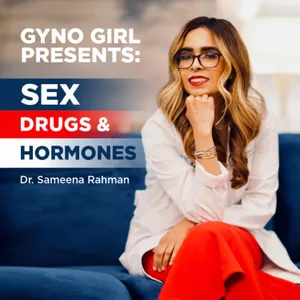
Gyno Girl Presents: Sex, Drugs & Hormones: Daily Summaries Delivered
by Dr. Sameena Rahman
As a fierce champion for women empowering women (and the people that love them), GynoGirl provides the knowledge and education to help you advocate for yourself so that you can live your best life!Dr. Sameena Rahman curates a space for exploring hormonal changes, sexual health, and pelvic wellness, while also emphasizing self-love and life improvement. Through collaborations with leading experts and the personal stories of patients, she provides a platform for knowledge-sharing while also addressing healthcare issues that have impaired women’s quality of life. A board-certified, South-Asian Muslim-American gynecologist who specializes in sex medicine and menopause, Dr. Rahman highlights the influence of religion, culture, racial bias, and societal factors on sexual health experiences.
Latest Episodes
The most recent episodes — sign up to get AI-powered summaries of each one.
- Today50 min
Menopause Around the World: Women Everywhere Are Being Dismissed ft. Dr. Yewande Banire
Menopause is biologically universal, but how women experience it, and whether they even have a word for it, depends a lot on where they live. I talk with Dr. Yewande Banire, a family nurse practitioner who cares for patients in the United States and in Lagos, Nigeria, about what women's health looks like through an international lens. Yewande shares how her own years of heavy periods and fibroid pain, and being told it was just part of being a woman, led her into this work. We talk about why women in Nigeria may not have a name for hot flashes or night sweats, how those symptoms can be mistaken for malaria or typhoid, and what limited access to hormone therapy looks like in practice. We also get into the role a husband's permission can play, early ovarian insufficiency in women under 40, and what birth control pills can offer when hormone therapy isn't available. Yewande closes with a message for patients and for clinicians.What You'll LearnWhy perimenopause and menopause can feel like a "this is not a problem we have" in places where no one is talking about them.How symptoms like joint pain and night sweats get treated as other issues when menopause is the missing piece.What limited access to estrogen and progesterone means for women who can't easily get or afford them.How some cultures have stigma around age, and how a husband’s approval can shape whether women seek care for libido and vaginal dryness.What clinicians can do to meet patients where they are, and why it's okay to refer when you don't know.Get in Touch with Dr. BanireWebsiteInstagramSerenara InstagramLinkedInGet in Touch with Me:WebsiteInstagramYoutubeSubstackOrder my book
- 1 weeks ago37 min
Brown Girls' Disease: A Guide to Sexual Health and Empowerment
Seven years ago, I started keeping notes on patient stories I kept coming back to, including a woman who hadn't been able to have sex in seven years, and a 68-year-old cancer survivor who wanted her life back. Somewhere along the way, I ended up writing about myself too, including something I've never told you before. Those stories became my new book, Brown Girls' Disease?, out October 6th. The title comes from a term I once heard used in a hospital to dismiss South Asian women with vaginismus, and I'm reclaiming it. Culture, religion, and ethnicity do shape how we experience sex, but they're context, not a diagnosis, and this book is for anyone who's ever been dismissed, not just South Asian women.Highlights: Why "Brown Girls' Disease" was originally a dismissive hospital term, and why I'm reclaiming it for a book meant for everyone.The patient stories behind the book.A personal story about my own experience with vaginismus that I've never shared publicly before.Why culture, religion, and shame shape how we experience sex, and why that context matters without becoming a diagnosis.Book Tour Dates (as mentioned in this episode)October 6 — New York City (book pub day) October 8 — Chicago, IL (The Veronica Beard) October 15 — Charlotte, NC (hosted by Dr. Sasha Davenport) October 17 — Worcester, MA (UMass OBGYN Department 50th anniversary) October 18 — Menopalooza, Chicago, IL (with Midlife UpgradeOctober 20 — Los Angeles, CA (The Womb) October 21-24 — San Diego, CA (The Menopause Society annual meeting) October 25 — Cleveland, OH (bookstore event, plus a lunch and learn at the OBGYN/Sexual Medicine department the following day) October 28 — Oak Brook, IL (The Book Loft, book signing) ■November 11-15 — ISSWSH Fall Course December 10 — Palo Alto, CA Get in Touch with Me:WebsiteInstagramYoutubeSubstackPreorder my book
- 2 weeks ago1h 9m
The Neuroscience of Desire, Dopamine, and Orgasm ft. Dr. Jim Pfaus
Dr. Jim Pfaus is a behavioral neuroscientist who has spent decades watching rats have sex to understand what's happening in the brain during desire, arousal, and orgasm. I talk with Jim about what that research can teach us about our own desire, and just how much of it comes down to the brain rather than any one hormone. We tend to assume females have little say in when sex happens, but Jim's research shows the opposite in female rats. They have complete control over whether it happens at all. He also shares a study on partner preference: when a male rat has to wait for one specific female instead of getting instant, easy access to her, he'll seek her out over other females afterward. When there's no wait, that preference never forms. We also get into what dopamine and serotonin are doing during arousal and orgasm, why SSRIs can shut down desire and what can sometimes be adjusted, and the real relationship between testosterone and estrogen in both men's and women's bodies. Jim also explains what might be happening in the brain when GLP-1 medications affect libido, the inverted U-shaped curve behind arousal and performance, how early experiences condition what turns us on for life, why pain responses in conditions like PGAD and vestibulodynia are so hard to fully unlearn, and what his research suggests about psychedelics and sexual connection.What You'll Learn:Why sex is a behavior generated by the brain, not just a matter of hormone levels.What decades of studying rat sexual behavior reveal about desire and consent, including how female rats have complete control over whether sex happens.Why male rats only form a preference for a specific partner when she isn't simply available on demand, and what that suggests about waiting and anticipation.How dopamine drives attention and wanting, and why it drops sharply after orgasm.What serotonin does to desire and orgasm on SSRIs, and how dosing can sometimes be adjusted.The real relationship between testosterone and estrogen in both men's and women's bodies.What might be happening neurologically when GLP-1 medications affect libido.The inverted U-shaped curve, and why some people need more stimulation while others need less.How early sexual experiences can condition lifelong arousal patterns.Why pain responses like PGAD and vestibulodynia are so difficult to fully unlearn, even after the physical cause is treated.Get in touch with Jim:LinkedInGet in Touch with Me:WebsiteInstagramYoutubeSubstackPreorder my book
- 3 weeks ago50 min
Why You Stopped Wanting Sex (And What To Do About It) ft. Dr. Lori Brotto
A lot of women notice their desire for sex fading over time and assume something is wrong with them, but there's often a real reason for it, and they're not the only ones going through it. I sat down with Dr. Lori Brotto, one of the most recognized researchers in women's sexual health, to talk about why desire changes and what actually helps bring it back. We discuss the difference between spontaneous and responsive desire, how to tell low desire apart from asexuality, and how sensate focus works in sex therapy. Lori also introduces eSense, her mindfulness and CBT based digital platform built to close the access gap for women who can't reach a sex therapist, and shares surprising research on how an AI-powered navigator stacks up against a human one.What You'll LearnHow to differentiate low desire (a treatable concern) from asexuality (a sexual orientation).What sensate focus actually is and how it's used in sex therapy.Why sexless relationships often start with avoiding non-sexual touch, not sex itself.What mindfulness and CBT do as treatments for low desire.The origin and design of eSense: a self-directed digital program modeled on real sex therapy sessions.The risks of unregulated AI (like general chatbots) in mental health contexts, and how eSense was trained differently.Access, translation, and the biopsychosocial barriers facing racialized and non-English-speaking women.Technoference: how technology disconnects us in daily life, and how it can also be used to rebuild presence.A live guided mindfulness exercise listeners can follow along with.Get in Touch with Lori:WebsiteeSense websiteInstagramGet in Touch with Me:WebsiteInstagramYoutubeSubstackPreorder my book
- 4 weeks ago50 min
Beyond the Pink: Breast Cancer Survivorship, Sexual Health, and Thriving After Treatment | Dr. Eleonora Teplinsky
We talk a lot about screening and treatment in the breast cancer space. What we do not talk about nearly enough is what happens after. What happens to a woman's fertility, her vagina, her relationships, her body image, her mental health, her cardiovascular health, and her sense of self when treatment ends and everyone expects her to simply be grateful to be alive.Dr. Eleonora Teplinsky is a board certified medical oncologist specializing in breast and gynecologic cancers, head of breast and gynecologic medical oncology at Valley Health System, and author of the new book Beyond the Pink: Navigating Life, Health, and Breast Cancer. Her work has long focused on young women with cancer, sexual health, and survivorship. And this book is her answer to a question medicine has not been asking loudly enough: how do we help women not just survive but thrive?We cover a lot of ground. Hormone therapy after breast cancer, including the nuanced conversations around hormone receptor positive versus negative disease, vaginal estrogen, testosterone, and Duavee. Bone health, body composition, sarcopenia, and the emerging data on GLP-1 medications and breast cancer recurrence risk. The difference between a local and distant recurrence and what ongoing screening actually looks like years after treatment.We also discuss the racial disparities in breast cancer care that begin with clinical trial enrollment and run all the way through treatment decisions, drug access, and who gets believed when they report pain. The medical distrust that Black women carry into the oncology office for very good reason. And what it means to practice truly patient centered care when the healthcare system was not designed to make that easy.Survivorship does not begin when treatment ends. It begins at diagnosis. And you are more than your breast cancer.Highlights:Vaginal estrogen is safe for the vast majority of breast cancer survivors, including those on aromatase inhibitors.Testosterone may actually act as a tumor suppressor in hormone receptor positive breast cancer.GLP-1 medications show early signals toward lower breast cancer recurrence risk.Black women are underrepresented in clinical trials and undertreated in guideline-based therapies.Survivorship care starts at diagnosis, not when treatment ends.Bone density should be checked right after chemotherapy; weight-bearing exercise, calcium, vitamin D, and body composition monitoring are all part of survivorship care.Black women are underrepresented in clinical trials, undertreated in guideline-based therapies, and underbelieved when reporting symptoms; medical racism in breast cancer care is real and documented.Get in Touch with Dr. Teplinsky:WebsitePodcastInstagramGet in Touch with Me:WebsiteInstagramYoutubePre Order my Book
- Sep 4, 202648 min
Your Gut, Your Hormones, and What Happens in Perimenopause | Dr. Kumkum Patel
Many of the women I see in my practice are dealing with gut issues that connect directly to their hormones, and this week I finally got to dig into all of it with someone who truly lives at that intersection.Dr. Kumkum Patel is a board certified gastroenterologist who did a subfellowship in neurogastroenterology and motility and now runs her own private practice focused on IBS and the gut brain connection. Before she was a doctor she was a patient, and her personal journey through infertility, postpartum depression, and pelvic floor dysfunction as a first year fellow is what shaped everything about how she practices today.We start with the gut brain connection, what the enteric nervous system actually is, why the gut is sometimes called the second brain, and how 70 to 80% of our happy hormones are made right there in the gut. From there we get into how stress, whether from childhood trauma, a stressful job, or the hormonal chaos of perimenopause, disrupts that entire system and shows up as bloating, constipation, diarrhea, and IBS.We talk about the estrobiome, the specific gut bacteria responsible for regulating estrogen, and what happens when that balance is off. We cover why perimenopause causes constipation from three different directions at once, why leaky gut is a real phenomenon even if the wellness industry has run away with the term, and what actually works when it comes to treating IBS.We also had a lot of fun with a rapid fire myth busting round at the end covering everything from gut cleanses to probiotics to how often you should actually be pooping.This is the gut health conversation midlife women have been waiting for.Highlights:70 to 80% of your serotonin is made in your gut, not your brain.The gut is a self cleaning organ you do not need a cleanse.Perimenopause affects your gut from three directions at once.Normal bowel movements ranges from 3 times a day to 3 times a weekProbiotics are all about knowing what strain is in them.Leaky gut is real, even if the wellness industry has run away with it.Childhood trauma can show up decades later as IBS or chronic constipation.Get in Touch with Dr. Patel:WebsiteInstagram Get in Touch with Me:Pre-Order my new bookWebsiteInstagramYoutubeSubstack
- Aug 28, 202652 min
The Menopause Experience for Women of Color: What Midlife Really Looks Like | Dr. Kudzai Dombo
Dr. Kudzai Dombo is a board certified OBGYN, educator, and one of the leading voices in elevating conversations around women of color and their healthcare journey.We start with the SWAN study, a 25-year longitudinal multiracial, multi-ethnic cohort study that enrolled over 3,300 women between the ages of 42 and 52. It remains one of the most important sources of information we have on how menopause affects women differently across racial and ethnic groups. What it found is striking: Black women are more likely to experience worse vasomotor symptoms, their hot flashes last on average 10 years compared to 6.5 for white women, and they tend to enter menopause about 1.2 years earlier. Hispanic women also enter the menopausal transition earlier, with symptoms lasting on average about 9 years. These are not small differences.We talk about why these disparities exist, including the concept of weathering, the chronic stress load carried by Black women navigating systemic racism that accelerates biological aging, and what allostatic load actually means in the body. We get into social determinants of health, what they are, how they shape who gets equitable care and who does not, and why implicit bias is not a character flaw but a phenomenon every clinician needs to examine continuously.We also get personal. Dr. Dombo shares what it felt like to be on the other side of the system she works within, and we talk honestly about what patients can do when they feel dismissed, and what clinicians can do before they even walk into the room.This is a conversation about science, equity, and advocacy. And it is one every woman and every clinician needs to hear.Key TakeawaysThe SWAN study, established in 1996, followed over 3,300 women for 25 years and remains the most comprehensive source of data on racial and ethnic differences in the menopause experience.The SWAN study found that Black women slept on average 30 minutes less per night than white women, even though they were less likely to report sleep disturbances — a gap that has significant implications for cardiometabolic health.Weathering is the concept that chronic stress from navigating systemic racism accelerates biological aging in Black women, contributing to earlier and more severe menopause symptoms and higher cardiometabolic disease burden.Social determinants of health include economic stability, access to quality care, food environments, green spaces, and the chronic stress of racial discrimination — all of which shape health outcomes.Only 6.8 percent of US residents felt prepared to prescribe hormone therapy at graduation a statistic that explains a great deal about the care gap women experience.Hot flashes are not benign; the intensity and duration of vasomotor symptoms is linked to cardiovascular risk and brain health, which makes treating them a priority not a preference.Get in Touch with Dr. Dombo:WebsiteInstagramTikTokGet in Touch with Me:WebsiteInstagramYoutubeSubstack
- Aug 21, 202658 min
The Hidden Heart Disease Risk No One Is Talking About in the South Asian Community | Dr. Ambreen Mohamed
South Asians represent about a quarter of the world's population but account for over 60 percent of the world's heart disease. The highest rates of diabetes and metabolic syndrome. And yet most women in the community have no idea this could be coming for them.This week I spoke with Dr. Ambreen Mohamed, a cardiologist with a passion for improving cardiovascular health, particularly in South Asian communities. This is a conversation I have wanted to have for a long time, and it is personal. I lost my mother to a massive heart attack over a year ago, and like so many women in our community, her symptoms did not look like what we are taught to recognize.We talk about why women's heart attack symptoms are so often dismissed, why the research was built on men for decades, and why what we call atypical is actually just different. We get into the genetics that make South Asians uniquely vulnerable, including lipoprotein A, APOB, insulin resistance, visceral fat distribution, and why someone can look healthy on the outside and have significant cardiovascular risk on the inside. We talk about the cultural pressures that make South Asian women put everyone else first, and how chronic stress compounds an already elevated risk.We also cover what good prevention actually looks like. What to ask your doctor. What markers to check beyond a standard cholesterol panel. How pregnancy history, PMOS, preeclampsia, and early menopause all factor into cardiovascular risk assessment. And what is coming down the pipeline in cardiology that gives Dr. Mohamed genuine excitement.This is not a doom and gloom conversation. It is an empowering one. Because knowing your risk is the first step to doing something about it.South Asians make up about 25 percent of the world's population but account for over 60 percent of global heart disease, with the highest rates of diabetes and metabolic syndrome of any ethnicity.What you'll learn:Women's heart attack symptoms are often dismissed because they can present differently from the classic Hollywood version, including fatigue, jaw pain, back pain, nausea, and indigestion rather than crushing chest pain.Microvascular disease, disease of the smaller coronary arteries, is more common in women and diabetics and can be missed entirely on standard imaging.The skinny fat phenomenon is real: visceral fat, the fat that wraps around organs deep in the body, increases cardiovascular risk even in people who appear slim.Early menopause is an independent risk factor for high blood pressure, and the estrogen drop during perimenopause and menopause accelerates cardiovascular risk.Sleep apnea is one of the most underdiagnosed contributors to high blood pressure and should be screened for before jumping to medication.The foundation of prevention is not supplements or peptides: it is sleep, movement, diet, stress management, and knowing your numbers.Connect with Dr. Mohamed:WebsiteInstagramTikTok
Get Gyno Girl Presents: Sex, Drugs & Hormones summaries in your inbox
Free AI-powered daily recaps. Key takeaways, quotes, and mentions — in a 5-minute read.
Get Free Summaries →Free forever for up to 3 podcasts. No credit card required.
You Might Also Like
Listeners also like.

SHE MD
Obstetrician Dr. Thais Aliabadi and women’s advocate Mary Alice Haney discuss women’s health issues with experts and celebrity guests.

The Girlfriend Doctor w/ Dr. Anna Cabeca
A board-certified OB-GYN offers medical advice for women navigating menopause and related health concerns.

Live Like a Girl with Dr. Mindy Pelz
Dr. Mindy Pelz explores women's health through hormone science and wellness conversations to help women live in rhythm with their bodies.

The Dr. Brighten Show
A naturopathic endocrinologist explores women’s health through science-backed discussions on hormones, research, and wellness.

Hello Hormones with Dr. Carrie Jones
A functional medicine doctor explains how hormonal changes affect women’s health and offers science-based solutions to manage symptoms.
You Are Not Broken
Explores sex, hormones, and midlife for women with science, humor, and candid conversations about body and mind reconnection.

Red Pill Your Healthcast
Two healthcare providers discuss overlooked health issues and empower listeners to make informed decisions for their families.
Everyday Wellness: Midlife Hormones, Menopause, and Science for Women 35+
A nurse practitioner shares science-based strategies for managing midlife hormones, menopause, and women's health.

Treated with Dr. Sara Szal
Dr. Sara Szal explores holistic health solutions through conversations with experts and patients seeking mind, body, and soul healing.

The Dr. Gabrielle Lyon Show
Discusses health, longevity, and mental resilience through science-based conversations with medical and wellness experts.

unPAUSED with Dr. Mary Claire Haver
A board-certified OB-GYN hosts candid discussions with experts and leaders on women's health, identity, and empowerment in midlife.

The Dr. Tyna Show
Discusses health truths and medical empowerment, offering practical wellness insights to foster personal and community resilience.
About Gyno Girl Presents: Sex, Drugs & Hormones
As a fierce champion for women empowering women (and the people that love them), GynoGirl provides the knowledge and education to help you advocate for yourself so that you can live your best life!Dr. Sameena Rahman curates a space for exploring hormonal changes, sexual health, and pelvic wellness, while also emphasizing self-love and life improvement. Through collaborations with leading experts and the personal stories of patients, she provides a platform for knowledge-sharing while also addressing healthcare issues that have impaired women’s quality of life. A board-certified, South-Asian Muslim-American gynecologist who specializes in sex medicine and menopause, Dr. Rahman highlights the influence of religion, culture, racial bias, and societal factors on sexual health experiences.
Customized Recaps
AI-powered recaps with compact key takeaways, quotes, and insights.
Straight to Your Inbox
Get key takeaways from Gyno Girl Presents: Sex, Drugs & Hormones in a 5-minute read.
Save Hours Every Week
Stay current on your favorite podcasts without falling behind.
Frequently Asked Questions
What is Podzilla's Gyno Girl Presents: Sex, Drugs & Hormones daily summary?
It's a free AI-powered email that summarizes new episodes of Gyno Girl Presents: Sex, Drugs & Hormones as soon as they're published. You get the key takeaways, notable quotes, and links & mentions — all in a quick read.
How does the Gyno Girl Presents: Sex, Drugs & Hormones podcast summary work?
When a new episode drops, our AI transcribes and analyzes it, then generates a personalized summary tailored to your interests and profession. It's delivered to your inbox every morning.
Is this an official Gyno Girl Presents: Sex, Drugs & Hormones product?
No. Podzilla is an independent service that summarizes publicly available podcast content. We're not affiliated with or endorsed by Dr. Sameena Rahman.
Can I get summaries of other podcasts too?
Absolutely! The free plan covers up to 3 podcasts. Upgrade to Pro for 15, or Premium for 50. Browse our full catalog at /podcasts.
How often does Gyno Girl Presents: Sex, Drugs & Hormones release new episodes?
Gyno Girl Presents: Sex, Drugs & Hormones publishes weekly. Our AI generates a summary within hours of each new episode.
What topics does Gyno Girl Presents: Sex, Drugs & Hormones cover?
Gyno Girl Presents: Sex, Drugs & Hormones covers topics including Education, Medicine, Sexuality, Fitness, Health & Fitness, Self-Improvement. Our AI identifies the specific themes in each episode and highlights what matters most to you.
Start getting Gyno Girl Presents: Sex, Drugs & Hormones summaries tomorrow morning.
Free forever for up to 3 podcasts. No credit card required.
Free forever for up to 3 podcasts. No credit card required.