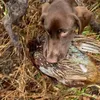
Dogs come in all shapes and sizes. There are over 400 different breeds, but they all stem from the Canis Lupus Familiaris species - the literal translation from Latin to English meaning Dog Wolf Domestic. Different breeds were created to serve different functions for humans. For example, some were created to help farmers herd livestock back to their housing quarters. Others were developed to protect livestock from intruders. In this episode, Gary Flynn from The Dog Advocate and I will be focusing on hunting breeds. It is difficult to quantify how many hunting dog breeds exist, however, they can be broken down into categories such as hounds, gun dogs, retrievers and terriers. They all have their specialties. The type of game you will be hunting will determine which breed you will choose. Gary is partial to German Shorthaired Pointers. They are highly intelligent, athletic and commonly known for hunting fowl. However, he has trained his dogs as versatiles: hunting fur and feathers. Gary recounts colorful stories in our podcast about hunting pheasants, turkeys, and small birds with his client’s and his own German Shorthaired Pointers. According to Gary:“German Shorthaired Pointers stay locked in pursuit of the holy grail!”When Gary is working with German Shorthaired Pointer puppies, their instinct to point already exists. He recounts how fun it is to observe a bunch of puppies who are all in point looking at a bubblegum wrapper, a bee, or anything that moves. This is not something that is taught. It is pure instinct. The puppies will learn as they mature to focus that instinct on birds or small animals. Pointing is how the dog communicates what is next. It is a pause before the pounce. If well trained, they will point exactly to what they found and wait for their handler to guide them to what comes next. It is a very intense and focused behavior, but Gary’s dogs will still obey commands while pointing. When older dogs point in a group, one dog may be pointing at another dog that is pointing to even another dog who is pointing at the location of the animal. They form a chain of pointers. This is called “honoring”. The dogs who come onto the scene where a dog is in a point, respects that dog by waiting and not stealing the prey. This prevents premature pursuit of the prey and demonstrates the discipline required to avoid chaos and an inefficient hunt. As the hunters approach the group, they must assess what they have come upon. They are able to handle the situation without interference from the dogs.Please keep in mind that the Ohio Department of Natural Resources Division of Wildlife (ODNR) oversees hunting and fishing by issuing licenses, establishing regulations and managing wildlife populations. Game wardens ensure laws are enforced. This is to prevent extinction of certain species and people shooting at game from their cars, etc. Gary mentions there is etiquette to follow when hunting. For example, it is unethical to shoot at birds that are out of range which can only wound and not kill. Suffering of an animal should be avoided. The mission statement of ODNR is:“To ensure a balance between the wise use and protection of our natural resources for the benefit of all.”Before I elaborate on the different hunting breeds Gary and I discussed, I would like to address the topic of hunting in general. Some people may not want to listen or read this post because it has to do with the demise of living beings. As an experienced hunter, Gary has observed time and time again how matter of fact dogs are about death. There is no remorse. The only emotion you could attach to the experience is gratification. They are satisfying an instinct. Sometimes, the dogs will flip the dead animal up in the air just to see if they can do it all over again. They couldn’t be happier.We have to remember, before our meat was already wrapped in cellophane to be sold in a grocery store, hunters had to go out and lure, trap, kill and gut animals daily. We all have the instinct to hunt. That means when we are forced to, we will try to live off the vegetables and fruit of the land and/or kill other animals in order to survive. A way we can simulate that instinct to hunt is to shop. The thrill of finding exactly what we are looking for is a form of hunting. We are excited when we find what we were looking for and we are disappointed when we don’t. This can result in pure exhaustion too!It is us humans who get in the way of our dogs doing what dogs are born to do. So often I have heard clients tell me similar stories about how they punished their dog for digging a hole to catch and kill their favorite chipmunk named Chippie. The dog had no emotional attachment to “Chippie” and couldn’t logically reason with thems
Podzilla Summary coming soon
Sign up to get notified when the full AI-powered summary is ready.
Free forever for up to 3 podcasts. No credit card required.
Listen to This Episode


Get summaries like this every morning.
Free AI-powered recaps of From A Dog's Eye View and your other favorite podcasts, delivered to your inbox.
Free forever for up to 3 podcasts. No credit card required.