Free Daily Podcast Summary
For The Hayters: The Stories We Survive: Daily Summaries Delivered
by PodcastOne
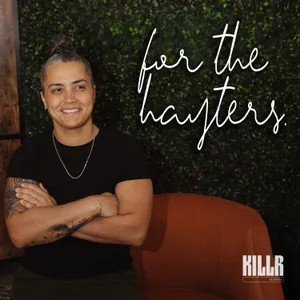
For The Hayters: The Stories We Survive is a space where vulnerability is met with strength, and real stories remind us we’re never alone. Hosted by a community of storytellers and listeners alike, this podcast dives into the personal journeys - both beautiful and brutal - that shape who we are. From life-changing challenges to moments of resilience, our guests open up about the experiences that have defined them, in hopes of connecting, healing, and inspiring others. Whether you’re here to feel seen, heard, or understood, this is your reminder: your story matters.
Latest Episodes
The most recent episodes — sign up to get AI-powered summaries of each one.
- Today32 min
Wallet Therapy: My Parents Didn't Save Enough. Now What?
Confession: I took out a personal loan this month. After working SO hard to get where I am, I had to go back ten steps because our old house has not sold and the credit card interest was starting to scare me. I'm telling you because this show is about being honest about money, even when it's embarrassing. I'm also telling you because Alex has opinions about how to do it right.Then we get into the conversation nobody wants to have until they're forced to. What happens when your parents retire and realize they don't have enough? Are you supposed to help? And how do you do that while you're paying your own mortgage, raising kids, and trying to save for your own retirement? Alex and I have lived this one with our own family, so we're getting real about it.The SolutionMedicare is not free: Part B alone runs about $202.90 a month in 2026, before deductibles, coinsurance, prescriptions, dental, vision, and hearing.Long-term care is a need, not a place: Whether it's assisted living (median cost around $6,200 a month) or someone checking in on Mom once a day, it costs money and someone has to provide it.Three questions before you help: Is this an emergency? Is there a sustainable solution? Can you actually afford it without wrecking your own future?Don't create your kids' problem: If you sacrifice your retirement to fund your parents', you might be handing the same crisis down a generation.If you're 50 and behind: Know your numbers, estimate what retirement will really cost, plan for healthcare and housing, and have the family conversation now.This week's homeworkPick one parent, partner, or even just yourself and ask three questions. How much is saved for retirement? What happens if someone needs long-term care? What do you expect from family financially? Write down the answers, even if they're scary. Especially if they're scary.Patreon members get Alex's full retirement expense checklist and the complete list of questions to ask your parents.Connect with usJoin the Hayters on Patreon for early episodes, bonus content, and the full checklist: patreon.com/beckyhayterQuestions for Alex? Email us at info@forthehayters.comMoney is emotional. And you deserve to feel safe with it.See Privacy Policy at https://art19.com/privacy and California Privacy Notice at https://art19.com/privacy#do-not-sell-my-info.
- 4 days ago59 min
A Marine, Twin Mom, and Trafficking Fighter: Raids, Bottles, and a Top Secret Clearance
Trigger Warning: This episode discusses human trafficking, sexual violence, child sexual abuse and exploitation, organ harvesting, ritual violence against children, and domestic abuse. A content note comes before the hardest section. Listener discretion is advised.Korrin's mornings look like a lot of ours: breakfast, the childcare handoff, nine-month-old twins who need everything at once. Somewhere between the bottles, there's a call from Uganda and a trip to Ecuador to plan. Korrin is a former Marine Corps cryptologic linguist, an attorney, a volunteer prosecutor, and the founder of Lantern Rescue, an organization fighting human trafficking in 18 countries.In this conversation, Korrin talks about going from an insurance job she couldn't stand to a Russian language school in Monterey, to studying for the LSAT by flashlight in the back of a truck in Haiti. She explains why most trafficking victims don't know they're being trafficked, why those viral "almost got trafficked at Target" posts do more harm than good, and what happened after the night a woman we're calling Rosa was found.This is a story about the worst things people do to each other, told by someone who refuses to look away and still goes home and makes dinner.For The Hayters is a podcast that normalizes hard conversations. Listener discretion is advised.Interview, narration, and editing by Becky Hayter, with post-production, scripting, and sound design by Emily Nadal.Don’t forget to subscribe, like, and share to help us continue bringing these stories to light.🔹 New episodes drop every Sunday!🔹 Join our community! patreon.com/beckyhayter🔹 Follow us on Instagram: @forthehayters🔹 Submit your story: info@forthehayters.com🔹 Grab some merch! beckyhayter.com🔹 A KILLR Network podcast! killrentertainment.comSee Privacy Policy at https://art19.com/privacy and California Privacy Notice at https://art19.com/privacy#do-not-sell-my-info.
- 1 weeks ago1h 14m
Cancer, Chronic Illness & Coming Out Later in Life
Trigger warnings: cancer diagnosis and chemotherapy, hysterectomy and invasive medical procedures, brief discussion of intimacy after surgery, chronic illness and chronic pain, medical dismissal and weight bias in healthcare, a partner's severe anxiety, divorce and custody court, separation from children during COVID, and fear around losing health insurance.Kristin's surgeon walked out of the operating room and told her family everything looked fantastic. A week later, a nurse handed her an envelope at her follow-up. She didn't open it. Then the doctor walked in and asked if she'd read it.Kristin grew up an only child outside Detroit, sure of one thing: she was going to be a mom. Life got her there in unexpected ways. She became a stepmom to a four-year-old in her twenties, moved across the country and back, and ended a 16-year marriage to a man she still has love for. She came out during the pandemic while running a memory care facility in lockdown. Then her body started keeping score. There were years of "normal" lab results, a Hashimoto's diagnosis, a rare ovarian cancer called granulosa cell tumor, and a fibromyalgia diagnosis that came only after one specialist sent her a message that said, "I wish you luck."This is a conversation about medical gaslighting, coming out later in life, and the things nobody tells you before surgery. It's also about what happened when Kristin finally shared her story and realized she wasn't as alone as she thought.For The Hayters is a podcast that normalizes hard conversations. Listener discretion is advised.Interview, narration, and editing by Becky Hayter, with post-production, scripting, and sound design by Emily Nadal.Don’t forget to subscribe, like, and share to help us continue bringing these stories to light.🔹 New episodes drop every Sunday!🔹 Join our community! patreon.com/beckyhayter🔹 Follow us on Instagram: @forthehayters🔹 Submit your story: info@forthehayters.com🔹 Grab some merch! beckyhayter.com🔹 A KILLR Network podcast! killrentertainment.comSee Privacy Policy at https://art19.com/privacy and California Privacy Notice at https://art19.com/privacy#do-not-sell-my-info.
- 2 weeks ago27 min
Wallet Therapy: Lease vs. Buy: Would You Still Want This Car If No One Saw It?
Confession: I have never once walked into a car purchase asking "can I afford this car?" I asked "can I afford this payment?" and called it a day. Turns out those are two very different questions, and the gap between them is where a LOT of money disappears.This week Alex and I tackle the lease vs. buy debate. We cover why leasing can make an $80,000 car feel weirdly affordable, why a new car's "low" interest rate might still cost you more, and the Scion story that proves nobody actually knows what's in your bank account by looking at your car.The SolutionLeasing means financing depreciation: You're paying to use a car for two to four years, plus mileage limits, wear and tear fees, and a payment that never ends.Buying wins when you keep it: Pay it off, keep driving it, and suddenly $500 a month is yours again.Watch the interest rate trap: New cars often come with lower rates than used ones, but on average you'll still pay around $15,000 more for the new one.Know what $600 a month really costs: That's $36,000 over five years before gas, insurance, and maintenance. Invested instead, it could grow to over $350,000 in 20 years.Ask the real question: Would you still want this car if no one saw it?This week's homeworkCalculate your true monthly car cost. Add up your payment, insurance, gas, maintenance, and registration. Then put that number next to your income and your goals and ask yourself: what else could this money be doing for me?Connect with usJoin the Wallet Therapy community on Patreon for early episodes, monthly live sessions, and Discord access where Alex answers your questions directly: patreon.com/beckyhayterGot a car decision you regret (or one you're proud of)? Tell us: info@forthehayters.comSee Privacy Policy at https://art19.com/privacy and California Privacy Notice at https://art19.com/privacy#do-not-sell-my-info.
- 2 weeks ago1h 14m
The Keeper of Secrets: A Marriage Built and Nearly Lost on Hidden Bills
Trigger Warning: This episode discusses financial trauma, debt, foreclosure and eviction, childhood dysfunction, the death of a family member, substance use, and a dark period of anxiety and self-blame. Listener discretion is advised.Shannon has a master's degree. She was a teacher. On paper, she had it together. And for two years, she hid thousands of dollars of debt from the man she was about to marry.It didn't start with a reckless swipe of a card. It started in childhood, in a house where money was a secret and "rob Peter to pay Paul" was the family motto. By 14, she was keeping her mother's financial secrets. By her late twenties, she'd bought a house alone, in her name only, and learned that asking for help made her physically sick.In this conversation, Shannon walks me through the split mortgage payments, the predatory loans, the late notices in the trash, and the foreclosure letter she opened by herself. She tells me how the lie almost cost her the house, the marriage, and the person she thought she was, and what it finally took to stop hiding and say the two words that changed her marriage: same team.For The Hayters is a podcast that normalizes hard conversations. Listener discretion is advised.Interview, narration, and editing by Becky Hayter, with post-production, scripting, and sound design by Emily Nadal.Don’t forget to subscribe, like, and share to help us continue bringing these stories to light.🔹 New episodes drop every Sunday!🔹 Join our community! patreon.com/beckyhayter🔹 Follow us on Instagram: @forthehayters🔹 Submit your story: info@forthehayters.com🔹 Grab some merch! beckyhayter.com🔹 A KILLR Network podcast! killrentertainment.comSee Privacy Policy at https://art19.com/privacy and California Privacy Notice at https://art19.com/privacy#do-not-sell-my-info.
- 3 weeks ago56 min
A Parent Worth Mourning: Justine on Abuse, Surrogacy Loss, and Choosing Herself
Trigger Warning: This episode discusses childhood sexual abuse, physical abuse, alcoholism, a disclosure that wasn't believed, pregnancy loss, surrogacy, and estrangement from a parent. Listener discretion is advised.For most of her life, Justine's family ran on one rule: keep mom happy, whatever it costs you. She started paying that bill as a kid trying to survive her father. At 14, she finally told someone the truth and got handed an ultimatum instead of help. She spent years after that finding new people to save, because saving herself was never on the table.A husband. A son. And for a while, two strangers on the other side of the world she agreed to carry a baby for. In this conversation, Justine talks about a house that looked completely normal in the school photo, what it costs to keep protecting people who don't deserve it, and the morning she wrote two goodbye letters and drove across the country with a U-Haul running.This is a story about the difference between the parent you thought you had and the one you actually did, and what finally happens when someone decides it stops with her.For The Hayters is a podcast that normalizes hard conversations. Listener discretion is advised.Interview, narration, and editing by Becky Hayter, with post-production, scripting, and sound design by Emily Nadal.Don’t forget to subscribe, like, and share to help us continue bringing these stories to light.🔹 New episodes drop every Sunday!🔹 Join our community! patreon.com/beckyhayter🔹 Follow us on Instagram: @forthehayters🔹 Submit your story: info@forthehayters.com🔹 Grab some merch! beckyhayter.com🔹 A KILLR Network podcast! killrentertainment.comSee Privacy Policy at https://art19.com/privacy and California Privacy Notice at https://art19.com/privacy#do-not-sell-my-info.
- 4 weeks ago31 min
Wallet Therapy: Credit Cards - Are You Using Them, or Are They Using You?
Credit cards are the topic where everyone has an extreme opinion. Either they're a free travel hack or they're evil and you should cut them all up. Alex's take is neither. A credit card is a tool, and the tool isn't good or bad on its own. What matters is how you're using it, and I am living proof that you can use one very badly for a very long time.The SolutionThe four types of credit card users. The credit card company's favorite customer, who carries a balance and pays minimums. The rewards optimizer, who pays in full and uses the card strategically. The avoider, who usually got there by clawing out of debt and is now scared of the thing. And the fourth type we added mid-episode, which is me: pays it off, but has no idea what benefits the card even has.How credit card companies actually make money. Interest, annual fees, late fees, and interchange fees paid by merchants. That last one is where your rewards come from. If you're paying 25 percent interest to earn 2 percent cash back, you are not beating the credit card company.The biggest mistakes. Carrying a balance to "build credit," which does not work. Paying only the minimum, which your statement will tell you takes anywhere from five to fifteen years. Buying things you can't afford yet. Opening too many cards. And doing a balance transfer without changing the behavior, which can leave you back charged for all the interest you thought you skipped.The four rules if you're using them well. Pay the full balance, not just the statement balance. Treat the card like a debit card, so if you have $500 in checking you have $500 to spend, not your $5,000 limit. Set up autopay. Know your due date and review your spending monthly.Should you cancel old cards? Audit them first. Check for annual fees, how old the account is, whether you actually use the benefits, and what canceling would do to your credit utilization. And ask about a downgrade option before you close anything, because most companies would rather keep you than lose you.How to maximize rewards without wrecking yourself. Pick a card that matches spending you already do. Never manufacture spending to hit a welcome bonus. Actually redeem your points. Alex parks her cash back in a high yield account earning three and a half percent, and she and Derek are sitting on about $6,000 in points earmarked for a cold plunge and a sauna, which is a choice.This week's homeworkPull up one card. Look at your total spending, the rewards you earned, the interest you paid, and the annual fee. Then answer one question: am I making money from this card, or is this card making money from me?Connect with usJoin the Patreon for the monthly Wallet Therapy Live plus the master spreadsheet with the credit utilization calculator: patreon.com/beckyhayterGot a question or a money confession? info@forthehaters.comTrack your card spending in one place with Monarch Money: https://monarch.com/referral/ey3kkk8c7eSee Privacy Policy at https://art19.com/privacy and California Privacy Notice at https://art19.com/privacy#do-not-sell-my-info.
- Sep 6, 202652 min
A Mother, Two Suicide Attempts, and the Marriage That Came After | The Beautiful Disaster
TW: This episode discusses suicide attempts and methods, self-harm, domestic violence and strangulation, psychiatric hospitalization, postpartum depression, and the death of a child. Listener discretion is advised.Nicole calls her life a beautiful disaster, and she means both words. By twenty-seven, she'd survived two suicide attempts in the same year, both times pulled back by her mother in the narrowest window imaginable. Not long after, she met a man who felt like the safest person she'd ever known. That feeling didn't last.In this conversation, Nicole walks through the childhood that taught her to disappear so everyone else could be okay, the marriage that shrank her world down to who she was allowed to talk to and what she was allowed to wear, and the ordinary morning it turned physical in front of her son. She talks about the three days it took to pack his things, the twenty years of silence that followed, and the slow work of learning she was allowed to need things too.This is a story about the version of survival nobody photographs: the therapy, the letters to the dead, the me-time in a locked bathroom, and one decision, made too many times to count, to stay.Interview, narration, and editing by Becky Hayter, with post-production, scripting, and sound design by Emily Nadal.Don’t forget to subscribe, like, and share to help us continue bringing these stories to light.🔹 New episodes drop every Sunday!🔹 Join our community! patreon.com/beckyhayter🔹 Follow us on Instagram: @forthehayters🔹 Submit your story: info@forthehayters.com🔹 Grab some merch! beckyhayter.com🔹 A KILLR Network podcast! killrentertainment.comSee Privacy Policy at https://art19.com/privacy and California Privacy Notice at https://art19.com/privacy#do-not-sell-my-info.
Get For The Hayters: The Stories We Survive summaries in your inbox
Free AI-powered daily recaps. Key takeaways, quotes, and mentions — in a 5-minute read.
Get Free Summaries →Free forever for up to 3 podcasts. No credit card required.
You Might Also Like
Listeners also like.
🎙️ Rebuild & Fulfill Real conversations on burnout, rebuilding, and becoming stronger than before.
Honest conversations about burnout, mental health, and resilience for high-functioning adults learning to rebuild and find fulfillment.

Let's Get Naked
Anne Karber discusses personal growth, relationships, and difficult life topics through candid conversations with guests.

Grief and Rebirth: Finding the Joy in Life
Explores grief, trauma, and spiritual growth through conversations with healers, mediums, and survivors.

Get Obsessed : With Living Your Best Life
Two hosts explore transformative stories and taboo topics with people challenging norms and living unfiltered lives.

Tony Mantor: Why Not Me ?
Explores autism, mental health, and human stories to promote understanding, challenge stigma, and support neurodiversity.

Mind If We Talk?
Two people share raw, intimate conversations about emotional struggles while a therapist guides understanding and growth.

Our Skin: A Personal Discovery Podcast
People share personal experiences with skin conditions like psoriasis and HS, discussing diagnosis, treatment, and living fully despite challenges.

Notes from the Edge
Raw conversations about trauma, survival, identity, and reinvention with host Lisa Lacy.

A Really Good Cry
Radhi Devlukia discusses life's emotional challenges through candid conversations with guests and personal reflections.
Unlocking Us with Brené Brown
Explores human connection through conversations on vulnerability, courage, and emotion with researchers, thinkers, and audiences.

Betrayal Weekly
Real-life stories of broken trust and hidden lives, told through gripping firsthand accounts of deception and resilience.

Run Your Story Podcast
Runners and walkers share their personal stories, memories, and advice about the sport.
About For The Hayters: The Stories We Survive
For The Hayters: The Stories We Survive is a space where vulnerability is met with strength, and real stories remind us we’re never alone. Hosted by a community of storytellers and listeners alike, this podcast dives into the personal journeys - both beautiful and brutal - that shape who we are. From life-changing challenges to moments of resilience, our guests open up about the experiences that have defined them, in hopes of connecting, healing, and inspiring others. Whether you’re here to feel seen, heard, or understood, this is your reminder: your story matters.
Customized Recaps
AI-powered recaps with compact key takeaways, quotes, and insights.
Straight to Your Inbox
Get key takeaways from For The Hayters: The Stories We Survive in a 5-minute read.
Save Hours Every Week
Stay current on your favorite podcasts without falling behind.
Frequently Asked Questions
What is Podzilla's For The Hayters: The Stories We Survive daily summary?
It's a free AI-powered email that summarizes new episodes of For The Hayters: The Stories We Survive as soon as they're published. You get the key takeaways, notable quotes, and links & mentions — all in a quick read.
How does the For The Hayters: The Stories We Survive podcast summary work?
When a new episode drops, our AI transcribes and analyzes it, then generates a personalized summary tailored to your interests and profession. It's delivered to your inbox every morning.
Is this an official For The Hayters: The Stories We Survive product?
No. Podzilla is an independent service that summarizes publicly available podcast content. We're not affiliated with or endorsed by PodcastOne.
Can I get summaries of other podcasts too?
Absolutely! The free plan covers up to 3 podcasts. Upgrade to Pro for 15, or Premium for 50. Browse our full catalog at /podcasts.
How often does For The Hayters: The Stories We Survive release new episodes?
For The Hayters: The Stories We Survive publishes 2x weekly. Our AI generates a summary within hours of each new episode.
What topics does For The Hayters: The Stories We Survive cover?
For The Hayters: The Stories We Survive covers topics including Fitness, Culture, Health & Fitness, Society & Culture. Our AI identifies the specific themes in each episode and highlights what matters most to you.
Start getting For The Hayters: The Stories We Survive summaries tomorrow morning.
Free forever for up to 3 podcasts. No credit card required.
Free forever for up to 3 podcasts. No credit card required.