Free Daily Podcast Summary
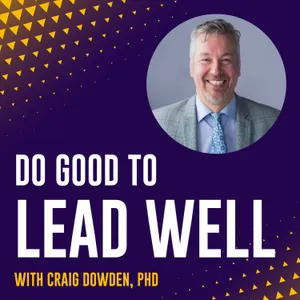
Do Good To Lead Well with Craig Dowden: Daily Summaries Delivered
by Craig Dowden
If you're passionate about mastering self-leadership, you're in the right place. I've dedicated my career to understanding the science and practice of positive leadership. I integrate evidence-based principles from the fields of positive psychology with those in leadership and organizational excellence that will help you develop real-life solutions to solve your greatest challenges. Each week I'll bring world-class content with industry experts to help you use positive leadership to build a peak performance culture.
Latest Episodes
The most recent episodes — sign up to get AI-powered summaries of each one.
- 3 days ago51 min
Mastering Managing Up with Bestselling Author Melody Wilding
This week’s episode of Do Good to Lead Well opens with a lively exchange about the true essence of “managing up.” Our conversation focuses on Melody Wilding’s journey from her bestselling book Trust Yourself to her latest, Managing Up, revealing how self-leadership is the essential foundation for influencing those in power. Together, we explore why managing up isn’t “boss-pleasing,” but rather empowering yourself to build conditions for true success.Our discussion also dives deep into the psychology and realities of work and why “letting your work speak for itself” is no longer enough. Melody also highlights how to use visibility as a tool for advancing both your projects and your career. Several points were raised, including the power of proactive communication, the necessity of challenging outdated norms, and the reality that managing up is crucial for everyone, not just junior employees.This conversation is rich with actionable frameworks, memorable phrases (such as “power mapping” and “pocket updates”), and mindset shifts for anyone navigating complex teams and tough bosses. Tune in to reconsider what it actually means to lead well while doing it on your own terms.What You’ll Learn- Rethinking “Managing Up.”- Visibility is not vanity.- How to use questions and pattern interrupts to set effective boundaries.- Why you want to spend time Power Mapping- Communicating with different leadership styles.- Seeding advancement and compensation conversations.- The power of the “Pocket Update.”Podcast Timestamps - The Origin Story of "Managing Up" - Redefining Managing Up: Ownership vs. Boss-Pleasing - Visibility, Self-Advocacy, and Career Progression - Recognizing the Need for Discernment - Managing Up as an Essential Senior Leadership Skill - The Alignment Conversation and Power Mapping - The Boundaries Conversation: Balancing Teamwork and Limits - Managing Up to Different Boss Archetypes – The Advancement and Money Conversations - Everyday Visibility Opportunities and Final TakeawaysKEYWORDSPositive Leadership, Managing Up, Self-Leadership, Leadership Development, Career advancement, Navigating Workplace Dynamics, Setting Boundaries, Managing Office Politics, Stakeholder Management, Power Mapping, Visibility at Work, Executive Communication, Difficult Conversations, Dealing with Micromanagement, Workaholic Bosses, Fear-Based Leadership, Organizational Influence, Self-promotion, Assertive Communication, Advocating for Yourself, Negotiating Compensation, Strategic Advocacy, CEO Success
- 1 weeks ago51 min
Why Data-Inspired Beats Data-Driven: Moving from Optimization to Transformation
This episode of Do Good to Lead Well opens with a thought-provoking challenge to the familiar refrain, “Let’s be more data-driven.” Instead, Sebastian Wernicke, a top TED speaker and globally recognized thought leader, shares the importance of being “data-inspired.” Our discussion focuses on the premise that lasting transformation requires more than dashboards and metrics. We explore the subtle yet crucial difference between optimizing the present and reimagining the future, using data as a catalyst.Listeners will discover why assumptions about objectivity and quick fixes with more data often backfire and how the real edge comes from leaders willing to be curious, challenge their own thinking, and foster environments where their employees can do the same. Key takeaways include actionable methods for reframing challenges, leveraging the “five whys,” and ensuring AI supports, rather than supplants, human judgment.Tune in for an essential guide to leading well in a landscape where data is plentiful, but wisdom and culture are what set winners apart.What You’ll Learn- Data-driven versus data-inspired? A key difference for transformational change.- Myth busting: Is data objective? Does ‘data speak for itself?”- Mindset shifts for better decisions.- Why psychological safety matters!- The importance of a “culture first, tech second” mentality.- Embracing human judgment in the AI era.- Dealing with data skeptics.- The (not-so) secret sauce: Data AND culture. Podcast Timestamps - The Origin Story of "Data Inspired" – What is the Difference between Data-Driven vs. Data-Inspired? - The Myth of Data Objectivity - Mindset Shifts for Effective Data Use - Cultivating Curiosity and the Power of Questions - Psychological Safety as the Bedrock of Data Inspiration - Culture First, Tools Second: Building Data-Inspired Organizations - Leadership Qualities for Data-Inspired Environments - Managing Data Quality and Volume - The Human Side of AI and Data-Inspired Judgment - Overcoming Resistance to Data and Organizational Change - Closing ReflectionsKEYWORDSPositive Leadership, AI, Artificial Intelligence, AI Transformation, People-First Leadership, AI Adoption, Transformational Change, Data-Driven, Data-Inspired, Organizational Culture, Psychological Safety, Curiosity, Decision-Making, Data Myths, Data Quality, Machine Learning, AI Strategy, Data Strategy, Business Transformation, Cultural Change, Big Data, Teamwork, Empathy, Storytelling with Data, Overcoming Resistance, Innovation, Problem-Solving, Root Cause Analysis, Five Whys Technique, Human Judgment, Data-Fatigue, Purpose-Driven, CEO Success
- 2 weeks ago53 min
Building Collective Confidence: Lessons from Elite Teams and Fortune 100 Talent Leader Dr. Andre Martin
What truly separates good teams from legendary ones? In this week’s episode, I speak with Dr. Andre Martin, author of Collective Confidence and a highly respected leader across multiple Fortune 100 companies. Our conversation debunks the quick-fix of assembling teams of pedigreed all-stars, showing instead how extraordinary outcomes come from humble, well-aligned teams rooted in trust and a sense of shared purpose.Our discussion uncovers a fresh perspective on teamwork: winning doesn’t start with a streak or a résumé, but with behind-the-scenes habits and the psychological safety that allows every member to shine. Highlights from our conversation include a closer look at onboarding, culture-building, inspirational learning, and the dangers of an unchecked ego in the age of relentless change.For leaders facing today’s continuous waves of disruption, this episode offers concrete, evidence-based practices to unlock the untapped power of true collectives. Don’t miss these insights on fostering culture, resilience, and collective brilliance when it matters most.What You’ll Learn- Lessons from Elite Sports & Beyond.- Why the ‘Best’ Team Isn't a List of Resumes.- The Power of Clarity.- Inspiration Over Engagement.- Onboarding & Behaviors: How Culture Scales.- Culture is “the average of our collective behaviors.”- Collective Learning in the Age of AI.- How to Grow Collective Confidence.Podcast Timestamps – An Introduction to Collective Confidence - Lessons from Sports Teams and the Prevailing Myth of Winning Streaks - The Pitfalls of Assembling All-Star Teams – The Importance of Role Clarity and Making Everyone the Boss of Something - Fit, Culture, and Assembling Effective Teams - Inspiration vs. Engagement: Borrowed Brilliance - Scaling Culture in Fast-Growth Organizations - Leading Collective Confidence Amidst Change - Learning as a Collective Performance Lever - Resilience, Trust, and Psychological Safety in Teams - Making the System the StarKEYWORDSPositive Leadership, High-Performing Teams, Collective Confidence, Executive Team Alignment, Talent Strategy, Team Culture, Process Outcomes, Elite Teams, Role Clarity, Team Fit, Top Talent, Humility in Teams, Glue People, Onboarding, Culture Curation, Behavioral Expectations, Psychological Safety, Trust in Teams, System Thinking, Learning Organizations, Collective Learning, AI in Organizations, Inspiration versus Engagement, Adaptability, Team Resilience, Confidence-Building, CEO Success
- 3 weeks ago57 min
Leading Through AI Transformation: Building a People-First Organization with Workforce Intelligence
How do you lead well in a world transformed by AI? This week, Do Good to Lead Well tackles this question head-on, as I speak with Mike Sullivan, co-founder and Chief Growth Officer of OneDigital, and the co-author of the timely and insightful book, Workforce Intelligence. Throughout our conversation, Mike breaks through both the hype and the fear surrounding AI in today’s workforce. As a champion of people-centered AI, he offers an inspiring roadmap for activating, not replacing, the human workforce.Listeners are invited into the story of “Ben,” a digital coworker, and how Mike and his team treat AI onboarding like hiring a real employee: with transparency, development, and high expectations. The result? A culture where humans and digital agents collaborate, learn, and continuously improve together. We also discuss how workforce intelligence is being redefined and how high-performing teams are built not on software alone, but on empathy, transparency, and courage.For leaders and organizations seeking practical strategies, this episode brims with actionable advice, from measuring workforce intelligence to ensuring HR has a seat at the AI table. It’s a compelling argument for seeing the faces behind the headcount, and for cultivating trust as the cornerstone of 21st-century leadership.What You’ll Learn- Start with honesty, not hype when it comes to AI.- Don’t treat AI as ‘software’: Treat it like a coworker.- Transparent roles & faces build trust.- What is your Workforce Intelligence (WI) score? The success metric.- Activation moments matter.- Top-down Is the only way forward.- People Always Come First.- It’s not either/or. It’s Human Intelligence (HI) + Artificial Intelligence (AI). Podcast Timestamps – Personal Fear and the Human Side of AI – No Code? No Problem – Mike’s Personal AI Journey – The Human Side of AI Deployment – Hiring AI Coworkers: Internship to Full-Time – Managing a Blended Human-AI Workforce – HR’s Role and Navigating Workforce Change – Defining Workforce Intelligence and the WI Score – Overcoming Employee Fears and Building Trust – Leadership Activation and Empathy in the Age of AI – Final Reflections and The Humanity TestKEYWORDSPositive Leadership, AI, Artificial Intelligence, AI Transformation, Workplace Intelligence, People-First Leadership, Human-Centric Organizations, AI Adoption, Digital Coworkers, Organizational Change, Employment Disruption, Job Automation, Human Resources (HR), Talent Management, Growth Mindset, Trust in Leadership, Empathy in Business, AI Onboarding, Blended Workforce, WI score, Transparency in AI, Disruption, Future of Work, Human-AI Collaboration, Managing AI Anxiety, CEO Success
- Aug 21, 202645 min
Anchoring Leadership in Purpose and Values: Part 3 of a 3-Part Series on the Foundations of Positive Leadership (with an award-winning CEO)
Over the past three episodes, I had a very special guest; Kevin Ford, the former CEO of Calian. Our previous conversations trace a powerful progression from self-leadership to connecting with others. In the final episode of this series, we explore how a profound sense of purpose united by a set of core values truly anchors an organization. Our discussion moves beyond corporate clichés, as we dig into how purpose statements can resonate from the C-suite to every desk and production floor, and why stories, not slogans, are the secret to unlocking commitment and pride. Listeners will also find practical insights on transforming company values from static posters into lived behaviors, using transparency, feedback, and authentic leadership. This journey ultimately challenges every leader to reflect on the following question: Are your company’s values visible in the daily experience, or just in the posters on the wall?Through the lens of firsthand leadership stories, our conversation examines the risks of focusing only on financial metrics and offers powerful reminders that true value is created when people are proud not just of their work, but of its impact. Tactics like regular storytelling, open surveys, and clear expectations set the stage for a culture where integrity, respect, and community involvement drive both performance, engagement and well-being.For leaders and teams navigating the complexity of today’s business world, this episode serves as both an inspiration and a toolkit for embedding purpose and values that last.What You’ll Learn- The Power of Purpose-Driven Organizations.- Developing and Communicating Core Values.- Storytelling as a Leadership Tool.- Metrics Matter: Move Beyond Just the Financials.- Balancing Performance and Values.- Navigating Personal and Organizational Values Misalignment.- The Ongoing Practice of Authentic Leadership.Podcast Timestamps - Introduction to Part 3: The Road We Travelled with an Introduction to Purpose and Values - Defining Purpose in Organizations - Developing and Living a Purpose Statement - The Tangible Benefits of Purpose-Driven Organizations - Strategies for Building a Purpose-Driven Culture - Defining and Living Core Values - Ensuring Alignment Between Stated and Lived Values - Balancing Performance Pressures with Values - Navigating Personal vs. Organizational Value Misalignment - Final Reflections on the Foundations of Positive LeadershipKEYWORDSPositive Leadership, Purpose-Driven Organization, Core Values, Empathy, Transparency, Respect, Candor, Organizational Culture, Community Involvement, Storytelling, Company Mission, Organizational Alignment, Values Drift, Employee Motivation, Behavioral Anchors, Values-Based Leadership, Organizational Trust, Accountability, Purpose and Values Integration, Lived Values, CEO Success
- Aug 13, 202658 min
Leading with Candor, Respect, and Empathy: Part 2 of a 3-Part Series on the Foundations of Positive Leadership (with an award-winning CEO)
In this episode of our 3-part series exploring the foundations of positive leadership, I speak with Kevin Ford, the award-winning, past CEO of Calian Group, about how to effectively connect with others. In a world grappling with AI, remote work, and breakneck change, we examine explore what meaningful connection looks like in practice. Starting with candor and transparency, our discussion explores why authentic openness isn’t just a nice-to-have, but a business essential. Kevin shares some real-life examples from leading a global, publicly traded company to amplify the conversation from theory to tangible action.Our journey continues with a deep dive into respect, which is not a formality rooted in title, but rather the lived foundation of innovative, resilient culture. Empathy emerges as our final, essential ingredient, with stories illustrating how courageous listening and presence lead organizations through uncertainty and drive sustainable results. Key moments include revealing the inner workings of boardroom transparency, the contagious effects of a leader’s sincerity, and the simple yet radical act of asking, “How are you really doing?” Insights on how accountability and compassion coexist provide leaders with a nuanced blueprint for addressing hard truths without losing humanity.Listeners will come away with a wealth of practical strategies, from how to tune into team energy, to acting on feedback with genuine care. For anyone looking to elevate their leadership and transform team dynamics, this episode delivers both the why and the how.What You’ll Learn- The Importance of Candor and Transparency in Leadership.- How Transparency Builds Trust and Followership.- Cultivating a Culture of Respect.- Navigating Difficult Conversations With Respect.- Demonstrating and Developing Empathy: A Leadership Superpower.- Positive energy matters, especially in tough times.- Balancing Empathy, Accountability, and Performance. Podcast Timestamps - Introduction to Part 2: Connecting with Others - The Challenge of Connection in a Tech-Driven World - Candor and Transparency in Leadership - Transparency Across Stakeholders - The Foundation of Respect - - Respect in Difficult Conversations and Layoffs - Empathy as a Leadership Imperative - Empathy in Action and Leading Through Crisis - The Courage to Embrace Raw Emotions - Reflecting on the Leadership JourneyKEYWORDSPositive Leadership, Candor, Transparency, Authenticity, Self-Leadership, Respect, Empathy, Leadership Culture, Company Values, Accountability, Performance Management, Giving Feedback, Employee Engagement, Emotional Intelligence, Human-Centered Leadership, Difficult Conversations, Building Trust, Stakeholder Communication, Navigating Change, Remote Work, CEO Success
- Aug 6, 202643 min
First, Leader Yourself: A 3-Part Series on the Foundations of Positive Leadership (with an award-winning CEO)
What makes great executives stand out? I’m thrilled to share Part 1 of a 3-part series that will explore the foundations of positive leadership. Throughout this special set of episodes, I will be sharing the stage with Kevin Ford, the award-winning CEO of Calian who recently stepped down. In this episode, Kevin and I start the conversation by taking an honest look at why leading yourself matters most. We unpack the critical role of self-awareness, sharing a powerful personal journey that moved Kevin from early-career overconfidence to the life-changing benefits of welcoming tough feedback.We also discuss insightful research, amplified with real-life examples that makes the case that self-awareness isn’t soft. Our discussion touches on structured approaches (like 360 reviews) and everyday, observational cues that help leaders read the room and adjust in real time. We reframe humility as a leadership strength, curiosity as the operational side of great leadership, and positivity as the superpower needed to weather today’s challenges.If you’re searching for ways to advance your leadership, build resilience, and foster authentic relationships, this episode provides an actionable roadmap to transform self-awareness from a buzzword into your most valuable asset.What You’ll Learn- Self-Awareness is foundational- Feedback is a gift: Receive it well- Embracing (tough) feedback, can be transformative.- Make time for self-reflection.- Curiosity is operationalized humility.- Positive energy matters, especially in tough times.- Legacy is about the journey. Podcast Timestamps - Introduction to the 3-Part Series - Guest Introduction: Kevin Ford's Leadership Journey - The Importance of Leading Yourself – The Role of Self-Awareness in Executive Success - Transformative Feedback: The Value of Tough Conversations - Processing Feedback and Humility in Leadership - Creating Upward Feedback Culture - Reading the Room: Observational Self-Awareness - Internal and External Self-Awareness - Addressing Time Constraints and Feedback Reluctance - Curiosity as a Driver of Self-Awareness - Humility, Curiosity, and Leadership Legacy - Self-Awareness and Decisive Leadership - Positive Energy and Well-being in Leadership - Practical Steps for Sustaining Positive Energy - Final Reflections on Self-AwarenessKEYWORDSPositive Leadership, Self-Awareness, Leadership Development, Executive Feedback, 360 Assessments, Upward Feedback, Humility in Leadership, Curiosity, Culture, Authenticity, Positive Energy, Well-Being, Mental Health, Physical Health, Energy Management, Legacy, Organizational Culture, Coaching, Empathy, Constructive Criticism, Personal Growth, Employee Engagement, Resilience, Performance Review, Self-Reflection, Emotional Intelligence, CEO Success
- Jul 23, 202648 min
The Benefits of Sabbatical Leave: Lessons from DJ DiDonna
What happens when you leave your routine behind to embrace uncertainty? DJ DiDonna, Harvard Business School senior lecturer and founder of the Sabbatical Project, joins Craig Dowden to unpack the real benefits of sabbatical leave, drawn from years of research into hundreds of sabbatical-takers. DiDonna explains why extended leave delivers measurable physical healing, from resolving stress conditions like eczema and ulcers to reducing what he calls functional workaholism. The conversation also covers the confidence and creativity gains people report, the three sabbatical archetypes, and why the benefits of sabbatical leave extend to employers as well as employees.DiDonna draws on interviews with hundreds of sabbatical-takers to show that the benefits of sabbatical leave aren't reserved for the wealthy or the lucky. He argues most people can plan toward a sabbatical five years out by setting aside a percentage of income and identifying a trusted example who has already taken one. The episode also explores why founders and CEOs, despite having more flexibility, often feel trapped by the businesses they built, and how stepping away can reduce key-person risk while creating growth opportunities for junior staff.Throughout, DiDonna distinguishes the benefits of sabbatical leave from those of a simple vacation: vacations swap work tasks for leisure tasks, while sabbaticals create open space for identity change, healing, and experimentation. He closes with micro-moment strategies, like disconnecting for a long weekend, that let listeners borrow some benefits of sabbatical leave without leaving their jobs.Key TakeawaysThe benefits of sabbatical leave include physical healing, with sabbatical-takers reporting resolved eczema, ulcers, and trigger fingers.Sabbatical-takers frequently describe the experience as a peak life event, comparable to a wedding or the birth of a child.Three archetypes shape how people access the benefits of sabbatical leave: the achiever, the explorer, and the seeker.Confidence and creativity gains often outlast the sabbatical itself and carry into everyday work life.Employers benefit too: sabbaticals reveal key-person risk and reduce dependence on any single employee.Emotional recovery from work identity typically takes six to eight weeks before people feel like themselves again.Micro-moments, such as fully disconnected long weekends, offer some benefits of sabbatical leave without quitting a job.Planning a sabbatical five years in advance makes accessing these benefits feel achievable rather than disruptive.Chapters00:57 Introduction and DJ DiDonna's background05:31 Defining what a sabbatical actually is07:55 Why extended time off matters14:32 Reframing sabbaticals as realistic for everyone22:20 Time vs. space: the real difference from a vacation25:19 The emotional journey of a sabbatical28:55 The three archetypes: achiever, explorer, seeker34:02 Financial and logistical planning38:45 Sabbaticals for founders and leaders42:26 Micro-moments: everyday sabbatical practices47:06 Closing thoughts and final adviceGuest ContactWebsite: https://thesabbaticalproject.orgBook page: https://djdidonna.com/big-time-off/LinkedIn: https://www.linkedin.com/in/djdidonnaFAQQ. What are the main benefits of sabbatical leave?A. DiDonna's research points to physical healing, increased confidence, renewed creativity, and stronger organizational resilience.Q. How long until the mental health benefits of sabbatical leave kick in?A. Most people need six to eight weeks before feeling like themselves again, separate from their work identity.Q. Do the benefits of sabbatical leave extend to employers?A. Yes. DiDonna argues sabbaticals reduce key-person risk and reveal overly dependent business processes.
Get Do Good To Lead Well with Craig Dowden summaries in your inbox
Free AI-powered daily recaps. Key takeaways, quotes, and mentions — in a 5-minute read.
Get Free Summaries →Free forever for up to 3 podcasts. No credit card required.
You Might Also Like
Listeners also like.
Craig Groeschel Leadership Podcast
Leadership lessons from Craig Groeschel on growing as a leader, managing time, developing teams, and organizing effectively.
How Leaders Lead with David Novak
Conversations with top leaders in business, sports, and entertainment reveal actionable insights on leadership and decision-making.

Your Virtual Upline Podcast
A podcast for online leaders redefining success through a belief-driven, identity-led growth method that prioritizes peace over burnout.
The Learning Leader Show With Ryan Hawk
Conversations with top leaders across industries exploring how continuous learning drives success.
A Bit of Optimism
Conversations with thinkers and doers exploring what drives purpose, growth, and meaning in life.
Finding Mastery with Dr. Michael Gervais
Conversations with elite performers across sports, business, and science to explore the psychology of high performance and human potential.
Maxwell Leadership Podcast
Explores principles and practices of transformational leadership to help individuals positively influence others.
The Balanced, Beautiful and Abundant Show - Rebecca Whitman
A coach helps high-achieving women overcome burnout using a framework centered on spiritual, emotional, physical, and financial well-being.

Passion Struck with John R. Miles
Explores purpose, resilience, and connection through science-backed conversations with experts in psychology, neuroscience, and performance.
Mick Unplugged
A leadership podcast exploring the deep personal motivations behind high achievers’ success by asking what drives them at their core.

Impact Podcast, Mentorship with Eddie Wilson
A seasoned entrepreneur shares insights on building businesses, leadership, and living with purpose to create meaningful impact.

Becoming UnDone with Dr. Toby Brooks
Explores how high-achievers rebuild after hitting rock bottom, facing burnout, or losing their identity.
About Do Good To Lead Well with Craig Dowden
If you're passionate about mastering self-leadership, you're in the right place. I've dedicated my career to understanding the science and practice of positive leadership. I integrate evidence-based principles from the fields of positive psychology with those in leadership and organizational excellence that will help you develop real-life solutions to solve your greatest challenges. Each week I'll bring world-class content with industry experts to help you use positive leadership to build a peak performance culture.
Customized Recaps
AI-powered recaps with compact key takeaways, quotes, and insights.
Straight to Your Inbox
Get key takeaways from Do Good To Lead Well with Craig Dowden in a 5-minute read.
Save Hours Every Week
Stay current on your favorite podcasts without falling behind.
Frequently Asked Questions
What is Podzilla's Do Good To Lead Well with Craig Dowden daily summary?
It's a free AI-powered email that summarizes new episodes of Do Good To Lead Well with Craig Dowden as soon as they're published. You get the key takeaways, notable quotes, and links & mentions — all in a quick read.
How does the Do Good To Lead Well with Craig Dowden podcast summary work?
When a new episode drops, our AI transcribes and analyzes it, then generates a personalized summary tailored to your interests and profession. It's delivered to your inbox every morning.
Is this an official Do Good To Lead Well with Craig Dowden product?
No. Podzilla is an independent service that summarizes publicly available podcast content. We're not affiliated with or endorsed by Craig Dowden.
Can I get summaries of other podcasts too?
Absolutely! The free plan covers up to 3 podcasts. Upgrade to Pro for 15, or Premium for 50. Browse our full catalog at /podcasts.
How often does Do Good To Lead Well with Craig Dowden release new episodes?
Do Good To Lead Well with Craig Dowden publishes weekly. Our AI generates a summary within hours of each new episode.
What topics does Do Good To Lead Well with Craig Dowden cover?
Do Good To Lead Well with Craig Dowden covers topics including Business, Management. Our AI identifies the specific themes in each episode and highlights what matters most to you.
Start getting Do Good To Lead Well with Craig Dowden summaries tomorrow morning.
Free forever for up to 3 podcasts. No credit card required.
Free forever for up to 3 podcasts. No credit card required.