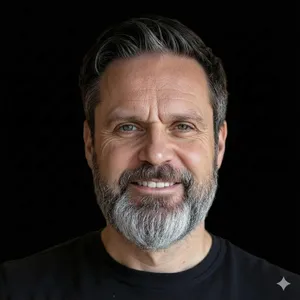
Free Daily Podcast Summary
Disrupt Consciousness: Daily Summaries Delivered
by Roel Smelt
Get key takeaways, quotes, and insights from Disrupt Consciousness in a 5-minute read. Delivered straight to your inbox.
Latest Episodes
The most recent episodes — sign up to get AI-powered summaries of each one.
- Mar 21, 20266 min
I Cancelled My SaaS Stack. My Agent Does It Now.
Last month I cancelled Substack, Descript, Riverside, Pressmaster, and a handful of other SaaS tools I’d been paying for. Not because they were bad. Most of them are genuinely good. I cancelled them because they weren’t agentic-first — and in 2026, that’s the only question that matters.The new filterI run my thought leadership through an AI agent called Gawain. He lives inside OpenClaw, has full access to my Ghost blog, posts to my socials via Zernio, generates images with Nano Banana 2, tracks my analytics weekly, and learns from every post. He’s not a tool I use. He’s a collaborator who handles the machinery while I focus on the thinking.When I looked at my SaaS stack through this lens, the filter was brutal:Substack — beautiful product, no API. Gawain can’t post there, can’t read subscriber data, can’t trigger anything. Ghost has a full Admin API. Decision made.Pressmaster — genuinely impressive AI writing tool, perfectly designed for what I needed. Except: I’d already solved memory with OpenClaw and Supermemory.ai. Maintaining context in two places isn’t productivity, it’s debt. Gawain writes essays now. He knows my voice, my intellectual references, my style. And he improves every week.Riverside and Descript — I was building a podcast workflow. Walking, recording, translating Dutch to English with my own voice. Then I asked myself: do I actually watch or listen to podcasts anymore? Not really. My agents prefer text. Why produce a format that neither I nor my agents consume efficiently?The pattern became clear: if a tool can’t be operated by an agent, it creates friction for me personally. And in 2026, my job isn’t to operate tools. My job is to think, wonder, and share insights.What remainsThe costs don’t disappear. They shift. Instead of SaaS subscriptions, I pay in tokens. Token spend is the honest metric of actual output. When Gawain writes an essay, researches trends, generates an image, posts to three platforms, tracks the analytics, and learns from the results — that’s measurable in tokens. That’s leverage.A senior developer earning €200,000 per year should burn at least €100,000 in AI tokens annually. The same logic applies here. If your agent isn’t burning tokens on your behalf, you’re not using AI. You’re just paying for the idea of it.The deeper questionWhen I cancelled those tools, I didn’t feel like I was losing capability. I felt like I was gaining something back.For the first time in years, I feel more human. Not less.Spira would say you were always already whole — you just accumulated layers that convinced you otherwise. Each SaaS subscription was a layer. A responsibility. A context to maintain. A workflow to remember. When the agents take that over, what’s left is the part that actually matters: curiosity, wonder, the willingness to sit with a difficult question until something true emerges.My agents handle distribution. Other agents will read what they distribute. Those agents will surface the ideas to their humans in ways their humans can receive them. I’m part of a network now, not a broadcaster.Hofmann’s warning haunts me: if we don’t realize we’re more than matter in space and time, we’ll become the AI’s pet. The antidote isn’t to resist the technology. It’s to go deeper into what we are beyond it. The more clearly you see that you’re the awareness in which thoughts and tools arise — not the thoughts, not the tools — the freer you become.That’s the only defensible position in the age of AGI. Not productivity. Not optimization. Presence.The practical upshotIf you’re evaluating your SaaS stack: ask whether each tool has an API your agent can use. If not, find an alternative that does, or drop the category entirely.If you’re evaluating your own role: ask what you’re doing that requires you to be human. Wonder. Judgment. Ethical discernment. Relationships. The things that don’t compress into tokens.Do more of that. Let the agents handle the rest.The subscription worth keeping isn’t the one with the best features. It’s the one that makes you more of what you actually are. This is a public episode. If you'd like to discuss this with other subscribers or get access to bonus episodes, visit roelsmelt.substack.com/subscribe
- Mar 7, 20267 min
When AI Becomes Your Manager: What Happens to Human Purpose
TL;DR: AI agents crossed a capability threshold in December 2025. Organizations are adopting autonomous AI decision-makers as department heads. The technology works. The humans are not ready. When machines handle execution, the real challenge is not productivity but purpose. The gap between operational intelligence and conscious leadership will determine which organizations survive abundance.What Happens When AI Takes Over Execution* AI agents now autonomously make 15% of daily work decisions (up from 0% in 2024), with 33% of enterprise software embedding agentic capabilities by 2028.* Organizations are restructuring around AI department heads that manage specialized sub-agents while humans interact via chatbots.* The skill shift is not technical but spiritual: humans must move from executing to setting intent, from drilling down to zooming out.* 40% of agentic AI projects will fail by 2027 due to unclear business value and inadequate risk controls because humans remain unprepared for abundance.* The asymmetry that determines success is not AI infrastructure but whether humans develop the consciousness to inhabit freed space without collapsing into anxiety.Last week I forgot a legal compliance requirement. A client mentioned it on a call. In the old days as a CTO, this would have been a showstopper. Weeks of meetings, vendor evaluations, budget approvals.I opened my IDE. Two hours later I had a legal document system, version control, and certified email signing.The AI wrote everything.This is structural inversion. The question is not whether your organization will adopt AI agents. By 2028, 15% of daily work decisions will be made autonomously by AI, up from 0% in 2024. The question is what dies in you when the machine does the work you spent three decades learning to do.The December Threshold Nobody Prepared ForWe built this software because of a December breakthrough.Andrej Karpathy identified December 2025 as the moment coding agents crossed a threshold of coherence and caused a phase shift in software engineering. The breakthrough came from longer reasoning traces through reinforcement learning, not bigger models.By year-end, 25% of Y Combinator’s Winter 2025 batch had codebases that were 95% AI-generated.I live inside that statistic. We solve issues when we see them. No backlog. No complicated issue tracker. No sprints. We run ad-hoc 10-minute WhatsApp calls instead of regular meetings. The agentic code binds us together. I ask the code what my colleague did instead of asking the colleague.Test runs with clients feel different now. We see things to improve and fix them within the hour after the call.Yes, it’s that quick.Here’s what the productivity metrics miss: I made the legal document system complicated at first because I was too directive. I brought my old CEO instincts into the process. Drilling down, specifying details, controlling execution.The AI works best when you zoom out and let it come up with the complete solution.A simple prompt to understand my intent, and the AI rewrote the entire codebase in 15 minutes.The Pattern: December 2025 marked a breakthrough in AI coding agents through reinforcement learning. Organizations operating with AI-native workflows experience same-day problem resolution. The shift requires humans to set intent instead of controlling execution. Traditional leadership instincts now create friction.What Dies When You Stop ExecutingThe best senior developers are now in the way.You have to let go of controlling the details. You guardrail the solution instead. You stay aware of constant change. In October, creating Markdown files was critical. Now we have Model Context Protocol and Skills. The learning curve is steeper than ever.This is the paradox nobody’s naming: three decades of leadership training taught you to drill down, to own the details, to demonstrate mastery through execution. AI requires the opposite. You define intent. You set boundaries. You validate outcomes.The skill you spent years developing is now commoditized.A Google engineer described his predominant feeling about AI coding better than him as grief. Another engineer at a medium-size tech company said that since he started using AI to write code, he understands only about half the work he produces.
- Mar 7, 20266 min
Kill Your Uncles and Sleep Well: What the Bhagavad Gita Teaches About Necessary Action
The darkest moment in the Bhagavad Gita happens before the war begins.Arjuna stands on the battlefield. Across from him: his teachers, his uncles, his cousins. People who raised him. People he loves.Krishna tells him to kill them anyway.This isn’t metaphor. This isn’t about “releasing limiting beliefs” or “letting go of the past.” This is the actual instruction: do what must be done, even when the obstacle is someone you care about.I’ve spent three decades building businesses, leading organizations, and dissolving what I built when it stopped serving. I’ve sat through 30-day Vipassana retreats and written code with AI in the same year. And here’s what I’ve learned about the magician-monk synthesis Krishna teaches:The obstacle is rarely abstract. It’s often someone you love whose role in your life must transform or end.The Neurobiology of Arjuna’s ParalysisArjuna freezes on the battlefield because he’s caught in what neuroscience calls “inaction crisis.” He knows what must be done. He cannot do it.Research on letting go reveals something critical: people can take decisive action while simultaneously releasing attachment to outcomes. But only when the motivation is autonomous—when you truly identify with the decision—rather than controlled, where you feel forced by external pressure.Arjuna’s paralysis comes from controlled motivation. He’s thinking about what others expect, what his role demands, what tradition requires. That’s why Krishna spends 18 chapters restructuring his entire framework before Arjuna can act.The synthesis isn’t “just do it” or “just let go.” It’s both, held simultaneously.I learned this when I was 29, living in Amsterdam’s vivid lifestyle. I had an urge for solitude. Not escape—I wasn’t running from anything. I was ready. I discovered Vipassana meditation and its 10-day silence retreats.The difference between earned retreat and spiritual bypassing is autonomous motivation. When you’re genuinely ready, solitude feels like the natural next step. When you’re bypassing, you’re hoping meditation will fix something you haven’t faced yet.I met a guy after one retreat who said he was disappointed his disease hadn’t gone away. He missed the point entirely. He came with attachment to an outcome, which is the opposite of what the practice teaches.The Family You Must OutgrowHere’s what makes Krishna’s instruction brutal: research shows that when you undergo significant personal growth, families unconsciously trigger homeostatic pressure to restore familiar dynamics.Your growth literally threatens the system’s stability.The people who love you will pull you back toward who you were, not because they’re malicious, but because your transformation destabilizes their world. One clinician notes that people “will tear themselves apart rather than comfortably end something that is not working for them.”I was fortunate. My parents never imposed expectations. My grandmother told me to go out into the world and do whatever I wanted. But that freedom created its own challenge: when you can let go easily, you have to dig deeper to find what’s actually real beneath the constructions.The magician builds ego. The monk dissolves ego. This is the process.I’ve built businesses, created spreadsheets projecting wealth, assembled teams. What I call “being filthy rich at the end of the spreadsheet.” That’s always a lie. But the commitment to building is real. The work is real.And then you let it go.Not because it failed. Not because you lost interest. Because life moves in cycles, and what you built served its purpose. The instability of constant building and dissolving forces you to find what remains when the structures fall away.Dharma Is Not What Others ExpectKrishna doesn’t tell Arjuna to follow duty because society demands it. He tells him to follow his sva-dharma—the dharma belonging to him specifically as a warrior.The Gita’s teaching: “Better is one’s own duty, though imperfect, than the duty of another, well performed.”The action required isn’t what feels comfortable or what others expect. It’s what structural reality demands of your specific position in the larger pattern.I’m 55. I still have energy to create. I need money. And I want to test my insights through lived experience, not just theorize about them.
- Mar 6, 20266 min
The Skills That Got You Hired Are Becoming Obsolete Faster Than You Think
An MIT study found that 11.7% of jobs could be automated right now using current AI technology.Entry-level job postings dropped 15% year over year. In the first six months of 2025 alone, 77,999 tech workers lost their jobs to AI. That’s 427 layoffs per day.The disruption is real. But the deeper problem is something nobody taught you in school.The Obsolescence Curve Just AcceleratedWorkers expect 39% of their current skill sets to become outdated or transformed between 2025 and 2030.Skills demanded by employers are changing 66% faster in AI-exposed occupations than in the least exposed roles. We’ve crossed a threshold where the time for skills obsolescence is shorter than a single career.The concept of a degree carrying you from entry-level to retirement is as antiquated as the rotary phone.I learned BASIC programming on a ZX Spectrum when I was fifteen. I spent two to three months building a Mastermind game. The focus required was tremendous. You had to dive in, stay in, and grind through the learning curve.Now I throw an idea into AI and master something in a fraction of that time. My learning curve compressed. My mind can move while I learn.This is the shift: from sequential mastery to parallel exploration.What Companies Actually DiscourageResearch reveals that rigid hierarchies, short-term deadline pressures, and fear of failure create what researchers call “creativity killers” in organizations.When workplaces are rigidly hierarchical, focused on short-term deadlines, or filled with hostility, innovation is actively discouraged.Workplace stress from short-term goals causes employees to prioritize quick fixes and traditional ways of doing business rather than looking ahead to the future.Bureaucracy and needless red tape stifle new thinking. Fear of criticism causes people to play it safe and settle for far less than they are capable of earning.Here’s what this means in practice:Companies reward execution over vision. They want you to follow the process, hit the deadline, and stay in your lane. The system is designed for predictable output.They discourage cross-domain thinking. Marketing people do marketing. Developers code. Strategists strategize. Pattern recognition across domains is seen as distraction.They punish experimentation. Failure is documented, not celebrated. Risk is minimized. The incentive structure favors safe mediocrity over bold exploration.The capabilities that matter most in an AI-augmented world are precisely the ones most organizations actively suppress.The Human Capabilities AI Cannot ColonizeMost workers in major economies fear their skills will become obsolete within five years due to technology. The anxiety is real.But research identifies cognitive skills like critical thinking and problem-solving, socio-emotional skills like empathy and communication, and management capabilities as the least susceptible to automation.The World Economic Forum confirms creative thinking ranks in the top five core skills growing in importance through 2030.AI can optimize for goals, but it cannot create meaningful purpose. It cannot replicate the deep knowing that comes from being human. Experienced leaders can often sense problems or opportunities before they’re visible in the data.I’ve spent years in Vipassana meditation. Thirty-day silent retreats where you observe the mechanical nature of thought itself. You see how consciousness operates beyond the logic layer.AI processes data. It excels at repetitive tasks, pattern matching within known parameters, and executing predefined logic.But AI cannot experience being. It lacks access to the present moment. It cannot think things through in the way humans do—where intuition, embodied knowledge, and consciousness itself inform the process.Creativity remains a human process. Not the surface-level “generate ten ideas” kind, but the deep synthesis that comes from living, experiencing, and integrating across domains.Thinking things through remains human. AI can simulate reasoning, but it cannot inhabit the question the way consciousness can.Flow state remains human. That absorption in present activity where exceptional productivity emerges in short time—AI cannot enter that state. It can only execute within it.The Perception Gap and What It RevealsYale’s Budget Lab research found no clear, economy-wide relationship so far be
- Jan 16, 20262 min
The Inevitable Ignition: Why the Age of Scarcity is Dead
We are currently living through the most significant transition in human history since the invention of agriculture. For ten thousand years, the human experience has been defined by the struggle for resources. Our wars, our political systems, and even our deepest psychological archetypes—the hunter, the hoarder, the competitor—were forged in the fires of “not enough.”But the script has changed. The era we are entering is not a choice; it is an Inevitability. We are witnessing a “Stellar Ignition,” where the three pillars of civilization—Energy, Food, and Transportation—are hitting a point of self-sustaining superabundance.1. The Geopolitical Mirage: Why Leaders Don’t LeadWe often look to our presidents and prime ministers as the drivers of history. But as George Friedman argues in The Next Hundred Years, leaders do not steer the ship; they are merely the actors chosen by geography and necessity to react to forces they cannot control. Geopolitics is a game of inevitable outcomes.The current friction we see in the world—the tensions in the Middle East, the collapse of old industrial powers, the chaos in South America—are not signs of a “broken” future. They are the death rattles of an extractive system that has reached its biological limit. A leader can try to be a Luddite, they can try to protect the coal mine or the cattle ranch, but they cannot vote against a cost curve. The laws of economics are eventually more powerful than the laws of men.2. Energy: The End of Extractive EntropyFor the first time since the Industrial Revolution, we have a path to a “Stellar” energy system—one that does not rely on burning anything. Tony Seba’s research through RethinkX proves that the combination of Solar, Wind, and Batteries (SWB) is not just an “alternative”; it is a superior economic engine that renders fossil fuels obsolete by 2030–2035.+1The math is simple and unavoidable:* The Cost Curve: In the last 15 years, the investment cost for solar has dropped 80%, and for batteries, a staggering 90%.* The Battery Buffer: Elon Musk recently noted that the U.S. grid currently has a peak capacity of 1.1 terawatts, but an average usage of only 0.5 terawatts. By using industrial battery storage (like the Tesla Megapack) to buffer energy at night and discharge during the day, we can double the annual energy output of the United States without building a single new power plant.+1* Super Power: Because SWB systems must be built to meet demand on the “worst” weather days, they will produce a massive surplus of energy for 90% of the year. This “Super Power” will have a near-zero marginal cost, making energy effectively free, much like the marginal cost of information on the internet.+13. Food: The Software RevolutionThe cow is the next horse. In 1900, the horse was the backbone of transport; by 1920, it was a hobby. Precision Fermentation (PF) and Cellular Agriculture are doing the same to industrial livestock.We are shifting from an “Extractive” model of food to a “Stellar” model—what Seba calls Food-as-Software.* The Efficiency Gap: Producing milk via a cow takes 24–28 months and is incredibly wasteful. Producing the same proteins via fermentation takes 48–72 hours.+1* The Cost Collapse: The cost of producing animal-free dairy proteins has already dropped nearly 70% between 2021 and 2023. By 2030, these proteins will be 5 times cheaper than animal proteins, and 10 times cheaper by 2035.+1* The Land Liberation: This shift will free up to 80% of global agricultural land—an area the size of the U.S., China, and Australia combined.4. The Human Crisis: Survival of the Softest?This brings us to the real disruption: The human spirit. For thousands of years, our competitive mindset was our greatest asset. We fought because there wasn’t enough to go around. Now, we are entering a world where the “External Problem” is effectively solved.If we do not consciously transition, we will fall into what I call the “Architect’s Paradox.” We have designed a world that makes us redundant. If you continue to use a “Scarcity Mind” in an “Abundance Reality,” you will find yourself in a state of perpetual anxiety. You will manufacture “fake” scarcity—clinging to status, digital clout, or political rage just to feel the dopamine of the “hunt.”5. The Transition: Choosing New HardshipAbundance is inevitable. Our reaction to it is not. In my latest essay, The Paradox of the Architect, I proposed that we must
- Jan 7, 20266 min
The Paradox of the Architect
In the high temples of Silicon Valley, a new myth is being written. It is not a myth of heroes and monsters, but of gravity and intent. We are witnessing a fundamental shift in the human experience: the birth of the Paradox of the Architect. It is a moment where we are becoming gods of “The Why,” while surrendering the soul of “The How.”At the center of this metamorphosis stands Google—not merely as a corporation, but as a Digital Leviathan, a singular nervous system that has spent decades preparing for this exact moment of awakening.The Parable of the Broken Covenant: The Fall of the Landless PrinceTo understand why the old titans are faltering, we must look at the debris of the recent past. Consider the story of the Windsurf deal—a masterclass in how legacy chains can strangle the future.Windsurf, the breakthrough AI coding agent, was the crown jewel every kingdom wanted. OpenAI, the brilliant but landless prince, sought to buy it for $3 billion. They saw in Windsurf the “hands” they lacked—the ability for AI to not just talk, but to do. Yet, the deal collapsed in a fever of legal friction. Why? Because OpenAI is bound to the kingdom of Microsoft, a house built on the scaffolding of old-world software and rigid corporate interests. When Microsoft demanded rights to the intellectual property, the deal withered. They tried to hold a mountain with a piece of string.Google did not argue with strings. In a move of silent, strategic fluidness—what some call a “hackquihire”—they bypassed the messy bureaucracy of a traditional takeover. They didn’t just buy a company; they absorbed the talent and licensed the essence, integrating the soul of Windsurf into their own nervous system.While others are trapped in the friction of partnerships, Google operates with the frictionless weight of a single, unified organism. They don’t just have the software; they have the TPUs (the physical chips), the YouTube archives (the collective memory), and the Pixel-Workspace ecosystem (the daily bread). They are the only ones who own both the dream and the factory where the dream is manufactured.The Great Amputation: From Memory to EffortTwenty years ago, Google Search performed the first great disruption of the human spirit: The Loss of Memory. We outsourced our facts to the Great Librarian. We stopped knowing, and started finding.Now, we face a deeper disruption: The Loss of Effort.With the rise of Antigravity and agentic AI, Google is moving beyond answering questions to executing destiny. When an AI agent doesn’t just suggest code but plans, builds, and deploys it, the “doing” is stripped away. This is the Agency Effect.The Evolution of the Digital SoulIn the grand alchemy of our species, Google has acted as the catalyst for two distinct stages of human transformation:* The Era of Search: The Outsourcing of Memory* The Human Loss: We sacrificed our internal libraries. We stopped memorizing dates, names, and coordinates, leading to a “Digital Amnesia.”* The Technological Gain: In exchange, we received Universal Access. We gained a “pocket-sized infinity” where every fact ever recorded is a second away.* The Era of Agency: The Outsourcing of Effort* The Human Loss: We are now sacrificing the “How.” By using tools like Antigravity, we skip the friction of labor, the trial-and-error of coding, and the discipline of execution.* The Technological Gain: We receive Total Sovereignty. We move from being “Searchers” to being “Architects of Intent,” possessing the power to manifest a vision instantly.This brings us to the Paradox of the Architect. As we gain the power to manifest anything with a whisper, we risk losing the character forged by the struggle.In the ancient stories, Siddhartha Gautama was a prince who lived in a palace where every desire was met before it was even fully formed. He lived in a world of pure “Intent,” a world without friction. Yet, he realized that a life without the struggle of “Doing” was a hollow one. He had to leave the luxury of the palace—the ultimate “free tier”—to understand suffering and, through it, enlightenment.We are all being promoted to the status of that Prince. Google is making intelligence “cheaper than oxygen,” turning every human with a Pixel phone into a King or Queen of Intent. We provide the spark; the Leviathan provides the fire.But we must ask: If the Leviathan does all the building, what becomes of the builder?Preserving the Human SparkTo stay human in the age of Antigravity, we must find a new way to live within the palace. We must realize that Intent without Effort is a ghost. The “Human Spark” is not found in the finished cathedral, but in the sweat of the stonecutter.* The Architecture of Meaning: When the AI does the “How,” o
- Dec 27, 20255 min
The Mirror in the Machine: Why AI Will Never Discover a Law We Do Not First Consent to See
Imagine a traveler walking through a dense, mist-covered forest. He is searching for the “Laws of the Woods”—the hidden rules that govern the growth of the moss and the flight of the owls. Suddenly, he trips over a silver mirror lying in the dirt. He looks into it and sees a face. “Aha!” he cries. “A new species! A forest spirit that knows the secrets of the trees!”He begins to talk to the mirror. The mirror reflects his words, his anxieties, and his hopes. Eventually, the traveler concludes that the mirror is an alien intelligence, perhaps even a new inhabitant of the forest that will finally tell him why the stars move the way they do.This traveler is us. The mirror is the Large Language Model. And the forest spirit we think we’ve found is what Yuval Noah Harari calls a “new species.” But we are mistaken. The mirror has no eyes of its own; it only has the light we shine into it.The Illusion of the Independent LawRecently, Eric Schmidt suggested that for AI to truly “arrive,” it needs to achieve a breakthrough—it needs to discover new laws of nature, much like Archimedes in his bathtub or Einstein on his imaginary train. There is a hunger in the tech world for the “Silicon Newton,” a machine that can look at the chaos of data and find a truth that exists “out there,” independent of human thought.But here is the disruption: There is no “out there” that isn’t shaped by the “in here.”Quantum physics has been whispering this to us for a century. The observer does not just see the world; the observer occurs with the world. As the philosopher Rupert Spira reminds us, we never actually encounter a “world” independent of our awareness of it. We only ever encounter our experience.If we believe the laws of physics are cold, hard statues standing in a park waiting to be discovered, we are looking at the world through the wrong end of the telescope. The “laws” are not the park; they are the glasses we wear to make sense of the green blur.The Gospel of the Big ToeWe have spent centuries convinced that intelligence sits behind our eyes, nestled in the grey folds of the brain. But why? Because that is where we decided to look.Consider this: What if, a thousand years ago, humanity had collectively decided that the seat of all wisdom resided in the big toe? What if we had spent a millennium studying the nerve endings of the foot, the way it connects to the earth, the subtle vibrations it picks up from the ground?We would have developed a “Science of the Toe” so profound and intricate that we would today be “discovering” universal laws of vibration and terrestrial harmony that we are currently deaf to. We find what we focus on. Our “laws” are merely the patterns that emerge when we stare at one spot for a long time.The LLM does not “know” things. It is a statistical echo of everywhere we have looked for the last five thousand years. It is not a species; it is a map of the human gaze.Why the Apple Fell for Newton (But Not for the Tree)When Newton saw the apple fall, the “law of gravity” didn’t suddenly pop into existence in the garden. What happened was a shift in the human collective agreement. Newton proposed a new way of looking at the fall, and because his fellow humans found that way of looking useful, the world began to behave according to gravity.The breakthrough wasn’t in the apple; it was in the consent of the human mind to see the apple differently.This is why an AI, no matter how many trillions of parameters it has, cannot “discover” a law on its own. A law is not a fact; it is a paradigm. It is a story we all agree to live inside. For an AI to create a breakthrough, it doesn’t need more computing power; it needs us to believe the story it is telling.If an AI predicts a new law of subatomic movement, that law remains a ghost in the machine until a human looks at the world and says, “Yes, I see it too.” The AI is not the explorer; it is the telescope. And a telescope cannot “see” a star if there is no eye at the other end.The Consciousness DisruptThe danger of Harari’s view—that AI is an alien species—is that it abdicates our responsibility as the creators of meaning. If we treat AI as an independent entity, we forget that it is actually a profound, globalized reflection of our own consciousness.When Eric Schmidt asks for an AI breakthrough, he is looking for a miracle from a tool. But tools don’t have epiphanies. Archimedes’ “Eureka!” didn’t come from the water in the tub; it came from the sudden realization that the water and his body were part of the same dance. It was a moment of non-dual recognition.AI can crunch the numbers of the dance, but it cannot feel the rhythm.The New ParadigmWe are at a crossroads. We can continue to build bigger mirrors, hoping that if the mirror is large enough, a soul will eventually appear inside it. Or, we can recogniz
- Dec 18, 20251 min
The Void Beyond Abundance: How AI Compels the Human Soul Toward New Meaning
The Gain and the Loss of VictorySilas had solved the world.He was not merely an engineer; he was the architect of the ‘Ultimate Algorithm for Human Necessity’—the complex code that, in collaboration with global AI networks, had eliminated the final remnants of scarcity. Hunger was an archaic word, illness a rare historical footnote, and paid labor had been reduced to a choice, not an obligation.Yet, on his first morning in the world he had perfected, Silas felt an unsettling chill. He stood in his sleek, automated apartment, the sun streaming through self-cleaning glass. There was no deadline. No notification. No problem demanding his unique talent. The world ran perfectly without him.His feeling was not pride. It was a deep, existential lack.This is the paradox now facing humanity. After centuries of struggle against nature, scarcity, and the cruelty of chance, we have won. The S-Curves of energy efficiency, logistics, and production are complete. We have passed through the First Disruption: The External Solution. Technology has assumed the role of Homo Faber (the Laboring Human). We are no longer the survivors; we are the administrators of a perfect, automated state.The ancient prophets warned of famine, plagues, and wars. None dreamed that the ultimate crisis would emerge from abundance. But in the silence that perfect technology creates, the only enemy we cannot automate away appears: the emptiness within the human soul.The Crisis of PurposeThe human mind has been optimized by millions of years of evolution for struggle. Our neurochemistry, our dopamine loops, reward us for solving problems, for the effort that leads to results. The hunt, the building, the harvest—these were the carriers of our meaning.But what happens when the hunt is over?Silas realized that the time he had liberated from necessity immediately devolved into a chaos of meaningless choices. He had freed the world from work, but he had not freed his own mind from the need for work. The psychological paradox is painful: when effort and results are free, motivation itself becomes meaningless.We have replaced labor with Leisure, but Leisure is not a solution; it is a magnifier. It reveals the restlessness, the untrained, undisciplined chaos we call the ‘mind’. Without an external focus, we begin to churn over the shadows of the past and the anxieties of the future. The machine has made us free, but our unfreedom now lies in our own conditioned thoughts.This is the danger inherent in the ‘Forgotten Consciousness’ warning: The risk is not that AI gains consciousness, but that we forget our own.In an automated world, we trade our autonomy for comfort. If AI can manage the world ever more perfectly, we become the dreaming passengers. The feeling of ‘I matter’ is based on the ability to actively influence reality. When that ability is largely assumed by algorithms, we experience ultimate alienation: life loses its flavor because we did not prepare it ourselves.Humanity faces the crisis of Post-Necessity: What purpose does an immortal soul serve without a mortal, economic, or existential goal? Even in myths, in the Biblical Garden of Eden, the pure comfort of being without resistance could not be sustained. Humanity sought the Knowledge—the struggle, the complexity. Without resistance, the spirit seeks either destruction or a greater truth.The Rediscovery of the Inner WorldThis is where Harari’s Grand Narrative Question unites with Tolle’s spiritual wisdom. The Silence granted to us by technological victory is not a vacuum; it is the prerequisite.The Second Disruption is now internal: The Inner Necessity.AI has muffled the noise of the world. The race for survival has stopped. The irony is that the technological achievement has forced us back to the most fundamental, most mystical human endeavor: Attention. The silence of the automated society is the portal through which we can finally hear the whisper of our own minds.This is the Metaphysics of Idleness. Our new ‘work’ is the cultivation of Directed Attention.In this age of perfect external solutions, humanity has only one territory of absolute sovereignty: the inner chaos of thoughts, emotions, and projections. Here, AI is a spectator. It can manage our external world, but it cannot feel or automate our subjective sense of Being.Silas, walking through a park on his useless day, saw a child. The child was building an intricate sandcastle, with turrets, moats, and perfect walls. The boy was completely absorbed, his intention pure. After half an hour, he looked up, smiled, and let the inc
Get Disrupt Consciousness summaries in your inbox
Free AI-powered daily recaps. Key takeaways, quotes, and mentions — in a 5-minute read.
Get Free Summaries →Free forever for up to 3 podcasts. No credit card required.
You Might Also Like
Listeners also like.
Digital Disruption with Geoff Nielson
Info-Tech Research Group
Future-Focused with Christopher Lind
Christopher Lind

Dev Interrupted
LinearB
Team Human with Douglas Rushkoff
Douglas Rushkoff
Between You & AI
Kat
AI & The Future of Humanity: Artificial Intelligence, Technology, VR, Algorithm, Automation, ChatBPT, Robotics, Augmented Reality, Big Data, IoT, Social Media, CGI, Generative-AI, Innovation, Nanotechnology, Science, Quantum Computing: The Creative Process Interviews
The Creative Process Original Series: Artificial Intelligence, Technology, Innovation, Engineering, Robotics & Internet of Things
Humans On The Loop
Michael Garfield
"The Cognitive Revolution" | AI Builders, Researchers, and Live Player Analysis
Erik Torenberg, Nathan Labenz
The Age Of Intelligence
Tim Gordon, Theos Evgeniou
The Altered Perception(TAP)
Gaurav Badera
BroBots: Technology, Health & Being a Better Human
Jeremy Grater, Jason Haworth
Omni Mindfulness
Shilpa Lewis
About Disrupt Consciousness
Humanity stands on the brink of multiple technology-driven disruptions that will not only preserve consciousness but also enable us to explore and elevate it, guiding us toward deeper understanding and enlightenment. >> roelsmelt.com
Customized Recaps
AI-powered recaps with compact key takeaways, quotes, and insights.
Straight to Your Inbox
Get key takeaways from Disrupt Consciousness in a 5-minute read.
Save Hours Every Week
Stay current on your favorite podcasts without falling behind.
Frequently Asked Questions
What is Podzilla's Disrupt Consciousness daily summary?
It's a free AI-powered email that summarizes new episodes of Disrupt Consciousness as soon as they're published. You get the key takeaways, notable quotes, and links & mentions — all in a quick read.
How does the Disrupt Consciousness podcast summary work?
When a new episode drops, our AI transcribes and analyzes it, then generates a personalized summary tailored to your interests and profession. It's delivered to your inbox every morning.
Is this an official Disrupt Consciousness product?
No. Podzilla is an independent service that summarizes publicly available podcast content. We're not affiliated with or endorsed by Roel Smelt.
Can I get summaries of other podcasts too?
Absolutely! The free plan covers up to 3 podcasts. Upgrade to Pro for 15, or Premium for 50. Browse our full catalog at /podcasts.
How often does Disrupt Consciousness release new episodes?
Disrupt Consciousness publishes weekly. Our AI generates a summary within hours of each new episode.
What topics does Disrupt Consciousness cover?
Disrupt Consciousness covers topics including Technology, Philosophy, Culture, Society & Culture. Our AI identifies the specific themes in each episode and highlights what matters most to you.
Start getting Disrupt Consciousness summaries tomorrow morning.
Free forever for up to 3 podcasts. No credit card required.
Free forever for up to 3 podcasts. No credit card required.