Free Daily Podcast Summary
Changemakers’ Handbook with Elena Bondareva: Daily Summaries Delivered
by Elena Bondareva
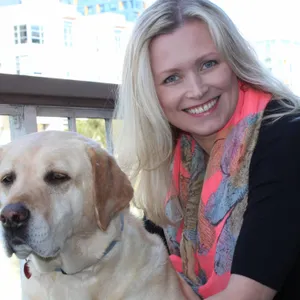
Your front-row seat to PhD findings into change-making and no-holds-barred insight into my experience across 6 continents. Join me in fueling dialogue on the why, the how, the how not to, and the personal toll of creating regenerative transformation. changemakershandbook.substack.com
Latest Episodes
The most recent episodes — sign up to get AI-powered summaries of each one.
- 1 weeks ago13 min
My cover is blown
“Are you a spy?” is a question I get surprisingly often.Yes, I was raised in the Soviet Union and have spent much of my life making relatively little sense to anybody anywhere. Still, the question surprises me mostly because regular people, tickled by the possibility that they are standing next to a maybe-spy, seem to expect a meaningful answer.If I were a spy (and I never confirm nor deny), I would have been fielding that question since I first learned to regard a pacifier with suspicion. Also, if I were a spy, I wouldn’t have any accent at all. Haven’t people seen The Americans?Anyway, with AI taking over the world, I can no longer hide the truth.Spotify has taken in hundreds of hours of my choices across music, podcasts, audiobooks and, yes, recommendations from friends — really, really watch who you allow to contaminate the evidence — and noticed something many of you have treated as a running joke for years.I have spent much of this summer noticing.Since I am currently based in North America, summer is only now coming to a close, leaving me up to my neck in unprocessed evidence.I have spent most of my professional life observing people, organizations, systems, movements: what changes, what stubbornly doesn’t, and what happens between intention and reality. Observation is practically an occupational hazard.But my PhD has been forcing me to distinguish more carefully between looking in order to reach a conclusion and looking to acknowledge what is there. Age may also be playing a role. Not chronological age, necessarily. I don’t remember who said it first, but I was with a group of friends when it was established that I was 76 on the inside. That was at least ten years ago. When I got perilously close to an internal 90, I decided something had to change or I’d soon be the oldest person anybody’s ever met. Lonely.I have been attempting a “Benjamin Button”: methodically reverse-aging my inside person.I reluctantly accepted that mac-and-cheese is legitimate food. Tried and was smitten by a weighted blanket. Gradually—over months—crept my bedtime from 8:15 p.m. toward 10. Committed to phone puzzles. Got hair tinsel. Glitter. A dog bed. All for myself.Impressive, I thought.And then yesterday afternoon, when asked for my Daylist, Spotify analyzed me and labeled it, coastal grandmother.Correct. Coastal grandmother.See Exhibit A.I sent this screenshot to several friends because, obviously, an accusation of this magnitude requires sufficiently appalled witnesses. This only becomes a story because my friends weren’t appalled. One friend reminded me that I had been claiming to be 74 for years. I corrected him. It has never dropped below 76 in recorded history, so there was no need to start flattering me now.What disturbed me was not that Spotify had got me wrong. It was that Spotify had somehow got me right.The algorithm looked past much of the evidence humans tend to use when deciding who somebody is and landed on something I have been insisting was true all along. Not even especially deep down.The evidence against me“Coastal grandmother” — I had to know, in case it comes up in New York Times Puzzles; thank you, Glamour — was coined and popularized in 2022 by TikTok creator Lex Nicoleta. You do not have to be a grandmother or live anywhere near a coast: this type of person is apparently excused from all integrity. The archetype draws heavily on Nancy Meyers heroines: relaxed linen, good food, farmers’ markets, fresh flowers, understated elegance, early mornings spent holding artisanal mugs with both hands, and effortless enjoyment of one’s life while expressing unfounded doubt and disorientation. Architectural Digest describes the domestic version in terms of natural materials, soft colors, eclectically washed out homes swaddled in light, comfort, simplicity, and everyday pleasure.In my mind, she has also perfected the self-deprecating chuckle and the lollop: that oddly loose, over-articulated gait, with too much limb, too much side-to-side, and not enough obvious reason.S**t.Diane Keaton has been preparing me for this diagnosis for decades.Once you scrub away the baby face, the midlife chub, my actual date of birth and other inconvenient forensic evidence, Spotify may have prod
- Jul 30, 202613 min
Art is water for changemaking
I may have been bullying artists recently.Or, perhaps, I have been excessively compelling changemakers who are capable of making art to do so. Either way, a poet, a satirist, a couple of painters, and an occasional dancer have been subjected to fervent appeals that their therapists may eventually hear about.Please make art. Please do not underestimate what it does the world.The longer I study changemaking, the more convinced I become that art is one of civilization’s oldest changemaking technologies — and one whose powers we have persistently underestimated.Changemaking demands strategy, competency, meticulous process, and masterful execution. These reshape the conditions around people: institutions, incentives, relationships, resources, and systems. They matter enormously. However, meaningful change also expects something of the people moving through it. It asks us to loosen identities, certainties, loyalties, fears, griefs, and hopes. It asks us to become capable of inhabiting a future that does not yet exist.This journey cannot be engineered. It must be imagined and experienced. And that is where art comes in.A private place to meet ourselvesArt changes the conditions within people, but not by issuing instructions, winning arguments, or demanding agreement.When societies know who they are, art celebrates. When societies know what they are fighting, art mobilizes. But when people can no longer make sense of themselves —when decent people are unsure whether to take pride or shame in their private thoughts — art becomes something else entirely. It becomes a kind place for an unmasked meeting with ourselves.Public life has become remarkably poor at holding such encounters. It demands conclusions before we have woven an understanding. It rewards declarations and treats uncertainty as weakness, guilt, or evasion.Art asks something quieter of us. It asks us to stay. To remain by an unfolding idea. With an authentic moment. Inside a paradox. Despite the urge to run.A poem, a song, a dance, a painting, a novel, or a satirical sketch may quietly ask: Is this what you want? Is this who you want to be? The gift of art is that no one ever has to hear our answers.The artist creates the work, but the decisive conversation occurs in private between the work and the person encountering it. Away from applause and outrage, we can notice what frightens, attracts, disgusts, consoles, implicates, or awakens us. We can mourn what we cannot explain. We can reconcile envy, tenderness, prejudice, delight, resentment, hope, and love within the human heart.Art gives us permission to confront ourselves before confronting one another. This privilege is one of art’s greatest kindnesses.Practicing paradoxIn my last essay, I argued that one of the defining competencies of changemakers is the capacity to remain inside paradox: to resist resolving complexity too quickly and to tolerate uncertainty long enough for better judgment to emerge.LINK: https://changemakershandbook.substack.com/p/can-changemaking-be-taughtArt is one of the places where we practice that competency. It can suspend judgment without abolishing discernment. It can loosen shame without excusing harm. It can delay action without surrendering responsibility. This suspension matters because action taken too quickly may be little more than fear dressed as moral courage.Art does not tell us what to think or who to become. It challenges us to question, imagine, and remain present long enough to encounter truths that cannot be marketed, legislated, or argued into existence.Art gives wisdom room to form.Refusing collective self-deceptionFor the artist, creation can be an act of defiance: pointing to what everyone else pretends not to see. The declaration that the emperor has no clothes is not reserved for governments. Art exposes the delusions of markets, institutions, ideologies, movements, communities, and individuals. It reveals where certainty has become performance, where language has outrun humanity, and where the stories we tell have locked us out of possibility. It invites us to consider where we, too, might disappoint ourselves.This is why authoritarian movements have so often feared artists. Not every artist is politically radical, but art itself resists reduction. It refuses to collapse a human being into a caricature, demographic, diagnosis, voting bloc, algorithm, market segment, or enemy. Art insists that human experience is always larger than the systems attempting to explain or control it.Long before investigative journalism, peer review, decentralized governance, or social media, artists were helping civilizations fu
- Jul 23, 202615 min
Can changemaking be taught?
Approximately 70% of transformational efforts fail. We often blame strategy, leadership, culture, funding, politics, or bad luck. Increasingly, my research suggests another explanation: we have never treated changemaking as a profession.Architects, teachers, engineers, surgeons, firefighters, pilots, and musicians all develop explicit competencies. We expect them to practise, improve, receive feedback, and continue learning throughout their careers. Changemakers, by contrast, are largely expected to figure it out as they go.That has left generations of extraordinary people underprepared, unsupported, and far more dependent on talent and perseverance than any serious profession should tolerate.One of the central questions driving my PhD is deceptively simple: if changemaking is a profession, what are its competencies? This post offers an early answer.If you listened to my Q2 Field Notes (LINK: https://changemakershandbook.substack.com/p/field-notes-on-changemaking-q2-2026?r=1i4aw7), you'll recognize this as one of the biggest shifts in my thinking. Increasingly, I suspect that successful transformation depends not only on good methods but on the abilities of changemakers. If that's true, understanding the competencies they can develop becomes just as important as understanding the tools they use.While my recent writing has focused on the predispositions that may draw someone toward changemaking, today's post turns to a different question: once someone is drawn to this work, what can they deliberately learn to become most effective?Changemakers have largely learned through improvisation. We apprentice ourselves to problems, borrow techniques from adjacent professions, accumulate scars, and hope that experience eventually resembles expertise. No mature profession would deem that sufficient.If we can articulate the competencies of changemaking, we can begin to do what every mature profession eventually learns to do:* recruit people whose natural predispositions fit the work,* develop them intentionally rather than accidentally,* coach them through increasingly complex challenges,* recognize excellence,* and sustain meaningful impact over an entire career.My research suggests 9 core and 6 situational competencies.While most of the competencies below emerge from my own research and practice, they are also informed by the work of others who have shaped my thinking. In particular, futurist Bob Johansen's work on future leadership skills has influenced several of the situational competencies, including dilemma flipping, bio-engaging, human calming, and what he calls "smart-mob swarming." His work has been an important companion as I develop a competency framework specifically for changemakers.LINK TO BIO: www.iftf.org/people/bob-johansen/LINK TO BOOK: https://www.iftf.org/insights/navigating-the-age-of-chaos-a-sense-making-guide-to-a-bani-world-that-doesnt-make-sense/The 9 Core Competencies of ChangemakersThese are the competencies all effective changemakers demonstrate. Some emerge naturally. Others require years of deliberate practice. Together, they form the professional foundation of changemaking.* Curiosity — Embracing uncertainty; actively seeking and enjoying new perspectives and experiences.* Systems Thinking — Building on the predisposition of systems sensitivity, this competency involves analysing interdependence, feedback loops, leverage points, and unintended consequences in order to design more effective interventions. Detailed in my earlier post: https://changemakershandbook.substack.com/p/want-to-change-the-world-master-systems?r=1i4aw7* Empathy — Understanding and responding to the lived experience of others when designing and leading change.* Strategy — Stripped of rigidity, effectively coordinating action across all spheres of influence. Related to Bob Johansen's concept of "clarity."* Facilitation & Collaboration — With humility and vulnerability, guiding groups toward possibility that is unlocked through cooperation.* Intentionality — Tr
- Jul 5, 202622 min
Field Notes on Changemaking (Q2 2026)
In this second installment of Field Notes on Changemaking, I again step back after a quarter of essays and conversations to reflect, synthesize, and help build shared memory for an emerging profession.These field notes serve two purposes. First, they provide an overview of the content generated during the quarter, helping you decide what source material is most worth your time.Second, they offer my reflection across that material to identify emerging patterns, refine working hypotheses, pose the next set of questions, and invite you to shape the coming quarter of inquiry.One unexpected gift of writing these notes is that they force me to examine not only what I published, but how my own thinking has changed.What has changed in how I understand changemaking?LINK to Notes from Q1: https://changemakershandbook.substack.com/p/field-notes-on-changemaking-q1-2026?r=1i4aw7Q1 ended with eight questions that I believed would shape the next phase of my work. They remain the living research agenda behind The Changemaker’s Handbook, my doctoral research, and the conversations within this growing global community.* What builds legitimacy at scale?* Can we create transformation without social movements?* How does power actually move?* How do we design for impact—not merely moral correctness or agreement?* Why do changemakers continue to serve, against all odds?* What would it mean to professionalize changemaking without flattening it?* How do we build the infrastructure this emerging profession lacks?* And how do we reduce the unequal cost of change?Q2 certainly advanced some of those questions. More surprisingly, it reorganized them.Regardless of whether I was speaking with Dr. Laura Mae Lindo about public service, Dr. Whitney Austin Gray about public health, Andrew MacLeod about trafficking and institutional courage, Dr. Dominique Hes about regenerative design and story, or reflecting on gender, mothering, fathering, and invisible work, I found myself pulled further upstream.Questions about legitimacy became questions about trust, standards, and story. Questions about social movements became questions about adoption. Questions about power became questions about relationships, institutions, and narrative. Even my longstanding interest in transformation infrastructure began to feel incomplete. Infrastructure, I realized, is itself dependent on something more fundamental: the conditions under which it can emerge, be maintained, and ultimately become ordinary.Rather than asking how we create change, these conversations probed what makes change possible. If we better understand the conditions that allow transformation to spark, spread, and endure, perhaps legitimacy, adoption, professionalization, and even power become more intelligible as consequences rather than starting points.That, I now believe, was the central discovery of the quarter. Q1 questions were pointing toward a more fundamental one.The quarter in reviewThe quarter opened with a milestone in my doctoral research into changemaking: three essays that captured some of my findings. What are changemakers for? Are all people changemakers? and How can we recognize one — or know that we’re “it”? introduce the function changemakers serve in society, the six attributes they appear to share, and why the world benefits from a diversity of contribution — not merely a diversity of people.LINK: https://changemakershandbook.substack.com/p/how-to-spot-a-change-maker-signs?r=1i4aw7LINK: https://changemakershandbook.substack.com/p/most-people-are-not-changemakers?r=1i4aw7LINK: https://changemakershandbook.substack.com/p/what-are-changemakers-for?r=1i4aw7I also revisited the origin story of my own work. Rather than recounting a biography, Why I Care explores why I have spent two decades trying to professionalize changemaking, and what experiences convinced me that the world needed better transformation infrastructure.LINK: https://changemakershandbook.substack.com/p/why-i-care-10e?r=1i4aw7For Mothers’ Day and Fathers’ Day, I stepped outside my usua
- Jun 28, 202654 min
Beyond solutions — our story problem: Interview with Dr. Dominique Hes
I had the honor of interviewing Dr. Dominique Hes — regenerative design pioneer, educator, co-author of Designing for Hope, and one of the biggest influences on my own thinking over the past two decades.“We have become very good at changing the stuff. We have paid far less attention to changing the story.” — Dr. Dominique HesThat distinction (and how it came to matter to Dominique) framed almost everything we discussed.For years, Dominique has worked across science, engineering, architecture, and regenerative development. Yet she increasingly believes that:Our greatest challenges are no longer technical. They are narrative. Because economics is a story. Planning is a story. And so is law. organizations. and markets. Even many of the systems we experience as fixed are, ultimately, stories we collectively agreed to live inside.Stories are infrastructure.That conversation led somewhere neither of us expected: the regenerative brain. The possibility that our collective excellence in analytical, literate, reductionist thinking has left us less practiced at noticing, relationships, presence, and seeing wholes.Perhaps regeneration requires a different way of paying attention.“Listen with the intent to learn.” — Dr. Dominique HesListen not to reply, persuade, or defend, but to understand. That feels rare. And vital.Another lovely moment came from me asking Dominique, What kind of changemaker do you consider yourself to be?“I’m mycelium.” — Dr. Dominique HesNot a profession. Invisible infrastructure in healthy forests. Connecting ideas, people, and places. Moving nutrients where they are needed. It struck me because invisible work was one of the themes of my Field Notes for Q1 2026. Perhaps some of the most important changemaking resembles mycelium far more than the visible leadership we tend to celebrate.Nature on the BoardWe also explored one of Dominique’s newest experiments: serving as the Voice of Nature on the board of Regen Melbourne. Not symbolically. Practically. She reads every board paper twice: once as Dominique (the left-hand page in her notebook) and then again as Nature (the right-hand page). Her description of the moments when the two disagree—and how that practice has changed the board’s governance — was one of the most thought-provoking parts of our conversation.What is hope?We finished on hope, which is in the title of Dominique’s book and at the heart of her work. Not hope as optimism, but hope as a practice of contribution, one relationship at a time.If you’ve been following the recent conversations here — from Laura Mae Lindo, Whitney Austin Gray, Andrew MacLeod, and now Dominique Hes — you may notice a thread emerging. Again and again, the work comes back to the same question:How do we create the conditions in which better futures become not merely imaginable — but normal?Dominique’s answer is both deceptively simple and profoundly challenging:Perhaps to expand what is possible, we must change our stories.References* Designing for Hope (2015) by Dr. Dominique Hes & Dr. Chrisna du Plessis: https://www.booktopia.com.au/designing-for-hope-dominique-hes/book/9781763874909.html?srsltid=AfmBOor4mU4litT-1fW7VPrEDuHkx_CPiZ2G5tqNjOQq8isD1fYkTstd* Mycelium Seed, Dominique’s Substack: https://myceliumseed.substack.com* Regen Melbourne: Nature on the Board https://regen.melbourne/gazette/dominique-hes-nature-on-the-board* Change the Story, Change the Future: A Living Economy for a Living Earth (2015) by David Korten. https://www.amazon.com/Change-Story-Future-Living-Economy/dp/1626562903* Right Story, Wrong Story (2023) by Tyson Yunkaporta. https://www.amazon.com/Right-Story-Wrong-Tyson-Yunkaporta/dp/1922790958▶️ Watch or listen to Changemakers Handbook on Substack, Spotify, or Apple Podcasts.https://podcasts.apple.com/us/podcast/changemakers-handbook-with-elena-bondareva/id1828981728<a target="_blank" href="https://open.spotify.com/show/4MGxEQM72DhSvpURHo7IQS?si=e6cef2
- Jun 20, 20268 min
What are fathers for?
I thought that writing something that went beyond biology and stereotypes for Mothers’ Day was hard. Then I started thinking about fathering.For Mother’s Day, I found myself writing about mothering as a choice: a way of caring for what is vulnerable. It felt surprisingly coherent. Fatherhood felt different. More contested. More uneven. More shaped by personal experience.What are fathers for?In a moment when many men seem increasingly uncertain about masculinity, fatherhood, and their place in society, I wasn’t sure I knew how to answer. Partly because my own experience refuses to fit neatly into any story I know how to tell.So I asked my audience:What is something a father or father figure gave you that would have been difficult to receive elsewhere?More than fifty responses arrived from around the world.Some people answered immediately. Others took days. A surprising number struggled to answer at all, and that, too, felt significant.One person responded:“A longing for a father… If I had my father, I wouldn’t long for one in others.”Another wrote:“There is something uniquely painful about being hurt the most by the person who was supposed to love you the most.Whatever fathering is, people seem to notice both its presence and its absence.Your answers were remarkably variedSome named values:“Integrity. Work ethic.” — Sujatha“Humility.” — Jeff“Patience.” — Rick“Counsel.” — Jim“Compassion.” — Alex“High standards as a man, father, leader.” — H.G."Discipline." - GuntherOthers described confidence:“Belief — my Dad always believed in me, sometimes when I didn’t.” — Davina“Confidence in life.” — Mukt“Confidence in my abilities.” — AndreaOne respondent described learning to build and repair almost anything alongside her father before concluding:“That confidence in turn birthed resilience.”Others spoke about safety:“A safe place. Acceptance. Reassurance. Rescue.” — Sara“The space to make my own decisions (and mistakes) without fear of judgement... the room to grow.” — Anthony“Security.” — Nick, Jennifer“A grounding presence.” — Paul“Unconditional support and always a safe place to land.” — Lynn“Unconditional love and support in all my decisions, even the ones he disagreed with.” — EricOne surprising answer stayed with me:“To know what it feels like to be delighted in.” — TiffanyInterestingly, this question is attracting attention far beyond my inbox. Dr. Sanjay Gupta (CNN’s Chief Medical Correspondent) has just interviewed the author of the new book Dad Brain, exploring the growing body of research on how fatherhood changes men’s brains and behavior.Who fathers us?What struck me was not just the variety of answers, but who people were talking about. Fathers, certainly. But also grandfathers. Professors. Mentors. Advisors. Stepfathers. Coaches. People who were not necessarily related to them at all.One responded opened with,“I don’t think these things are inherently masculine.”He then proceeded to describe a grandfather who taught him generosity, courage, emotional openness, humor, advocacy, and how to love with his whole heart. That response helped clarify something for me. Perhaps fathering is less about who performs it than what is contributed.Our parenting norms aren’t universalNature itself seems remarkably unconcerned with our assumptions. Male seahorses carry pregnancies. Emu fathers incubate eggs and raise chicks. Across the animal kingdom, parenting responsibilities are distributed in countless ways.Perhaps humans are not so different.Perhaps fathering is not a category of person but a category of care.Again and again, people described fathering as modeling a way of being in the world. Sometimes that meant trust in themselves: confidence, self-reliance, resilience, ambition, a sense of worth or the room to grow. Sometimes it meant trust in how the world works: how to build, fix, compete, endure, recover, or make sense of things. And sometimes it meant trust in how to participate with integrity: how to love, how to treat others, how to stay calm, how to stand for something, how to be strong without becoming hard.And perhaps the strongest evidence that it matters is that people notice when it is there — and when it is not.So this Father’s Day, consider thanking or honoring the father figures who helped you trust yourself a little more, understand the world a little better, and participate in it a little more wisely.And to every single person who chooses to father the world: Happy Father’s Day! May you know that your care mattered, often in ways you
- Jun 11, 20268 min
Why I Care
Almost two years ago, I published a piece called Why I Care.Change-maker’s Handbook (the book) came out in late 2023. I was starting to mine my twenty years of changemaking experience for patterns and lessons that may benefit others, interviewing practitioners, and shaping my PhD research. Re-reading this piece now, I am struck by how many of the themes that would later emerge in my research were already present within it — not as theory or findings, but as lived experience.Most of you would have never seen this essay, so I thought I would share it again. After the original piece, I’d like to tell you what I now see differently._ _ _Why I Care (2024)The baby in the photo, I was born and raised in Moscow. Now Russia, then the traumatically imploding Soviet Union and the West’s sandbox for crude experimentation in forging a democracy and a market economy from scratch. Unlike many other countries — including those of the former Soviet Union — Russia had no history of either. This was like teaching a child to swim by throwing them into the deep end: there was no muscle memory to trigger.Raised by two university professors and a veteran of one of WWII’s all-female front-line battalions, I witnessed what it meant to strip a society of its value system without meaningfully replacing it. Once-respected professionals, my mom and dad were now paid in towel fabric, plates, and promises because anybody who relied on the government was, well, instantaneously overboard without a life raft. Surgeons, police officers, and scientists were bartering on street corners. In shame, nobody was making eye contact.I was not yet seven when I — clad in layers that kept us somewhat warm via sheer bulk, not smarts — first held my parents’ spot in lines for bread, sugar, or butter in the pitch black of winter mornings. Those were, indeed, separate lines with none of the efficiency of Western food banks.As it relegated people to shuffling huddles, I looked Need in the eye before I could recognize its power over everybody in my world.It would be years before I understood the meaning of eating pancakes for dinner every night of the week. By the age of eleven or twelve, I was responsible for growing (often to be canned) our annual supply of vegetables, fruit, and berries during the summer. I still can’t throw food away.At school, we routinely sat for hours on end without teachers, who were forced out into the fickle market economy to make ends meet. There were no extracurricular activities. Playgrounds got dismembered for parts. All the parents were so preoccupied with surviving that as children, we were raising ourselves.I remember acknowledging that change was non-negotiable. Still, I knew in my gut that it need not callously decimate people’s lives. Before even hitting my teens, I remember the Moscow intersection where I first committed to finding better ways to do it; ways that did not pull the rug from under people’s feet; ways that protected the environment as well as human dignity; ways that reinvigorated rather than decimated; that unlocked possibility rather than entrenched despair.My postgraduate research at Cornell University allowed me to delve into broad-spectrum change, and I have not stopped since.I was in my 20s when, on a flight, I first wrote down my purpose, “To mobilize people to imagine and create realities far better than they have experienced.”Curiously, this has not changed for me. I don’t know if this is atypical. I accept that one’s purpose may change with time, and I wish we knew more about this; one of my standing invitation for social sciences research.Even if it took me years to see it clearly, my purpose has been my compass for over three decades.May I suggest that you have a lot to gain and nothing to lose by giving a go at distilling yours. Section 1 of my book, Change-maker’s Handbook, focuses on purpose and can guide you. It may mean all the difference in the impact and contentment you experience as a changemaker, and I would love to hear from you whether it does! https://open.substack.com/pub/changemakershandbook/p/playlist-purpose-is-fuel-for-changemaking?r=1i4aw7&utm_campaign=post&utm_medium=web_ _ _When I wrote this piece, I was trying to explain myself and my commitment to better equip changemakers for their vital work. Today, I find myself asking a different question. Not why I care but
- May 31, 20269 min
What are changemakers for?
I have repeatedly spoken and written about purpose.Across earlier posts, I have argued that purpose is fuel for changemaking; explored the idea that each of us possesses gifts, experiences, and motivations that point toward particular forms of contribution; and written about superpowers, mandates, and the strange experience of feeling repeatedly drawn toward work that is neither convenient nor obviously rewarded.Those ideas remain central to my thinking. Yet the deeper I go into this work, the more they seem to point toward another question entirely: What are changemakers for?This may sound obvious, odd, or both. We tend to think of changemakers as individuals with causes, ideas, wounds, gifts, convictions, and projects. We ask what drives them, what problems they are solving, and how we can help.All useful questions.But if changemakers are real — more than a corporate buzzword or aspirational LinkedIn identity, but as people predisposed toward transformation — then another question becomes unavoidable.Why do changemakers exist?Across countries, sectors, professions, ideologies, and generations, some people seem persistently drawn to changemaking. They notice problems others normalize. They imagine alternatives others dismiss. They struggle to disengage from harms they did not create. They continue engaging long after exhaustion, cynicism, self-interest, or social pressure would have persuaded many others to stop.Not all changemakers agree. Not all succeed. Not all are even pursuing the same future. Still, they are everywhere.What if societies require transformation in the same way they require continuity?What if human communities need people who are unusually sensitive to unrealized possibility? People who repeatedly question inevitability. People who become uncomfortable when preventable harm is normalized. People willing to move toward uncertainty in pursuit of a future that does not yet exist.Goodness knows we need them now.Perhaps we always have — whether anybody, changemakers included — recognized the function clearly or not.Human beings are astonishingly capable of normalizing the unbearable. We adapt to institutions that degrade us, incentives that distort reason, technologies that outpace our ethics, economies that drain us, and narratives that shrink our hopes.This capacity to adapt can protect us. But at times, it can also trap us. Changemakers, at their best, disrupt that trap.They are not the whole answer. They are not saviors. They are not automatically wise, ethical, effective, or right. But they may perform a necessary function inside human systems: noticing where reality no longer fits the frame, where harm has been normalized, where possibility has been declared impossible too soon.Studying changemakers reminds me of immune systemsHealthy immune systems do not dominate the body. They detect threats, respond to harm, support repair, and help living organisms survive what might otherwise overwhelm them.Without an immune system, the body becomes dangerously vulnerable. With an overactive or misdirected one, the body can self-sabotage. This feels increasingly useful to me as a metaphor for changemakers.A society without changemakers would likely struggle to adapt. A society composed entirely of changemakers would likely implode.The work, then, is not to romanticize changemakers. Nor is it to dilute, silence, or punish them for picking at what others would rather leave alone. The work is to understand what function they perform, what conditions allow that function to become regenerative rather than destructive, and what kinds of support, ethics, relationships, competencies, and institutions might help changemakers serve transformation well.This matters because changemakers are often treated as anomalies. Too disruptive. Too intense. Too idealistic. Too impatient. Too difficult. Too unwilling to accept “that’s just how things are.”Sometimes, all of that is fair.Yet perhaps some of what makes changemakers difficult is inseparable from what makes them useful. The person who cannot stop asking whether the system is solving the wrong problem may prevent pseudo-consensus. The person who balks at existing constraints may chip away until unrealized possibility comes into view. The person who feels responsible for harms they did not create may help an entire society take responsibility.Without changemakers, many necessary transformations may never happen. Purpose, in this sense, is not only personal. It is ecological.The question is not simply, What gives my life meaning? It may also be, What kind of contribution does the world seem to need of me?Changemakers’ contribution seems to be helping systems change before
About Changemakers’ Handbook with Elena Bondareva
Your front-row seat to PhD findings into change-making and no-holds-barred insight into my experience across 6 continents. Join me in fueling dialogue on the why, the how, the how not to, and the personal toll of creating regenerative transformation. changemakershandbook.substack.com
Customized Recaps
AI-powered recaps with compact key takeaways, quotes, and insights.
Straight to Your Inbox
Get key takeaways from Changemakers’ Handbook with Elena Bondareva in a 5-minute read.
Save Hours Every Week
Stay current on your favorite podcasts without falling behind.
Frequently Asked Questions
What is Podzilla's Changemakers’ Handbook with Elena Bondareva daily summary?
It's a free AI-powered email that summarizes new episodes of Changemakers’ Handbook with Elena Bondareva as soon as they're published. You get the key takeaways, notable quotes, and links & mentions — all in a quick read.
How does the Changemakers’ Handbook with Elena Bondareva podcast summary work?
When a new episode drops, our AI transcribes and analyzes it, then generates a personalized summary tailored to your interests and profession. It's delivered to your inbox every morning.
Is this an official Changemakers’ Handbook with Elena Bondareva product?
No. Podzilla is an independent service that summarizes publicly available podcast content. We're not affiliated with or endorsed by Elena Bondareva.
Can I get summaries of other podcasts too?
Absolutely! The free plan covers up to 3 podcasts. Upgrade to Pro for 15, or Premium for 50. Browse our full catalog at /podcasts.
How often does Changemakers’ Handbook with Elena Bondareva release new episodes?
Changemakers’ Handbook with Elena Bondareva publishes weekly. Our AI generates a summary within hours of each new episode.
What topics does Changemakers’ Handbook with Elena Bondareva cover?
Changemakers’ Handbook with Elena Bondareva covers topics including Business, Entrepreneurship, Culture, Society & Culture. Our AI identifies the specific themes in each episode and highlights what matters most to you.
Start getting Changemakers’ Handbook with Elena Bondareva summaries tomorrow morning.
Free forever for up to 3 podcasts. No credit card required.
Free forever for up to 3 podcasts. No credit card required.