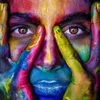
I may have been bullying artists recently.Or, perhaps, I have been excessively compelling changemakers who are capable of making art to do so. Either way, a poet, a satirist, a couple of painters, and an occasional dancer have been subjected to fervent appeals that their therapists may eventually hear about.Please make art. Please do not underestimate what it does the world.The longer I study changemaking, the more convinced I become that art is one of civilization’s oldest changemaking technologies — and one whose powers we have persistently underestimated.Changemaking demands strategy, competency, meticulous process, and masterful execution. These reshape the conditions around people: institutions, incentives, relationships, resources, and systems. They matter enormously. However, meaningful change also expects something of the people moving through it. It asks us to loosen identities, certainties, loyalties, fears, griefs, and hopes. It asks us to become capable of inhabiting a future that does not yet exist.This journey cannot be engineered. It must be imagined and experienced. And that is where art comes in.A private place to meet ourselvesArt changes the conditions within people, but not by issuing instructions, winning arguments, or demanding agreement.When societies know who they are, art celebrates. When societies know what they are fighting, art mobilizes. But when people can no longer make sense of themselves —when decent people are unsure whether to take pride or shame in their private thoughts — art becomes something else entirely. It becomes a kind place for an unmasked meeting with ourselves.Public life has become remarkably poor at holding such encounters. It demands conclusions before we have woven an understanding. It rewards declarations and treats uncertainty as weakness, guilt, or evasion.Art asks something quieter of us. It asks us to stay. To remain by an unfolding idea. With an authentic moment. Inside a paradox. Despite the urge to run.A poem, a song, a dance, a painting, a novel, or a satirical sketch may quietly ask: Is this what you want? Is this who you want to be? The gift of art is that no one ever has to hear our answers.The artist creates the work, but the decisive conversation occurs in private between the work and the person encountering it. Away from applause and outrage, we can notice what frightens, attracts, disgusts, consoles, implicates, or awakens us. We can mourn what we cannot explain. We can reconcile envy, tenderness, prejudice, delight, resentment, hope, and love within the human heart.Art gives us permission to confront ourselves before confronting one another. This privilege is one of art’s greatest kindnesses.Practicing paradoxIn my last essay, I argued that one of the defining competencies of changemakers is the capacity to remain inside paradox: to resist resolving complexity too quickly and to tolerate uncertainty long enough for better judgment to emerge.LINK: https://changemakershandbook.substack.com/p/can-changemaking-be-taughtArt is one of the places where we practice that competency. It can suspend judgment without abolishing discernment. It can loosen shame without excusing harm. It can delay action without surrendering responsibility. This suspension matters because action taken too quickly may be little more than fear dressed as moral courage.Art does not tell us what to think or who to become. It challenges us to question, imagine, and remain present long enough to encounter truths that cannot be marketed, legislated, or argued into existence.Art gives wisdom room to form.Refusing collective self-deceptionFor the artist, creation can be an act of defiance: pointing to what everyone else pretends not to see. The declaration that the emperor has no clothes is not reserved for governments. Art exposes the delusions of markets, institutions, ideologies, movements, communities, and individuals. It reveals where certainty has become performance, where language has outrun humanity, and where the stories we tell have locked us out of possibility. It invites us to consider where we, too, might disappoint ourselves.This is why authoritarian movements have so often feared artists. Not every artist is politically radical, but art itself resists reduction. It refuses to collapse a human being into a caricature, demographic, diagnosis, voting bloc, algorithm, market segment, or enemy. Art insists that human experience is always larger than the systems attempting to explain or control it.Long before investigative journalism, peer review, decentralized governance, or social media, artists were helping civilizations fu
Podzilla Summary coming soon
Sign up to get notified when the full AI-powered summary is ready.
Free forever for up to 3 podcasts. No credit card required.
Listen to This Episode
More from Changemakers’ Handbook with Elena Bondareva

My cover is blown
Can changemaking be taught?
Field Notes on Changemaking (Q2 2026)
Beyond solutions — our story problem: Interview with Dr. Dominique Hes
Get summaries like this every morning.
Free AI-powered recaps of Changemakers’ Handbook with Elena Bondareva and your other favorite podcasts, delivered to your inbox.
Free forever for up to 3 podcasts. No credit card required.