Free Daily Podcast Summary
Bendy Bodies with Dr. Linda Bluestein: Daily Summaries Delivered
by Dr. Linda Bluestein
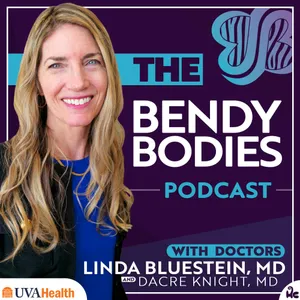
Whether you’re bendy with all the benefits or hurting in all the wrong places, you’ve come to the right place for all things hypermobility. Connective tissue disorders like Ehlers-Danlos Syndromes (EDS) are often dismissed or overlooked by healthcare providers as a cause of chronic pain. But if you or someone you care about struggles with the life-altering symptoms of hypermobility, you should know YOU ARE NOT ALONE! At the Bendy Bodies Podcast, we understand. Each week, join Dr. Linda Bluestein (The Hypermobility MD) as she pulls back the curtain on how to prevent injury and unnecessary suffering in “double-jointed” individuals seeking a more comfortable life in their unique, complex “bendy bodies.” When you tune in, you’re engaging in more than a podcast. Both on-air and online, you’re joining a supportive community where patients, caregivers, and healthcare professionals trade insights, life hacks, and inspiring stories to embrace our Bendy Bodies journey together!
Latest Episodes
The most recent episodes — sign up to get AI-powered summaries of each one.
- 3 days ago1h 4m
Hand Pain, Numbness & Weakness in EDS: Missed Nerve Problems with Dr. William Ericson | Ep 214
What if your hand pain, numbness, weakness, or grip problems aren’t actually coming from your hand or wrist? Orthopedic hand surgeon William Ericson, MD, joins Dr. Linda Bluestein to explain why people with Ehlers-Danlos syndrome (EDS) and hypermobility may experience overlooked median nerve entrapment near the elbow, carpal tunnel-like symptoms, thumb arthritis, and thoracic outlet syndrome—even when standard imaging or nerve testing doesn’t reveal the answer. Dr. Ericson, co-author of the 2017 American Journal of Medical Genetics article on orthopedic management of the Ehlers-Danlos syndromes, shares what he has learned from more than three decades of treating patients with complex upper-extremity symptoms. Why can someone have significant hand pain, weakness, numbness, tingling, or loss of grip strength even when imaging or standard nerve testing looks normal? Dr. Ericson describes a pattern of proximal median nerve entrapment near the elbow that he believes is extremely common in people with EDS and may frequently be mistaken for carpal tunnel syndrome, tendonitis, or unexplained pain. He explains how median nerve dysfunction can change the way the hand pinches and grips, potentially placing excessive stress on the thumb and contributing to thumb arthritis over time. He also discusses whether identifying and treating the underlying nerve problem could help reduce that risk. The conversation expands beyond the hand and wrist to the relationship between hypermobility, shoulder instability, scapular protraction, and thoracic outlet syndrome. Dr. Ericson explains why improving shoulder and scapular mechanics may sometimes be more important than operating directly on the thoracic outlet. You’ll also hear an important discussion about cortisone injections in EDS and hypermobility, including why injections may be appropriate for true tendon inflammation but potentially problematic when the underlying issue is joint instability. Just as importantly, Dr. Ericson explains why he evaluates the whole person before recommending surgery—including posture, shoulder mechanics, thoracic outlet involvement, stress, and mental health—and why persistent symptoms after surgery may sometimes reflect an unrecognized problem farther upstream. The episode closes with advice for anyone living with symptoms that have been difficult to explain: a good clinician does not have to know everything. Sometimes the most important words a healthcare professional can say are, “I don’t know—but I believe you, and I’ll help you figure out what comes next.” Want more of Dr. William Ericson? Website: https://www.williamericsonmd.com/ Ericson Hand and Nerve Center: https://ericsonhand.com/ Want more Dr. Linda Bluestein, MD?Website: https://www.hypermobilitymd.com/YouTube: https://www.youtube.com/@bendybodiespodcastInstagram: https://www.instagram.com/hypermobilitymd/Facebook: https://www.facebook.com/BendyBodiesPodcastX: https://twitter.com/BluesteinLindaLinkedIn: https://www.linkedin.com/in/hypermobilitymd/Newsletter: https://hypermobilitymd.substack.com/Shop my Amazon store https://www.amazon.com/shop/hypermobilitymdDr. Bluestein's Recommended Herbs, Supplements and Care Necessities: https://us.fullscript.com/welcome/hypermobilitymd/store-start Want to learn more about the UVA EDS Center? For Appointments and Questions: RUVAEDSCenter@uvahealth.orgUVA EDS: https://www.uvahealth.com/healthy-practice/advancing-care-through-ehlers-danlos-clinicUVA EDS FAQ: https://www.uvahealth.com/support/eds/faq UVA Pediatric Integrative Medicine: https://childrens.uvahealth.com/specialties/integrative-health Thank YOU so much for tuning in. We hope you found this episode informative, inspiring, useful, validating, and enjoyable. Join us on the next episode for YOUR time to level up your knowledge about hypermobility disorders and the people who have them. Join YOUR Bendy Bodies community at https://www\.bendybodiespodcast\.com/. YOUR bendy body is our highest priority! Learn more about Human Content at http://www\.human-content\.com Podcast Advertising/Business Inquiries: sales@human-content.com Part of the Human Content Podcast Network Go http://www.AquaTru.com now for 20% off (your purifier) using promo code BENDY. FTC: This video is not sponsored. Links are commissionable, meaning I may earn commission from purchases made through links Chapter: 00:00 Median Nerve Shocker00:29 Meet Dr Erickson01:47 Why He Focuses on EDS06:14 Listening Changed Everything13:52 Common Upper Extremity Complaints19:58 Median Nerve Elbow Explained25:06 Misdiagnosis and Thumb Arthritis28:16 Surgery Decision Protocol31:30 Ergonomics and Tool Hacks33:09 When Surgery Makes Sense33:57 Thoracic Outlet Surgery Risks35:29 Scapular Protraction Fix38:26 Red Flags Before Operating4
- 5 days ago1h 6m
What AI Gets Wrong About Your Health with Michael Turken, MD (Ep 213.5)
Patients are already asking AI the questions they cannot always ask their doctors. That creates enormous opportunity, but also real risk. AI can help people organize complex medical information, prepare for appointments, and better understand their health. It can also sound completely certain when the evidence is weak or the answer is wrong. In this live episode of Bendy Bodies, host Dr. Linda Bluestein speaks with Michael Turken, MD, an internist at UCSF and founder of My Doctor Friend, an AI health companion designed to support patients navigating medical complexity. Dr. Turken explores the growing gap between what patients need from healthcare and what traditional systems can realistically provide, especially between appointments. He explains where AI may help fill that gap, where it can go wrong, and why these tools should support rather than replace the patient-physician relationship. The conversation includes practical strategies for connecting medical records to AI platforms, checking what an AI model actually understands about your health history, keeping that information accurate and current, and recognizing situations where AI may be less reliable, particularly when the science itself is still evolving. Takeaways: AI chatbots are not healthcare providers, and many are not subject to HIPAA protections in the same way healthcare organizations and covered entities are. AI can sound highly confident even when its answer is incomplete, overly reassuring, or wrong. The conversation includes discussion of AI sycophancy, in which a model may reinforce a user’s assumptions or provide reassuring responses rather than appropriately challenging them. If you connect your medical records to an AI platform, periodically ask it to summarize what it believes about your diagnoses, medications, major medical events, and current health history. This can help uncover outdated, missing, or incorrect information. AI may be particularly useful in addressing the gap between what patients want from healthcare, such as the ability to ask questions at any hour, organize complex information, and prepare for appointments, and what traditional healthcare systems can currently provide. For medically complex patients, the quality of an AI answer depends heavily on the quality, completeness, and accuracy of the information the model is using. To get 2 months of Premium access to My Doctor Friend, use code "BENDY" Want to learn more about My Doctor Friend? Website: https://about.mydoctorfriend.ai/ Instagram: @mydoctorfriend.ai Want more Dr. Linda Bluestein, MD? Website: https://www.hypermobilitymd.com/ YouTube: https://www.youtube.com/@bendybodiespodcast Instagram: https://www.instagram.com/hypermobilitymd/ Facebook: https://www.facebook.com/BendyBodiesPodcast X: https://twitter.com/BluesteinLinda LinkedIn: https://www.linkedin.com/in/hypermobilitymd/ Newsletter: https://hypermobilitymd.substack.com/ Shop my Amazon store https://www.amazon.com/shop/hypermobilitymd Dr. Bluestein's Recommended Herbs, Supplements and Care Necessities: https://us.fullscript.com/welcome/hypermobilitymd/store-start Want to learn more about the UVA EDS Center? For Appointments and Questions: RUVAEDSCenter@uvahealth.org UVA EDS: https://www.uvahealth.com/healthy-practice/advancing-care-through-ehlers-danlos-clinic UVA EDS FAQ: https://www.uvahealth.com/support/eds/faq UVA Pediatric Integrative Medicine: https://childrens.uvahealth.com/specialties/integrative-health Thank YOU so much for tuning in. We hope you found this episode informative, inspiring, useful, validating, and enjoyable. Join us on the next episode for YOUR time to level up your knowledge about hypermobility disorders and the people who have them. Join YOUR Bendy Bodies community at https://www\.bendybodiespodcast\.com/. YOUR bendy body is our highest priority! Learn more about Human Content at http://www\.human-content\.com Podcast Advertising/Business Inquiries: sales@human-content.com Part of the Human Content Podcast Network FTC: This video is not sponsored. Links are commissionable, meaning I may earn commission from purchases made through links Chapter: 00:00 AI as Malpractice00:28 Welcome and Guest Intro01:20 Boutique Sponsor Break01:54 Why Build My Doctor Friend05:52 Choosing AI Platforms07:15 Record Linking Pitfalls09:21 Always Ask What It Knows12:35 Three Models for Safety15:50 Privacy Reality Check19:29 Reassurance Trap Lawsuit21:47 Making One Model a Jerk23:27 Urgent Care MRI Story27:18 Fixing Sycophancy Prompts32:12 Doctors React to AI35:26 Avoiding AI Misinformation38:51 Privacy and Medical Records41:46 Finding EDS Savvy Doctors46:24 Talking AI With Your Doctor48:46 My Doctor Friend Demo55:31 AI in Medicine Next 5 Years58:41 Carbon Footprint and Wrap Up Learn more about your ad choices. Visit megaphone.fm/adchoices
- 1 weeks ago1h 18m
EDS Medical Gaslighting, MCAS & Migraine with Dr. Ina Stephens | Ep 213
What happens when doctors misunderstand Ehlers-Danlos syndromes (EDS) and hypermobility spectrum disorders (HSD)? Sometimes the consequences go far beyond frustration or delayed treatment. In this episode of Bendy Bodies with the Hypermobility MD, Dr. Linda Bluestein is joined by Dr. Ina Stephens, Associate Director of the UVA Health EDS and Hypermobility Disorder Center, to answer listener questions about MCAS, gut health, circadian rhythm, migraine, pediatric hypermobility, and more. They also confront a disturbing reality for some families navigating poorly understood conditions: medical gaslighting, misdiagnosis, and inappropriate Munchausen-by-proxy referrals. Can you support a healthy gut microbiome with MCAS if fermented foods trigger symptoms? Drs. Bluestein and Stephens discuss the role of dietary fiber, polyphenol-rich foods, exercise, and thoughtful antibiotic use, including why the narrowest effective antibiotic may be preferable when treatment is necessary. They also explain why resetting a disrupted circadian rhythm involves more than simply going to bed earlier, and how morning light exposure can help shift the body’s internal clock. Then the conversation turns to migraine management in hypermobile patients. Dr. Stephens shares her approach to supplements and medications, including magnesium glycinate, CoQ10, and CGRP-targeting medications such as ubrogepant (Ubrelvy,) while explaining why Botox (onabotulinumtoxin A) is not usually a first-line migraine treatment and may be problematic for people with significant craniocervical instability. The episode also tackles a question with major implications for the next generation: Should children be evaluated for hypermobile EDS earlier (hEDS)? Dr. Stephens explains how delayed recognition can contribute to years of orthopedic problems, psychological distress, inappropriate diagnoses, and missed opportunities for prevention and support. Finally, the episode closes with a Hypermobility Hack on low dose naltrexone (LDN): how it may work, why benefits can take time to appear, and why patience matters when evaluating whether it is helping. Takeaways: Could the wrong antibiotic choice create problems long after the infection is gone? Why might morning sunlight matter more than forcing yourself to go to bed earlier? When could Botox actually make headaches and neck symptoms worse in someone with hypermobility? How can missed or delayed recognition of hEDS in childhood affect orthopedic and mental health outcomes years later? What happens when physicians misunderstand EDS so profoundly that a family is suspected of fabricating illness? Why can low dose naltrexone seem like it is “not working” before it has had enough time to take effect? Want to learn more about the UVA EDS Center? For Appointments and Questions: RUVAEDSCenter@uvahealth.org UVA EDS: https://www.uvahealth.com/healthy-practice/advancing-care-through-ehlers-danlos-clinic UVA EDS FAQ: https://www.uvahealth.com/support/eds/faq UVA Pediatric Integrative Medicine: https://childrens.uvahealth.com/specialties/integrative-health Want more Dr. Linda Bluestein, MD? Website: https://www.hypermobilitymd.com/ YouTube: https://www.youtube.com/@bendybodiespodcast Instagram: https://www.instagram.com/hypermobilitymd/ Facebook: https://www.facebook.com/BendyBodiesPodcast X: https://twitter.com/BluesteinLinda LinkedIn: https://www.linkedin.com/in/hypermobilitymd/ Newsletter: https://hypermobilitymd.substack.com/ Shop my Amazon store https://www.amazon.com/shop/hypermobilitymd Dr. Bluestein's Recommended Herbs, Supplements and Care Necessities: https://us.fullscript.com/welcome/hypermobilitymd/store-start Thank YOU so much for tuning in. We hope you found this episode informative, inspiring, useful, validating, and enjoyable. Join us on the next episode for YOUR time to level up your knowledge about hypermobility disorders and the people who have them. Join YOUR Bendy Bodies community at https://www\.bendybodiespodcast\.com/. YOUR bendy body is our highest priority! Learn more about Human Content at http://www\.human-content\.com Podcast Advertising/Business Inquiries: sales@human-content.com Part of the Human Content Podcast Network Go http://www.AquaTru.com now for 20% off (your purifier) using promo code BENDY. FTC: This video is not sponsored. Links are commissionable, meaning I may earn commission from purchases made through links. Chapters: 00:00 EDS Starts Early00:34 Meet Dr Ina Stephens02:12 Fermented Foods MCAS02:39 Microbiome Support Basics10:47 Antibiotics Probiotics15:49 Medical Distrust CPS Risk29:31 Migraine Treatments Botox41:16 Feverfew Dosage Basics41:30 Avoiding Rebound Headaches43:12 CGRP Rescue Meds Explained44:51 Why Diagnose EDS Early49:05 Early Intervention and Prevention56:42 Parenting Tips and Clinic Access01:06:54 LDN Patience and Closing Resources Learn more about your ad choices. V
- 2 weeks ago58 min
Unpredictability in EDS: Flares, Shame & What Actually Helps | Office Hours
Why can you feel almost functional one day and completely wrecked the next with hypermobile EDS, HSD, POTS, or MCAS? And how do you know whether you need more treatment, more rest, more movement, or an entirely different approach? In this special episode of Bendy Bodies with the Hypermobility MD, producer Aron Korney turns the tables on Dr. Linda Bluestein, asking questions submitted by the hypermobility community about some of the most frustrating and misunderstood parts of living with hypermobile Ehlers-Danlos syndrome (hEDS), hypermobility spectrum disorder (HSD), mast cell activation syndrome (MCAS), POTS/dysautonomia, joint instability, chronic pain, and related conditions. Dr. Bluestein breaks down why symptoms can fluctuate so dramatically from day to day and explains the physiology that may be driving those changes. Sleep quality, hormones, hydration, immune and mast cell activation, physical activity, cumulative stress, and other factors can all influence how someone feels from one day to the next. The conversation also tackles something that is rarely discussed enough: the shame, guilt, and self-doubt that can come with unpredictable chronic illness. Dr. Bluestein shares practical ways family members, partners, and friends can offer support without minimizing symptoms, giving advice that wasn’t requested, or assuming they know what the person needs. They also explore two professionals who are often missing from a hypermobility care team: pelvic floor physical therapists and mental health professionals who truly understand chronic illness. Drawing from The Book of Questions: Living with Chronic Illness by Brianna Greenspan and Dr. Gregory Stock, Dr. Bluestein discusses a powerful self-advocacy question: “Despite how I’m feeling in this exact moment, what can I do to best support myself starting now?” Sometimes the most useful intervention isn’t a complicated new treatment. It may be drinking water, eating something, changing position, putting on compression, asking for help, modifying an activity, or simply doing one small thing that moves you forward. And then things get rapid-fire. Dr. Bluestein reveals some of her favorite and most underrated treatments for hypermobility, the misconceptions about joint instability she encounters most often, and what she considers one of the most dangerous myths in EDS and HSD care: that surgery is always the answer for an unstable joint. They discuss why joint stability is more complicated than ligaments alone, how systemic issues such as mast cell activation may influence symptoms and stability, and why optimizing the entire person before pursuing surgery can matter. The episode closes with a simple strategy for anyone who feels overwhelmed by a long list of health problems: don’t try to fix everything at once. Start small, build momentum, and keep moving in the right direction. Whether you’re living with hEDS, HSD, POTS, MCAS, chronic pain, dysautonomia, or another complex connective tissue disorder, this episode offers practical strategies for understanding symptom variability, building a better care team, advocating for yourself, and making progress without needing a perfect plan. Want more Dr. Linda Bluestein, MD? Website: https://www.hypermobilitymd.com/ YouTube: https://www.youtube.com/@bendybodiespodcast Instagram: https://www.instagram.com/hypermobilitymd/ Facebook: https://www.facebook.com/BendyBodiesPodcast X: https://twitter.com/BluesteinLinda LinkedIn: https://www.linkedin.com/in/hypermobilitymd/ Newsletter: https://hypermobilitymd.substack.com/ Shop my Amazon store https://www.amazon.com/shop/hypermobilitymd Dr. Bluestein's Recommended Herbs, Supplements and Care Necessities: https://us.fullscript.com/welcome/hypermobilitymd/store-start Thank YOU so much for tuning in. We hope you found this episode informative, inspiring, useful, validating, and enjoyable. Join us on the next episode for YOUR time to level up your knowledge about hypermobility disorders and the people who have them. Join YOUR Bendy Bodies community at https://www\.bendybodiespodcast\.com/. YOUR bendy body is our highest priority! Learn more about Human Content at http://www\.human-content\.com Podcast Advertising/Business Inquiries: sales@human-content.com Part of the Human Content Podcast Network Go http://www.AquaTru.com now for 20% off (your purifier) using promo code BENDY. FTC: This video is not sponsored. Links are commissionable, meaning I may earn commission from purchases made through links Chapters: 00:00 Fatigue Battery Analogy 01:15 Episode Goals and Community 04:08 Family and Friends Variability 06:26 Why Symptoms Fluctuate 12:26 Spoon Theory and Energy 15:14 Supportive Accommodations 30:38 Care Team Unsung Heroes 33:24 Micro Massive Self Support 36:38 AI Tools And Privacy 38:55 Rapid Fire Myths And Treatments 47:36 One Next Step Hack 53:20 Goodbye And Final Resources Lear
- 3 weeks ago1h 2m
Is Brain Inflammation the Missing Link? Brain Inflammation Collaborative & Dr. Ina Stephens | Ep 211
What if some of the most disabling symptoms in EDS, HSD, POTS, MCAS, ME/CFS, and long COVID are being driven by something we still struggle to see on standard testing? In this episode of Bendy Bodies, Dr. Linda Bluestein is joined by guest co-host Dr. Ina Stephens, Associate Director of the UVA Health EDS and Hypermobility Disorder Center, along with Brain Inflammation Collaborative co-founder Christy Jagdfeld and neuroscientist Dr. Megan Fitzgerald. Together, they explore the rapidly evolving science of brain inflammation, including what it actually means, how it differs from conditions like encephalitis or brain edema, and why it may matter in complex multisystem illness. The conversation dives into microglial activation, mast cell involvement in the central nervous system, and the challenge of detecting subtle neuroinflammation in living patients. The guests also discuss emerging research tools, including ultra-high-field MRI, PET ligands, and blood-based extracellular vesicles, that may eventually give clinicians a clearer window into what is happening inside the brain. The group also takes a closer look at the Brain Inflammation Collaborative's Unhide platform, which is collecting real-world, patient-reported data across more than 30 overlapping chronic conditions, including EDS, POTS, MCAS, ME/CFS, and long COVID. Early findings raise important questions about quality of life, symptom burden, the limitations of the Beighton score, and why pediatric research may be especially important. The episode closes with practical implications, including why pacing matters when exercise can worsen symptoms rather than improve them, and what patients and clinicians should watch as this field moves forward. Takeaways “Brain inflammation” can involve subtle processes such as microglial activation and mast cell signaling that may not appear on routine MRI or CT scans. Emerging tools such as ultra-high-field MRI, PET imaging, and blood-based extracellular vesicles may eventually help researchers detect and track neuroinflammation in living patients. The Unhide platform has collected real-world data from thousands of participants with overlapping chronic conditions, offering a new way to study symptom burden and quality of life outside traditional clinical trials. The Beighton score may not reflect functional severity or symptom burden, highlighting the need for better ways to assess hypermobility over time. Pediatric research is urgently needed to understand how these conditions develop and whether earlier recognition could change long-term outcomes. Want more of the Brain Inflammation Collaborative? https://www.unhidenow.org/ https://www.braininflammation.org/ Want to learn more about the UVA EDS Center? For Appointments and Questions: RUVAEDSCenter@uvahealth.org UVA EDS: https://www.uvahealth.com/healthy-practice/advancing-care-through-ehlers-danlos-clinic UVA EDS FAQ: https://www.uvahealth.com/support/eds/faq UVA Pediatric Integrative Medicine: https://childrens.uvahealth.com/specialties/integrative-health Want more Dr. Linda Bluestein, MD? Website: https://www.hypermobilitymd.com/ YouTube: https://www.youtube.com/@bendybodiespodcast Instagram: https://www.instagram.com/hypermobilitymd/ Facebook: https://www.facebook.com/BendyBodiesPodcast X: https://twitter.com/BluesteinLinda LinkedIn: https://www.linkedin.com/in/hypermobilitymd/ Newsletter: https://hypermobilitymd.substack.com/ Shop my Amazon store https://www.amazon.com/shop/hypermobilitymd Dr. Bluestein's Recommended Herbs, Supplements and Care Necessities: https://us.fullscript.com/welcome/hypermobilitymd/store-start Thank YOU so much for tuning in. We hope you found this episode informative, inspiring, useful, validating, and enjoyable. Join us on the next episode for YOUR time to level up your knowledge about hypermobility disorders and the people who have them. Join YOUR Bendy Bodies community at https://www\.bendybodiespodcast\.com/. YOUR bendy body is our highest priority! Learn more about Human Content at http://www\.human-content\.com Podcast Advertising/Business Inquiries: sales@human-content.com Part of the Human Content Podcast Network Go to AirDoctorPro.com and use promo code BENDY_ to get UP TO $300 off today! FTC: This video is not sponsored. Links are commissionable, meaning I may earn commission from purchases made through links Chapters: 00:00 Beighton Score Debate00:28 Meet the Guests02:54 Why BIC Was Founded07:22 Defining Brain Inflammation09:44 Biomarkers and Imaging Advances18:12 Unhide Platform and Real World Data25:55 Comorbidities and Survey Cadence31:40 Survey Fatigue Solutions32:49 Tools Beyond Beighton34:16 Research Priorities Wish List35:41 Biomarkers EVs Immune Profiling38:37 Pediatric Focus Early Signs46:34 Building Pediatric Platform53:07 Hacks Resources And Wrap Up Learn more about your ad choices. Visit megaphone.fm/adchoices
- Aug 20, 20261h 16m
Flexibility as a Liability: What Circus Teaches Us about Hypermobility w/ Dr. Emily Scherb (Ep 210)
What if being “naturally flexible” is actually the thing putting you at risk for injury? Dr. Linda Bluestein welcomes back Dr. Emily Scherb, known as The Circus Doc, for a fascinating conversation about what circus performers can teach all hypermobile people about flexibility, strength, joint control, and injury prevention. A physical therapist, researcher, and former circus performer, Dr. Scherb explains why being able to get into an extreme position is not the same as being able to control it—and why impressive range of motion can sometimes mask weakness, instability, or poor load tolerance. The conversation explores how hypermobile bodies function differently at end range, why building strength in the mid-range can be so important, and how to tell the difference between normal training soreness, overtraining, injury, and signs that may point toward an underlying connective tissue disorder. Dr. Scherb and Dr. Bluestein also dig into the psychology of pushing through pain, the way flexibility can become intertwined with identity, the spinal changes documented in contortionists, and why performers may hide injuries when they fear that speaking up could threaten their careers. And while circus provides an extreme example, the lessons apply far beyond the circus world—to dancers, athletes, yogis, gymnasts, and anyone with a body that moves farther than average. Takeaways: More range is not always better. Hypermobility describes how far a joint can move; what matters just as much is how well you can control that range. Getting into a position is not the same as owning it. Extreme flexibility without adequate strength and control can increase stress on joints and surrounding tissues. Hypermobile people often benefit from building strength and motor control in mid-range before progressively challenging end range. Persistent pain, recurrent injuries, instability, or symptoms that seem disproportionate to training may be clues that something more than routine soreness is going on. Contortion offers a striking example of how repeated end-range loading can produce measurable adaptations in the spine. Pain should not have to become severe before someone feels “allowed” to seek care. Creating a culture where performers can address problems early may help protect both health and longevity. The goal for a hypermobile body is not necessarily less flexibility. It is more strength, control, and capacity within the range you already have. Want more of Dr. Emily Scherb? Instagram: https://www.instagram.com/thecircusdoc Website: https://www.thecircusdoc.com Want more Dr. Linda Bluestein, MD? Website: https://www.hypermobilitymd.com/ YouTube: https://www.youtube.com/@bendybodiespodcast Instagram: https://www.instagram.com/hypermobilitymd/ Facebook: https://www.facebook.com/BendyBodiesPodcast X: https://twitter.com/BluesteinLinda LinkedIn: https://www.linkedin.com/in/hypermobilitymd/ Newsletter: https://hypermobilitymd.substack.com/ Shop my Amazon store https://www.amazon.com/shop/hypermobilitymd Dr. Bluestein's Recommended Herbs, Supplements and Care Necessities: https://us.fullscript.com/welcome/hypermobilitymd/store-start Want to learn more about the UVA EDS Center? For Appointments and Questions: RUVAEDSCenter@uvahealth.org UVA EDS: https://www.uvahealth.com/healthy-practice/advancing-care-through-ehlers-danlos-clinic UVA EDS FAQ: https://www.uvahealth.com/support/eds/faq UVA Pediatric Integrative Medicine: https://childrens.uvahealth.com/specialties/integrative-health Thank YOU so much for tuning in. We hope you found this episode informative, inspiring, useful, validating, and enjoyable. Join us on the next episode for YOUR time to level up your knowledge about hypermobility disorders and the people who have them. Join YOUR Bendy Bodies community at https://www\.bendybodiespodcast\.com/. YOUR bendy body is our highest priority! Learn more about Human Content at http://www\.human-content\.com Podcast Advertising/Business Inquiries: sales@human-content.com Part of the Human Content Podcast Network Head to http://www.cozyearth.com and use my code BENDY for an exclusive 20% off. Go to AirDoctorPro.com and use promo code BENDY_ to get UP TO $300 off today! FTC: This video is not sponsored. Links are commissionable, meaning I may earn commission from purchases made through links Chapters: 00:00 Painful Past With Stretching 00:40 Meet The Circus Doc 03:03 How Emily Found Circus Medicine 04:37 What Circus Really Is 06:25 Circus Injuries And End Range 08:55 Hypermobility Flexibility Resilience 33:00 Soreness Vs Overtraining Red Flags 37:52 Hypermobility Soreness Clues 40:13 Yellow Flags vs Red Flags 42:46 Circus Risk and Resilience 47:27 Ignoring Pain Signals 52:08 Building Safer Culture 59:46 Contortion Safety and Strength 01:05:46 Longevity Hacks and Wrap Up Learn more about your ad choices. Visit megaphone.fm/adchoices
- Aug 13, 20261h 2m
Tongue Tie, Trauma, Menopause & More: Your EDS Questions Answered with Dr. Dacre Knight (Ep 209)
Tongue tie and POTS? EDS without obvious hypermobility? Perimenopause making symptoms worse? And tongue numbness after a nerve block? In this listener Q&A, Dr. Linda Bluestein, the Hypermobility MD, and recurring co-host Dr. Dacre Knight, medical director of the UVA Health EDS and Hypermobility Disorders Center, tackle some of the complicated questions patients are asking—and where the evidence is still evolving. Can tongue tie contribute to dysautonomia? Can men have a connective tissue disorder even without obvious joint hypermobility? How should people with hEDS, POTS, and MCAS think about pregnancy? And could being born prematurely influence autonomic function later in life? Dr. Bluestein and Dr. Knight also explore emerging research examining trauma histories in people with EDS and HSD, including how repeated medical dismissal and gaslighting may contribute to trauma over time. The conversation turns to perimenopause and menopause, including why perimenopause can be particularly challenging and the sometimes-competing considerations of estrogen and progesterone therapy for people managing both menopausal symptoms and connective tissue laxity. Finally, they break down Local Anesthetic Systemic Toxicity (LAST): what it is, symptoms to recognize, potential risk factors, and how it is managed—prompted by a listener’s experience with recurrent tongue numbness following nerve blocks. In this episode, you’ll learn: What we know—and don’t know—about tongue tie and dysautonomia Why connective tissue disorders may look different in men Important considerations when planning pregnancy with hEDS, POTS, and MCAS Whether prematurity may influence autonomic function later in life What emerging research suggests about trauma, EDS/HSD, and medical gaslighting Why perimenopause may be particularly difficult for some hypermobile patients How estrogen and progesterone may affect symptoms and connective tissue laxity How to recognize Local Anesthetic Systemic Toxicity (LAST) Why unusual neurologic symptoms after local anesthetic exposure deserve attention Go to AirDoctorPro.com and use promo code BENDY_ to get UP TO $300 off today! Want more Dr. Linda Bluestein, MD? Website: https://www.hypermobilitymd.com/YouTube: https://www.youtube.com/@bendybodiespodcast Instagram: https://www.instagram.com/hypermobilitymd/ Facebook: https://www.facebook.com/BendyBodiesPodcastX: https://twitter.com/BluesteinLinda LinkedIn: https://www.linkedin.com/in/hypermobilitymd/ Newsletter: https://hypermobilitymd.substack.com/ Shop my Amazon store https://www.amazon.com/shop/hypermobilitymd Dr. Bluestein's Recommended Herbs, Supplements and Care Necessities: https://us.fullscript.com/welcome/hypermobilitymd/store-start Want to learn more about the UVA EDS Center? For Appointments and Questions: RUVAEDSCenter@uvahealth.org UVA EDS: https://www.uvahealth.com/healthy-practice/advancing-care-through-ehlers-danlos-clinicUVA EDS FAQ: https://www.uvahealth.com/support/eds/faq UVA Pediatric Integrative Medicine: https://childrens.uvahealth.com/specialties/integrative-health Thank YOU so much for tuning in. We hope you found this episode informative, inspiring, useful, validating, and enjoyable. Join us on the next episode for YOUR time to level up your knowledge about hypermobility disorders and the people who have them. YOUR bendy body is our highest priority! Learn more about Human Content at http://www\.human-content\.com Podcast Advertising/Business Inquiries: sales@human-content.com Part of the Human Content Podcast Network FTC: This video is not sponsored. Links are commissionable, meaning I may earn commission from purchases made through links Join YOUR Bendy Bodies community at https://www\.bendybodiespodcast\.com/. Chapters: 00:00 Medical Trauma Opens00:36 Show Intro and Fan Qs02:38 Adult Tongue Tie Talk12:09 hEDS in Men Question16:58 10 Percent Rule Toolkit21:36 Pregnancy Planning Advice28:02 Prematurity and Trauma Links33:46 Trauma Begets Trauma34:52 Stellate Blocks And Vagal Stimulation36:20 Postmenopausal Bleeding And MCAS38:36 Endometriosis And Perimenopause42:19 Hormones Versus Hypermobility45:49 Clinician Advocacy And Learning49:57 LAST And Tongue Numbness Learn more about your ad choices. Visit megaphone.fm/adchoices
- Aug 6, 20261h 25m
Is the Ehlers-Danlos Umbrella Helping... or Hurting? with Abbey Phillipson (Ep 208)
Could lumping every type of Ehlers-Danlos syndrome under one umbrella actually be doing more harm than good? In this thought-provoking episode, host Dr. Linda Bluestein, the Hypermobility MD, is joined by Abby Phillipson, who was born with COL5A1 classical Ehlers-Danlos syndrome, survived the first recorded non-traumatic pediatric spondyloptosis, and now serves as Head Strength Coach for Paralympic and Adaptive Sports at the University of Michigan and founder of the Collagen Advocacy Network. Inspired by Abby's powerful presentation at the UVA Research Symposium, this conversation challenges long-held assumptions about how we define, discuss, and advocate for Ehlers-Danlos syndrome. Although hypermobile EDS has dramatically increased public awareness, Abby argues that people living with rare and ultra-rare EDS types, representing just 1 to 3 percent of the community, are too often overlooked in research, funding, clinical care, and even public conversations. Together, Dr. Bluestein and Abby explore whether the different EDS types should continue to share a single name, why distinguishing hypermobile EDS from the genetically defined types could ultimately benefit everyone, and how naming disorders by their underlying gene and predominant manifestation might improve diagnosis, research, and patient care. Abby also shares deeply personal stories that illustrate what's at stake, including a friend who spent 35 years carrying the wrong diagnosis before genetic testing revealed kyphoscoliotic EDS. Their conversation highlights why genetic counseling matters, the limitations of direct-to-consumer testing, and how assumptions in medicine can unintentionally delay appropriate care. The episode closes on a message of hope and empowerment. After her neurosurgeon prescribed strength training, Abby transformed from experiencing monthly full-joint dislocations to having none. Today, she helps athletes and people of all abilities discover that movement can be adapted, strength can be built, and disability does not define potential. She also shares why advocacy is most effective when it channels frustration into meaningful, solution-focused action, plus one of her favorite protein-packed hypermobility hacks. Takeaways: People with rare and ultra-rare EDS types make up only about 1 to 3 percent of the community and are frequently left out of decisions about research, funding, and care. Clearly distinguishing hypermobile EDS from the genetically defined types benefits everyone; naming a condition by its gene and predominant manifestation could improve medical clarity and care. The "invisible illness" framing can cause genuinely visible rare types to be overlooked, and comfort with a clinical diagnosis can lead to decades-long misdiagnoses that genetic testing would catch. Genetic testing and counseling are essential, especially before starting a family; direct-to-consumer testing carries real limitations and should be interpreted cautiously. Strength training can be transformative: after her neurosurgeon prescribed it, Abby went from frequent full dislocations to none, and movement can be tailored to activities people love rather than being purely prescriptive. Want more Abbey Phillipson? Instagram: @abbeyphillipson @definedbycollagen Website: collagenadvocacynetwork.org Want more Dr. Linda Bluestein, MD?Website: https://www.hypermobilitymd.com/YouTube: https://www.youtube.com/@bendybodiespodcastInstagram: https://www.instagram.com/hypermobilitymd/Facebook: https://www.facebook.com/BendyBodiesPodcastX: https://twitter.com/BluesteinLindaLinkedIn: https://www.linkedin.com/in/hypermobilitymd/Newsletter: https://hypermobilitymd.substack.com/Shop my Amazon store https://www.amazon.com/shop/hypermobilitymdDr. Bluestein's Recommended Herbs, Supplements and Care Necessities: https://us.fullscript.com/welcome/hypermobilitymd/store-start Want to learn more about the UVA EDS Center? For Appointments and Questions: RUVAEDSCenter@uvahealth.orgUVA EDS: https://www.uvahealth.com/healthy-practice/advancing-care-through-ehlers-danlos-clinicUVA EDS FAQ: https://www.uvahealth.com/support/eds/faq UVA Pediatric Integrative Medicine: https://childrens.uvahealth.com/specialties/integrative-health Thank YOU so much for tuning in. We hope you found this episode informative, inspiring, useful, validating, and enjoyable. Join us on the next episode for YOUR time to level up your knowledge about hypermobility disorders and the people who have them. YOUR bendy body is our highest priority! Learn more about Human Content at http://www\.human-content\.com Podcast Advertising/Business Inquiries: sales@human-content.com Part of the Human Content Podcast Network FTC: This video is not sponsored. Links are commissionable, meaning I may earn commission from purchases made through links Join Y
Get Bendy Bodies with Dr. Linda Bluestein summaries in your inbox
Free AI-powered daily recaps. Key takeaways, quotes, and mentions — in a 5-minute read.
Get Free Summaries →Free forever for up to 3 podcasts. No credit card required.
You Might Also Like
Listeners also like.
The Dr. Hyman Show
Explores root causes of chronic disease and promotes functional medicine, nutrition, and preventive health through expert discussions.
Peak Performance Life Podcast
Covers health, energy, and mental performance optimization through biohacking, nutrition, and lifestyle strategies.

Red Pill Your Healthcast
Two healthcare providers discuss overlooked health issues and empower listeners to make informed decisions for their families.

TED Health
Examines medical breakthroughs and science-backed habits that improve health through curated TED Talks.
Paul Saladino MD podcast
A physician explores the root causes of chronic disease and optimal health through science and personal experimentation.

Health Discovered
Doctors explore surprising stories to uncover insights about health and well-being.
The Dr. Gabrielle Lyon Show
Discusses health, longevity, and mental resilience through science-based conversations with medical and wellness experts.
The Dylan Gemelli Podcast
Discussions with health and wellness experts on fitness, biohacking, and performance enhancement to improve quality of life.
Good Inside with Dr. Becky
A clinical psychologist provides practical guidance for handling common parenting challenges and improving parent-child relationships.

Health Optimization Medicine Podcast
Experts discuss health optimization, performance, and decision-making with insights from neuroscience, medicine, and consciousness.
The Biology of Trauma With Dr. Aimie
Explores how trauma affects the body on a cellular level and offers a new model for healing in the modern world.

The Curbsiders Internal Medicine Podcast
Expert-led internal medicine discussions with clinical insights and humor for primary care and hospital medicine providers.
About Bendy Bodies with Dr. Linda Bluestein
Whether you’re bendy with all the benefits or hurting in all the wrong places, you’ve come to the right place for all things hypermobility. Connective tissue disorders like Ehlers-Danlos Syndromes (EDS) are often dismissed or overlooked by healthcare providers as a cause of chronic pain. But if you or someone you care about struggles with the life-altering symptoms of hypermobility, you should know YOU ARE NOT ALONE! At the Bendy Bodies Podcast, we understand. Each week, join Dr. Linda Bluestein (The Hypermobility MD) as she pulls back the curtain on how to prevent injury and unnecessary suffering in “double-jointed” individuals seeking a more comfortable life in their unique, complex “bendy bodies.” When you tune in, you’re engaging in more than a podcast. Both on-air and online, you’re joining a supportive community where patients, caregivers, and healthcare professionals trade insights, life hacks, and inspiring stories to embrace our Bendy Bodies journey together!
Customized Recaps
AI-powered recaps with compact key takeaways, quotes, and insights.
Straight to Your Inbox
Get key takeaways from Bendy Bodies with Dr. Linda Bluestein in a 5-minute read.
Save Hours Every Week
Stay current on your favorite podcasts without falling behind.
Frequently Asked Questions
What is Podzilla's Bendy Bodies with Dr. Linda Bluestein daily summary?
It's a free AI-powered email that summarizes new episodes of Bendy Bodies with Dr. Linda Bluestein as soon as they're published. You get the key takeaways, notable quotes, and links & mentions — all in a quick read.
How does the Bendy Bodies with Dr. Linda Bluestein podcast summary work?
When a new episode drops, our AI transcribes and analyzes it, then generates a personalized summary tailored to your interests and profession. It's delivered to your inbox every morning.
Is this an official Bendy Bodies with Dr. Linda Bluestein product?
No. Podzilla is an independent service that summarizes publicly available podcast content. We're not affiliated with or endorsed by Dr. Linda Bluestein.
Can I get summaries of other podcasts too?
Absolutely! The free plan covers up to 3 podcasts. Upgrade to Pro for 15, or Premium for 50. Browse our full catalog at /podcasts.
How often does Bendy Bodies with Dr. Linda Bluestein release new episodes?
Bendy Bodies with Dr. Linda Bluestein publishes weekly. Our AI generates a summary within hours of each new episode.
What topics does Bendy Bodies with Dr. Linda Bluestein cover?
Bendy Bodies with Dr. Linda Bluestein covers topics including Education, Medicine, Fitness, Health & Fitness, Self-Improvement. Our AI identifies the specific themes in each episode and highlights what matters most to you.
Start getting Bendy Bodies with Dr. Linda Bluestein summaries tomorrow morning.
Free forever for up to 3 podcasts. No credit card required.
Free forever for up to 3 podcasts. No credit card required.