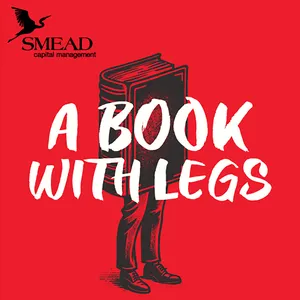
Free Daily Podcast Summary
A Book with Legs: Daily Summaries Delivered
by Smead Capital Management
In each episode, we explore value investing through an entirely unique lens, bringing in authors to discuss books that have directly or indirectly influenced the decisions the Smead Capital Management team has made on their investments in stocks and equities. The podcast is for the curious-minded looking for worldly wisdom. Investing is the last great liberal art, and the team at Smead wants to learn as much as they can. Any level of investor, business person, or thinker, whether personally or professionally, will be intrigued and engaged by these discussions.
Latest Episodes
The most recent episodes — sign up to get AI-powered summaries of each one.
- 5 days ago1h 2m
Robert Winder - Three Rivers: The Extraordinary Waterways that Created Europe
In this episode of A Book with Legs, Cole Smead, CEO and Portfolio Manager at Smead Capital Management, sits down with Robert Winder to discuss his book, “Three Rivers: The Extraordinary Waterways That Created Europe.”Robert Winder is the former literary editor of The Independent, where he ran the Independent Foreign Fiction Award for translated novels, and a former deputy editor of Granta. His earlier books include “Bloody Foreigners: The Story of Immigration to Britain,” which helped inspire the Migration Museum, where he was a founding trustee, and “The Last Wolf: The Hidden Springs of Englishness.” “Three Rivers” was named one of the Financial Times’ Best Books of 2025 and earned starred reviews from Kirkus, Booklist and Shelf Awareness.The conversation starts on a single mountain massif in the Swiss Alps where the Rhine, the Rhone and the Ticino, which feeds the Po, are born, and follows them to three different seas. Topics include why the Rhine became both Europe’s superhighway and its most contested border, how the word “rivalry” traces back to rivers, and why Basel, with one of the only early bridges between the Alps and the sea, became a center of printing and Reformation ideas. Winder also covers the 1882 opening of the Gotthard Tunnel, the 1818 glacier flood in the Rhone Valley, Switzerland’s iodine campaign against goiter, and the “year without a summer” that gave the world “Frankenstein.”Through a business and markets lens, Cole and Robert discuss geography as the first mental model, or what Winder calls the invisible hand that shapes everything else. They look at who gets rich at choke points, how the monastic hospices on Alpine passes may have planted the seeds of Swiss banking’s custodial culture, and how Switzerland’s early bet on hydropower helped shelter it from the oil shocks of the 1970s. They also discuss why the farmers living beside the glaciers understood them long before the professors did, and why investors with close knowledge of what they own can have an edge.“Three Rivers: The Extraordinary Waterways That Created Europe,” published by Pegasus Books, is available now: https://pegasusbookstore.com/book/9798897101627Sign up to be notified about new episodes: https://hubs.ly/Q0452V800
- 2 weeks ago57 min
Lydia Towns - In Search of Trade and Fortune: John Cabot, Christopher Columbus and the Opening of the Atlantic
In this episode of A Book with Legs, Cole Smead, CEO and Portfolio Manager at Smead Capital Management, and Chairman and Chief Investment Officer Bill Smead sit down with Lydia Towns to discuss her book, “In Search of Trade and Fortune: John Cabot, Christopher Columbus and the Opening of the Atlantic.”Lydia Towns is an assistant professor of world history at Stephen F. Austin State University in Nacogdoches, Texas. She earned her PhD in Transatlantic History from the University of Texas at Arlington, where her dissertation on England’s transatlantic activities under Henry VIII won the George Wolfskill Dissertation Award. She served six years as Executive Secretary of the Society for the History of Discoveries and has published on Henry VIII’s planned 1521 Atlantic voyage and the history of the Grand Banks fishery. “In Search of Trade and Fortune” is her first book, drawing on archives in Canada, the United Kingdom, and the United States.The conversation starts in 986, with a Norse trader blown off course who sights North America and simply keeps sailing. From there, it traces five centuries of Atlantic activity before 1492. Topics include Norse expeditions driven by timber and iron rather than adventure, butternuts at L’Anse aux Meadows that prove contact with the St. Lawrence River Valley, and a 2021 discovery in Milan showing that knowledge of lands west of Greenland had reached the Mediterranean. Towns also covers the Black Sea slave trade that shaped Cabot’s world and why the fall of Constantinople did not, by itself, push Europe west.Through a business and markets lens, Cole and Bill dig into how these voyages were actually structured and financed. They compare Genoa’s entrepreneurial family networks with Venice’s state-run merchant galleys, which were auctioned each year and helped give rise to the joint venture. They also discuss how the Crown carried almost no risk while entrepreneurs carried all of it, and why the investors behind Columbus simply transplanted the sugar plantation model they already owned in Madeira and the Canaries. Other topics include who really financed 1492 and Columbus’s demand for a one-eighth co-investment right in every voyage. Towns’s takeaway for investors: great reward comes with great risk, and there is no reward without taking it.“In Search of Trade and Fortune: John Cabot, Christopher Columbus and the Opening of the Atlantic,” published by Reaktion Books, is available now: https://reaktionbooks.co.uk/work/in-search-of-trade-and-fortuneSign up to be notified about new episodes: https://hubs.ly/Q0452V800
- Oct 5, 20261h 4m
Erwin Chemerinsky - Campus Speech and Academic Freedom: A Guide for Difficult Times
In this episode of A Book with Legs, Cole Smead, CEO and Portfolio Manager at Smead Capital Management, sits down with Erwin Chemerinsky to discuss his book, “Campus Speech and Academic Freedom: A Guide for Difficult Times,” co-authored with Howard Gillman.Erwin Chemerinsky is the 13th Dean of Berkeley Law and the Jesse H. Choper Distinguished Professor of Law. Before joining Berkeley in 2017, he served as founding Dean of UC Irvine School of Law. He is one of the nation’s leading constitutional scholars, the author of more than twenty books, including leading casebooks on constitutional law, criminal procedure, and federal jurisdiction, and a regular advocate before the United States Supreme Court. His deanship at Berkeley Law has been extended through 2029.The conversation starts from the premise that a university cannot punish an idea just because it clashes with the school’s mission, then works through where campuses keep losing the line between what the law allows and what is wise. They cover the heckler’s veto and Stanford Law’s disruption of Judge Kyle Duncan, Berkeley’s multimillion-dollar security bill for controversial speakers, inconsistent enforcement of encampment rules after October 7, content neutrality, Title VI hostile-environment duties, DEI statements as a hiring screen, and hard cases including Hamline, Kilborn, Amy Wax, and Ilya Shapiro. Chemerinsky’s through line is viewpoint neutrality: protect the speech you loathe, punish disruption rather than ideas, and do not pretend doing nothing is always legal when a hostile environment is in play.“Campus Speech and Academic Freedom: A Guide for Difficult Times,” published by Yale University Press, is available now.Sign up to be notified about new episodes: https://hubs.ly/Q0452V800
- Sep 28, 202656 min
The Smead Book List - Fall Book List 2026
In this episode of A Book with Legs, Cole Smead, CEO and Portfolio Manager at Smead Capital Management, is joined by Chairman and Chief Investment Officer Bill Smead for the firm’s quarterly book list.Cole and Bill walk through what they have recently finished, what they are reading now, and what is on deck. Recent titles include David Williams’s “The William E. Boeing Story”, Liaquat Ahamed’s “1873”, Ken Rogoff’s “Our Dollar, Your Problem”, Adrian Wooldridge’s “The Revolutionary Center”, Bryan Burrough’s “The Gunfighters”, and Erwin Chemerinsky and Howard Gillman’s “Campus Speech and Academic Freedom”. Currently in progress are Lydia Towns’s “In Search of Trade and Fortune”, George Orwell’s “1984”, and A. W. Tozer’s “God’s Pursuit of Man”.The conversation uses those books as mental models, including comparing today's AI enthusiasm with the railroad boom and the panics of 1873 and 1893. In the second half, they turn to the firm’s eight criteria and the market: Nike’s core shoe business versus apparel, the 10-year Treasury back near 5 percent, and a gun-to-the-head choice between that Treasury and the S&P 500 over the next decade. Tozer’s reminder from Ecclesiastes 12:12 that “of making many books there is no end, and much study is a weariness of the flesh” hangs over the book list episode itself.If you have a book to recommend for a future list, email podcast@smeadcap.com or reach the firm on X at @smeadcap.Sign up to be notified about new episodes: https://hubs.ly/Q0452V800
- Sep 14, 20261h 11m
Kenneth Rogoff - Our Dollar, Your Problem: An Insider's View of Seven Turbulent Decades of Global Finance, and the Road Ahead
In this episode of A Book with Legs, Cole Smead, CEO and Portfolio Manager at Smead Capital Management, sits down with Dr. Kenneth Rogoff to discuss his book, "Our Dollar, Your Problem: An Insider's View of Seven Turbulent Decades of Global Finance, and the Road Ahead."Kenneth Rogoff is the Maurits C. Boas Professor of Economics at Harvard University. From 2001 to 2003, he served as Chief Economist and Director of Research at the International Monetary Fund, and earlier in his career was an economist at the Federal Reserve Board. He is the co-author, with Carmen Reinhart, of the New York Times bestseller "This Time Is Different: Eight Centuries of Financial Folly," as well as "Foundations of International Macroeconomics" and "The Curse of Cash." He earned his Ph.D. in economics at MIT and is also an international grandmaster of chess.The conversation explores the dollar's position at the center of global finance, from the history of currency dominance dating back to Spain, to the rise of populism and its threat to the dollar's exorbitant privilege, to real, candid stories from Rogoff's own experience meeting Chinese leadership and warning of the country's real estate crisis years before it hit. They also discuss the euro's uneven path, the Mexican peso crisis, and what stablecoins and cryptocurrency really mean for the future of money.Read Kenneth's column here: https://www.project-syndicate.org/columnist"Our Dollar, Your Problem: An Insider's View of Seven Turbulent Decades of Global Finance, and the Road Ahead," published by @YaleUniversityPress , is available now.Sign up to be notified about new episodes: https://hubs.ly/Q0452V800
- Aug 31, 20261h 17m
Adrian Wooldridge - The Revolutionary Center: The Lost Genius of Liberalism
In this episode of A Book with Legs, Cole Smead, CEO and Portfolio Manager at Smead Capital Management, sits down with Adrian Wooldridge to discuss his book, “The Revolutionary Center: The Lost Genius of Liberalism.”Adrian Wooldridge is the global business columnist at Bloomberg News, and previously spent more than twenty years at The Economist, serving as political editor and Washington bureau chief. He is the author of twelve previous books, including “Capitalism in America,” co-written with former Federal Reserve chair Alan Greenspan, and “The Aristocracy of Talent.”The conversation traces the intellectual roots of liberalism, from Erasmus and Hobbes to Mill and Tocqueville, and explores where the philosophy has drifted from its original ideals. Along the way: how the concentration of power in figures like the Mag 7 and today’s tech leaders echoes Montesquieu’s warnings, how identity politics shifted the unit of analysis from individuals to groups, and what Wooldridge believes must change to recover what he calls “the revolutionary center” before autocracy, fascism, or societal stratification takes hold.“The Revolutionary Center: The Lost Genius of Liberalism,” published by Pegasus Books, is available now.Sign up to be notified about new episodes: https://hubs.ly/Q0452V800
- Aug 17, 20261h 10m
Bryan Burrough - The Gunfighters: How Texas Made the West Wild
In this episode of A Book with Legs, Cole Smead, CEO and Portfolio Manager, welcomes back Bryan Burrough to discuss his book, “The Gunfighters: How Texas Made the West Wild.”Bryan Burrough is a New York Times bestselling author or coauthor of eight books, including the Wall Street classic “Barbarians at the Gate,” which he previously discussed on A Book With Legs podcast, as well as “Public Enemies,” “The Big Rich,” and “Forget the Alamo.” He spent nearly a decade as a reporter for The Wall Street Journal and has been a longtime special correspondent for Vanity Fair.The conversation traces how a Southern honor code, a new piece of technology, the Colt revolver, and a generation of traumatized Civil War veterans collided in one state to produce three decades of violence, and how journalism turned killers into folk heroes. Along the way: how Texas became home to 30% of all major postwar gunfights in America, the true origins of the gunfighter in Southern dueling culture rather than frontier life, and how legends like Wild Bill Hickok, Wyatt Earp, and Jesse James were built as much by newspapers as by their own actions.“The Gunfighters: How Texas Made the West Wild,” published by Penguin Press, is available now.Sign up to be notified about new episodes: https://hubs.ly/Q0452V800
- Aug 3, 20261h 5m
Liaquat Ahamed - 1873: The Rothschilds, the First Great Depression, and the Making of the Modern World
In this episode of A Book with Legs, Cole Smead, CEO and Portfolio Manager, and Bill Smead, Chairman and Chief Investment Officer at Smead Capital Management, sit down with Liaquat Ahamed to discuss his book, “1873: The Rothschilds, The First Great Depression and the Making of the Modern World.”Liaquat Ahamed explores 1873 as the first truly global financial crisis, centered on the Rothschild family, then the wealthiest bankers in the world. The conversation traces how the Rothschilds nearly collapsed in 1848, losing 40% of their capital, only to rebuild over the next 25 years into a bank controlling a third of the entire European banking system. Liaquat and the Smeads discuss how market psychology moves in generational cycles, why it can take a full generation to recover confidence after a crash, and how President Grant’s decision to defend the gold standard during the 1873 panic prolonged deflation across the U.S. economy.“1873: The Rothschilds, The First Great Depression and the Making of the Modern World,” published by Penguin Press, is available now.Sign up to be notified about new episodes: https://hubs.ly/Q0452V800
Get A Book with Legs summaries in your inbox
Free AI-powered daily recaps. Key takeaways, quotes, and mentions — in a 5-minute read.
Get Free Summaries →Free forever for up to 3 podcasts. No credit card required.
You Might Also Like
Listeners also like.
The Investor's Podcast (We Study Billionaires) - The Investor’s Podcast Network
Analyzes the investment strategies of billionaire investors and explores lessons from legendary financiers on wealth, wisdom, and life.
How I Invest with David Weisburd
Interviews with top institutional investors about their strategies and decision-making.
The Money Mondays
Business discussions on investments, side hustles, and entrepreneurship with experts, athletes, and influencers in personal settings.
Capitalisn't
Examines the flaws in modern capitalism and explores solutions with insights from economics and business journalism.

David Senra
David Senra hosts conversations with the greatest living founders.

The Real Eisman Playbook
A legendary investor analyzes markets, economic trends, and financial crises with candid, no-nonsense commentary.
The David Guttman Podcast
Conversations with top leaders on building wealth, integrity, and a meaningful life through real-world lessons and authentic mentorship.

BiggerPockets Business Podcast
Real entrepreneurs share practical advice on starting, growing, and selling businesses, covering hiring, marketing, and raising capital.

Afford Anything | Get Smarter With Money
Explores the five pillars of financial freedom through expert interviews on wealth-building, investing, and behavioral finance.
Everybody's Business
A weekly look at business news from Wall Street to unusual ventures, with insights from Bloomberg Businessweek journalists.

The Spiritual Investor
Elizabeth Ralph

Your Money Guide on the Side
A practical guide to personal finance and investing, breaking down complex topics with expert insights and actionable advice.
About A Book with Legs
In each episode, we explore value investing through an entirely unique lens, bringing in authors to discuss books that have directly or indirectly influenced the decisions the Smead Capital Management team has made on their investments in stocks and equities. The podcast is for the curious-minded looking for worldly wisdom. Investing is the last great liberal art, and the team at Smead wants to learn as much as they can. Any level of investor, business person, or thinker, whether personally or professionally, will be intrigued and engaged by these discussions.
Customized Recaps
AI-powered recaps with compact key takeaways, quotes, and insights.
Straight to Your Inbox
Get key takeaways from A Book with Legs in a 5-minute read.
Save Hours Every Week
Stay current on your favorite podcasts without falling behind.
Frequently Asked Questions
What is Podzilla's A Book with Legs daily summary?
It's a free AI-powered email that summarizes new episodes of A Book with Legs as soon as they're published. You get the key takeaways, notable quotes, and links & mentions — all in a quick read.
How does the A Book with Legs podcast summary work?
When a new episode drops, our AI transcribes and analyzes it, then generates a personalized summary tailored to your interests and profession. It's delivered to your inbox every morning.
Is this an official A Book with Legs product?
No. Podzilla is an independent service that summarizes publicly available podcast content. We're not affiliated with or endorsed by Smead Capital Management.
Can I get summaries of other podcasts too?
Absolutely! The free plan covers up to 3 podcasts, any in the catalog. Basic raises that to 15, Pro to 40 and Max to 100. Browse our full catalog at /podcasts.
How often does A Book with Legs release new episodes?
A Book with Legs publishes biweekly. Our AI generates a summary within hours of each new episode.
What topics does A Book with Legs cover?
A Book with Legs covers topics including Business, Management, Investing. Our AI identifies the specific themes in each episode and highlights what matters most to you.
Start getting A Book with Legs summaries tomorrow morning.
Free forever for up to 3 podcasts. No credit card required.
Free forever for up to 3 podcasts. No credit card required.