Free Daily Podcast Summary
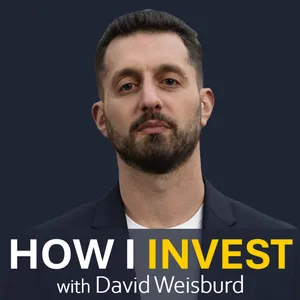
How I Invest with David Weisburd: Daily Summaries Delivered
by David Weisburd
How I Invest with David Weisburd is a podcast that interviews the world's leading institutional investors. Previous guests include The Ford Foundation, Northwestern University Endowment, CalPERS, Stepstone, and other top limited partners.
Latest Episodes
The most recent episodes — sign up to get AI-powered summaries of each one.
- Yesterday56 min
E451: Peter Thiel's 27-Year Partner on the AI Bubble, the Venture Capital Crisis, and the PayPal Mafia
What if the best venture capital opportunities are hiding in the 47 states Silicon Valley largely ignores? In this episode, I sit down with Jack Selby, Managing Director at Thiel Capital and an early member of the PayPal Mafia, to explore why he believes venture capital has become dangerously concentrated in Silicon Valley and overpriced AI startups. After working alongside Peter Thiel for 27 years, Jack is pursuing a contrarian strategy through Copper Sky, investing in promising technology companies outside California, New York, and Massachusetts. Jack explains why he can invest at roughly one-tenth of Silicon Valley valuations, how the next Carvana could emerge from cities like Phoenix or Milwaukee, and why venture capital's obsession with trillion-dollar outcomes may be hurting LP returns. We also discuss the hiring culture behind PayPal's extraordinary alumni network, why struggling venture firms have become zombies, and Jack's conviction that today's AI investment boom is a bubble.
- 3 days ago1h 5m
E450: Brijesh Jeevarathnam on Why Venture Is Eating Public Markets, Picking Great VCs, and the AI Boom
What if just 7% of venture-backed companies generate all the gains, and the real skill is identifying the managers who can find them first? In this episode, I sit down with Brijesh Jeevarathnam, Partner and Global Head of Fund Investments at Adams Street Partners, to explore how institutional investors identify exceptional venture capital managers in an increasingly crowded market. Drawing on more than 20 years of experience evaluating venture and private equity funds, Brijesh explains why the best VCs think independently, how they earn access to extraordinary founders, and why past performance is often the least predictive part of manager selection. We discuss how Adams Street evaluates emerging managers, the role of information asymmetry in fund investing, and why venture capital is increasingly capturing value creation once available to public market investors. Brijesh also shares how AI is changing institutional due diligence and why the next generation of transformative AI companies may still be ahead of us.
- 6 days ago48 min
E449: Federated Hermes CEO on $400 Billion in Cash, the Private Markets Boom, and AI
What if the most overlooked asset in your portfolio is the one that gives you the freedom to invest in everything else? In this episode, I sit down with Christopher Donahue, President, Chair and CEO of Federated Hermes, to explore how the firm manages approximately $700 billion in money market assets and why cash is far more than an idle allocation. Chris explains how liquidity creates financial flexibility, why trust and scale have concentrated the money market industry among a handful of firms, and what stablecoins can learn from decades of cash management. We also discuss how corporations manage their cash reserves, why AI could improve investment management without replacing employees, and how Federated Hermes plans to expand its private markets business. After more than 50 years at the firm, Chris shares the principles behind its longevity and why culture, trust, and disciplined risk-taking remain essential to building an enduring financial institution.
- 1 weeks ago1h 13m
E448: Gavin Ezekowitz on AI Valuations, Asymmetric Returns, and Why Great Investors Fail
How do you invest in generational companies like Anthropic, OpenAI, and SpaceX before everyone recognizes their potential? Gavin Ezekowitz is the Co-Founder and Chief Investment Officer of BFA Global Investors, an alternative investment firm providing access to private market opportunities. In this episode, Gavin explains how BFA gained exposure to Anthropic, OpenAI, and SpaceX through GP relationships, including its early Anthropic investment at a $17 billion valuation.
- 1 weeks ago1h 3m
E447: Anthropic at $2 Trillion? The AI Bubble, and Why the Best Startups Always Look Overvalued
Are venture capitalists overpaying for the next generation of AI winners? Matthew Harris is a Partner at Bain Capital Ventures, where he invests in financial services and technology companies. In this episode, Matthew explains why the best venture investments often look overpriced, how valuation discipline can cause firms to miss power-law winners, and why today's AI market is increasingly driven by consensus.
- 1 weeks ago58 min
E446: Vista Equity President: The Death of SaaS? AI Agents and the $3 Trillion Opportunity
Is AI destroying the software industry, or creating its biggest investment opportunity yet? David Breach is President of Vista Equity Partners, a firm managing approximately $100 billion in assets. In this episode, David explains why the recent selloff in software stocks may be missing a much larger opportunity: AI-powered digital workers. We explore Vista's repeatable playbook for creating value in enterprise software, why mission-critical products and proprietary data remain competitive advantages, and how AI could expand software's addressable market into trillions of dollars in services. David also shares how Vista evaluates software companies amid AI disruption, why incumbents may be better positioned than startups to deploy AI agents, and the career lessons that took him from selling juice to leading one of the world's largest software-focused private equity firms.
- 2 weeks ago1h 1m
E445: AngelList: Why Picking Winners Is the Wrong Way to Invest in Startups
What if the biggest advantage in venture capital isn't picking winners, but getting access to them? Erik Syvertsen is GM of Asset Management and Chief Legal Officer at AngelList and Chairman of USVC. Drawing on AngelList's extensive venture investment data, Erik explains why seed and growth investing operate like two different asset classes, why the best startups often command higher valuations from the beginning, and how access drives venture returns. We explore the power law, why doubling down on winners matters, the two strategies for building successful venture portfolios, and the challenges of selling investments in breakout companies. Erik also discusses how USVC aims to expand access to private markets as companies like OpenAI, Anthropic, and SpaceX create enormous value before going public.
- 2 weeks ago53 min
E444: NEPC President on AI Portfolio Risk, Finding Top Funds, and Preparing for a Downturn
What if the biggest advantage in institutional investing isn’t finding better managers, but building an organization that can make better decisions over decades? In this episode, I sit down with Tim McCusker, President of NEPC, which advises on approximately $2 trillion in assets, to discuss what separates the best institutional investors from everyone else. Tim explains why even sophisticated endowments and pension funds fall into peer-driven investing, how governance and incentives shape long-term returns, and why the strongest allocators are willing to invest when others are retreating.
Get How I Invest with David Weisburd summaries in your inbox
Free AI-powered daily recaps. Key takeaways, quotes, and mentions — in a 5-minute read.
Get Free Summaries →Free forever for up to 3 podcasts. No credit card required.
You Might Also Like
Listeners also like.

The Investor's Podcast (We Study Billionaires) - The Investor’s Podcast Network
Analyzes the investment strategies of billionaire investors and explores lessons from legendary financiers on wealth, wisdom, and life.

All-In with Chamath, Jason, Sacks & Friedberg
Four tech investors discuss technology, markets, politics, and poker with candid, in-depth analysis.

David Senra
David Senra hosts conversations with the greatest living founders.

Know Your Risk Podcast
A financial podcast exploring investment risk, portfolio strategies, and market insights beyond traditional Wall Street approaches.

No Priors: Artificial Intelligence | Technology | Startups
Discusses AI advancements and implications with researchers, engineers, and founders shaping the future of artificial intelligence.

Sources with Alex Heath
A podcast offering insider interviews with influential tech leaders and rising entrepreneurs shaping Silicon Valley's future.

The Money Mondays
Business discussions on investments, side hustles, and entrepreneurship with experts, athletes, and influencers in personal settings.

Sourcery
Interviews with top investors, CEOs, and founders.

This Week in AI
Four AI experts analyze the latest news and trends in artificial intelligence each week.

What's Your Problem?
Inventors and technologists explore solutions to major global challenges in energy, space, and health.
Going Public With Ross Mandell
A Wall Street veteran teaches investors how to analyze stocks, understand market forces, and make informed financial decisions.
Training Data
Discussions with AI researchers and builders exploring the technological, business, and societal impacts of artificial intelligence.
About How I Invest with David Weisburd
How I Invest with David Weisburd is a podcast that interviews the world's leading institutional investors. Previous guests include The Ford Foundation, Northwestern University Endowment, CalPERS, Stepstone, and other top limited partners.
Customized Recaps
AI-powered recaps with compact key takeaways, quotes, and insights.
Straight to Your Inbox
Get key takeaways from How I Invest with David Weisburd in a 5-minute read.
Save Hours Every Week
Stay current on your favorite podcasts without falling behind.
Frequently Asked Questions
What is Podzilla's How I Invest with David Weisburd daily summary?
It's a free AI-powered email that summarizes new episodes of How I Invest with David Weisburd as soon as they're published. You get the key takeaways, notable quotes, and links & mentions — all in a quick read.
How does the How I Invest with David Weisburd podcast summary work?
When a new episode drops, our AI transcribes and analyzes it, then generates a personalized summary tailored to your interests and profession. It's delivered to your inbox every morning.
Is this an official How I Invest with David Weisburd product?
No. Podzilla is an independent service that summarizes publicly available podcast content. We're not affiliated with or endorsed by David Weisburd.
Can I get summaries of other podcasts too?
Absolutely! The free plan covers up to 3 podcasts, any in the catalog. Basic raises that to 15, Pro to 40 and Max to 100. Browse our full catalog at /podcasts.
How often does How I Invest with David Weisburd release new episodes?
How I Invest with David Weisburd publishes every few days. Our AI generates a summary within hours of each new episode.
What topics does How I Invest with David Weisburd cover?
How I Invest with David Weisburd covers topics including Business, Investing. Our AI identifies the specific themes in each episode and highlights what matters most to you.
Start getting How I Invest with David Weisburd summaries tomorrow morning.
Free forever for up to 3 podcasts. No credit card required.
Free forever for up to 3 podcasts. No credit card required.