Free Daily Podcast Summary
30 Animals That Made Us Smarter: Daily Summaries Delivered
by BBC World Service
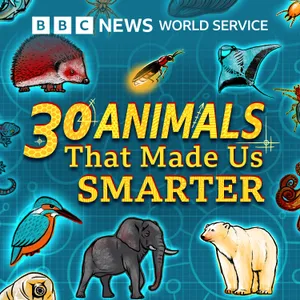
Amazing things humans have learnt from the animal kingdom. Inspiring, fascinating, bingeable.Please note, we are no longer able to receive emails for this series.
Latest Episodes
The most recent episodes — sign up to get AI-powered summaries of each one.
- Jan 17, 202220 min
Insects and mobile phone
S2 Ep 30. Smart phones could become even smarter – thanks to ants, beetles, moths and spiders! A multi-animal special episode, marking the season 2 finale. Patrick explores what could be an insect inspired phone of the future! There’s the story of the fire ants and bark beetles and a new camera lens with a much greater field of view. The hairs on butterflies, moths and spiders could help with an amazing new microphone. Moths might make it easier to look at our phones in bright sunlight. There’s also a waterproof, anti-bacterial cover which could be based on the wings of cicadas. Thanks for listening and please help us spread the word. #30Animals
- Jan 10, 202217 min
Butterfly and eye implant
S2 Ep 29. Not all butterflies are colourful. The transparent wings of the longtail glasswing butterfly may hold the key to more effective eye implants. This could be of huge benefit to people with glaucoma - the second leading cause of blindness in the world. Get in touch: www.bbcworldservice.com/30animals #30Animals
- Jan 3, 202217 min
Slug and surgical glue
S2 Ep 28. From goo to super glue! Slug slime may hold the key to mending wounds without stitches or staples. Scientists have developed new adhesives based on the properties of slug slime, that are as sticky as any glue, stretchier than a rubber band and aren’t toxic to humans. This sticky substance could be used to repair a delicate organ like the heart or lung without using methods that could damage the organ. Get in touch: www.bbcworldservice.com/30animals #30Animals
- Dec 27, 202115 min
Dragonfly and sky spy
S2 Ep 27. The amazing agility of a dragonfly leads to the creation of a new spy drone. Their four wings can move independently of each other, enabling them to fly forwards, backwards, sideways, up and down and suddenly stop and hover like a helicopter. This caught the attention of engineers who wanted to develop a small drone that could be used by the military as a spying device. In the future, this sort of technology might send back pictures from areas where it’s too dangerous for humans to go. Get in touch: www.bbcworldservice.com/30animals #30Animals
- Dec 20, 202114 min
Kingfisher and soil erosion
S2 Ep 26. A very clever solution to a significant environmental problem based on a kingfisher’s eyelids. When the brightly coloured bird dives for food, its eyes are covered in a way that protects the kingfisher’s eyeballs, rather like swimming goggles protect ours. Architects have copied this design to help prevent soil erosion on the banks of the huge Three Gorges Dam in China. Get in touch: www.bbcworldservice.com/30animals #30Animals
- Dec 13, 202115 min
Bees and fast deliveries
S2 Ep25. Sweet moves! Honey bees have developed an extraordinary form of communication known as the “waggle dance”, which directs other bees to where the best nectar can be found. As more and more bees explore the area, their directions become more refined. This method of refining information has been copied into an algorithm to help delivery drivers save time and fuel, without the need to plot journeys by hand. Get in touch: www.bbcworldservice.com/30animals #30Animals
- Dec 6, 202114 min
Jellyfish and underwater robot
S2 Ep 24. The world’s most efficient swimmer is the moon jellyfish! It’s the inspiration for a soft underwater robot that is safe enough to use in fragile environments like coral reefs and aquatic archaeological sites. By contracting a ring of muscle, the jellyfish can push water out of their bell-shaped bodies, thrusting them forwards without using much energy at all. Get in touch: www.bbcworldservice.com/30animals #30Animals
- Nov 29, 202120 min
Polar bear and insulation
S2 Ep 23. The science behind some fascinating fur could help humans keep warm in space. A polar bear’s fur is brilliant at insulating it from freezing arctic temperatures. Each shaft of hair contains multiple chambers which trap heat close to the skin, making it an incredible thermal insulator. Now, scientists have copied its structure to build a light and flexible material which may be useful for the aerospace industry. Let us know what you think. #30Animals Get in touch: www.bbcworldservice.com/30animals
Get 30 Animals That Made Us Smarter summaries in your inbox
Free AI-powered daily recaps. Key takeaways, quotes, and mentions — in a 5-minute read.
Get Free Summaries →Free forever for up to 3 podcasts. No credit card required.
You Might Also Like
Listeners also like.

50 Things That Made the Modern Economy
Explores the pivotal inventions, ideas, and innovations that shaped the modern economy.

The Weirdest Thing I Learned This Week
Three science journalists share bizarre and little-known facts they’ve recently discovered.
Science In Action
The BBC covers the latest weekly developments and news in science.

Unexpected Elements
Explores hidden scientific connections behind global news and everyday phenomena.

Discovery
Explores various topics in the field of science.

The World, the Universe and Us
Explores big scientific questions about life, consciousness, climate, and the cosmos with expert scientists and New Scientist journalists.

What in the World
A daily podcast exploring major and minor global events to help listeners understand current affairs and feel more informed.

CrowdScience
Explores listener-submitted questions about life, Earth, and the universe with scientists at the forefront of research.

5 Live Science Podcast
Dr Chris and the Naked Scientists present the latest science news and analysis.

Digital Planet
Global technology and digital news coverage.

Tech Life
Explores how technology shapes global work, learning, and play while examining its societal impacts and innovations.

Witness History
First-hand accounts of pivotal historical moments, from global events to cultural milestones, told by those who lived them.
About 30 Animals That Made Us Smarter
Amazing things humans have learnt from the animal kingdom. Inspiring, fascinating, bingeable.Please note, we are no longer able to receive emails for this series.
Customized Recaps
AI-powered recaps with compact key takeaways, quotes, and insights.
Straight to Your Inbox
Get key takeaways from 30 Animals That Made Us Smarter in a 5-minute read.
Save Hours Every Week
Stay current on your favorite podcasts without falling behind.
Frequently Asked Questions
What is Podzilla's 30 Animals That Made Us Smarter daily summary?
It's a free AI-powered email that summarizes new episodes of 30 Animals That Made Us Smarter as soon as they're published. You get the key takeaways, notable quotes, and links & mentions — all in a quick read.
How does the 30 Animals That Made Us Smarter podcast summary work?
When a new episode drops, our AI transcribes and analyzes it, then generates a personalized summary tailored to your interests and profession. It's delivered to your inbox every morning.
Is this an official 30 Animals That Made Us Smarter product?
No. Podzilla is an independent service that summarizes publicly available podcast content. We're not affiliated with or endorsed by BBC World Service.
Can I get summaries of other podcasts too?
Absolutely! The free plan covers up to 3 podcasts. Upgrade to Pro for 15, or Premium for 50. Browse our full catalog at /podcasts.
How often does 30 Animals That Made Us Smarter release new episodes?
30 Animals That Made Us Smarter publishes weekly. Our AI generates a summary within hours of each new episode.
What topics does 30 Animals That Made Us Smarter cover?
30 Animals That Made Us Smarter covers topics including Technology. Our AI identifies the specific themes in each episode and highlights what matters most to you.
Start getting 30 Animals That Made Us Smarter summaries tomorrow morning.
Free forever for up to 3 podcasts. No credit card required.
Free forever for up to 3 podcasts. No credit card required.