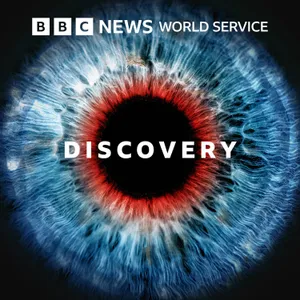
Free Daily Podcast Summary
Discovery: Daily Summaries Delivered
by BBC World Service
Explorations in the world of science.
Latest Episodes
The most recent episodes — sign up to get AI-powered summaries of each one.
- 6 days ago26 min
Women Not Included: Consumer Products
Design is never neutral and small choices can have a big impact. Dr Ella Hubber and journalist Katie Silver explore how consumer products marketed to women are frequently developed without fully understanding their needs. Along with expert insight, they look at everything from footwear based on male anatomy to menstrual products tested with unrealistic methods, revealing how these decisions can affect comfort, performance and even health.As awareness grows, they also ask what change can look like and whether everyday products can finally reflect women’s real needs.Presenter/producer: Ella Hubber Assistant Producer: Scarlett Victoria Researcher: Elliott Prince Editor: Ilan Goodman
- 1 weeks ago26 min
Women Not Included: Medical Devices
CPR mannequins, medical implants and surgical tools. These are life changing and lifesaving medical devices. But when they are built around male bodies, what does that mean for everyone else?Through expert insight, Dr Ella Hubber and journalist Candice Bailey uncover how gaps in research can lead to higher complication rates in women, why the “one-size-fits-all” design method falls short, and how even the operating theatre can fail women. As awareness grows, they also ask what change can look like and whether the tools used in healthcare can finally serve every body.[EH1.1]Presenter/producer: Ella Hubber Researcher: Elliott Prince Editor: Ilan Goodman
- 2 weeks ago26 min
Women not included: Artificial Intelligence
Dr Ella Hubber and journalist Katie Silver unpack how artificial intelligence is far from neutral, and why that matters. They speak to experts who reveal how some AI is trained with bad data and how this means it can often reflect the same inequalities found in society be that in voice assistants, hiring tools, or translation apps.As awareness grows, they also ask what change can look like. Better training, better regulation, and the technologies shaping our future working fairly for everyone.Presenter/producer: Ella Hubber Researcher: Elliott Prince Editor: Ilan Goodman
- 3 weeks ago26 min
Women Not Included: Urban Planning
On every street corner, at every bus stop, in every public toilet the message is clear: this city is not built for women. Along with journalist Chhavi Sachdev, Dr Ella Hubber explores how urban design often fails to reflect the realities of women’s lives. They unpack issues like why women spend longer queuing for toilets, how safety concerns shape the way women move through cities, and why transport systems built around linear commutes fail those juggling care, work and home. As awareness grows, they also ask what change can look like. More inclusive planning, policies shaped by lived experience, and cities finally designed to work for everyone. Presenter/producer: Ella Hubber Researcher: Elliott Prince Editor: Ilan Goodman
- Aug 17, 202626 min
Women Not Included: Safety Equipment
Safety equipment is often designed around an “average” male body and Dr Ella Hubber wants to understand the consequences this has for women. Alongside journalist Candice Bailey and expert voices, we hear how healthcare workers are forced to adapt to PPE never made for them and how car safety systems fail to reflect the way women’s bodies respond in collisions. As awareness grows, they also ask what change can look like and if, through better data, and more women’s input, safety equipment can protect us all equally.Presenter/Producer: Ella Hubber Researcher: Elliott Prince Editor: Ilan Goodman
- Aug 10, 202626 min
Women Not Included: Drugs and Clinical Trials
After working exclusively with male mice while looking for a treatment for type 1 diabetes, Dr Ella Hubber begins to uncover a much bigger issue: modern medicine is not built equally for everyone. Along with journalist Chhavi Sachdev, she explores how decades of clinical research have overlooked women with serious consequences.Through expert interviews, they examine how women were historically excluded from clinical trials, why biological differences matter in how drugs work, and how this has led to higher rates of side effects. The story reveals how gaps in research continue to shape women’s healthcare today. As awareness grows, they also ask what change can look like. More representative trials, pharmaceutical companies held accountable, and medicine finally built for everyone.Presenter/Producer: Ella Hubber Researcher: Elliott Prince Editor: Ilan Goodman
- Jun 22, 202626 min
The friendly virus
Our antibiotics are failing us. In 2025, the UK Government said antibiotic resistance (AMR) contributes to more than 35,000 deaths each year in the UK. Emergency doctors say they are losing patients on a regular basis when they run out of ways to treat them. Antibiotics have saved countless lives, but alongside them, there is another unlikely sounding ally in this fight: viruses, so small that they can attack and kill the bacteria causing these devastating infections. They are called bacteriophages, or phages for short. There are more of them than any other commonly occurring natural entity on the planet. And we could be about to see doctors using them on very ill patients in the UK. The thing is scientists have studied bacteriophages for nearly a century. They are used routinely in other countries, and science journalist Marnie Chesterton, who has been following this story for nearly a decade, asks why, suddenly, is phage all the rage?
- Jun 15, 202626 min
The Life Scientific: Dean Lomax
Have you ever been told you aren't good enough to do something, then gone ahead and proved the naysayers wrong by doing it anyway - in glorious, headline-grabbing style? That is the satisfying story of Dr Dean Lomax. Dean grew up in Doncaster with a passion for fossils but after failing various school exams, was told by teachers that he'd never make it as a palaeontologist. Undeterred by leaving school with no qualifications, Dean sold his childhood Star Wars collection to fund a fossil-hunting trip to America that changed his life - after which a chance discovery led to him publishing his first ever scientific paper at the age of just 20. Today, he’s an expert on ichthyosaurs - the massive marine reptiles that once inhabited our seas - and has discovered and named several new species, written books for both adults and children, and brought the prehistoric world to life on TV. Talking to Professor Jim Al-Khalili, Dean discusses dinosaurs as a 'gateway science', discovering the Rutland Sea Dragon and the importance of cutting out noise from nay-sayers to follow your dreams...
Get Discovery summaries in your inbox
Free AI-powered daily recaps. Key takeaways, quotes, and mentions — in a 5-minute read.
Get Free Summaries →Free forever for up to 3 podcasts. No credit card required.
You Might Also Like
Listeners also like.
The Conversation
Two women from different backgrounds discuss their lives and shared passions or expertise.
Science In Action
The BBC covers the latest weekly developments and news in science.
Unexpected Elements
Explores hidden scientific connections behind global news and everyday phenomena.
BBC Inside Science
Explores the latest scientific discoveries and debates shaping our understanding of the world.
The Life Scientific
A scientist discusses their research, inspirations, and career with physicist Jim Al-Khalili.
Where To Be A Woman
Journalists compare global practices on women's wellbeing, equality, and quality of life across different countries.

Woman's Hour
Discussions on issues affecting women’s lives, from current affairs to personal stories.
In Our Time: Science
Discusses scientific principles, theories, and influential figures in the development of science.

The Inquiry
The Inquiry explores global trends, forces, and ideas shaping the world beyond the headlines.

CrowdScience
Explores listener-submitted questions about life, Earth, and the universe with scientists at the forefront of research.

What in the World
A daily podcast exploring major and minor global events to help listeners understand current affairs and feel more informed.

Inquiring Minds
Explores the intersection of science and society through critical thinking and in-depth analysis.
Customized Recaps
AI-powered recaps with compact key takeaways, quotes, and insights.
Straight to Your Inbox
Get key takeaways from Discovery in a 5-minute read.
Save Hours Every Week
Stay current on your favorite podcasts without falling behind.
Frequently Asked Questions
What is Podzilla's Discovery daily summary?
It's a free AI-powered email that summarizes new episodes of Discovery as soon as they're published. You get the key takeaways, notable quotes, and links & mentions — all in a quick read.
How does the Discovery podcast summary work?
When a new episode drops, our AI transcribes and analyzes it, then generates a personalized summary tailored to your interests and profession. It's delivered to your inbox every morning.
Is this an official Discovery product?
No. Podzilla is an independent service that summarizes publicly available podcast content. We're not affiliated with or endorsed by BBC World Service.
Can I get summaries of other podcasts too?
Absolutely! The free plan covers up to 3 podcasts. Upgrade to Pro for 15, or Premium for 50. Browse our full catalog at /podcasts.
How often does Discovery release new episodes?
Discovery publishes weekly. Our AI generates a summary within hours of each new episode.
What topics does Discovery cover?
Discovery covers topics including Science. Our AI identifies the specific themes in each episode and highlights what matters most to you.
Start getting Discovery summaries tomorrow morning.
Free forever for up to 3 podcasts. No credit card required.
Free forever for up to 3 podcasts. No credit card required.