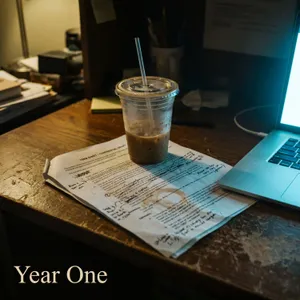
Free Daily Podcast Summary
Year One: Daily Summaries Delivered
by Year One
Every billion-dollar YC company survived a brutal first year after Demo Day. Year One captures those twelve months as they happen, tracking one founder's make-or-break decision per episode: the pivot that saved the company, the co-founder fight that almost killed it, the fundraising round that closed at 2am on a Thursday. Two hosts (one former YC founder, one startup reporter) sit down with recent batch founders while the wounds are still fresh, then bring in YC partners to dissect what went right, what went wrong, and what the founder couldn't see from inside the fog. If you're an aspiring founder, an early startup employee, or an investor trying to understand why 90% of startups stall while a handful become Stripe or Airbnb, this is the show that replaces hindsight polish with the version founders tell each other at 1am on Bookface.
Latest Episodes
The most recent episodes — sign up to get AI-powered summaries of each one.
- 6 days ago15 min
Nadia: The Same-Day Deadline Question
Picture stepping off a Demo Day stage with an empty inbox at nine a.m. and a same-day deadline sitting in it by lunch. You have to hear this one because the cap you set in those first two days can follow you into every later conversation, and the clock is working against you. In this episode of Year One, Miles and Grant follow Nadia through the first two days after Fall 2026 YC Demo Day, set for Wednesday, December 2, in San Francisco, just as Thanksgiving ends and calendars thin out. They work through which investor email to answer first, why the standard YC deal and its MFN safe make the cap matter so much, and why pricing is trickier in the year-end lull. Then they take on the hardest question: when do you say no to a deadline that expires today? A recorded YC partner segment digs into real versus theatrical investor interest, what founders mistake for signal, and what investors say on the phone versus in writing. If you're a founder heading toward Demo Day or fresh out of a YC batch, this one is for you.
- 1 weeks ago17 min
Agent Founders: Surviving the Lab Launch Week
You wake up, check your phone, and a lab's launch post looks a lot like your roadmap. For an agent startup, that moment can decide whether you keep building or start scrambling, so you have to hear how Grant and Miles work through it on this episode of Year One. They start with what shipped this week, including Fable 5.2 and Mythos 5.2 and the lab heading into its IPO roadshow. Then they ask the better question: which parts of an agent company are still standing after the next release? Their answer is their own opinion, not a YC partner's. They split features a lab ships for everyone from workflows tied to one customer's specific processes, then give you a three-question checklist to run on each part of your product this week. They also point to YC office hours and Bookface as places to ask peers before launch day instead of after. This one is especially relevant for early-stage founders building AI agents on top of frontier models.
- 2 weeks ago19 min
Nadia: Pricing the Round Before Demo Day
You have to hear this one because, around week five of her YC batch, Nadia's pitch stopped feeling finished, and Demo Day is four weeks away on Wednesday, December 2. She gets sixty seconds on that stage, and a fundraising window sits right behind it, with Thanksgiving and year-end slowing everything down. In this Year One episode, Miles and Grant start with the pause Nadia left in the tape, then look at what the middle of the batch feels like and how to rewrite a sixty-second pitch by cutting what you love. They also work through how to price a seed round against a very wide market, using Carta data and YC's standard $500K on two SAFEs. In the YC partner segment, they examine why YC credits investor competition, not brand alone, for higher valuations, and offer their own read on the first two weeks after the stage. This one is especially relevant for founders in a YC batch, or any early-stage team heading toward a short pitch and a fundraise.
- 3 weeks ago15 min
Greypoint: Proving a Four-Person Team on a Different Clock
Greypoint is four people in San Francisco building drone swarms, and the public record shows no contract or raise since Demo Day. That matters because the defense money they would count on is requested, not appropriated, and a slipping budget can outlast a young company's runway. In this Year One follow-up, recorded a week before the November 3 midterms, Grant and Miles look at what is actually visible about Greypoint and 9 Mothers, including a correction: 9 Mothers is Spring 2026, not S26. There is no founder interview and no YC partner on this one. The hosts say so plainly and offer their own labeled read on what counts as signal and what is election-year noise. You will hear how Hegseth's drone command depends on a reconciliation bill with no clear path, why Breaking Defense reports 150-plus delayed new starts, and how venture money is concentrating at the big and early ends. They also cover how YC describes the post-Demo Day stretch and how to handle an investor's ambiguous maybe. You have to hear this if you are a hardware or defense-tech founder trying to plan around a budget that may not arrive on time.
- Oct 20, 202616 min
W27 Applicants: The Draft You Haven't Finished
You have to hear this one if there's an unfinished YC application sitting in a tab you keep opening and closing. The Winter 2027 on-time deadline is November 2 at 8pm Pacific, thirteen days from now, and it's the line between a decision by December 11 and an open-ended wait. On this Year One episode, Miles and Grant run a last-minute application clinic told backward: what applicants overthink, what they skip, and what YC's public writing suggests a partner weighs. To be clear, there's no founder interview or YC partner on this one. The hosts work from YC's published posts and secondary guides, and they label what's sourced and what's their own read. You'll hear what happens between submitting and hearing back, why the application's real job is to earn the interview, how to keep your claims checkable, what to do in the weeks before that interview, and what the YC offer looks like. This one is especially for founders with a half-finished draft who want to know what's worth their next few hours.
- Oct 6, 202617 min
Anonymous Founder: Extension or Default Alive
You have to hear this one because it starts at month fourteen, with real users, real revenue, and a Series A bar you haven't quite cleared. Nothing forces your hand, which means you have time to make a bad decision slowly, and the stakes are whether your next round funds a plan or just hides a gap. On this episode of Year One, hosts Miles and Grant follow a hypothetical composite founder through three options: a SAFE extension in the $1.5 to $3 million range, a priced A anyway, or cutting burn to reach default alive. They look at how common missing the bar is, what each path costs, and why an extension only works as a bridge if you name a falsifiable milestone before the money lands. No YC partner joins the conversation. Instead, they read the choice through YC's default alive definition and its 2022 guidance as reported by TechCrunch, which they flag as dated, and the founder's decision stays open. It's especially relevant for seed-stage founders weighing an extension while their runway quietly shrinks.
- Sep 29, 202616 min
Two Founders, One Year Out: The Series A Cliff
Two YC founders are sitting on seed rounds sized for a market that no longer exists, and neither knows yet whether they'll clear the bar. One raised in Summer '25, the other in Winter '26, both roughly a year out from Demo Day with normal $3-4M rounds and no guarantee of what comes next. This episode of Year One tracks their live, unresolved odds against a Series A threshold that has roughly tripled since 2021, now demanding $2-5M in ARR and 2-3x growth just to get a meeting. A YC partner weighs in with a cross-portfolio view spanning hundreds of startups and a $15.5M median Series A, offering a rare look at what actually separates the fifteen to twenty percent who graduate from the rest. Anyone weighing whether to grind or pivot in their own post-seed year will recognize exactly what's at stake here.
- Sep 22, 202617 min
Nadia: Walking Into the Room After the $200M Number
Nadia walked into YC's F26 kickoff carrying the shadow of a number nobody in the room would say out loud: the $200 million valuation her company, Nine Mothers, hit as an eight-month-old startup in the S26 batch. Every founder in the new class had done the math, and Year One hosts Grant and Miles are back to find out what happens when an entire incoming cohort gets recalibrated by one outlier deal before they've even shipped a product. This episode follows the three-day, in-person F26 kickoff in San Francisco, from the roughly 400 founders and 200 companies sorted into nine-person house groups to the moment a YC partner names the Nine Mothers print directly and coaches founders to price on fundamentals, not headlines. Grant and Miles trace how the S26 story spread through alumni nights and Bookface, why the July 27 application deadline mattered, and what December 2, 2026 now means as F26's own Demo Day countdown begins. Anyone building through their first YC batch, or just trying to ignore a number that won't stop haunting the room, will want this one.
Get Year One summaries in your inbox
Free AI-powered daily recaps. Key takeaways, quotes, and mentions — in a 5-minute read.
Get Free Summaries →Free forever for up to 3 podcasts. No credit card required.
You Might Also Like
Listeners also like.

Founder's Story
Raw conversations with entrepreneurs about the struggles, doubts, and pivotal moments behind their ventures.
Crucible Moments
Stories of pivotal decisions that shaped major tech companies, told by their founders and leaders.

The Vault Unlocked
Founders share hard-earned lessons on what actually worked, what failed, and the pivotal decisions behind growing successful companies.

Y Combinator Startup Podcast
Founders and Y Combinator partners discuss building startups, from idea to scale, sharing real-world lessons and strategies.

My First Million
Two entrepreneurs analyze market trends and generate business ideas, often with guest collaborators.
The Money Mondays
Business discussions on investments, side hustles, and entrepreneurship with experts, athletes, and influencers in personal settings.

David Senra
David Senra hosts conversations with the greatest living founders.
One Part Lion - One Part Lamb with Stephen Scoggins
Leadership advice for founders balancing success, integrity, and faith through interviews with entrepreneurs.

Liftoff Journeys with Jeanniey Walden
Conversations with leaders reveal the real decisions, doubts, and turning points that shaped their careers and personal growth.

Young and Profiting (YAP) with Hala Taha: Entrepreneurship and Self-Improvement Podcast
Interviews with top entrepreneurs and experts deliver actionable strategies for business growth, productivity, and personal development.

The Room Podcast
Tech founders and funders share behind-the-scenes stories from pivotal moments in their careers.
The Diary Of A CEO with Steven Bartlett
Raw, unfiltered conversations with influential figures and experts exploring personal growth, mindset, and the realities of success.
About Year One
Every billion-dollar YC company survived a brutal first year after Demo Day. Year One captures those twelve months as they happen, tracking one founder's make-or-break decision per episode: the pivot that saved the company, the co-founder fight that almost killed it, the fundraising round that closed at 2am on a Thursday. Two hosts (one former YC founder, one startup reporter) sit down with recent batch founders while the wounds are still fresh, then bring in YC partners to dissect what went right, what went wrong, and what the founder couldn't see from inside the fog. If you're an aspiring founder, an early startup employee, or an investor trying to understand why 90% of startups stall while a handful become Stripe or Airbnb, this is the show that replaces hindsight polish with the version founders tell each other at 1am on Bookface.
Customized Recaps
AI-powered recaps with compact key takeaways, quotes, and insights.
Straight to Your Inbox
Get key takeaways from Year One in a 5-minute read.
Save Hours Every Week
Stay current on your favorite podcasts without falling behind.
Frequently Asked Questions
What is Podzilla's Year One daily summary?
It's a free AI-powered email that summarizes new episodes of Year One as soon as they're published. You get the key takeaways, notable quotes, and links & mentions — all in a quick read.
How does the Year One podcast summary work?
When a new episode drops, our AI transcribes and analyzes it, then generates a personalized summary tailored to your interests and profession. It's delivered to your inbox every morning.
Is this an official Year One product?
No. Podzilla is an independent service that summarizes publicly available podcast content. We're not affiliated with or endorsed by Year One.
Can I get summaries of other podcasts too?
Absolutely! The free plan covers up to 3 podcasts, any in the catalog. Basic raises that to 15, Pro to 40 and Max to 100. Browse our full catalog at /podcasts.
How often does Year One release new episodes?
Year One publishes weekly. Our AI generates a summary within hours of each new episode.
What topics does Year One cover?
Year One covers topics including Business, Entrepreneurship. Our AI identifies the specific themes in each episode and highlights what matters most to you.
Start getting Year One summaries tomorrow morning.
Free forever for up to 3 podcasts. No credit card required.
Free forever for up to 3 podcasts. No credit card required.