Free Daily Podcast Summary
WTF is AuDHD?: Daily Summaries Delivered
by Ellie & Paige Harwood
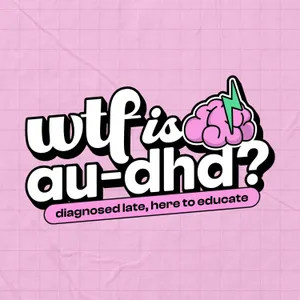
Ellie (33) and Paige (31) are sisters who were diagnosed late with autism and ADHD (AuDHD). However, the way it manifests in them doesn't look the same. With AuDHD only becoming an official diagnosis in 2013, the lack of research not only resulted in late diagnosis and mental health issues, but also left Ellie and Paige feeling alone and confused. This podcast is a space where Ellie and Paige share their experiences, in the hopes it will help others. It explores the vast manifestations of neurodivergence and emphasises how even sisters with the same condition can look completely different.// Diagnosed late, here to educate // INSTAGRAM, TIKTOK, YOUTUBE @wtfisaudhdpodcast Hosted on Acast. See acast.com/privacy for more information.
Latest Episodes
The most recent episodes — sign up to get AI-powered summaries of each one.
- 5 days ago49 min
E91 | How to accomodate yourself - with or without a diagnosis
The term 'accommodations' can sometimes sound like a big, unattainable thing - especially when you're conscious of asking others to help. But this week, we want to chat about how you can learn to make your own life easier, even without a diagnosis.We're talking about accommodations: what they are, why they're not just for people with a formal diagnosis, and how small adjustments to your everyday life can make a big difference.You don't need a diagnosis, permission or a complicated support plan to accommodate yourself. The first step is identifying your needs (arguably the hardest part!). Once you know what you need, sometimes it's as simple as finding a workaround, changing the way you approach a task, or giving yourself permission to do things differently.We asked you, our listeners, to share the accommodations you've made in your own lives, and the responses are full of clever, practical and simple ideas that you might want to steal for yourself!P.S. We end up talking about pleasure and intimate relationships towards the end of this episode – so, beware of little ears who might be listening!Sign up to our WTF Pod - coming soon Hosted on Acast. See acast.com/privacy for more information.
- 1 weeks ago48 min
E90 | You're not procrastinating; you're fighting inertia and context switching
Do you ever finally build up the motivation to do a task you've been delaying for a while, only to be stumped by an unexpected roadblock in the first five minutes? Does your brain find it difficult to change contexts? In this episode we discuss why it is SO hard to just do the thing sometimes, and why can one tiny roadblock completely derail your entire day.We're talking inertia, context switching and the experience of finally getting into a task, only to have something go wrong and suddenly be unable to do literally anything else. We discuss the combination of autistic intertia, ADHD executive function and how this can be hugely challenging as an AuDHDer.Even though it might look like you're procrastinating, underneath the surface, there's often more going on.Sign up to be the first to know about our new WTF Pod Hosted on Acast. See acast.com/privacy for more information.
- 2 weeks ago41 min
E89 | "ADHD tax" - the cost of being neurodivergent
Forgotten subscriptions, late fees, food rotting in the fridge, buying things you already own, and paying $40 for takeaway because cooking feels like an Olympic sport - those are just a few examples of the colloquial ADHD tax - all the extra money we end up spending because our brains work a little differently.In this episode, we unpack the financial consequences of ADHD, from impulsive purchases and procrastination to time blindness, executive dysfunction and the cost of convenience. We share our own ADHD tax moments, explore the shame that can come with money struggles, and also share your ADHD experiences (join our Reddit to be part of the conversation!)Sign up to our monthly newsletter and keep up to date with what's coming soon Hosted on Acast. See acast.com/privacy for more information.
- 3 weeks ago43 min
E88 | ADHD and money - why it's a tough combination (and not your fault)
Money is hard for everyone, but add ADHD and autism into the mix and it can feel like being thrown around a washing machine. In this episode, Ellie and Paige chat about our volatile relationships with money: the freelance feast-or-famine cycle, impulse spending, hoarding out of fear, and the shame that follows.We talk about:Why so many people are struggling more than social media shows, and the “broke to look rich” effectHow ADHD affects money: impulse control, executive function, time blindness and bill paralysisWhy we hate direct debits, how budgets and spreadsheets don't often help us, and the shame spiral that followsChildhood spending habits (the impulsive spender vs. the fearful hoarder)Why financial literacy was never taught, and how Simran Kaur’s Friends That Invest made investing feel less intimidatingHow medication changed our relationship with impulse buyingPractical ideas: a 24-hour cart rule, keeping your own money in a shared relationship, and valuing time and autonomy over a big bank balanceThere are no quick fixes here, just a reminder that you’re not alone and not bad with money because you’re a bad person. Next wee we chat about the "ADHD tax"!Sign up to hear updates about our new portal coming soon! Hosted on Acast. See acast.com/privacy for more information.
- Oct 5, 202641 min
E87 | Why are we so mean to ourselves? Self talk before and after diagnosis
In this week’s episode, we start with a listener who posted in our Reddit about their vivid dreams. We chat about dreams and our relationship with them - before getting into our main topic: self-talk before and after diagnosis, and why it matters.We’re talking self-esteem, the impact of all those tiny, everyday rejections, and how they can add up over time - especially when you’re autistic or ADHD and don’t yet know it.We look at how diagnosis has changed the way we understand our brains and our behaviour, but most importantly, how it’s changed the way we talk to ourselves.Because sometimes the biggest change after an AuDHD diagnosis isn’t what you do differently, or even the medication you might be prescribed. Sometimes, it’s simply having the knowledge to understand yourself and be kinder to yourself. Sign up for WTFMail updates - new stuff coming soon! Hosted on Acast. See acast.com/privacy for more information.
- Sep 28, 202643 min
E86 | Our childhood bedrooms were trying to tell us something (in hindsight)
In this episode, we go back in time and try to remember what our childhood bedrooms looked like - and what they might have been showing us in hindsight!Our Mum, Karen, also joins us with her memories to see whether her recollection matches ours. Plus, we hear from you about your childhood bedrooms, and it turns out there are some pretty interesting patterns and themes.Near the beginning of the episode, we also have a little message for anyone whose parents might be struggling to understand or accept their late diagnosis. If it resonates with you and your experience, perhaps send it to someone who might need to hear it. Join our Reddit to be part of the conversation! Hosted on Acast. See acast.com/privacy for more information.
- Sep 21, 20261h 4m
E85 | Living with Tourette Syndrome - Paige shares her story
Paige was diagnosed with Tourette Syndrome as a child, and we've never really heard her share her story on this podcast. So we thought it'd be a great time to learn a little bit more about Tourette's in this episode! We bust some myths and stereotypes, learn more about what a 'tic' actually is, what they feel like and whether they can be suppressed, what treatments are available and we hear from Paige about her lived experience and the mental and physical cost Tourette's has had on her. Hosted on Acast. See acast.com/privacy for more information.
- Sep 14, 202658 min
E84 | Grief and loss with ADHD and autism
Trigger warning: this episode talks about self harm, as well as somber chats with regard to loss and grief that could be upsetting for some.In this episode, Ellie and Paige chat about grief and loss after a listener wrote in currently navigating grief as an AuDHDer. We speak about our own experiences with grief, "unhealthy" ways we dealt with it, and whether we think ADHD and autistic people have a harder time with grief compared to the general population. Ellie also brings a study that explores grief in different neurotypes (Understanding the Neurodiversity of Grief, Mair et.al).Join our Reddit to be part of the conversation Hosted on Acast. See acast.com/privacy for more information.
Get WTF is AuDHD? summaries in your inbox
Free AI-powered daily recaps. Key takeaways, quotes, and mentions — in a 5-minute read.
Get Free Summaries →Free forever for up to 3 podcasts. No credit card required.
You Might Also Like
Listeners also like.
"You Are A Lot" (an ADHD/AuDHD podcast)
Jen Kirkman

Tony Mantor: Why Not Me ?
Explores autism, mental health, and human stories to promote understanding, challenge stigma, and support neurodiversity.

Two Parents & A Podcast
Two parents discuss raising kids, pop culture, and everyday life in candid after-bedtime conversations.

The [EYE] on Autism Podcast
Brightway Living and Learning

After Bedtime with Big Little Feelings
Honest conversations about modern parenting challenges with practical advice and emotional support from experienced guides.
You Only Know What You Know
Compass Health Center

The Middle School Mary Poppins Podcast
Practical strategies for supporting kids ages 10–15 through the challenges of early adolescence.

Sh!t That Goes On In Our Heads
Friends discuss mental health, relationships, parenting, and pop culture with humor and honesty to encourage open conversations.

What Fresh Hell: Parenting, Relationships, and Making Life Better, with Two Funny Moms
Two moms discuss parenting challenges, child development, and self-care with humor and practical advice.

The Middle School Mary Poppins Podcast
An educator and social worker discusses middle schoolers' emotional and social development to support students, parents, and teachers.

Therapy Works
The Times

The Whinypaluza Podcast
A parenting podcast offering advice and support through expert interviews on raising children, marriage, and family life.
About WTF is AuDHD?
Ellie (33) and Paige (31) are sisters who were diagnosed late with autism and ADHD (AuDHD). However, the way it manifests in them doesn't look the same. With AuDHD only becoming an official diagnosis in 2013, the lack of research not only resulted in late diagnosis and mental health issues, but also left Ellie and Paige feeling alone and confused. This podcast is a space where Ellie and Paige share their experiences, in the hopes it will help others. It explores the vast manifestations of neurodivergence and emphasises how even sisters with the same condition can look completely different.// Diagnosed late, here to educate // INSTAGRAM, TIKTOK, YOUTUBE @wtfisaudhdpodcast Hosted on Acast. See acast.com/privacy for more information.
Customized Recaps
AI-powered recaps with compact key takeaways, quotes, and insights.
Straight to Your Inbox
Get key takeaways from WTF is AuDHD? in a 5-minute read.
Save Hours Every Week
Stay current on your favorite podcasts without falling behind.
Frequently Asked Questions
What is Podzilla's WTF is AuDHD? daily summary?
It's a free AI-powered email that summarizes new episodes of WTF is AuDHD? as soon as they're published. You get the key takeaways, notable quotes, and links & mentions — all in a quick read.
How does the WTF is AuDHD? podcast summary work?
When a new episode drops, our AI transcribes and analyzes it, then generates a personalized summary tailored to your interests and profession. It's delivered to your inbox every morning.
Is this an official WTF is AuDHD? product?
No. Podzilla is an independent service that summarizes publicly available podcast content. We're not affiliated with or endorsed by Ellie & Paige Harwood.
Can I get summaries of other podcasts too?
Absolutely! The free plan covers up to 3 podcasts, any in the catalog. Basic raises that to 15, Pro to 40 and Max to 100. Browse our full catalog at /podcasts.
How often does WTF is AuDHD? release new episodes?
WTF is AuDHD? publishes weekly. Our AI generates a summary within hours of each new episode.
What topics does WTF is AuDHD? cover?
WTF is AuDHD? covers topics including Fitness, Culture, Journals, Health & Fitness, Society & Culture, Mental Health, Personal Journals. Our AI identifies the specific themes in each episode and highlights what matters most to you.
Start getting WTF is AuDHD? summaries tomorrow morning.
Free forever for up to 3 podcasts. No credit card required.
Free forever for up to 3 podcasts. No credit card required.