Free Daily Podcast Summary
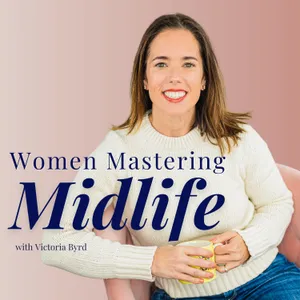
Women Mastering Midlife: Daily Summaries Delivered
by Victoria Byrd
Women Mastering Midlife is the podcast for women in their 40s and 50s who want real answers about what is happening inside their bodies, and the confidence to advocate for themselves in every room they walk into.Hosted by Victoria Byrd, a licensed pharmacist, certified menopause practitioner, and integrative health and wellness coach, this show bridges the gap between clinical medicine and lived experience. Victoria brings 20 years of pharmacy training alongside a deep commitment to integrative, evidence-based care for women navigating perimenopause, menopause, and the full arc of midlife transition.Each week, you will hear expert conversations and honest discussions covering:Hormones and HRT — what the evidence actually says about estrogen, progesterone, testosterone, and the pharmacology of hormone therapy optionsBrain fog, cognition, and mood — the neuroscience of menopause and why your thinking and emotional life are changingMetabolism, weight, and body composition — how shift
Latest Episodes
The most recent episodes — sign up to get AI-powered summaries of each one.
- 4 days ago41 min
124. Pelvic Floor Health in Midlife: Bladder Leaks, Urgency, Prolapse, and Strength Training with Dr. Caroline Packard, DPT
Leaking when you sneeze, rushing to the bathroom the moment you turn onto your street, a feeling of heaviness at the end of a long day, or sitting out the trampoline at a family party are all common in midlife, and many women have been told these things are simply part of having children or getting older. In this episode of Women Mastering Midlife, Victoria Byrd, RPh, talks with Dr. Caroline Packard, DPT, a pelvic floor physical therapist, certified yoga instructor, lifelong athlete, and mother of three, about why these symptoms often surface or worsen during perimenopause and menopause, and what women can do about them at any age.Caroline shares her own experience with postpartum leakage and prolapse, which led her to build Connect Pelvic Floor Fitness, an online platform that pairs pelvic floor education with progressive strength training. Together they explore how childbirth, declining estrogen, age-related muscle loss, and years of habits like breath holding, sucking in the stomach, and holding urine all stack together in midlife. Caroline explains how to calm bladder urgency in the moment, why a true pelvic floor contraction differs from the typical Kegel, how vaginal estrogen can complement pelvic floor rehab, and why proper form in exercises like the split squat matters so much for women with pelvic floor symptoms.In This Episode, You'll LearnWhy pelvic floor symptoms often appear or worsen in perimenopause and menopauseHow both vaginal and cesarean births affect the pelvic floor, including the load of pregnancy itselfHow the bladder learns habits, and a simple technique to calm urgency using breath, heel raises, or quick pelvic floor contractionsThe difference between a coordinated pelvic floor contraction and a standard KegelWhat chronic stomach gripping does to pelvic floor coordination and "pressure belly"Why most women with pelvic floor symptoms are not simply weak, and the role of tension, hips, and glutesHow vaginal estrogen supports tissue health alongside pelvic floor physical therapyHow to adjust strength training movements, such as the split squat, to support the pelvic floorWhy pelvic floor health is a long-term layer of your training, not a short rehab phaseFrequently Asked QuestionsIs it normal to leak urine when you sneeze, jump, or exercise after having children?It is common, but it is not something women have to accept. Caroline explains that pelvic floor symptoms can improve at any age, whether you are newly postpartum or 20 years past childbirth.Why do pelvic floor problems get worse during perimenopause and menopause?Midlife is often when several factors collide: tissue changes related to declining estrogen, gradual loss of muscle mass that begins in adulthood, and decades of habits such as breath holding, ab gripping, and poor bladder and bowel routines.How can I stop sudden bladder urgency?Caroline suggests taking a deep breath to help the pelvic floor relax, then doing heel raises or five quick pelvic floor contractions. Because the pelvic floor and bladder work in an inverse relationship, contracting the pelvic floor signals the bladder to relax, which can buy you time to reach the bathroom calmly.Are Kegels the best exercise for the pelvic floor?Not on their own. Caroline describes the pelvic floor as a three-dimensional bowl that moves with the diaphragm, lengthening on the inhale and lifting on the exhale, so effective training coordinates breath and movement rather than simply squeezing.Does vaginal estrogen help with pelvic floor symptoms?For many women, topical vaginal estrogen can improve tissue elasticity, sensitivity, and lubrication, which may help the tissues tolerate pelvic floor rehab. Caroline views it as a complement to therapy rather than a substitute, and the decision is one to make with your healthcare provider.Can you strength train with pelvic floor dysfunction or prolapse?Yes. Caroline's approach treats the pelvic floor as the base of the core and builds it into squats, deadlifts, presses, and eventually running and jumping, with attention to setup, pelvic position, and pressure management.Episode Timestamps00:28 Introduction to Dr. Caroline Packard, DPT02:20 Caroline's own experience with postpartum leakage and prolapse05:42 What happens to the pelvic floor after vaginal and cesarean birth08:02 Why midlife is where pelvic floor symptoms collide10:08 How the bladder learns habits, and how to calm urgency13:16 Kegels versus coordinated pelvic floor contractions15:06 How sucking in your stomach affects the pelvic floor17:3
- 1 weeks ago19 min
123. Women Mastering Midlife, the Book: A Pharmacist’s Evidence-Based Guide to Perimenopause and Menopause
My book, Women Mastering Midlife, came out in paperback on October 20, 2026. In this solo episode I talk you through what’s inside it, who I wrote it for, and how I hope you’ll use it. I’m Victoria Byrd, a licensed pharmacist, certified menopause practitioner, and health and wellness coach, and this is the guide to perimenopause and menopause I wish someone had handed me at 40.I share how a goal I wrote on a wooden ruler at a women entrepreneurs’ mastermind became a book contract. I also talk about writing through one of the hardest seasons of my life, alongside starting pharmacy school and solo parenting two teenage daughters, and why “mastering” means working on it rather than having it all figured out.The book is organized into five parts and twelve chapters. It starts with what perimenopause actually is and the symptoms that often never get linked to hormones, like brain fog, joint pain, sudden anxiety, and sleep that falls apart. From there it covers sleep, stress, muscle and bone, nutrition without food rules, sexual and genitourinary health, and hormone therapy, including what the Women’s Health Initiative did and didn’t tell us. There’s also a chapter on working with your healthcare team. Every chapter ends with small, doable steps, and the conclusion includes the Momentum Map, a guided reflection for building a plan that fits your own life.In this episode:How Women Mastering Midlife went from a goal on a ruler to a published bookWhat the five parts and twelve chapters coverWhy the book won’t tell every woman to take, or skip, hormone therapyHow podcast experts, including Dr. Andrea Matsumura, Dr. Lauren Colenso-Semple, and Dr. Shayna Kauffmann, shaped its chaptersWho the book is for, from early perimenopause through postmenopause, plus the partners and daughters who love these womenHow to read it in a hard season, and how to bring it to your book clubTimestamps:00:00 From a goal on a ruler to a finished book01:16 How the publishing contract came about02:44 Rebuilding the manuscript so it sounded like me again03:12 Writing through a hard season, and what “mastering” means05:22 Five parts and twelve chapters: what’s inside07:18 The Momentum Map and the simple steps that end each chapter09:05 Podcast experts and a fully cited, evidence-based approach10:22 Who the book is for11:58 Balancing personal story with clinical evidence13:35 Bandwidth, individuality, and how to read the book14:43 Book clubs, and where to find the book16:47 Why this community keeps me behind the micGet the book: womenmasteringmidlife.com/book, plus Amazon and Barnes & NobleHosting a book club? Send me a message. I’m happy to join by Zoom, or in person if you’re local.Let's Keep the Conversation GoingIf this episode resonated with you, please rate, review, and share it with someone who needs to hear it. Subscribe to Women Mastering Midlife on your favorite podcast platform to receive weekly conversations that help you navigate perimenopause, menopause, and midlife health with clarity and confidence.Join the Women Mastering Midlife Community and let's grow stronger together.Order the Women Mastering Midlife Book Now!Get your FREE guides HERE: www.womenmasteringmidlife.com/freeguidesShare your thoughts and stories on our social channels and tag us @women_mastering_midlife . Let's rewrite the narrative together!Find more information on our website: www.womenmasteringmidlife.comBook a FREE 1:1 discovery call to learn more about coaching programs and courses.DisclaimerThis podcast is for entertainment, educational, and informational pur
- 2 weeks ago36 min
122. Endometriosis in Perimenopause and Menopause: Diagnosis, Treatment, and Excision Surgery with Lillian Medhus, NP
Endometriosis affects roughly one in ten women and girls of reproductive age worldwide, yet many women spend close to a decade, and sometimes ten or more doctor visits, before anyone names it. It is also a condition we tend to assume quietly disappears at menopause, which isn’t always the case, and a history of endometriosis can change how you and your clinician approach hormone therapy during the transition.In this episode, I talk with Lillian Medhus, a women’s health nurse practitioner, certified menopause practitioner, and founder of Aspire Women’s Wellness, where she cares for women with endometriosis, pelvic pain, and hormone changes across the lifespan. Lillian lived with symptoms from her very first period and spent years treating endometriosis patients while telling herself her own pain wasn’t as bad as theirs, until a collapse on a New York City street led to a diagnosis of stage four deep infiltrating endometriosis. That experience shapes how she listens to the women in her practice today.We talk about what endometriosis actually is (and why it behaves so differently from ordinary tissue), the many conditions it overlaps with, and why perimenopause is often the point where long-standing coping strategies stop working. Lillian also explains why a hysterectomy is not a cure for endometriosis, what separates excision surgery from ablation, and why finding the right surgeon can be one of the biggest hurdles women face.In this episode, we discussLillian’s own path to an endometriosis diagnosis while working as a pelvic pain clinicianWhat endometriosis is, how it differs from adenomyosis, and the symptoms that are often mislabeled as IBS, interstitial cystitis, or sciaticaConditions that commonly overlap with endo, including autoimmune disease, chronic migraine, hypermobility, POTS, and MCASHow endometriosis is diagnosed in the US today, clinically and surgically, and where imaging is improvingHer measured take on the saliva test being studied in the UK and why external validation still mattersWhy there is no cure, and how she layers hormonal treatment, pelvic floor therapy, nutrition, and other tools to lower the overall burden of diseaseHow perimenopause can intensify endometriosis, and why scar tissue and adhesions can still cause symptoms after menopauseExcision versus ablation, and the insurance and access barriers that keep many women from specialized surgeryHow to find a vetted endometriosis excision surgeonLifestyle supports, including sleep, an anti-inflammatory eating pattern, reducing alcohol, gentle movement, and pelvic floor therapyWhy the threshold for seeking care is simpler than many women think: if your cycle or pelvic symptoms are affecting your daily life, it is worth getting checkedEpisode timestamps00:01 Introduction: endometriosis by the numbers and why it matters in midlife02:01 Lillian’s personal health journey06:27 What endometriosis is and how it presents08:34 How endometriosis is diagnosed in the US09:22 The saliva test and other emerging diagnostics11:09 Is there a cure?12:10 Managing endometriosis day to day14:13 Endometriosis in perimenopause15:11 Endometriosis after menopause and after hysterectomy17:16 What’s encouraging in endometriosis care19:36 Barriers to excision surgery22:43 How to find a vetted excision surgeon23:50 MCAS, POTS, and looking at the whole person26:35 Inside Aspire Women’s Wellness28:43 What’s next in women’s health30:25 When to make an appointment31:52 Lifestyle and over-the-counter supports35:13 Where to find LillianA note on treatmentSeveral of the therapies Lillian mentions, including GLP-1 medications and low-dose naltrexone, are used off-label for endometriosis, and the research supporting them is still emerging. Treatment decisions, including whether hormone therapy makes sense for you during the menopause transition, are best made together with a clinician who knows your full health history.Resources mentionedAspire Women’s Wellness: aspirewomenswellness.com and @aspirewomenswellness on InstagramiCareBetter (independent vetting organization for endometriosis excision surgeons)Lillian’s 14-hour endometriosis course for clinicians (details on her Instagram)Endometriosis UKLet's Keep the Conv
- 3 weeks ago36 min
121. Breast Cancer, Medical Menopause, and Whole-Person Healing with Sue Weldon of Unite for HER
A cancer diagnosis changes far more than the body. It can shake a woman’s confidence, her relationships, and her sense of control, and for many women it arrives during the same years she is already moving through perimenopause or menopause.Sue Weldon was 39, with three young children at home, when she was diagnosed with breast cancer 22 years ago. Her treatment included a bilateral mastectomy and six months of chemotherapy, which pushed her into medically induced menopause with hot flashes every hour, poor sleep, bone pain, and depression. She found that acupuncture, yoga, and nutrition helped her manage those side effects and stay on treatment, yet none of it was part of her medical care or covered by insurance. That gap became Unite for HER, the national nonprofit she founded to fund and deliver integrative therapies for people affected by breast and ovarian cancer.Sue and I talk about why emotional health belongs alongside physical treatment, how financial strain can quietly determine whether someone stays on therapy, and what she hopes her new book, Heal Empower Restore: A Revolutionary Road Map to Support the Body and Mind Throughout Cancer Care, offers a woman holding a fresh diagnosis. She is clear throughout that these therapies work in partnership with a woman’s oncology team, not in place of it.We also spend time on the people walking alongside a patient: how to ask for help in specific, concrete ways, and why saying yes to a friend’s offer can be a gift to them as well.In this episodeHow chemotherapy can bring on menopause in younger women, and what helped Sue with hot flashes, sleep, and treatment side effectsWhy Sue frames acupuncture, yoga, meditation, oncology massage, and counseling as additions to medical care rather than alternativesThe connection between emotional distress, food and transportation insecurity, and staying on treatmentHow Unite for HER’s one-year Wellness Passport covers integrative therapies, nutrition support, and groceries at no cost to patientsPractical ways to advocate for yourself, including bringing someone to appointments, recording visits with your clinician’s knowledge, writing questions down, and seeking another opinion when you feel dismissedHow to turn “let me know if you need anything” into real help, from frozen broth to weeding the gardenWhat caregivers can keep in mind, including showing up without trying to fix, and caring for themselves tooInside the book: expert-contributed chapters on reiki, ecotherapy, sexual health, and more, plus a recipe section for treatment-related symptoms like mouth sores and low appetiteAbout Sue WeldonSue Weldon is a 22-year breast cancer survivor and the founder and CEO of Unite for HER, a national nonprofit that provides integrative therapies, education, and community for people affected by breast and ovarian cancer. Before founding the organization, she worked as a gymnastics coach and in sales. Heal Empower Restore is her first book, written with contributions from Unite for HER’s network of physicians and integrative practitioners.Resources mentionedUnite for HER: uniteforher.orgApply for Unite for HER support: uniteforher.org/applyHeal Empower Restore by Sue Weldon, available in print and audiobook (narrated by Sue) from Amazon, Barnes & Noble, Books-A-Million, and other booksellersLet's Keep the Conversation GoingIf this episode resonated with you, please rate, review, and share it with someone who needs to hear it. Subscribe to Women Mastering Midlife on your favorite podcast platform to receive weekly conversations that help you navigate perimenopause, menopause, and midlife health with clarity and confidence.Join the Women Mastering Midlife Community and let's grow stronger together.Order the Women Mastering Midlife Book Now!Get your FREE guides HERE: www.womenmasteringmidl
- Oct 26, 202642 min
120. Menopause Skin Changes Explained: Retinol, Estrogen Face Cream, and Sunscreen with Dermatologist Dr. Corinne Erickson
If your skin seems to have changed its mind about everything lately, from how it holds moisture to how it reacts to products you've used for years, this conversation will help it make sense. My guest is Dr. Corinne Erickson, a board certified dermatologist, Menopause Society certified practitioner, and owner of Georgia Skin Specialists in Atlanta, who turned her focus to midlife skin after her own mid-40s brought hormonal acne, hair thinning, new sensitivity, and a chin hair she named Fred.Dr. Erickson walks us through a framework she and colleagues call the pilocutaneous syndrome of menopause (PSM), which links the skin and hair changes of perimenopause to two drivers: declining estrogen and the relative androgen excess that follows. Estrogen was quietly supporting collagen, elastin, hydration, blood flow, and antioxidant protection in the skin, so as it falls, skin often becomes thinner, drier, looser, and more reactive. At the same time, testosterone takes a more prominent role, which can show up as jawline acne, facial hair, and patterned thinning on the scalp. Seeing it this way can take some of the personal blame out of it, because your routine didn't fail you; your hormones changed the rules.We also talk about how to cut through the skincare noise on social media, starting with a simple morning and evening routine she recommends for many of her patients. From there, we get into estrogen face creams and what the current research does and does not show, the real difference between drugstore retinol and prescription retinoids, and how to approach Botox, fillers, and lasers with a clear sense of your own reasons. Dr. Erickson also shares why she came home from Seoul with a suitcase full of sunscreen, what a new UVA filter could mean for American sunscreens, and why skin cancer tends to show up more often on the left side of the face.In this episode, we cover:The two hormonal shifts behind dryness, laxity, sensitivity, hormonal acne, and hair changes in perimenopause and menopauseHow Dr. Erickson brings hormone therapy into dermatology conversations, and why skin changes alone are not an approved indicationWhy waiting to see a pattern before buying new products can save money and irritation during the hormonal swings of perimenopauseA "protect in the morning, repair at night" routine built on vitamin C, sunscreen, a gentle retinoid, and a barrier-supporting moisturizerWhat the evidence currently shows for estrogen face creams, and why she considers them an active hormone treatment rather than a beauty trend (Dr. Erickson discloses her advisory role with Alloy Health)Retinol vs. tretinoin and tazarotene, and why starting with a gentler over-the-counter option for three to six months is often the better pathAnnual full-body skin checks, the hard-to-see places skin cancer can hide, and Vicky's mother's experience with stage 0 melanoma under her chinQuestions to ask yourself before Botox, fillers, or lasers, and how to choose a qualified injectorKorean skincare, buzzy ingredients like PDRN, and how to try new products without overwhelming your skin barrierUVA vs. UVB protection, UVA exposure through car windows, and the newly approved UVA filter coming to the USSunscreen and vitamin D, including her general approach to supplementation and monitoring levelsEpisode timestamps00:00 Welcome and introduction to Dr. Corinne Erickson01:18 What led her to focus on midlife skin04:24 The pilocutaneous syndrome of menopause (PSM) explained08:40 Where hormone therapy fits in dermatology care10:15 Non-negotiables for a simpler midlife skincare routine14:45 Estrogen face creams: what the research shows17:38 Retinol vs. prescription retinoids20:03 Skin cancer prevention and when to schedule a skin check22:45 Botox, fillers, and lasers: starting with your why26:29 How to choose an injector or dermatology practice29:59 Korean skincare and French pharmacy trends34:14 Sunscreen, UVA filters, and car window exposure37:43 Sunscreen and vitamin D39:48 Where to find Dr. EricksonConnect with Dr. Corinne EricksonSubstack: The Skin PauseSocial media: @themenopausederm Practice: GeorgiaSkinSpecialists.comLet's Keep the Conversation GoingIf this episode resonated with you, please rate, review, and share it with someone who needs to hear it. Subscr
- Oct 19, 202653 min
119. World Osteoporosis Day: Protecting Your Bones in Perimenopause and Menopause with Dr. Jenny Han, PharmD
Released the day before World Osteoporosis Day, this episode welcomes back Dr. Jenny Han, PharmD, a board-certified ambulatory care pharmacist and co-founder of SEEN Nutrition, a woman-owned company in Ithaca, New York, that makes a calcium chew from real food ingredients: milk minerals, organic dates, almonds, and vitamin D from mushrooms. Jenny's path into this work began with a diagnosis most of us would never expect, pregnancy and lactation-associated osteoporosis, discovered when she fractured her back two months postpartum during the early days of COVID.Roughly one in two women over 50 in the United States will break a bone because of osteoporosis, and many of us don't think about our bones until one breaks. Jenny and I talk about what women in their 40s and 50s can do now, before the rapid bone loss that follows menopause, along with what has changed at SEEN since her first visit to the show and what it looks like to use a PharmD in a way most pharmacists never consider.In this episode, we talk about:Why synthetic calcium supplements are so bulky, and how a food-based calcium chew delivers 500 mg of dietary calcium (about a glass and a half of milk, without the lactose)What vitamin K2 (MK-7) does for bone health, and why eating chickpeas won't give you the K2 that SEEN sources from fermented chickpeasWhy SEEN chose a nutrition facts label over a supplement facts panel, and what that extra regulatory oversight means for trustWinning $500,000 in the Grow New York Food and Agriculture startup competition, and growing from two founders to a team of fiveWhy Duke orthopedic surgeon Dr. Jocelyn Wittstein joined SEEN's scientific advisory board, and her work on the musculoskeletal syndrome of menopauseAdolescence as the most important window for building bone, peak bone mass around age 30, and the accelerated loss in the years after menopauseThe difference between a DEXA body composition scan and a DEXA bone density scan (only one of them diagnoses osteopenia or osteoporosis)Why getting a baseline bone density scan before 65 may be worth the out-of-pocket cost, and the advocacy work to lower the screening age to 50Treating osteoporosis like any other chronic condition: nutrition, calcium and vitamin D, protein, resistance training, and medication when appropriateWhy "I reversed my osteoporosis" claims on social media leave out the most important partMoving from patient care into entrepreneurship, and Jenny's advice to pharmacy students who want a path outside retail or hospital practiceThe growing role of pharmacists in menopause care, from hormone therapy titration to managing estrogen patch shortagesA note from Jenny for women listeningBones are living, dynamic tissue, and your skeleton renews itself roughly every decade. A diagnosis of osteopenia or osteoporosis can feel final, but the choices you make consistently, day after day, still shape your bone health, even when you can't feel the difference in a month or two.World Osteoporosis Day (October 20)To mark the month leading up to World Osteoporosis Day, SEEN Nutrition launched its Generations of Strength campaign and donated $10,000 to the Bone Health and Osteoporosis Foundation and the National Spine Health Foundation. Listeners can use code SEENSTRONG at checkout for an extra 10% off a first purchase.Connect with Jenny and SEEN NutritionWebsite: www.seennutrition.comSocial media: The Calcium QueensJenny's first episode on the show: 72. Bone Health, Calcium, and Clean Supplements” Pharmacist Jennifer Han on Creating SEEN Nutrition for Women’s WellnessLet's Keep the Conversation GoingIf this episode resonated with you, please rate, review, and share it with someone who needs to hear it. Subscribe to Women Mastering Midlife on your favorite podcast platform to receive weekly conversations that help you navigate perimenopause, menopause, and midlife health with clarity and confidence.Join the Women Mastering Midlife Community and let's grow stronger together.Order the Women Mastering Midlife Book Now!Get your FREE guides HERE: www.womenmasteringmidlife.com/freeguidesShare your thoughts and stories on ou
- Oct 12, 202659 min
118. Weight Health vs Weight Loss in Midlife with Ashley Koff, RD
Registered dietitian Ashley Koff explains why weight loss rules can backfire in perimenopause and menopause, how GLP-1 hormones connect to gut health, bone, and muscle, and how to use AI for health questions without handing it your decisions.If you are in perimenopause or menopause and the eat less, move more advice is no longer working, this conversation offers a different starting point.Victoria Byrd, RPh, talks with Ashley Koff, RD, USA Today best-selling author of Your Best Shot: The Personalized System to Optimize Your Weight Health, GLP-1 Shot or Not and founder of the Better Nutrition Program. Ashley has spent more than 25 years in personalized nutrition, and she explains why she moved from weight loss language to weight health, and what that shift means for women in midlife.In this episode, you will learn:Why Ashley views weight as a health signal made up of bone, muscle, fat, and waterHow GLP-1, GIP, and other weight health hormones are produced in the gut lining, and how shifting sex hormones in perimenopause and menopause can affect themWhat to consider before starting a GLP-1 medication, and why Ashley calls it a tool rather than a solutionHer perspective on pairing transdermal estrogen with a low-dose GLP-1, and why she urges caution with the word "microdose"Why population-based guidelines for fiber, calories, and protein may not fit your bodyHow Ashley suggests using public AI for research and organizing your week, and where she says it falls short with labs, diagnoses, and recommendationsWhat private AI is, and how it differs from tools like Claude, Gemini, and ChatGPTHow "better, not perfect" can replace all-or-nothing thinking about foodChapters:00:00 Welcome and how consumers are using AI for health03:45 Why Ashley moved from weight loss to weight health08:41 Weight health hormones and midlife13:13 Why personalization matters21:00 Talking with women who are curious about GLP-1 shots28:44 Estrogen, GLP-1s, and the microdose question33:49 Using AI as a health tool39:00 Public AI vs. private AI47:03 The emotional and cultural side of food52:41 Better, not perfect nutrition58:24 Where to find AshleyConnect with Ashley Koff, RD:Grab her Book: "Your Best Shot," Check out her website: https://thebetternutritionprogram.com/ Let's Keep the Conversation GoingIf this episode resonated with you, please rate, review, and share it with someone who needs to hear it. Subscribe to Women Mastering Midlife on your favorite podcast platform to receive weekly conversations that help you navigate perimenopause, menopause, and midlife health with clarity and confidence.Join the Women Mastering Midlife Community and let's grow stronger together.Order the Women Mastering Midlife Book Now!Get your FREE guides HERE: www.womenmasteringmidlife.com/freeguidesShare your thoughts and stories on our social channels and tag us @women_mastering_midlife . Let's rewrite the narrative together!Find more information on our website: www.womenmasteringmidlife.comBook a FREE 1:1 discovery call to learn more about coaching programs and courses.DisclaimerThis podcast is for entertainment, educational, and informational purposes only. The hosts, guests, and experts featured are not your personal healthcare providers or advisors. The content should not be considered as professional, personalized medical, psychological, or prescriptive advice.Always consult qualified professionals such as your physician, therapist,
- Oct 5, 20261h 6m
117. Menopause Awareness Month: Policy, Testosterone, & Advocacy with Dr Sarah Berg
October is Menopause Awareness Month, and Dr. Sara Berg, an OB-GYN who stepped out of the exam room to build an education and advocacy platform, joins Victoria for a second conversation about where menopause care and policy stand right now.They begin with the FDA panel on testosterone for women. Dr. Berg explains that the research supports use for low sexual desire once other contributing factors have been sorted out, and Victoria raises the pharmacist concerns about cost and controlled substance scheduling. From there they turn to the long estrogen patch shortage, what it took for it to be acknowledged, and why letters to legislators and agencies can move things faster than most of us expect.Dr. Berg also talks about preparing for the first Perimenopause and Menopause Hill Day, and previews The Appointment, her new short-form podcast that gives patients the wording to bring hard questions to their doctors, starting with brain fog.Also in this episode: the difference between brain fog and a mental load that never lets up, adding menopause symptom questions to routine intake forms, Victoria's public comment to CMS on pharmacists and remote patient monitoring, why peptides and unregulated supplements call for caution, cultural attitudes that keep women whispering the word menopause, and how to raise menopause at work without it feeling like a liability.Timestamps 01:38 Dr. Berg's path from OB-GYN to advocate 05:49 How to read health claims on social media 09:36 The FDA testosterone panel 14:27 The estrogen patch shortage 17:30 Hill Day and writing to your legislators 23:31 Brain fog versus overload 28:38 The Appointment podcast 33:55 Asking your doctor about symptoms 42:01 CMS and pharmacist remote monitoring 48:16 Peptides and supplement marketing 54:08 Menopause Awareness Month 1:02:22 Menopause in the workplaceLinks and where to find Dr. Berg: www.selfority.comLet's Keep the Conversation GoingIf this episode resonated with you, please rate, review, and share it with someone who needs to hear it. Subscribe to Women Mastering Midlife on your favorite podcast platform to receive weekly conversations that help you navigate perimenopause, menopause, and midlife health with clarity and confidence.Join the Women Mastering Midlife Community and let's grow stronger together.Get your FREE guides HERE: www.womenmasteringmidlife.com/freeguidesShare your thoughts and stories on our social channels and tag us @women_mastering_midlife . Let's rewrite the narrative together!Find more information on our website: www.womenmasteringmidlife.comBook a FREE 1:1 discovery call to learn more about coaching programs and courses.DisclaimerThis podcast is for entertainment, educational, and informational purposes only. The hosts, guests, and experts featured are not your personal healthcare providers or advisors. The content should not be considered as professional, personalized medical, psychological, or prescriptive advice.Always consult qualified professionals such as your physician, therapist, pharmacist, or coach for specific concerns and decisions related to your health or lifestyle. Women Mastering Midlife is not responsible for any undesired outcomes resulting from actions taken based on the content of this podcast.
Get Women Mastering Midlife summaries in your inbox
Free AI-powered daily recaps. Key takeaways, quotes, and mentions — in a 5-minute read.
Get Free Summaries →Free forever for up to 3 podcasts. No credit card required.
You Might Also Like
Listeners also like.
Everyday Wellness: Midlife Hormones, Menopause, and Science for Women 35+
A nurse practitioner shares science-based strategies for managing midlife hormones, menopause, and women's health.

BETTER! with Dr. Stephanie Estima | Women's Strength, Body Composition and Hormones
Women in perimenopause and menopause learn science-based strategies for strength, hormones, and body composition from expert interviews.

Afterpause
Evidence-based guidance on menopause, hormone health, sleep, and metabolism from a certified wellness coach and women's health experts.
unPAUSED with Dr. Mary Claire Haver
A board-certified OB-GYN hosts candid discussions with experts and leaders on women's health, identity, and empowerment in midlife.
You Are Not Broken
A urologic surgeon hosts experts to discuss women's health, hormones, and sexuality with science-backed insights and candid conversation.

Live Like a Girl with Dr. Mindy Pelz
Dr. Mindy Pelz explores women's health through hormone science and wellness conversations to help women live in rhythm with their bodies.

The Dr Vonda Show
An orthopedic surgeon discusses aging, movement, bone health, and resilience with experts and women athletes.

The Food Medic
Dr. Hazel Wallace

How Hard Can It Be? with Diana Maria Riva
A weekly conversation for GenX women navigating midlife challenges, from empty nesting to self-identity, with humor and honesty.

Well Beyond 40
Women in midlife and beyond explore nutrition, fitness, and mindfulness to support healthy aging.

Red Pill Your Healthcast
Two healthcare providers discuss overlooked health issues and empower listeners to make informed decisions for their families.
Treated with Dr. Sara Szal
Dr. Sara Szal explores holistic health solutions through conversations with experts and patients seeking mind, body, and soul healing.
About Women Mastering Midlife
Women Mastering Midlife is the podcast for women in their 40s and 50s who want real answers about what is happening inside their bodies, and the confidence to advocate for themselves in every room they walk into.Hosted by Victoria Byrd, a licensed pharmacist, certified menopause practitioner, and integrative health and wellness coach, this show bridges the gap between clinical medicine and lived experience. Victoria brings 20 years of pharmacy training alongside a deep commitment to integrative, evidence-based care for women navigating perimenopause, menopause, and the full arc of midlife transition.Each week, you will hear expert conversations and honest discussions covering:Hormones and HRT — what the evidence actually says about estrogen, progesterone, testosterone, and the pharmacology of hormone therapy optionsBrain fog, cognition, and mood — the neuroscience of menopause and why your thinking and emotional life are changingMetabolism, weight, and body composition — how shift
Customized Recaps
AI-powered recaps with compact key takeaways, quotes, and insights.
Straight to Your Inbox
Get key takeaways from Women Mastering Midlife in a 5-minute read.
Save Hours Every Week
Stay current on your favorite podcasts without falling behind.
Frequently Asked Questions
What is Podzilla's Women Mastering Midlife daily summary?
It's a free AI-powered email that summarizes new episodes of Women Mastering Midlife as soon as they're published. You get the key takeaways, notable quotes, and links & mentions — all in a quick read.
How does the Women Mastering Midlife podcast summary work?
When a new episode drops, our AI transcribes and analyzes it, then generates a personalized summary tailored to your interests and profession. It's delivered to your inbox every morning.
Is this an official Women Mastering Midlife product?
No. Podzilla is an independent service that summarizes publicly available podcast content. We're not affiliated with or endorsed by Victoria Byrd.
Can I get summaries of other podcasts too?
Absolutely! The free plan covers up to 3 podcasts, any in the catalog. Basic raises that to 15, Pro to 40 and Max to 100. Browse our full catalog at /podcasts.
How often does Women Mastering Midlife release new episodes?
Women Mastering Midlife publishes weekly. Our AI generates a summary within hours of each new episode.
What topics does Women Mastering Midlife cover?
Women Mastering Midlife covers topics including Medicine, Sexuality, Fitness, Relationships, Culture, Health & Fitness, Society & Culture. Our AI identifies the specific themes in each episode and highlights what matters most to you.
Start getting Women Mastering Midlife summaries tomorrow morning.
Free forever for up to 3 podcasts. No credit card required.
Free forever for up to 3 podcasts. No credit card required.