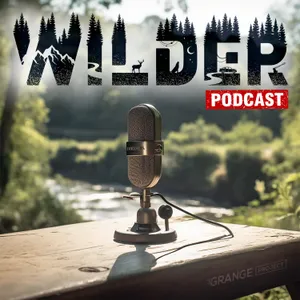
Free Daily Podcast Summary
Wilder Podcast: Daily Summaries Delivered
by Grange Project
Co-hosted by Chloe and Tom, we explore topics including "rewilding", sustainable living and climate change, whilst documenting our attempts to apply these principles on our 80 acres in rural Monmouthshire. We speak with experts who are passionate about understanding, protecting and restoring the natural world, to the benefit of us all. Whether that’s a professor of rewilding, a micro green start-up or charity founders, we explore their stories in a way that’s accessible to all. Alongside their expertise, we also share our journey of the Grange Project - where we are learning through doing and without any relevant background in ecology or nature recovery. Essentially, we ask the stupid questions so you don’t have to. Whether you're a seasoned environmentalist, a nature enthusiast, or simply curious about how you can make a difference, we hope this podcast will entertain, inspire (and perhaps educate a little too)!
Latest Episodes
The most recent episodes — sign up to get AI-powered summaries of each one.
- 2 weeks ago54 min
Ep. 057: Right to Roam - Who Is the Countryside Actually For? With Jon Moses
Jon Moses lives five minutes from the River Monnow. He had lived beside it for twenty years and barely knew it, because almost none of it could legally be reached. In the first lockdown he pretended for a day that he lived in Scotland, and walked up it anyway.That walk is the whole argument of this episode. Jon is co-director of the Right to Roam campaign and co-editor of Wild Service: Why Nature Needs You, and he joins Chloe and Tom to explain what the campaign is actually asking for: parity with Scotland, where a right of responsible access to land and water has been the default since 2003, rather than the roughly 8% of England that the Countryside and Rights of Way Act opened up for walking and climbing only.Tom comes at it as the concerned landowner. Someone left a bag of poo in a bush on the project. Gates have been left open with livestock behind them. There are 100 kilogram pigs on the land that have chased people and ripped trousers, and a horse who has now tried to eat one of the pigs. So the conversation gets into the practical questions rather than the slogans: what happens to liability, how conservation land gets exempted, whether someone could camp next to the cabins, and what you do about the ten per cent of people who will never apply common sense.Chloe brings the other side. Living in the Forest of Dean they could walk for three hours from the back door without crossing a road. From the Grange there is not a single usable footpath. And if the benefits to wellbeing are as large as the evidence suggests, is it fair to deny them to the many because of the few?The bit that stays with you is Jon's shift from access for recreation to access for guardianship. On the River Wye, which for access purposes already works much like Scotland, it was local people who knew the river well who raised the alarm on algal blooms long before the regulators did. You look after what you know. You cannot know what you are not allowed to see.After the interview, Chloe and Tom cover the four benefits they never got to, Rose's idea for a Right to Roam licence, and the full story of Lady the horse, two pigs, and a pair of Crocs.Chapters:[00:06] Welcome to episode 57, and a first for Tom[02:39] Project update: 20 jars of pickled cucumbers and a market garden in its second summer[04:37] Community Day, Saturday 12 September, spaces still available[06:03] Jon Moses joins: Wild Service, the Monnow Valley and a lockdown trespass[11:11] What the campaign is actually asking for: parity with Scotland[12:44] Why Scotland got there and England and Wales did not: devolution, the Lords and the Clearances[17:53] The concerned landowner: poo in a bag, open gates and 100 kilogram pigs[19:40] How Scotland handles liability, livestock and exempting conservation land[22:29] Does everyone have common sense? Why the Wilder Wander is still not marketed[26:31] Chloe: no usable footpath from our land, and the ethical question[32:17] Could someone camp next to our cabins? Privacy, curtilage and commercial use[36:47] A feudal culture: shouting rights, DofE students and the meeting point on the land[41:31] What the campaign has achieved, and access for guardianship on the River Wye[44:08] How to support Right to Roam, and why this year matters[45:13] Chloe and Tom: the four benefits we never got to[49:47] The horse and pig story[54:00] Wrapping upAbout the guestJon Moses is co-director of the Right to Roam campaign, which is calling for a Right to Roam Act for England and Wales. He is a former teacher and historian, with a PhD from London, and looks at land access through the lens of land history. He co-edited Wild Service: Why Nature Needs You (Bloomsbury, 2024) with Nick Hayes, and writes the Substack The Fields Was Our Church. He lives in the Monnow Valley on the Welsh borders, and has been working alongside Chloe and Tom through the Welsh Rewilding Alliance over the past year.Right to Roam: https://www.righttoroam.org.uk/Jon's Substack: https://jonmoses.substack.com/Facts and figures mentioned:The Countryside and Rights of Way Act 2000 created access land over mountain, moor, heath and down, covering roughly 8% of England, for walking and climbing only. No swimming, cycling or camping, with the exception of DartmoorThe Land Reform (Scotland) Act 2003 established a default right of responsible access to land and water, with exceptions for privacy, growing crops and land managementScottish Land and Estates, the main landowner body in Scotland, opposed the Act at the time and now broadly regard it as a successA Right
- Aug 2, 202657 min
Ep. 056: Wildfires - What's Actually Burning, and What Can Be Done
A mountain has been burning 13 miles from the Grange Project for two weeks. Wales has just gone into drought after receiving 8% of its average July rainfall, the driest July in 190 years. Just under 22,000 hectares have burnt across the UK so far this year, more than the whole of 2022, with most of the summer still to come.This is a special episode, recorded quickly, to try to understand what is actually happening.Tom is joined by James Hitchcock, Rewilding Advocacy and Policy Lead for Rewilding Britain in Wales, and Alex Crawley, co-director of Grazing Management and a Nuffield scholar who studied wildfire in France and California. Both arrive from different starting points and both refuse the easy answer.Because there is an easy answer doing the rounds, in two versions. Restock the uplands and graze down the fuel load. Or rewild, rewet, and the landscape stops burning. Neither survives contact with the detail.What the conversation gets to instead is more useful: not all fuel loads are equal, spring fires and summer fires are different problems, rewilding sites are genuinely more vulnerable during their transition years, and almost every wildfire in Britain starts with a person.Chloe joins Tom afterwards to pick over what the interview left out, including the effect on people, the standing grass on their own land, and whether "wildfire" is even the right word.Chapters[00:00] Welcome to a special episode, and why the gap since the last one [03:04] Setting the scene: a mountain on fire 13 miles away, and what 220 hectares means in Grange Projects [05:20] Why are we seeing more wildfires now, or are we? [05:22] Alex on whiplash weather, soil moisture and winter vegetation build-up [06:20] James on fire danger modelling, the first UK mega fire, and degraded habitats [11:29] What the Met Office projects for 2050, and why it may already be out of date [12:58] Fire is not a natural process in Britain [15:34] Shifting baselines, and the day Tom walked away from his flail mower [16:47] Arson, barbecues and the culture that needs to change [18:15] Triggers versus conditions: who is getting the blame [18:49] Alex on wildfire being used to fit ideological narratives [20:07] James on why it is not either/or, and where beavers come in [25:17] What Alex learned in California: goats, sagebrush and ladder fuels [28:51] The vulnerable years: firebreaks as insurance for a rewilding site [32:31] Mapping wet firebreaks and joining them up [34:50] Who insures a nature asset that burns down? [37:23] What France tells us about reactive spending [39:17] Final thoughts from James 40:18 Final thoughts from Alex [41:02] Tom and Chloe reflect on the interview [52:00] Political courage, and a thank you to Catherine Fookes MP [53:09] Is this the moment the climate crisis becomes real to people?About the guestsJames Hitchcock is the Rewilding Advocacy and Policy Lead for Rewilding Britain in Wales, and the first full-time person the organisation has had working in the country. He has over 20 years in the environment sector, from site management through to senior leadership, and was previously CEO of Radnorshire Wildlife Trust, where he led the rewilding of Gilfach in the Marteg Valley.Rewilding Britain: rewildingbritain.org.ukAlex Crawley is co-director of Grazing Management Limited alongside Emily Crawley. The business delivers contract conservation grazing across around 25 sites, restoring habitats on behalf of partners including Natural Resources Wales, the Wye Valley National Landscape and Severn Trent. Alex is a Nuffield scholar and studied wildfire management in France and California.Grazing Management: grazingmanagement.co.ukBoth James and Alex have been guests on the Wilder Podcast before. Links to their previous episodes are below.Facts and figures mentionedWales received 8% of its average July rainfall in July 2026, the driest July in 190 years. Drought was declared across the whole of Wales on 30 July, following EnglandThe Blaenavon fire covered around 220 hectares of bracken and gorse at its peak, roughly seven times the size of the Grange Project. It had been burning since 19 JulyJust under 22,000 hectares have burnt across the UK so far in 2026, more than the total for the whole of 2022Around 50,000 hectares burnt across the UK in 2025Wales recorded roughly 3,450 grass fire incidents last year, of which around two and a half thousand were started deliberatelyThere has been approximately one wildfire in the UK officially recorded as started by lightningWales has around 50 beavers. Scotland has well over 1,500In California, targeted grazing runs at roughly 250 goats on one acr
- Jun 11, 202658 min
Ep. 055: Together for Good - The Power of Community Climate Action
Helen Meech is Executive Director of the Climate Coalition, the UK's largest group of organisations dedicated to action on people, climate and nature. Over 130 member organisations, from the National Trust to Oxfam to Save the Children, plus a network of around 3,500 community organisers across the UK. And yet most people have never heard of them. As Helen explains, that's deliberate.We talk about Great Big Green Week, the Coalition's flagship campaign, running this year from 6 to 14 June. It has more than doubled in size every year for three years: 250,000 people, then 600,000, then 1.2 million last year, with around 2 million expected this year. The stat that matters most: over a third of attendees had never engaged with climate or nature before. They came because someone they knew organised something, or because it was free to do with the kids on a Saturday.We also dig into where power actually sits. Helen's framing, "creating the space for politics to move into," challenges the idea that change is something politicians do to us. And we compare notes on the People's Emergency Briefing, which we recently screened at the Grange Hub, and the tension every communicator in this space wrestles with: realism versus hope.The post-interview chat gets into Tom's view that the era of being polite about the emergency is over, Chloe's case for hope grounded in community rather than technology, and why we still don't have a Help for Heroes equivalent for the climate movement.About the guestHelen Meech is Executive Director of the Climate Coalition. She has spent 25 years in environmental campaigning and movement-building, including roles at the National Trust and the RSPB, where she was Head of Movement Building and led the development of the People's Plan for Nature. Her work is built on a single belief: people are powerful, especially when they come together.The Climate Coalition: theclimatecoalition.org Great Big Green Week: greatbiggreenweek.comChapters00:00 - Welcome and intros 01:30 - Grange update: screening the People's Emergency Briefing at the Hub 04:30 - Watching hard truths in community, and why that changes the experience 06:55 - Tom's case: the days of being polite about the emergency are over 07:30 - Wilder Connections summer programme: co-design with young people 10:57 - Who is the Climate Coalition? 14:59 - Why most people haven't heard of the Climate Coalition (on purpose) 17:24 - "Creating the space for politics to move into" 20:05 - Everyone has power: protest, community organising, media, culture 22:18 - Great Big Green Week: nightclubs, litter picks, fetes and school assemblies 23:59 - The infrastructure behind 6,000 local events 29:54 - Flooded pitches: why grassroots sport is organising 30:30 - The unexpected challenge: keeping the big NGOs on board 32:43 - Greenwashing and a brand with a life of its own 34:15 - The Coalition's three policy asks 36:50 - The five million target, and matching Children in Need for awareness 39:43 - Helen's reaction to the People's Emergency Briefing 42:28 - Rebecca Solnit and hope as an action 44:35 - How to get involved in Great Big Green Week 46:03 - Tom and Chloe debrief: community action vs direct action 48:27 - The 3.5% rule, and whether the research still holds 50:45 - The school drop-off apology problem: why we need a safe movement to belong to 53:40 - Hope vs fear: did the briefing get the balance right? Key takeawaysOver a third of Great Big Green Week attendees have never engaged with climate or nature before. They come because the event is organised by someone they know, connected to a community they're already part of, or simply free to do with the kids. Over 80% of those newcomers wanted to do more afterwards.Great Big Green Week has more than doubled in size every year for three years, and reached a media audience of over 60 million last year. Around 11% of the UK population recognises it when prompted, on a par with campaigns that have run for decades.Helen's core argument about power: if we say politicians are the only ones with power, we're handing ours to them. The Coalition's job is to make the public mandate visible so politicians have space to move into.The Coalition's three policy asks: climate finance flowing where it's most needed, fairness at the heart of climate action (bills, jobs, just transition), and the urgent protection and restoration of nature.Fear needs to be combined with agency. Helen cites the Branding Biodiversity report: hard-hitting information without a path to action paral
- May 26, 20261h 1m
Ep. 054: The Psychology of Species Reintroductions with Pete Cairns
Episode summaryWe see Pete Cairns as rewilding royalty. Thirty years in the conservation conversation, co-founder and former CEO of SCOTLAND: The Big Picture, and now host of the new podcast At the Edge. In this episode Tom and Chloe sit down with Pete to dig into the one thing every species reintroduction in the UK has in common, and it is not the species.Wildcats, sea eagles, red kites, beavers, lynx. The practical side of bringing animals back is largely solved. What is not solved is the human side. The consultation, the fear, the bureaucracy, the politics, and the deep emotional and economic stakes for the rural communities living on the front line.We talk about the 11 million domestic cats in the UK and the 100 million wild animals they kill each year. The mysterious lynx release in the Cairngorms in January 2025. Whether "beaver bombers" should be celebrated or condemned. And what Pete would do if he had a magic wand to fix the system.The post-interview chat between Tom and Chloe gets properly unpacked on the moral case for reintroductions, the sheep farmer's perspective, and whether logic or culture should lead.About the guestPete Cairns has spent thirty years working on rewilding communications and engagement, with a particular focus on the human-wildlife fault line. He co-founded SCOTLAND: The Big Picture and served as its CEO until 2025. He now works independently and hosts the podcast At the Edge, a deep dive into our relationship with wild nature and each other.Find Pete on LinkedIn: linkedin.com/in/petercairnsphoto Listen to At the Edge: attheedge.org.ukChapters00:00 - Welcome and what is the Wilder Podcast01:55 - Project update: the community day04:22 - Thanks to Katya and Hannah in the market garden05:09 - Pigs escaping again06:38 - Why we're talking to Pete07:10 - Pete's introduction and 30 years in the rewilding conversation10:07 - What is a wildcat, and how did Scotland nearly lose them12:22 - Why the wildcat decline went unnoticed for so long15:00 - The elephant in the room: 11 million domestic cats and 100 million wild animals18:05 - Cats are hardwired, not killing for fun 22:02 - The principles of species reintroduction, from sea eagles to today24:16 - Beavers, wolves and the feeling that reintroductions are "done to" rural communities26:00 - Lynx to Scotland vs The Missing Lynx Project: two regulatory bodies, two processes28:35 - Selling the benefits, hearing the concerns, and the sheep predation reality31:30 - "Just pay the farmer" is a dangerous narrative 32:20 - What does success even look like35:14 - The shortage of skilled navigators in conservation35:54 - The illegal lynx release in the Cairngorms, January 202538:15 - Beaver bombers and the guerrilla rewilding question40:16 - If Pete could redesign the system, what would it look like43:04 - What one listener can actually do: voice, vote, money45:04 - Is wildcat reintroduction a success48:07 - Pete's sign-off and where to find At the Edge48:42 - Tom and Chloe debrief: cats, sheep farmers, and the moral argument59:24 - The ripple effect of wild landscapes on cultureKey takeawaysSpecies reintroduction is no longer a practical problem. The science and the techniques exist. The challenge now is social, cultural and political: how do we live alongside species we have not shared the landscape with for generations.The UK is one of the only countries in Europe with no large carnivores, and one of the only countries anywhere. The question is not whether it is ecologically possible. It is whether we will.The "just pay the farmer" line misses the point. Farmers are motivated by financial considerations, but also by tradition, family history, animal welfare and a sense of place. None of those things have a price tag.Lynx to Scotland is the most comprehensive consultation a reintroduction has ever had in this country. Whether it ultimately leads to a release or not, the process itself has reset the standard.The illegal lynx release in the Cairngorms in January 2025 was, in Pete's words, "plain stupid". But it advanced the conversation. There is a sweet spot somewhere between an illicit release and a process that takes 15 years.Mediating these conversations is a specialist skill, and there is a real shortage of people who can do it well. Most conservation organisations cannot mediate their own debates because they wear a badge.Domestic cats kill an estimated 100 million wild animals in the UK every year. Not a judgement on cat ownership, but a call fo
- Apr 22, 20261h 6m
Ep. 053: Who Really Wins and Loses in the Food System? With Sue Pritchard
The invisible forces shaping what you eat, why they stay hidden, and what it actually takes to change them.Sue Pritchard is CEO of the Food, Farming and Countryside Commission (FFCC) and a farmer just down the road from us in Monmouthshire. In this episode she lays out exactly how the modern food system works, who benefits, who pays the price, and why the polite assumption that "people just want cheap food" is one of the most damaging myths in British public life.We go into the ABCD commodity giants most people have never heard of, the three forces reshaping our plates (commodified, consolidated, financialised), the citizens' assemblies that proved the political class has been misreading the public for decades, and why Sue thinks it might finally be time to bring back the word shame.This was one of those conversations where a missing piece of the puzzle dropped into place. Not cheery in places, but clarifying and energising.In this episode:What we actually mean by "the food system" and why the definition mattersThe ABCD companies: the four private firms (plus one Chinese state company) that control over 80% of global commodity tradeWhy Cargill's profits jumped 27% while the rest of us absorbed food price spikesCommodified, consolidated, financialised: the three words that explain how we got hereWho's really losing: farmers on below real-living-wage incomes, citizens paying twice (at the till and through their taxes), and our public healthThe assumptions keeping the system stuck: "people only want cheap food", "nobody wants a nanny state", "this is a middle-class concern"What happened when FFCC actually asked people what they want from food (spoiler: the response rate was five times the norm)The role of anger, and why Rowan Williams called it the "appropriate emotional response"Rutger Bregman, shame, and whether it is time to make certain jobs socially unacceptable againFinding your lane: why we do not all have to do everything everywhere all at onceThe "What Works Here?" inquiries and the stories of hope already on the groundApproximate timestamps:00:00 - Welcome & Introduction05:00 - Farm Start with Rachel Hammond (starts next month, places still available)06:00 - Community Day, 16 May, plus the screening of the People's Emergency Briefing08:20 - Introducing Sue Pritchard09:30 - What the FFCC is and why it was set up after Brexit12:30 - What we actually mean by "the food system"18:30 - The winners: ABCD companies, Cargill, the Amazon, and chicken sheds in the Wye Valley24:00 - The losers: farmers, citizens, public health26:20 - The assumptions that keep the system stuck28:45 - Sue "spits the dummy" and launches the citizens' assemblies36:30 - Anger, Rowan Williams, and what to do with it42:45 - Bregman, shame, and raising the social cost of harm44:30 - Working inside the system: the conversations that actually move people49:20 - Where hope already lives: the "What Works Here?" inquiries54:30 - Tom and Chloe unpack it: invisible winners, shame, food security, and the search for brave leadershipSue's best lines"Perhaps anger is the appropriate emotional response to the degree of injustice that we are finally seeing.""How do we tell the stories of the future that is already coming to life all around us? It's just not evenly distributed and it's not visible enough.""Don't do bad things and don't be a dick. Those would be my missions for government."Links and resources mentioned in this episodeSue Pritchard and FFCCFood, Farming and Countryside Commission: https://ffcc.co.ukThe Food Conversation: https://thefoodconversation.ukFFCC's overview of The Food Conversation and Citizen Mandate: https://ffcc.co.uk/so-what-do-we-really-want-from-foodPeople and works referencedHenry Dimbleby's National Food Strategy: https://www.nationalfoodstrategy.orgRutger Bregman's 2025 BBC Reith Lectures, Moral Revolution: https://www.bbc.co.uk/programmes/b00729d9Rutger Bregman, Moral Ambition: <a href="https://www.moralambition.org" rel="noopener noreferrer" targe
- Mar 26, 20261h 12m
Ep. 052: Three Years In: The Honest Truth About Rewilding 80 Acres
No guest this week. Just Tom and Chloe with a drink, a lot to catch up on, and roughly an hour to get through it all.It's been 18 months since the last proper project update and quite a lot has happened. 4,000 trees planted. A tiny forest that nearly died twice and is now over six feet tall. A market garden. A distillery in the barn. A charity. Four schools through the gate in one week. And an otter, which felt significant.This is the third update episode - episode 9 was the start, episode 29 was one year in. This one's the most honest of the three.What We CoverRestoring More NatureThe trees, the dragon's nests, and what happens when you prepare the ground properlyWhy the tiny forest survived a drought, deer, and voles - and is now extraordinaryThe wood meadow: a rare habitat, hand-scythed by the community, and why it mattersThe pond that failed, then gave us house martins, a kestrel, and an otterThe pig situation (it got complicated)The cow debate: October, says Chloe. Tom is less sureBreeding birds: double the species recorded between 2024 and 2025Naturfa Pathway: one of four sites selected across Wales by the Welsh GovernmentProducing More FoodFrom silage grassland to 50-100+ varieties of fruit and veg - and why that matters for food securityThe cathedral polytunnel, the duck pond, the new orchard, and chickens planned for under the treesCourses launching this summer: market gardening, agroforestry, mushroom growing, seed saving and moreWhat it actually means when the food you grew feeds the people who came to help grow itContributing to the Local EconomyFrom two tractor drivers twenty days a year to six people working on siteWilder Spirits: pre-orders open 2 April. The first spirit distilled on a rewilding site in Wales, in a paper bottlePlatform Nature: 20 founding partners from Wildlife Trusts to a koala sanctuary in AustraliaThe Grange Hub, Wilder Away Days, and why Tom talks about money on a nature podcastRevenue transparency: what the first six months actually generatedConnecting More People to Wilder NatureWilder Connections charity: Chloe's co-design phase with schools across MonmouthshireWhat happened when a group of teenagers asked if they could hug a treeMonthly open days: selling out a month in advanceHopes for the rest of 2026 - and why Tom wants everyone to slow down a littleTimestamps00:00 - Tom's opening confession 01:31 - What we said on episode 29, and how much has changed 05:44 - The four pillars explained 07:04 - 28,000 listeners, 125 countries, and someone in Cape Town saving for their own rewilding site 07:53 - PILLAR 1: Restoring More Nature 08:12 - 4,000+ trees, dragon's nests, and the saplings finally breaking through 10:43 - Tiny Forest: 98% survival, over six feet tall, future outdoor classroom 13:59 - Hedgerows: planted, lost to drought, replanted 15:36 - Wood Meadow: what it is, why it's rare, and a lot of hand-scything 18:44 - Deer: why culling became unavoidable, and the experiment with over-planting 22:24 - The pond that collapsed - and then gave us house martins, a kestrel and an otter 26:39 - Voles everywhere, and what doubling bird species in one year actually means 27:13 - Pigs: what went wrong, what's coming next, and the ecological case for them 31:21 - The cow debate 33:54 - Welsh Rewilding Alliance: founding members 34:02 - Naturfa Pathway: recognised by the Welsh Government 35:05 - PILLAR 2: Producing More Food 35:37 - How a market garden ended up being run by the people who said they wouldn't run it 37:47 - Ducks, chickens, and the orchard 41:54 - 50-100+ varieties: why growing diversity is also food security 43:29 - From least to most efficient food production on the same land 44:33 - PILLAR 3: Contributing to the Local Economy 44:33 - Wilder Spirits: the distillery, the story, the paper bottle, 2 April 47:13 - Mark, Sandy, and why six people working on site matters 48:18 - Platform Nature: what it is, who's using it, and where it's going 5
- Mar 11, 20261h 1m
Ep. 051: WTF is the Polycrisis and why should I care?
In this conversation, we update you on two big milestones for the Grange Project, the launch of the Welsh Rewilding Alliance and our OECM recognition, before sitting down with Professor Mike Berners‑Lee. We ask Mike to explain the polycrisis: how climate change, biodiversity loss, pollution, food insecurity and geopolitical instability are all interlinked. Mike helps us see why recycling alone won’t cut it: plastics are produced almost entirely from fossil fuels, their emissions could eat up a large chunk of the remaining carbon budget and their additives disrupt hormones. We also talk about why technology by itself isn’t enough, how misinformation slows progress and what practical steps we can all take-like switching to trustworthy media and supporting a national information campaign to wake up and act.Episode journey:[00:05] Introduction and mission. We open the show by explaining why we started the Wilder Podcast: to share our learning about rewilding and the wider forces shaping our world. We remind listeners that we created the Grange Project two and a half years ago to restore nature, grow food, support eco‑businesses and reconnect people with land.[02:24] Two big updates. We proudly announce the launch of the Welsh Rewilding Alliance and its report A Welsh Way to Wild. We also share that the Grange Project has been recognised by the Welsh Government as an OECM, a big step in confirming that our land management has rigorous governance and real biodiversity benefits.[07:08] Introducing Professor Mike Berners‑Lee. We explain how we first encountered Mike’s work-reading There Is No Planet B inspired us to buy the farm and start the Grange Project. Mike introduces himself as a professor, consultant and author.[11:09] What is the polycrisis? Mike explains that the polycrisis is a tangle of interconnected challenges driven by humanity’s unprecedented power. He emphasises that disasters like pandemics and wars no longer happen in isolation; their severity comes from the cascading effects they unleash. For us, it was eye‑opening to see how our economic and political systems amplify these stresses.[16:58] Examples of cascading crises. We discuss real‑world examples: the COVID‑19 pandemic and the war in Ukraine amplifying food and energy crises. Mike highlights that plastic production has boomed since the 1950s and plastics are a major source of emissions and endocrine disruption. It reinforced for us how everything is connected.[20:43] Wake‑up call and the National Emergency Briefing. Mike tells us about the National Emergency Briefing in Westminster, where experts covered nine dimensions of the crisis from health and food to national security and no one thought the situation was exaggerated. We both feel this shows how widely the severity of the crisis is recognised and why we need national action.[23:05] Misinformation and media ownership. We explore how misinformation is blocking progress. Mike challenges the narratives that climate action will leave us poorer and colder, and explains how social‑media algorithms spread disinformation. We urge you to choose trustworthy news sources and recognise manipulation.[29:14] Techno‑optimism vs. systemic change. Mike says that simply scaling up renewables isn’t enough. He points out that although renewable capacity has grown massively, fossil energy use has also climbed, so overall emissions keep rising. That’s why systemic measures like carbon pricing and fossil‑fuel constraints are critical.[33:35] Human psychology and leadership. Together we discuss why people aren’t inherently selfish. Neuroscience and social history suggest we can cultivate cooperation and empathy. Mike encourages us to seek leaders who are kind and honest, and we talk about the courage it takes to speak up and push for change.[47:19] Calls to action. We finish by encouraging you to sign the letter at nebriefing.org, host local screenings of the briefing film and start conversations in your community. Mike notes that facing these issues head‑on feels liberating, we felt it too.[49:05] Host reflections. After the interview, we reflect on our own nerves and gratitude for Mike’s clarity. We discuss doing a mini‑series on the individual crises and debate whether information alone prompts action. We conclude that people need both facts and relatable stories of hopeful change.About the guest:We were honoured to speak with Mike Berners‑Lee, a professor at Lancaster University and founder of Small World Consulting. He advises organisations on s
- Feb 19, 202645 min
Ep. 050: The Future of Rewilding in Cymru (Wales) - Tir Natur
Chloe and Tom speak with Gwenni Jenkins-Jones and Eben Muse from Tir Natur, a Welsh rewilding charity working to establish Wales’s largest rewilding site. The conversation explores the unique challenges and opportunities for rewilding in Wales and why this moment represents a turning point for nature recovery in the country.Tir Natur recently secured a 1,195-acre landscape in the Doethïe Valley in the Cambrian Mountains, creating a rare opportunity to demonstrate what large-scale ecosystem restoration could look like within a distinctly Welsh cultural and ecological context. The discussion moves beyond ecology alone, examining how rewilding intersects with language, rural communities, land ownership, farming identity and the future of the countryside.This episode is both hopeful and honest. It explores the realities of nature loss in Wales, the misconceptions surrounding rewilding and the importance of community participation in restoring landscapes. At its heart is a powerful idea: that restoring nature is not about removing people from the land, but about rebuilding relationships between people, place and the living systems that sustain both.Tir Natur Crowdfunder – Support the charity’s fundraising appeal for Wales’s largest rewilding project. https://www.crowdfunder.co.uk/p/tirnaturKey topics & chapter markers[00:05] – Introduction & project updates. Chloe and Tom welcome listeners, recount the story of spotting an unexpected otter on their land, apologise to “Pig Sheep Man Paul” for previous sheep‑related frustrations and announce a series of learning events at the Grange Project.[06:28] – Meet Gwenni & Eben. Guests introduce themselves: Gwenni recently became Tir Natur’s fundraising manager after volunteering for a year, while Eben volunteers in planning, community engagement and translation in addition to his day job in access conservation. They describe Tir Natur as a volunteer‑powered charity whose name means “nature’s land”.[08:30] – Why Wales needed Tir Natur. Rewilding projects in England and Scotland inspired action, yet Wales lacked a dedicated rewilding charity. Gwenni recounts that frustration with stalled government action and the desire to create a Welsh flagship site led to Tir Natur’s founding.[09:40] – What ‘rewilding’ means to Tir Natur. Eben and Gwenni define rewilding as restoring whole ecosystems rather than managing single species. They plan to use hardy grazer, cattle, ponies and pigs to create a mosaic of habitats and make the landscape resilient to climate change.[13:06] – The Welsh context. Eben outlines sobering statistics: Wales scores around 37 % on the Biological Intactness Index and 90% of its peat bogs are in poor condition. Agricultural pollution has degraded rivers, and political parties are reluctant to prioritise nature. Gwenni notes that shifting baselines mean many people have forgotten what a healthy landscape looks like.[20:50] – Navigating rewilding’s reputation. Gwenni acknowledges past projects that failed to engage communities and insists Tir Natur will listen to local voices, retain the farmer on the productive part of the land and ensure access rather than exclusion. Eben rejects profit‑driven rewilding and stresses that land should serve communities, not corporate reputations.[30:00] – A 1 195‑acre canvas for rewilding. Gwenni paints a picture of the Doethïe site: 1 195 acres with two rivers, 160 acres of degraded peat ready for restoration and 55 historic features including ancient farmsteads. The charity plans early interventions such as peatland rewetting and river restoration, followed by the introduction of grazing animals to kick‑start natural processes.[38:40] – Next steps & call to action. The first priorities after purchase are community engagement, bringing in hardy grazers and restoring peatlands. Gwenni invites listeners to visit the site, volunteer, share expertise or donate. Fundraising continues to finish purchasing the land and begin restoration.About the guestsGwenni Jenkins‑Jones is the fundraising manager for Tir Natur. After volunteering for a year, she now leads fundraising and community engagement for the charity, using her professional skills to connect donors with a shared vision for rewilding. Email: Gwenni@tirnatur.cymruEben Mewes works in access conservation and is an ambassador for Campaign for National Parks. He volunteers with Tir Natur, focusing on planning, community outreach and translation. Motivated by frustration with policy in Wales, he sees the new rewilding site as a chance to show what’s possible a
Get Wilder Podcast summaries in your inbox
Free AI-powered daily recaps. Key takeaways, quotes, and mentions — in a 5-minute read.
Get Free Summaries →Free forever for up to 3 podcasts. No credit card required.
You Might Also Like
Listeners also like.

Wild Edible World: A Foraging Podcast
Explores wild edible plants and mushrooms, sharing global foraging knowledge and ways to identify and use them safely.
The Wild with Chris Morgan
Explores wildlife and wild places through stories of animals adapting to survive and the people protecting them.

Wildlife Photography
Photographers discuss wildlife and nature photography techniques, experiences, and creative inspiration in casual conversation.
The Origins Foundation Podcast
Discusses wildlife conservation, hunting ethics, and controversial issues in sustainable use through candid interviews.
Sustainable World Radio- Ecology and Permaculture Podcast
Experts discuss ecology, permaculture, organic gardening, and sustainable living through interviews and commentary.

BBC Gardeners’ World Magazine Podcast
Expert gardening advice, seasonal tips, and global garden travels from BBC Gardeners’ World Magazine.
MeatEater Conservation
A podcast about outdoor news and conservation issues, featuring interviews with experts and hunters.
Gunfighters
Stories of Old West gunfighters like Billy the Kid, Wyatt Earp, and John Wesley Hardin reveal the violent reality of America's frontier.

Wild at Heart
Teaches Christian men to embrace their purpose through biblical teachings on masculinity, faith, and spiritual growth.

Terrestrials
A nature podcast exploring surprising animal and plant behaviors through immersive storytelling and original songs.
Working Cows - Regenerative Ranching to Maximize Profitability and Soil Health
Discusses regenerative ranching practices focusing on soil health, grazing, herd management, and profitability with industry leaders.

Wild Thing
A narrative podcast exploring how humanity's quest to uncover scientific mysteries reveals deeper truths about ourselves.
About Wilder Podcast
Co-hosted by Chloe and Tom, we explore topics including "rewilding", sustainable living and climate change, whilst documenting our attempts to apply these principles on our 80 acres in rural Monmouthshire. We speak with experts who are passionate about understanding, protecting and restoring the natural world, to the benefit of us all. Whether that’s a professor of rewilding, a micro green start-up or charity founders, we explore their stories in a way that’s accessible to all. Alongside their expertise, we also share our journey of the Grange Project - where we are learning through doing and without any relevant background in ecology or nature recovery. Essentially, we ask the stupid questions so you don’t have to. Whether you're a seasoned environmentalist, a nature enthusiast, or simply curious about how you can make a difference, we hope this podcast will entertain, inspire (and perhaps educate a little too)!
Customized Recaps
AI-powered recaps with compact key takeaways, quotes, and insights.
Straight to Your Inbox
Get key takeaways from Wilder Podcast in a 5-minute read.
Save Hours Every Week
Stay current on your favorite podcasts without falling behind.
Frequently Asked Questions
What is Podzilla's Wilder Podcast daily summary?
It's a free AI-powered email that summarizes new episodes of Wilder Podcast as soon as they're published. You get the key takeaways, notable quotes, and links & mentions — all in a quick read.
How does the Wilder Podcast podcast summary work?
When a new episode drops, our AI transcribes and analyzes it, then generates a personalized summary tailored to your interests and profession. It's delivered to your inbox every morning.
Is this an official Wilder Podcast product?
No. Podzilla is an independent service that summarizes publicly available podcast content. We're not affiliated with or endorsed by Grange Project.
Can I get summaries of other podcasts too?
Absolutely! The free plan covers up to 3 podcasts. Upgrade to Pro for 15, or Premium for 50. Browse our full catalog at /podcasts.
How often does Wilder Podcast release new episodes?
Wilder Podcast publishes monthly. Our AI generates a summary within hours of each new episode.
What topics does Wilder Podcast cover?
Wilder Podcast covers topics including Science, Education, Nature, Documentary, Culture, Society & Culture. Our AI identifies the specific themes in each episode and highlights what matters most to you.
Start getting Wilder Podcast summaries tomorrow morning.
Free forever for up to 3 podcasts. No credit card required.
Free forever for up to 3 podcasts. No credit card required.