Free Daily Podcast Summary
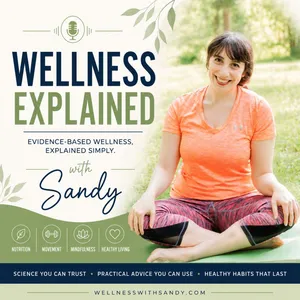
Wellness Explained: Daily Summaries Delivered
by Sandy Jolles
Wellness Explained cuts through the noise to make health and wellness easier to understand and actually apply to your life. Join nutritionist Sandy Jolles as she explores the science and real-life strategies behind nutrition, movement, mindfulness, longevity, and overall well-being. From everyday habits to the latest wellness trends, each episode breaks down what the evidence really says, what’s worth your attention, and what you can realistically put into practice. No extremes, no perfection...just practical conversations and takeaways designed to help you feel informed, empowered, and confident in the choices you make for your health.
Latest Episodes
The most recent episodes — sign up to get AI-powered summaries of each one.
- 3 days ago45 min
From Ballerina to Physical Therapist: The Art of Moving Well for Life
You can exercise regularly, lift weights, and stay active, but are you actually moving well?In this episode of Wellness Explained, Sandy sits down with physical therapist Mary Jean Stack of Great Falls Physical Therapy, whose journey from intensive ballet training to physical therapy offers a fascinating perspective on how our bodies move, adapt, and recover.Together, they explore why movement quality matters just as much as exercise itself, how seemingly minor aches and pains can reflect underlying compensation patterns, and why physical therapy isn't just for recovering from injuries.What You'll LearnWhy movement patterns matter: How two people with the same knee pain can have completely different underlying issues, and why individualized care is essential.Strength vs. mobility: Why building muscle is only part of the equation when it comes to moving well and aging independently.The importance of recovery: How rest, sleep, and active recovery support long-term performance, and where treatments like dry needling and red-light therapy fit in.Everyday movement habits: Simple strategies for desk workers, improving ergonomics, and breaking up prolonged sitting.Pregnancy and postpartum health: Why pelvic floor physical therapy deserves more attention and how movement needs change throughout pregnancy and recovery.The bigger health picture: How hormones, metabolic health, and nutrition can influence musculoskeletal conditions, including frozen shoulder.The TakeawayMoving well isn't about perfect form or avoiding every ache and pain. It's about developing the strength, mobility, and confidence to keep doing the things you love, at every stage of life.Connect With Our GuestMary Jean Stack | Great Falls Physical TherapyWebsite: https://greatfallspt.comFree Ergonomic ResourceLooking to make your workspace more comfortable? Explore the ergonomic tips and recommendations shared by Great Falls Physical Therapy.GFPT Workstation SetupConnect With SandyWebsite: https://wellnesswithsandy.comEnjoyed this conversation? Follow Wellness Explained and leave a rating or review to help more people discover practical, evidence-based wellness conversations. Wellness ExplainedEvidence-based wellness, explained simply.Hosted by Sandy Jolles, MS, CNS, LDN.Disclaimer: Wellness Explained is for educational and informational purposes only and is not intended to diagnose, treat, cure, or prevent any disease or replace individualized medical advice from a qualified healthcare professional.
- 1 weeks ago49 min
Why Do We Wait for a Wake-Up Call? Finding Your Way Back to Yourself
Have you ever reached a point where everything in your life looks good on paper, but something just doesn't feel right anymore?Maybe it's a career you've worked hard for, a routine you've outgrown, or the feeling that somewhere along the way, you've lost touch with yourself.In this episode, I'm joined by Lianna Nielsen, a certified Integrative Nutrition Health Coach specializing in the mind-body connection. And this conversation is particularly meaningful to me because Lianna was actually one of the people who inspired me to pursue my own career in wellness!We explore why change can feel so difficult, why we sometimes ignore the subtle signals that something isn't working, and what it means to reconnect with ourselves before reaching a breaking point.We also talk about something I think gets overlooked in wellness: joy. What if taking care of ourselves didn't have to feel like another obligation? What if movement, nourishment, and rest could become things we genuinely look forward to?In this conversation, we explore:Why we often wait for a crisis before making a changeThe relationship between physical health, emotional well-being, and self-awarenessHow to recognize when you've outgrown a version of your lifeThe role of play, joy, and movement in sustainable wellnessHow sleep, nutrition, and everyday habits can influence the way we feelSimple ways to become more present and reconnect with what matters to youLianna also shares a beautiful, simple morning practice that you can try yourself, one that takes just a few minutes and encourages you to listen to what you actually need.Try this: Liana’s 5-minute morning check-inBefore you get out of bed or look at your phone, place one hand on your heart and one on your belly.Take five deep breaths.Ask yourself: “What’s one thing I need more of today? What’s one thing I need less of?”Listen without judging, act on what comes up, and repeat daily for a week or more.About Lianna NielsenLianna Nielsen is a certified Integrative Nutrition Health Coach specializing in the mind-body connection. After beginning her career as a professional actress, personal health challenges led her to explore integrative wellness and eventually build a coaching practice focused on physical health, self-awareness, intuition, and personal alignment.She is also the host of Love Through It, a podcast featuring personal insights and conversations about connection, growth, and navigating life's experiences.Connect with Lianna:Website: https://www.healthybylianna.comPodcast: Love Through It: https://podcasts.apple.com/us/podcast/love-through-it/id1680239705Connect with Sandy:Website: https://wellnesswithsandy.comPodcast: https://wellness-explained.simplecast.comIf you enjoyed this conversation, please follow Wellness Explained and consider leaving a rating or review. It helps more people discover the show! Wellness ExplainedEvidence-based wellness, explained simply.Hosted by Sandy Jolles, MS, CNS, LDN.Disclaimer: Wellness Explained is for educational and informational purposes only and is not intended to diagnose, treat, cure, or prevent any disease or replace individualized medical advice from a qualified healthcare professional.
- 2 weeks ago26 min
Is Your Bladder Trying to Tell You Something?
Let's talk about something we all do every single day, but probably don't think much about: peeing.How often is too often? Is waking up at night to use the bathroom normal? And could changes in your bathroom habits be telling you something about your bladder, kidneys, or overall health?Urinary health doesn't exactly come up in everyday conversation, but it's an important part of our well-being. And there's a lot more to it than simply drinking enough water.In this episode of Wellness Explained, we're diving into the fascinating connection between urinary habits and overall health, including a few things that might surprise you.In this Wellness Bite, we'll explore:How often you should typically urinate, and what can influence that number.Why your kidneys do much more than produce urine.The different types of urinary incontinence and why bladder leakage isn't something you necessarily have to accept.Common urinary tract infection (UTI) symptoms and prevention strategies.Whether cranberry supplements can actually help prevent UTIs.What contributes to kidney stones and why hydration matters.Popular urinary health herbs and remedies, including what the research does and doesn't supportSimple habits that can help support bladder and kidney health.Here's something worth remembering: Changes in urinary habits aren't always a cause for alarm, but persistent symptoms shouldn't be ignored either.Whether you've noticed yourself making more bathroom trips, have experienced a UTI, or simply want to better understand how your body works, this episode is for you.Because sometimes, paying attention to the little things can make a big difference in how we care for our health.Have a wellness question you'd love to hear covered? Send it my way! Your question might inspire a future Wellness Bite.SIMPLE CORN SILK TEAINGREDIENTS• 2 cups water• 2 Tbsp fresh or dried corn silkDIRECTIONSPut water and silk into a pot and bring to a boil with the lid on the pot. As soon as itcomes to a boil, turn the heat down to lowest setting and simmer for ten minutes. Turnoff the heat and let the silk continue to steep for another half hour. Strain the silk andwarm your tea or drink at room temperature. CORN SILK SUMMER SUN TEAINGREDIENTS• 4 cups water• 4 Tbsp chopped fresh corn silkDIRECTIONSPut silk and water in half gallon Mason jar out in the sun for half a day. Bring it into thehouse and strain the herbs out. Add honey and lemon or lime to taste. Serve chilled orat room temperature. Wellness ExplainedEvidence-based wellness, explained simply.Hosted by Sandy Jolles, MS, CNS, LDN.Disclaimer: Wellness Explained is for educational and informational purposes only and is not intended to diagnose, treat, cure, or prevent any disease or replace individualized medical advice from a qualified healthcare professional.
- 2 weeks ago58 min
Stronger Than You Think: Rethinking Strength Training
Strength training isn't just about lifting heavier weights or changing how your body looks. It's about maintaining muscle, supporting bone health, improving everyday movement, and building confidence as we age.In this episode, Sandy sits down with Carla Davies, a group fitness instructor with 12 years of experience and a certified personal trainer, to explore the science and practical side of resistance training.As fellow Les Mills BodyPump instructors, Sandy and Carla bring their firsthand experiences into a conversation about building strength, challenging yourself appropriately, and making fitness enjoyable and sustainable.In this episode, we explore:Why maintaining muscle becomes increasingly important as we ageMuscular endurance versus traditional strength trainingCan lighter weights actually help build muscle?Progressive overload: how to know when it's time to increase resistanceHow BodyPump fits into a well-rounded strength training routineCommon form mistakes with deadlifts, squats, and lungesThe importance of proper technique, recovery, and rest daysWhy strength training benefits more than just appearanceThe confidence, motivation, and community that group fitness can providePractical ways to begin strength training, even if you're intimidated by the gymAbout Our GuestCarla Davies is a group fitness instructor with 12 years of experience helping individuals build strength, confidence, and healthier, more active lives.After a successful career as a Human Resources Executive, Carla discovered a passion for group fitness that inspired a second career in wellness. She holds multiple Les Mills certifications, including BodyPump, BodyBalance, RPM, CORE, and SPRINT, along with AFAA Group Fitness Instructor, NASM Personal Trainer, and NASM Nutritional Coach certifications.Connect with CarlaInstagram & Facebook: @carladavies2010Connect with SandyWebsite: https://wellnesswithsandy.comPodcast: https://wellness-explained.simplecast.com Wellness ExplainedEvidence-based wellness, explained simply.Hosted by Sandy Jolles, MS, CNS, LDN.Disclaimer: Wellness Explained is for educational and informational purposes only and is not intended to diagnose, treat, cure, or prevent any disease or replace individualized medical advice from a qualified healthcare professional.
- 3 weeks ago15 min
EMFs: The Invisible Exposure We Rarely Think About”
Could the technology we use every day be influencing our biology in ways we're only beginning to understand?In this Wellness Bite, we're exploring electromagnetic fields (EMFs), how they interact with biological systems, and what current research can and cannot tell us about potential health effects.In this episode, we explore:What EMFs actually are: The differences between naturally occurring electromagnetic fields, extremely low-frequency fields, and radiofrequency exposure from wireless devices.Your body's electrical activity: How our cells use electrical signaling and how bones generate electrical signals in response to mechanical stress.Calcium signaling and cellular health: The proposed role of voltage-gated calcium channels (VGCCs), oxidative stress, and mitochondrial function in EMF research.Sleep and thyroid health: Research questions surrounding melatonin, circadian rhythms, and thyroid function.What the evidence actually shows: Why findings from laboratory studies, observational research, and real-world human health outcomes aren't interchangeable.Practical exposure-reduction strategies: Simple adjustments involving phones, Wi-Fi routers, device placement, and everyday technology habits.A note about EMF protection productsThis episode also references information from DefenderShield, a company that manufactures EMF-shielding accessories. Its materials describe conductive shielding technology and laboratory measurements of signal attenuation under specified testing conditions.It's important to distinguish a product's ability to reduce measured electromagnetic exposure in a particular setup from evidence that using the product improves long-term health outcomes.Resources and further readingDefenderShield — Product information and company-reported shielding research.World Health Organization: Electromagnetic FieldsNational Cancer Institute: Cell Phones and Cancer RiskUnderstanding potential biological mechanisms is valuable, but it doesn't automatically establish that everyday EMF exposure causes disease. The goal is to stay informed, recognize where evidence is still developing, and make practical decisions without unnecessary fear. Wellness ExplainedEvidence-based wellness, explained simply.Hosted by Sandy Jolles, MS, CNS, LDN.Disclaimer: Wellness Explained is for educational and informational purposes only and is not intended to diagnose, treat, cure, or prevent any disease or replace individualized medical advice from a qualified healthcare professional.
- 3 weeks ago1h 1m
When “Healthy” Goes Too Far: Finding a More Realistic Approach to Wellness
What happens when the pursuit of health starts taking a toll on your physical and emotional well-being?In this episode of Wellness Explained, Sandy sits down with Elena Morales for an honest conversation about perfectionism, body image, PCOS, women's health, and redefining what it means to live well.From her years as a competitive athlete to experimenting with restrictive diets, intermittent fasting, and intense exercise routines, Elena shares how her pursuit of wellness eventually led her to question whether she was truly supporting her health.Now a mother and successful Northern Virginia real estate professional, Elena offers a refreshing perspective on building sustainable habits, trusting your body, and finding joy in movement, food, and everyday life.In this episode, we explore:When healthy habits become an unhealthy obsessionThe all-or-nothing mindset and its relationship with exercise and dietingElena's personal experience with PCOS, hormonal health, and birth controlRestrictive eating, intermittent fasting, and the importance of adequate nutritionWhy research on women's health and exercise deserves more attentionYoga, mindfulness, and shifting away from exercise as punishmentFitness trackers, wellness trends, and knowing when data is helpful...or stressfulSelf-trust, therapy, boundaries, and the connection between emotional and physical healthMaking wellness realistic while balancing work, parenting, and everyday responsibilitiesResources mentionedDr. Stacy Sims Women's Exercise Physiology and NutritionDr. Stacy Sims is an exercise physiologist and researcher known for her work on female-specific exercise and nutrition considerations. Elena discusses her work in relation to the historical underrepresentation of women in sports and exercise research.Website: https://www.drstacysims.com/Mary Cain “I Was the Fastest Girl in America, Until I Joined Nike”Elena references Mary Cain's story about the pressures of elite athletics, weight expectations, and the consequences of inadequate fueling. Her experience highlights important conversations around athlete health, menstrual function, and performance.Watch/read via The New York Times: https://www.nytimes.com/2019/11/07/opinion/nike-running-mary-cain.htmlAdult Children of Emotionally Immature Parents Lindsay C. Gibson, PsyDElena shares how this book helped her reflect on family relationships, emotional patterns, boundaries, and developing greater self-trust.Additional topic: PCOS and women's hormonal healthElena shares her personal experiences navigating a PCOS diagnosis and exploring different approaches to her health. Her story is a reminder that everyone's circumstances are different and individualized medical guidance matters.Meet Elena MoralesElena Morales is a Northern Virginia real estate agent and member of an all-women team ranked #2 among medium-sized teams in Virginia, with more than $150 million in combined sales in 2025.Before building her real estate career, Elena's journey included competitive basketball and volleyball, long-distance running, strength training, and yoga. She also worked on an organic fruit farm in Hawaii, managed cold-pressed juice sales and deliveries throughout Northern Virginia, and served as a store manager at South Block in Clarendon and Vienna.A Northern Virginia native and Virginia Tech alumna, Elena began her real estate career in Northern California before returning home to raise her family and continue growing her business.Connect with ElenaInstagram: https://www.instagram.com/elena__morales_/Facebook: https://www.facebook.com/elena.morales.serhant/TikTok: https://www.tiktok.com/@elena__morales_Email: elena@SERHANT.comPhone: (571) 294-5148 Wellness ExplainedEvidence-based wellness, explained simply.Hosted by Sandy Jolles, MS, CNS, LDN.Disclaimer: Wellness Explained is for educational and informational purposes only and is not intended to diagnose, treat, cure, or prevent any disease or replace individualized medical advice from a qualified healthcare professional.
- 4 weeks ago17 min
Estrogen Dominance: What It Really Means & What Actually Helps
Is estrogen dominance really about having too much estrogen?Not necessarily. The term estrogen dominance is commonly used in wellness discussions, but it isn't a standardized medical diagnosis. Sometimes the concern is an imbalance between estrogen and progesterone rather than an elevated estrogen level.In this Wellness Bite, we explore:Estrogen and progesterone: Why their relationship matters and how hormone patterns change throughout life.Estrogen receptor sites: Why the effects of estrogen depend on receptor binding and the signals activated inside our cells, not just estrogen levels in the bloodstream.Soy and phytoestrogens: How plant compounds such as genistein and daidzein interact with estrogen receptors, and why their effects differ from those of the body's own estrogen.Flaxseed and lignans: How gut bacteria metabolize lignans into compounds that may influence estrogen signaling, while fiber supports normal digestive elimination.The gut-liver connection: The role of estrogen metabolism, the estrobolome, and the body's normal elimination pathways.Nutrients and herbs: A look at B vitamins, magnesium, vitex, red raspberry leaf, and traditional emmenagogue herbsHormonal health is more complicated than simply trying to lower estrogen. Understanding hormone signaling, metabolism, and your individual symptoms is a much more useful starting point. Wellness ExplainedEvidence-based wellness, explained simply.Hosted by Sandy Jolles, MS, CNS, LDN.Disclaimer: Wellness Explained is for educational and informational purposes only and is not intended to diagnose, treat, cure, or prevent any disease or replace individualized medical advice from a qualified healthcare professional.
- Oct 13, 20261h 2m
What a Scientist Learned About Health After Hashimoto's and Burnout
What does it really mean to listen to your body, and how do you know which wellness advice is worth following?In this episode, Sandy welcomes Ashima Chopra, a scientist who shares how her experiences with hypothyroidism, Hashimoto's, and persistent fatigue reshaped her approach to health.Together, they explore the balance between modern science, traditional wellness practices, and the realities of maintaining healthy habits when life gets busy.In this episode, we discuss:Recognizing your body's signals: What changes in energy, digestion, menstrual cycles, and hunger can tell us about our health.Protein, fiber, and nutrition trends: Why fundamentals matter more than constantly chasing the latest dietary recommendation.Wellness without perfection: Making room for convenience, flexibility, and realistic routines without guilt.Strength training for longevity: Ashima's experience with muscle weakness, injury, and finding a sustainable approach to resistance training.Ayurveda and individualized wellness: An introduction to the traditional Indian system, including the three doshas—Vata, Pitta, and Kapha.Adaptogens and ashwagandha: Why popular stress-support supplements deserve thoughtful consideration rather than automatic inclusion in your routine.Hydration, sleep, and stress: The everyday habits that can get overlooked when we're focused on optimization.Navigating wellness misinformation: How to question social media claims, recognize marketing influences, and avoid unnecessary purchases.Reconnecting with hunger and fullness cues: A practical starting point for becoming more aware of your body's needs.Resources & Recommendations Mentioned in This EpisodeIntuitive Eating & Reconnecting With Hunger CuesColleen Christensen - No Food RulesWebsite | Instagram: @no.food.rulesColleen Christensen is an intuitive eating educator whose approach focuses on rebuilding trust with your body and developing a healthier relationship with food.Ashima particularly appreciates that her program emphasizes reconnecting with hunger and fullness cues before transitioning into intuitive eating: an important distinction for people who may have lost touch with those signals after years of restrictive eating or rigid food rules.Her content offers a fun, approachable, and nonjudgmental perspective on nutrition without promoting food guilt or unnecessary restrictions.Ayurveda & Understanding Your DoshaJoyful Belly - Ayurvedic Dosha QuizExplore the Dosha QuizFor anyone curious about Ayurveda, Ashima recommends Joyful Belly as a comprehensive resource for exploring your individual dosha, or constitution.Unlike many short online quizzes, Joyful Belly offers multiple questionnaires that you can complete over time, with the option to create an account and save your results.The platform also includes information about Ayurvedic body types, food recommendations, recipes, and lifestyle practices.Ayurvedic Educators Worth ExploringAshima also recommends learning about Ayurveda from educators with roots in the Indian tradition who understand the realities of modern Western lifestyles.My Ayurvedic Life — InstagramDr. Vara Ayurveda — InstagramWhat Ashima appreciates about these creators is their practical approach: sharing traditional Ayurvedic concepts in ways that feel accessible, culturally grounded, and realistic for busy people, without suggesting that wellness requires elaborate daily rituals.Note: Ayurveda is a traditional system of health and wellness. Dosha quizzes are tools for exploring its traditional framework, not medically validated diagnostic tests. Similarly, online educational resources should complement, not replace, individualized medical or nutrition care. Wellness ExplainedEvidence-based wellness, explained simply.Hosted by Sandy Jolles, MS, CNS, LDN.Disclaimer: Wellness Explained is for educational and informational purposes only and is not intended to diagnose, treat, cure, or prevent any disease o
About Wellness Explained
Wellness Explained cuts through the noise to make health and wellness easier to understand and actually apply to your life. Join nutritionist Sandy Jolles as she explores the science and real-life strategies behind nutrition, movement, mindfulness, longevity, and overall well-being. From everyday habits to the latest wellness trends, each episode breaks down what the evidence really says, what’s worth your attention, and what you can realistically put into practice. No extremes, no perfection...just practical conversations and takeaways designed to help you feel informed, empowered, and confident in the choices you make for your health.
Customized Recaps
AI-powered recaps with compact key takeaways, quotes, and insights.
Straight to Your Inbox
Get key takeaways from Wellness Explained in a 5-minute read.
Save Hours Every Week
Stay current on your favorite podcasts without falling behind.
Frequently Asked Questions
What is Podzilla's Wellness Explained daily summary?
It's a free AI-powered email that summarizes new episodes of Wellness Explained as soon as they're published. You get the key takeaways, notable quotes, and links & mentions — all in a quick read.
How does the Wellness Explained podcast summary work?
When a new episode drops, our AI transcribes and analyzes it, then generates a personalized summary tailored to your interests and profession. It's delivered to your inbox every morning.
Is this an official Wellness Explained product?
No. Podzilla is an independent service that summarizes publicly available podcast content. We're not affiliated with or endorsed by Sandy Jolles.
Can I get summaries of other podcasts too?
Absolutely! The free plan covers up to 3 podcasts, any in the catalog. Basic raises that to 15, Pro to 40 and Max to 100. Browse our full catalog at /podcasts.
How often does Wellness Explained release new episodes?
Wellness Explained publishes 2x weekly. Our AI generates a summary within hours of each new episode.
What topics does Wellness Explained cover?
Wellness Explained covers topics including Nutrition, Fitness, Health & Fitness. Our AI identifies the specific themes in each episode and highlights what matters most to you.
Start getting Wellness Explained summaries tomorrow morning.
Free forever for up to 3 podcasts. No credit card required.
Free forever for up to 3 podcasts. No credit card required.