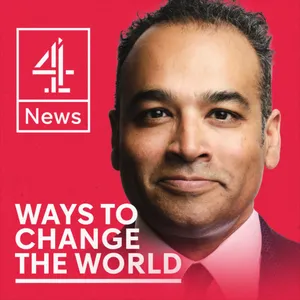
Free Daily Podcast Summary
Ways to Change the World with Krishnan Guru-Murthy: Daily Summaries Delivered
by Channel 4 News
How can you change the world? Join Krishnan Guru-Murthy and his guest of the week as they explore the big ideas influencing how we think, act and live.
Latest Episodes
The most recent episodes — sign up to get AI-powered summaries of each one.
- 3 days ago41 min
Salman Rushdie on the fatwa, the attack and his second act
Salman Rushdie is one of the world’s most celebrated writers. But for more than three decades, his life has also been bound up with arguments about freedom of expression, religious extremism and the threat of violence.In 2022, that violence caught up with him when he was attacked on stage and nearly killed. His wife, the poet and visual artist Rachel Eliza Griffiths, began filming his recovery, creating an extraordinarily intimate record of what followed.In this episode of Ways to Change the World, Salman and Rachel Eliza join Krishnan Guru-Murthy to discuss the attack, anger and forgiveness, the power of love, religious fanaticism, free speech and what it means to rebuild a life after trauma. Salman also reflects on returning to fiction with his new book The Eleventh Hour, and on Knife: The Attempted Murder of Salman Rushdie, Alex Gibney’s new documentary built around Rachel Eliza’s remarkable footage of his recovery.Knife: The Attempted Murder of Salman Rushdie will be released in UK and Irish cinemas at the end of September.
- 6 days ago46 min
Johnny Marr on the ‘MAGIC’ behind The Smiths
Johnny Marr is one of the most influential guitarists of his generation. As a founding member of The Smiths, his distinctive playing helped create some of the most enduring songs in British music.He joins Krishnan Guru-Murthy, surrounded by the guitars that have soundtracked more than four decades of his life, including the legendary Gibson ES 355 1960, the Gibson Les Paul Standard 1984, and the Martin D28 1971, as he prepares to let much of his collection go. They talk about the magic of writing with Morrissey, how The Smiths found their sound, why a new generation is discovering their music, and the strange relationship between musicians and their instruments.Marr also discusses his new album The Age of Everything, politics, inequality and why he believes so many of the world’s problems come back to “unregulated greed and unfairness”.The auction "Marr's Guitars: The Johnny Marr Collection" is taking place at Christie's in London on 17th September 2026. 0:00 Introduction and highlights0:45 Johnny Marr on selling his guitar collection3:32 Why Marr wants his guitars to be played, not collected4:45 1960 Gibson ES-355 and “Heaven Knows I’m Miserable Now”9:17 Gibson Les Paul: Marr’s most-used Smiths guitar13:46 The Rickenbacker and escaping the blues-rock sound15:54 Rejecting 1970s rock and finding a new guitar sound20:43 How Marr built The Smiths as a guitar band23:20 Writing songs with Morrissey: “It was magic”26:21 Why a new generation is discovering The Smiths29:11 Andy Burnham, Manchester and “Rusholme Ruffians”31:38 The Age of Everything and Marr’s new worldview36:40 Politics, defiance and “reclaiming the world”38:08 Martin D-28: “There Is a Light That Never Goes Out” and The Queen Is Dead40:34 The guitars Marr is keeping and his signature Jaguar42:42 The nine-pickup guitar, Noel Gallagher and Kraftwerk44:42 How Johnny Marr would change the world48:06 Gretsch Super Axe and the earliest Smiths songs49:49 The guitars with the most personal history50:51 “How Soon Is Now?”, “The Headmaster Ritual” and the final guitars
- 1 weeks ago53 min
Algorithms, angry men and the collapse of reality - Jon Ronson
Why are so many men feeling angry, lost and without purpose, and what role do algorithms, AI and the collapse of traditional institutions have in this?Jon Ronson has spent decades investigating the strange corners of modern life. His new book, The Castle: Adventures in a World of Unraveling Men, begins with his son being lured to a mysterious castle in the US and expands into an investigation of masculinity, internet fame, the manosphere, public shaming and the increasingly extreme incentives of social media.He joins Krishnan Guru-Murthy to discuss his long-running feud with Graham Linehan, why YouTube can push ordinary people towards increasingly extreme behaviour, the seductive promise of becoming a personal brand, and whether AI threatens our sense of purpose. Jon also reflects on his own search for purpose, the impact of his upbringing, and why he believes the answer lies not online, but in reconnecting with communities in the real world.This episode contains offensive language.
- 1 weeks ago40 min
Francis Fukuyama: ‘The old United States is NOT COMING BACK’
More than three decades after publishing The End of History and the Last Man, political scientist Francis Fukuyama is looking back on the ideas that made him famous, and asking whether democracy can still withstand the forces reshaping the world.In this episode of Ways to Change the World, Krishnan Guru-Murthy talks to Fukuyama about Donald Trump, the rise of populism, why young men are driving political upheaval across the West, and whether social media has destroyed our shared sense of reality. Through the lens of his new book, In the Realm of the Last Man, they discuss why people are drawn to extreme causes, what Europe should do in a world where America can no longer be relied upon, and whether liberal democracy is entering a period of dangerous turbulence.Fukuyama also reflects on changing his mind about the Iraq War and free-market economics, the intellectual friendships he lost along the way, and why he believes good thinkers must be willing to abandon ideas when the facts change.
- 2 weeks ago37 min
‘Expensive restaurants are all the same’ - Jay Rayner
Restaurant critic and writer Jay Rayner says restaurants are much more than a set of tables and chairs. In an age of rising costs, social media trends and pressure on the hospitality industry, he argues that restaurants remain vital spaces for creativity, community and human connection.In this episode of Ways to Change the World, he tells Krishnan Guru-Murthy why he would ban tipping. How restaurants help people connect in ways few other public spaces can. And why he believes going out to eat is good for society. He also discusses the challenges facing the restaurant industry, the rise of influencers and online food culture. And states why there’s nothing wrong with taking that photo of your meal.
- 3 weeks ago45 min
Trump’s like a NEW ROMAN EMPEROR - Robert Harris
Historical novelist Robert Harris writes about the Roman Empire - and says the parallels of disillusionment with modern day politics are ‘impossible’ to ignore. In this episode of Ways to Change the World, he tells Krishnan Guru-Murthy that Donald Trump’s vanity projects and strong man tactics remind him of Emperor Augustus, how the pressure to appease the masses is ‘crushing politicians into a form where it’s impossible for them to operate’ and why historians might look back and see the Brexit vote as ‘the first big crack’ in British democracy.
- Aug 7, 202640 min
The 'normal' drinking habit DESTROYING your mental health
We talk more openly about mental health than ever. So why is alcohol so often left out of the conversation?Millie Gooch believes Britain's relationship with drinking is overdue for a rethink. After struggling with binge drinking and anxiety herself, she founded Sober Girl Society and has become one of the leading voices calling for a more honest conversation about alcohol, addiction and wellbeing.In this episode of Ways to Change the World, Krishnan Guru-Murthy speaks to Millie about the science behind "hangxiety" (hangover anxiety), why moderation is harder for some people than others, the stigma surrounding addiction, and whether Britain's drinking culture is preventing us from asking difficult questions. They discuss the alcohol industry's influence, the changing habits of younger generations, and why Millie believes giving people better information - not banning alcohol - is the way forward.This episode features conversation around suicide.
- Jul 31, 202636 min
"We're heading over the cliff" - Former SpaceX and Google insider’s warning
Former Silicon Valley insider Dex Hunter-Torricke spent years advising some of the most influential figures in tech, from Google and Facebook to SpaceX. Now, the founder of The Center for Tomorrow, he is sounding the alarm about the future being built by the industry he once helped champion.In this episode of Ways to Change the World, Krishnan Guru-Murthy speaks to Dex Hunter-Torricke about why he believes society is unprepared for the impact of artificial intelligence, the growing power of Big Tech, and the political influence of Silicon Valley’s leaders. Drawing on his experience working alongside figures including Elon Musk and Mark Zuckerberg, he reflects on what changed inside the tech industry, why he feels betrayed by its direction, and why he fears AI could deepen inequality, fuel social unrest and transform the global balance of power. From online safety and regulation to jobs, democracy and the future of international cooperation, this is a conversation about whether technology is really changing the world for the better, and what must happen if we are to avoid the dangers he believes lie ahead.
Get Ways to Change the World with Krishnan Guru-Murthy summaries in your inbox
Free AI-powered daily recaps. Key takeaways, quotes, and mentions — in a 5-minute read.
Get Free Summaries →Free forever for up to 3 podcasts. No credit card required.
You Might Also Like
Listeners also like.

Radical with Amol Rajan
Amol Rajan interviews global radicals, pioneers, and innovators shaping the future on issues like AI, climate, and politics.

The New World
Explores global shifts in politics, truth, demographics, and power as societies face transformative change.

The Interview
In-depth interviews with influential figures across culture, politics, business, and sports exploring their motivations and impact.

The Media Show
A programme exploring the revolution in media, including social media, breaking news, and misinformation.

The Real Story
Experts and decision makers analyze and debate major news stories.

The Global Story
A daily look at global politics, business, and foreign policy through the lens of US decisions and their worldwide impact.

The Reith Lectures
Prominent international thinkers present lectures as part of the BBC's annual flagship series.

Analysis
Examines the ideas and forces shaping public policy in Britain and abroad with writers, journalists, and academics.

The Interview
In-depth 20-minute conversations with global leaders, cultural figures, and decision-makers on the issues shaping our world.

A Changed Mind | Mindset That Matters
Explores mindset, personal growth, and global issues through neuroscience, spirituality, and practical strategies for lasting change.

The Interface
Three journalists analyze how technology shapes global events, politics, and daily life through sharp, jargon-free debate.

Arts & Ideas
Philosophers, historians, and critics explore current events through the lens of history, culture, and ideas.
About Ways to Change the World with Krishnan Guru-Murthy
How can you change the world? Join Krishnan Guru-Murthy and his guest of the week as they explore the big ideas influencing how we think, act and live.
Customized Recaps
AI-powered recaps with compact key takeaways, quotes, and insights.
Straight to Your Inbox
Get key takeaways from Ways to Change the World with Krishnan Guru-Murthy in a 5-minute read.
Save Hours Every Week
Stay current on your favorite podcasts without falling behind.
Frequently Asked Questions
What is Podzilla's Ways to Change the World with Krishnan Guru-Murthy daily summary?
It's a free AI-powered email that summarizes new episodes of Ways to Change the World with Krishnan Guru-Murthy as soon as they're published. You get the key takeaways, notable quotes, and links & mentions — all in a quick read.
How does the Ways to Change the World with Krishnan Guru-Murthy podcast summary work?
When a new episode drops, our AI transcribes and analyzes it, then generates a personalized summary tailored to your interests and profession. It's delivered to your inbox every morning.
Is this an official Ways to Change the World with Krishnan Guru-Murthy product?
No. Podzilla is an independent service that summarizes publicly available podcast content. We're not affiliated with or endorsed by Channel 4 News.
Can I get summaries of other podcasts too?
Absolutely! The free plan covers up to 3 podcasts. Upgrade to Pro for 15, or Premium for 50. Browse our full catalog at /podcasts.
What topics does Ways to Change the World with Krishnan Guru-Murthy cover?
Ways to Change the World with Krishnan Guru-Murthy covers topics including Culture, Society & Culture. Our AI identifies the specific themes in each episode and highlights what matters most to you.
Start getting Ways to Change the World with Krishnan Guru-Murthy summaries tomorrow morning.
Free forever for up to 3 podcasts. No credit card required.
Free forever for up to 3 podcasts. No credit card required.