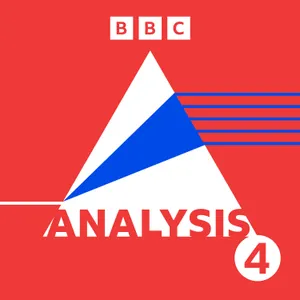
Free Daily Podcast Summary
Analysis: Daily Summaries Delivered
by BBC Radio 4
Programme examining the ideas and forces which shape public policy in Britain and abroad, presented by distinguished writers, journalists and academics.
Latest Episodes
The most recent episodes — sign up to get AI-powered summaries of each one.
- Mar 25, 202429 min
The low pay puzzle
From April, 2.7 million workers will get one of the biggest pay rises in UK history as the National Living Wage rises to £11.44 an hour. But will they feel better off?It's 25 years since the National Minimum Wage was introduced. During that time it's credited with putting billions of extra pounds in the pockets of low-paid workers. But, despite that, according to the Joseph Rowntree Foundation, two thirds of households living in poverty have at least one adult in work. And, according to the Institute for Fiscal studies, far from cutting the annual benefits bill, the cost of benefits paid to working families has ballooned since 1999 to about 50 billion pounds a year. So what's behind this low pay puzzle? And what can employers, governments and workers do to ensure that work pays? Pauline Mason investigates.Presenter: Pauline Mason Producer: Ravi Naik Editor: Clare Fordham.Contributors: Kate Bell, TUC Assistant General Secretary and former low pay commissioner Damian Grimshaw, Professor of Employment Studies, Kings College London and London & South Forum Co-Lead at the Productivity Institute Patricia Findlay, Distinguished Professor of Work and Employment Relations, University of Strathclyde, and Director of the Scottish Centre for Employment Research Matthew Fell, Low Pay Commissioner and Director of Competitiveness at BusinessLDN Nye Cominetti, Principal Economist, the Resolution Foundation James Cockett, Labour Market Economist, CIPD Margaret Esapa, Managing Director and owner, Cherry Care Services, Oxfordshire Conor Taylor, Director, Foresso
- Mar 18, 202429 min
How real is the existential threat from AI?
The existential threat caused by Artificial Intelligence is a popular theme in science fiction. But more recently it’s started to be taken seriously by governments around the world and the companies developing the technology. Where did this idea come from, and why is so much money being spent on it, rather than on the regulation of AI and the real threat it poses to jobs and to copyright?Presenter: Jack Stilgoe Producer: Philip Reevell Editor: Clare Fordham
- Mar 11, 202428 min
What would Isambard Kingdom Brunel have done?
It's 2024, and the Manchester extension of HS2 has been cancelled. The leg to Leeds was cancelled in 2021. The remaining line to Birmingham is now less than half the initial planned route, and will cost over double the initial budget. This is not exclusive to HS2; Sprialling costs and missed deadlines have become commonplace in big engineering projects, the UK is now one of the most expensive places in the world to build infrastructure, but Britain has a proud history of engineering, and one name in particular looms large - Isambard Kingdom Brunel. Ruthless, bloody minded and notoriously driven - what could he do about the current state of UK infrastructure?Presenter: Neil Maggs Producer: Johnny I'Anson Editor: Clare Fordham
- Mar 4, 202428 min
Power Drive
It's widely believed that the Conservaives won the Uxbridge by-election because of motorists who were annoyed by the London mayor's ultra low emission zone. With a general election looming, both main english parties want to harness "driver power". But how did the vote of car and van owners become so important? Does the independence driving brings lead to a libertarian attitude? Or is that combative attitude caused by drivers feeling that they have been used as cash-cows by successive governments, which have gladly taken their road tax and fuel duty. But that power balance is also set to change, with the eventual electrification of all UK vehicles. Could road pricing replace fuel duty - and how will motorists respond?Presenter: Chris Bowlby Producer: Jim Frank Editor: Clare Fordham
- Feb 26, 202428 min
How to cure the small town blues
Middlesbrough, in the north-east, is one of the most deprived towns in England. Once a steel and shipbuilding powerhouse, its fortunes changed when those industries closed down. Today, the town that Gladstone described as “an infant Hercules” faces a precarious future. David Baker, who grew up in Middlesbrough in the 1970s, returns to his hometown to ask what can be done to revive its fortunes and what Middlesbrough can teach us about regenerating small, postindustrial towns elsewhere in the UK.Presenter: David Baker Producer: Dan Hardoon Editor: Clare FordhamContributors: Natasha Vall, Professor of Urban and Cultural History, Teesside University Rob Nichols, Editor, Middlesbrough FC fanzine Fly Me To The Moon Sally Rodgers, DJ, producer, and vocalist Steve Dugan, Head of Enterprise, Teesside University Oliver Lloyd, co-founder and COO, Dink Chris Cooke, Mayor of Middlesbrough Gary Hamilton, managing director, Community Leisure Management Lord Michael Heseltine, former Secretary of State for the Environment With thanks to the students of Teesside University and Reverend Kath Dean of the Genesis Project.
- Feb 19, 202428 min
How to Dismantle a Democracy
Democracies do not die in military coups. They are dismantled slowly, by libel laws, through tax audits, and procedure. Democracies are dismantled by bureaucrats and judges, not by soldiers and heavy-handed policing. It has always been thus, from ancient Rome to present-day Tunisia. The program outlines the tricks of the trade that imperceptibly kill democracies – and how examples in Mexico, Turkey, India and Poland illustrate that the autocratic playbook is nearly always the same. With Anne Applebaum, historian and staff writer at The Atlantic, Amy Slipowitz, research manager at Freedom House, Greta Rios, co-executive director, People Power, David Runciman, professor of politics at the University of Cambridge, Professor Larry Diamond, Stanford University, Jennifer Gandhi, professor of political science and global affairs, Yale University, Renata Uitz, professor of law and government at Royal Holloway, The University of London.Presenter: Matt Qvortrup Producer: Bob Howard Editor: Clare Fordham
- Feb 12, 202428 min
What is 'British culture'?
'What is "British Culture?” I was born in the UK and have lived here for 40 years, and yet, as a British Asian person, I am constantly told “we are not integrating”. Not integrating into what culture exactly?' Bushra Shaikh runs a charity, is a business-owner and is also a writer and commentator. When she posted this question on social media, two million people viewed it, she received thousands of replies, but no clear definition of British Culture. Some respondents mentioned the food, while others defined it by quoting literature or history. But those answers were often just lists; of meals. books, names and dates. Is "culture" a synonym for race? How can British people of colour integrate, and what does that mean? Americans put their hands on their hearts, gaze at the stars and stripes and identify with freedom, while the French look to liberty, equality, and fraternity, but is there a British equivalent? Bushra speaks to Historians, cultural commentators, as well as both the UK's newest citizens, and people who can trace their British family roots back hundreds of years, to try to find out what British culture means to them. Presenter: Bushra Shaikh Producers: Ravi Naik and Sean Johnson Editor: Clare Fordham.Contributors: Robert Colls, emeritus professor of history at De Montfort University Lionel Shriver, novelist and journalist Pen Vogler, food historian and writer Dr Bernard Trafford, retired headteacher and former member of the citizenship advisory group Anton Dani, Conservative councillor and former mayor of Boston Robert Owen, Vice Lord Lieutenant of Merseyside Professor Alice Foucart, Principal Investigator, Psycholinguistics, Universidad Nebrija, Madrid Dr Tessa Dunlop, historian and broadcaster Keith Richardson, Author
- Feb 5, 202428 min
Has the family had its day?
British politicians love to invoke the family, from John Major's "Back to Basics" campaign, to New Labour's "hardworking families" - and now a prominent strain of the Conservative right says parents sticking together for the sake of the children is "the only possible basis for a safe and successful society". By turning family values into a political football, are they in denial about the way society has developed this century? For decades, single-person households have been the fastest-growing demographic and younger generations are re-defining romantic commitments and their purpose.Is the erosion of traditional structure around marriage and family a destructive thing for society, or does it offer the kind of freedom and individual choice denied to previous generations? Presenter: Zoe Strimpel Producer: David Reid Editor: Clare FordhamContributors: Danny Kruger, Conservative Member of Parliament for Devizes and Co-Chair of the New Conservatives: Committing to a Better Politics. Dr. Ruth Beecher, Historian of Modern Britain and the United States, Birkbeck, University of London Prof. Deborah Cohen, Richard W. Leopold Professor of History at Northwestern University. Prof. Sasha Roseneil, Vice Chancellor of the University of Sussex. Prof. Sylvie Fogelj-Bijaoui, sociologist specialising in gender, human rights, the family and the kibbutz. Daisy Lees, resident of Old Hall Chris Lees, resident of Old Hall Rob Connigale, resident of Old Hall
Get Analysis summaries in your inbox
Free AI-powered daily recaps. Key takeaways, quotes, and mentions — in a 5-minute read.
Get Free Summaries →Free forever for up to 3 podcasts. No credit card required.
You Might Also Like
Listeners also like.

Arts & Ideas
Philosophers, historians, and critics explore current events through the lens of history, culture, and ideas.

Beyond Today
Examines major news stories and global issues around identity, technology, and power through expert interviews and BBC reporting.

BBC Inside Science
Explores the latest scientific discoveries and debates shaping our understanding of the world.

Feedback
A forum for audience feedback, including comments, questions, critiques, and praise.
Political Thinking with Nick Robinson
In-depth conversations with political figures and influencers about their lives and the experiences that shaped their worldviews.

The Media Show
A programme exploring the revolution in media, including social media, breaking news, and misinformation.

Strong Message Here
A weekly analysis of political language and doublespeak, exploring how rhetoric shapes perception and power.
Radical with Amol Rajan
Amol Rajan interviews global radicals, pioneers, and innovators shaping the future on issues like AI, climate, and politics.
The Inquiry
The Inquiry explores global trends, forces, and ideas shaping the world beyond the headlines.
The New World
Explores global shifts in politics, truth, demographics, and power as societies face transformative change.

Understand
Explores the complexities behind major current stories and important global subjects.

The Real Story
Experts and decision makers analyze and debate major news stories.
Customized Recaps
AI-powered recaps with compact key takeaways, quotes, and insights.
Straight to Your Inbox
Get key takeaways from Analysis in a 5-minute read.
Save Hours Every Week
Stay current on your favorite podcasts without falling behind.
Frequently Asked Questions
What is Podzilla's Analysis daily summary?
It's a free AI-powered email that summarizes new episodes of Analysis as soon as they're published. You get the key takeaways, notable quotes, and links & mentions — all in a quick read.
How does the Analysis podcast summary work?
When a new episode drops, our AI transcribes and analyzes it, then generates a personalized summary tailored to your interests and profession. It's delivered to your inbox every morning.
Is this an official Analysis product?
No. Podzilla is an independent service that summarizes publicly available podcast content. We're not affiliated with or endorsed by BBC Radio 4.
Can I get summaries of other podcasts too?
Absolutely! The free plan covers up to 3 podcasts. Upgrade to Pro for 15, or Premium for 50. Browse our full catalog at /podcasts.
What topics does Analysis cover?
Analysis covers topics including News, Politics. Our AI identifies the specific themes in each episode and highlights what matters most to you.
Start getting Analysis summaries tomorrow morning.
Free forever for up to 3 podcasts. No credit card required.
Free forever for up to 3 podcasts. No credit card required.