Free Daily Podcast Summary
Radical with Amol Rajan: Daily Summaries Delivered
by BBC Radio 4
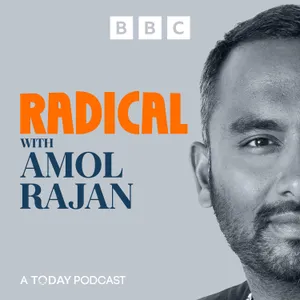
Conversations about tomorrow, from Today.Every week Today programme presenter Amol Rajan talks to radicals, pioneers and innovators from all over the world. From populism and climate change, to economics and AI... How can their radical ideas help you win the future?As well as presenting Today on BBC Radio 4, Amol is also the host of University Challenge on BBC One. Before that he was the BBC's media editor and editor of The Independent.Episodes of Radical with Amol Rajan are published on Thursdays on BBC Sounds. You can also watch them on BBC iPlayer: https://www.bbc.co.uk/iplayer/episodes/m002f1d0/radical-with-amol-rajanRadical with Amol Rajan is a Today podcast. If you enjoy this (and you've read this far so hopefully you do), then we think you’ll also like another podcast from Today. It’s called Political Thinking with Nick Robinson and you can listen to Nick’s interviews here: https://www.bbc.co.uk/sounds/brand/p04z203l
Latest Episodes
The most recent episodes — sign up to get AI-powered summaries of each one.
- 4 days ago41 min
Disaster Prepping: Should We All Stock Up? (Mike Chappell, prepper)
Prepper Mike Chappell is ready for disaster to hit the UK, and he believes everyone else should be prepared too.Mike is worried that blackouts, food supply disruption, and extreme weather could seriously disrupt normal life, potentially leaving people to fend for themselves for weeks or months at a time. He believes those threats are growing and thinks everyone should have enough supplies to last them at least two weeks - a message he spreads on his YouTube channel, UK Urban Prepper.The UK government recently urged people to stock up on tinned food and bottled water to build resilience in case of a national emergency, so have preppers like Mike been right all along?Gabriel Gatehouse asks Mike what exactly he is prepping for and gets some tips on how to start building a stockpile. Plus, does the prepper mindset leave any room for community spirit, or is it all about looking after yourself?- WhatsApp: 0330 123 9480 - Email: radical@bbc.co.ukEpisodes of Radical are released every Thursday.Series Producer: Simon Tulett Producer: Bob Howard Technical Producer: Dafydd Evans Digital Producer: Daniel Raza Senior News Editor: Sam Bonham
- 1 weeks ago50 min
Human Composting: A New Way To Deal With Death? (Kristoffer Hughes)
Former mortuary technician Kristoffer Hughes wants to bring terramation - or human composting - to the UK. He believes it's a more natural and hopeful way for our bodies to be disposed of, and a more environmentally friendly alternative to burial and cremation.Kristoffer tells Gabriel Gatehouse about the "epiphany" he had when he first witnessed the practice in the USA, his own experience of being 'buried alive' in a terramation facility, and what human compost can actually be used for.The practice isn't legal in the UK yet - the Law Commission has suggested it could be explored as an option in England and Wales - but how much appeal would it really have, how much would it cost, and is it safe? - WhatsApp: 0330 123 9480 - Email: radical@bbc.co.ukEpisodes of Radical are released every Thursday and Monday.Series Producer: Simon Tulett Producers: Bob Howard and Ivana Davidovic Technical Producer: Mike Regaard Digital Producer: Daniel Raza Senior News Editor: Sam Bonham
- 2 weeks ago17 min
What Should The Minimum Age For Drugs Be? (Your Radical Questions with Neil Woods)
Neil Woods is a former undercover police officer who used to infiltrate drug gangs, but he now believes drugs should be legalised and the market regulated by government. He's a board member of the Law Enforcement Action Partnership (LEAP), which campaigns for drug policy reform around the world.In the main episode Neil explained why he thinks prohibition of illicit drugs has failed and outlined his plan for the government to source and supply drugs like cannabis, cocaine and heroin through pharmacies or via sales in regulated shops.In this special Q&A, Neil answers your questions on minimum ages for these drugs, the experiences of other countries, and the thorny moral question.- WhatsApp: 0330 123 9480 - Email: radical@bbc.co.ukEpisodes of Radical are released every Thursday and Monday.Series Producer: Simon Tulett Producer: Nathan Gower Technical Producer: Mike Regaard Senior News Editor: Sam Bonham
- 2 weeks ago56 min
Legalisation: Has The War On Drugs Failed? (Neil Woods, ex-police officer)
As an undercover police officer Neil Woods' job was to infiltrate drug gangs and put their leaders behind bars, but he says his work gradually convinced him that he was doing more harm than good. Since leaving the force he has become one of the UK's foremost campaigners for drug policy reform. Neil tells this week's host, Jenny Kleeman, why he believes the war on drugs has failed, and sets out his alternative vision for legalising and regulating the use of cannabis, cocaine, heroin and other products. He thinks drugs on prescription or sold with age and dose restrictions, as well as health advice, would be the best way to keep users safe and wrest control of the market away from organised crime.But, of course, Neil has his opponents. We ask whether the war on drugs really is failing, if legalisation would really eradicate crime and the black market, and whether legalisation might actually increase drug use and deaths.- WhatsApp: 0330 123 9480 - Email: radical@bbc.co.ukEpisodes of Radical are released every Thursday and Monday.Series Producer: Simon Tulett Producer: Nathan Gower Technical Producer: Mike Regaard Senior News Editor: Sam Bonham
- 2 weeks ago26 min
Are Politicians Too Focused on Older Generations? (Your Radical Questions with Professor Sarah Harper)
Sarah Harper is Professor of Gerontology at the University of Oxford and one of the world's leading experts on demographic change. She challenges the widespread belief that ageing populations are primarily a social and economic burden, arguing instead that longer lives represent one of humanity's greatest achievements and an opportunity to rethink how society is organised.In the last episode, Sarah explained why many of the pressures associated with ageing societies stem from institutions that were designed for a very different era. She argued that our welfare systems, labour markets and expectations around retirement no longer reflect the realities of modern life, where people are living longer, healthier lives than previous generations.In this week's Q&A, Sarah joins James Marriott to answer your questions about the future of retirement, pensions and work in an ageing society. She explores generational resentment and how we can bridge the gap between old and young, whether inequality is more important than age, and whether politicians disproportionately focus on older voters.- WhatsApp: 0330 123 9480 - Email: radical@bbc.co.ukEpisodes of Radical are released every Thursday and Monday.Series Producer: Rufus Gray Producers: Nathan Gower and Ivana Davidovic Digital Producer: Gabriel Purcell-Davis Technical Producer: Dafydd Evans Senior News Editor: Sam Bonham
- 3 weeks ago42 min
Redefining Retirement: Is Our Ageing Population an Untapped Asset? (Professor Sarah Harper)
This week, James Marriott talks to Sarah Harper, Professor of Gerontology at the University of Oxford and one of the world's leading experts on demographic change. She challenges the increasingly common narrative that ageing populations represent an inevitable economic and social burden, arguing instead that longer lives should be seen as an achievement that requires us to rethink the way society is organised. As birth rates fall and life expectancy increases, governments across the world face growing concerns about pensions, healthcare and shrinking workforces. Yet Harper believes many of these pressures stem from institutions that were designed for a very different era. She argues that our welfare systems, labour markets and assumptions about retirement are still based on outdated ideas about ageing and no longer reflect the realities of modern life. She wants us to be more radical, and makes the case for a fundamental rethink of the state pension, proposing that eligibility should be linked to years of contribution rather than chronological age. More broadly, she argues that we need to move beyond rigid age-based milestones and develop new ways of understanding work, contribution and later life in an ageing society. Can ageing populations drive prosperity rather than decline? Should age continue to determine when we stop working and start receiving support from the state? And what would it take to build a society that not only adapts to longer lives, but thrives because of them?- WhatsApp: 0330 123 9480 - Email: radical@bbc.co.ukEpisodes of Radical are released every Thursday and Monday.Series Producer: Rufus Gray Producers: Nathan Gower and Ivana Davidovic Digital Producer: Gabriel Purcell-Davis Technical Producer: Dafydd Evans Senior News Editor: Sam Bonham
- 3 weeks ago23 min
Is Britain's Military Still Fit For Purpose? (Your Radical Questions with Brendan Simms)
Brendan Simms is Professor of the History of International Relations at the University of Cambridge and the author of The Return of the Great Powers. He challenges the widespread belief that Britain is in terminal decline, arguing that the UK remains one of the world’s four true Great Powers.In the main episode, Brendan explained why Britain’s resources, global reach, reputation and resilience still give it significant international influence. He also argued that great power politics has returned as the dominant force shaping global affairs.In this special Q&A, Brendan answers your questions on what steps Britain needs to take to stay relevant, whether its military is fit for purpose, and whether our soft power is overlooked.- WhatsApp: 0330 123 9480 - Email: radical@bbc.co.ukEpisodes of Radical are released every Thursday and Monday.Series Producer: Rufus Gray Producers: Nathan Gower and Ivana Davidovic Digital Producer: Joe Wilkinson Technical Producer: Jonny Baker Senior News Editor: Sam Bonham
- Aug 21, 202644 min
Influence After Empire: Is Britain Still a Great Power? (Professor Brendan Simms)
Is Great Britain really still great? Is it in decline, or has the UK underestimated its own status in the world?In his latest book The Return of the Great Powers, Brendan Smith, Professor of the History of International Relations at the University of Cambridge, challenges one of the most deeply rooted current assumptions in British public life and argues that the UK is still a significant player on the world stage.While much of the national conversation focuses on economic stagnation, geopolitical uncertainty and the fading legacy of empire, Simms argues that the UK remains one of only four true Great Powers in the world today, alongside the United States, China and Russia.Drawing on a framework of resources, reach, reputation and resilience, he joins Radical to make the case that Britain retains many of the characteristics that define global power: a strong economy, worldwide diplomatic influence, significant military capabilities and an overseas presence that allows it to project influence far beyond its shores.Sophia Smith Galer hosts this week, and find out why Brendan Simms believes that great power politics has returned as the dominant force shaping international affairs. What does it mean to be a Great Power in the 21st century? Does Britain still belong at the top table? And how the growing rivalry between the US and China is reshaping the global order?- WhatsApp: 0330 123 9480 - Email: radical@bbc.co.ukEpisodes of Radical are released every Thursday and Monday.Series Producer: Rufus Gray Producers: Nathan Gower and Ivana Davidovic Digital Producer: Joe Wilkinson Technical Producer: Jonny Baker Senior News Editor: Sam Bonham
Get Radical with Amol Rajan summaries in your inbox
Free AI-powered daily recaps. Key takeaways, quotes, and mentions — in a 5-minute read.
Get Free Summaries →Free forever for up to 3 podcasts. No credit card required.
You Might Also Like
Listeners also like.

Beyond Today
Examines major news stories and global issues around identity, technology, and power through expert interviews and BBC reporting.
Political Thinking with Nick Robinson
In-depth conversations with political figures and influencers about their lives and the experiences that shaped their worldviews.

Analysis
Examines the ideas and forces shaping public policy in Britain and abroad with writers, journalists, and academics.

The Media Show
A programme exploring the revolution in media, including social media, breaking news, and misinformation.

Pod Save the UK
Comedians and journalists analyze UK politics with guests, offering insight and solutions on current events.

Any Questions? and Any Answers?
Experts answer public questions on current issues, followed by audience responses.

Strong Message Here
A weekly analysis of political language and doublespeak, exploring how rhetoric shapes perception and power.

Friday Night Comedy from BBC Radio 4
Satirical comedy shows from BBC Radio 4 that tackle the week’s news with sharp humor and parody.

Feedback
A forum for audience feedback, including comments, questions, critiques, and praise.

TED Radio Hour
A show that explores profound global questions through curated TED Talks and in-depth conversations with leading thinkers.

Understand
Explores the complexities behind major current stories and important global subjects.

Arts & Ideas
Philosophers, historians, and critics explore current events through the lens of history, culture, and ideas.
About Radical with Amol Rajan
Conversations about tomorrow, from Today.Every week Today programme presenter Amol Rajan talks to radicals, pioneers and innovators from all over the world. From populism and climate change, to economics and AI... How can their radical ideas help you win the future?As well as presenting Today on BBC Radio 4, Amol is also the host of University Challenge on BBC One. Before that he was the BBC's media editor and editor of The Independent.Episodes of Radical with Amol Rajan are published on Thursdays on BBC Sounds. You can also watch them on BBC iPlayer: https://www.bbc.co.uk/iplayer/episodes/m002f1d0/radical-with-amol-rajanRadical with Amol Rajan is a Today podcast. If you enjoy this (and you've read this far so hopefully you do), then we think you’ll also like another podcast from Today. It’s called Political Thinking with Nick Robinson and you can listen to Nick’s interviews here: https://www.bbc.co.uk/sounds/brand/p04z203l
Customized Recaps
AI-powered recaps with compact key takeaways, quotes, and insights.
Straight to Your Inbox
Get key takeaways from Radical with Amol Rajan in a 5-minute read.
Save Hours Every Week
Stay current on your favorite podcasts without falling behind.
Frequently Asked Questions
What is Podzilla's Radical with Amol Rajan daily summary?
It's a free AI-powered email that summarizes new episodes of Radical with Amol Rajan as soon as they're published. You get the key takeaways, notable quotes, and links & mentions — all in a quick read.
How does the Radical with Amol Rajan podcast summary work?
When a new episode drops, our AI transcribes and analyzes it, then generates a personalized summary tailored to your interests and profession. It's delivered to your inbox every morning.
Is this an official Radical with Amol Rajan product?
No. Podzilla is an independent service that summarizes publicly available podcast content. We're not affiliated with or endorsed by BBC Radio 4.
Can I get summaries of other podcasts too?
Absolutely! The free plan covers up to 3 podcasts. Upgrade to Pro for 15, or Premium for 50. Browse our full catalog at /podcasts.
How often does Radical with Amol Rajan release new episodes?
Radical with Amol Rajan publishes 2x weekly. Our AI generates a summary within hours of each new episode.
What topics does Radical with Amol Rajan cover?
Radical with Amol Rajan covers topics including Culture, Society & Culture. Our AI identifies the specific themes in each episode and highlights what matters most to you.
Start getting Radical with Amol Rajan summaries tomorrow morning.
Free forever for up to 3 podcasts. No credit card required.
Free forever for up to 3 podcasts. No credit card required.