Free Daily Podcast Summary
Tim Wendelboe Podcast: Daily Summaries Delivered
by timwendelboe
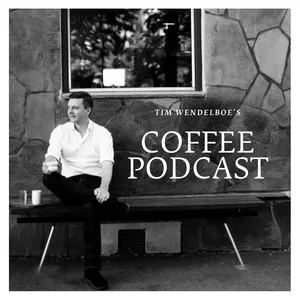
A podcast by award winning roaster and 2004 World Barista Champion, Tim Wendelboe
Latest Episodes
The most recent episodes — sign up to get AI-powered summaries of each one.
- 5 days ago1h 20m
Episode 59 - Before Coffee with Tim Wendelboe
In this episode Tim switches roles and becomes the one being interviewed. Maren Myhre Gullvik, Project Coordinator at Tim Wendelboe, takes the lead and asks Tim questions he may never have been asked before. They talk about the history of the company, how it has evolved over the years, and what it looks like today. They also dive into Tim’s personal story, his life before coffee, and the experiences that eventually led him into the coffee industry. Tim shares some of his personal stories and reflect on how both him and the company have changed over the years. Music by Tim’s uncle, Jens Wendelboe.
- Sep 11, 20261h 36m
Episode 58 - Ida’s Coffee Journey: From Barista to Business Owner
In this episode, I talk with Ida, the founder of Tøllefsenhjørnet in Tromsø, about her journey from working in some of Norway’s pioneering coffee shops to opening her own coffee shop and natural wine bar. Ida shares stories from her years at Tim Wendelboe, where she eventually became wholesale manager, and how her experience in specialty coffee shaped the way she approached her own business. We discuss her decision to return to Tromsø, reconnect with her family roots, and revive the building where her great-grandfather and grandfather once ran Tøllefsen Kolonial. Starting the business came with significant financial and personal challenges, from renovating the space on a tight budget to surviving the difficult first year. Ida talks about the changes that helped turn the business around, including longer opening hours, introducing simple food options, and her homemade pumpkin spice latte syrup. We also discuss the realities of running a coffee shop in Norway, where high labor costs make profitability particularly challenging. Despite the challenges, Ida has built a strong team and a welcoming place where coffee, wine, and community come together. Music by my uncle, Jens Wendelboe.
- Aug 16, 202636 min
Episode 57 - Finca El Suelo: A Year Under the Biofilia Project
In this episode, I sit down with Yurany, the farm manager at Finca El Suelo in Colombia, and the daughter of Elias and Bellanid at Finca Tamana. We reflect on a year of farming under the Biofilia Project and discuss the challenges and progress of managing the farm using 100% biological techniques, without synthetic fertilisers, pesticides and fungicides . The year brought extreme drought and intense sunlight, highlighting the importance of shade trees for protecting coffee plants and soil. We also discuss the difficulties of establishing new Sudan Rumé coffee trees and the use of biological inputs such as compost, biochar, and soil drenches to improve soil health and plant resilience. Despite the challenges, the coffee quality has been very encouraging. Around 120+ samples from Finca Tamana and Finca el Suelo were cupped, ranging between 84 and 88 points, with clean, fruity, juicy and sweet profiles. Looking ahead, we discuss the importance of establishing shade before planting new coffee, as well as the farm’s new partnership with a new exporter named A Coffee Family, to improve milling, quality control, and shipping to Norway. Music by my uncle Jens Wendelboe.
- Jun 5, 20261h 0m
Episode 56: Evolution, Genetics, and the Future of Coffee – A Conversation with Professor Andreas Tribsch.
In this episode, Tim speaks with Andreas Tribsch, a Professor of Botany at the University of Salzburg. Andreas brings a unique perspective as both an expert in plant evolution and a partner in an Austrian coffee shop, offering insights into the coffee plant from a biological and systematic viewpoint. We dive deep into the history of coffee, discussing how Coffea Arabica evolved as a coffee species in the highlands of Ethiopia roughly 350,000 - 600,000 years ago. Andreas explains the genetic complexity of Arabica, being the only tetraploid species in the coffee family, and how its narrow genetic base makes it both unique and vulnerable compared to other domesticated crops. Our conversation also covers the potential impacts of climate change on wild coffee populations, and the biological importance of diversification on coffee estates to ensure long-term resilience. Music by my uncle Jens Wendelboe.
- May 21, 202654 min
Episode 55: Ranked No. 2 in the World – Exceeding Guest Expectations with Stephanie Dawn Holm
In this episode, I return to our Oslo studio to welcome back a very special guest: Stephanie, our Espresso Bar Manager, who has been an essential part of Tim Wendelboe for 15 years. As the person responsible for training our baristas and overseeing the daily operations of the espressobar, Stephanie is the heartbeat of our retail experience. We discuss the impact of being ranked 2nd in the world on the 2026 "The Worlds 100 Best Coffee Shops" list, a recognition that has brought a surge of tourists and high expectations to our 50-square-meter space. Stephanie explains her philosophy on hospitality. While she always strives to make every coffee an exceptional one, her main goal is to make every guest feel seen and comfortable, as if they are entering her "living room". Looking ahead, Stephanie and I discuss the challenge of maintaining our quality while managing long lines and trying to live up to our guests expectations. For us, success isn't about opening more locations, it is about perfecting the one we have and ensuring that every cup remains a true reflection of the farm it came from. Music by my uncle Jens Wendelboe.
- Apr 28, 202615 min
Episode 54 - The Future of Honduran Coffee: The Biofilia Transition - A conversation with Benjamin Paz
In this episode, I am back in Santa Bárbara, Honduras, to sit down with Benjamín Paz. Benjamín is a key collaborator in our Biofilia Project, an initiative focused on improving coffee production through biological techniques that restore the natural balance of the environment. We discuss Benjamín’s decision to transition his entire farm to the Biofilia system, moving away from the traditional reliance on synthetic NPK fertilizers and fungicides. This shift was inspired by the need for long-term sustainability and the success of similar regenerative practices seen in other world-class farms. Benjamín shares the early results of this transition, noting that while some sun-exposed varieties have struggled with coffee leaf rust, others like Parainema and Geisha have shown incredible resilience and immediate improvements in cup quality. We emphasize that this is a holistic process requiring a "mental shift" and the reintroduction of shade trees to protect the plants and soil. Looking ahead, the goal is to replicate these results across more farms in the region. Benjamín is planning to host workshops for other producers to demonstrate how reducing chemical dependency can lower production costs and secure the future of Honduran coffee. Music by my uncle Jens Wendelboe.
- Apr 14, 202633 min
Episode 53 - Adapting coffee farms to prepare for the future – A Conversation with Moises Herrera from Finca el Puente
In this episode, I am in Marcala, Honduras, visiting Finca El Puente to sit down with Moises Herrera. Moises and his wife, Marysabel Caballero, are world-renowned producers we have worked with since 2010. Their operation is incredibly professional, as they manage every step of the process, from the seed to the final export bag, through their own wet and dry mills. In our conversation, Moises shares the harsh realities of the last two harvests. The 2025 crop was severely affected by frost, which damaged about 50% of the coffee of some farms and forced them to sort the beans up to ten times to maintain quality. We also discuss the first year of our TW Biological Project on their land. Moises explains the mental shift required to move away from farming with agro-chemicals and synthetic fertilizers toward biological solutions working with shade trees and soil micro organisms. Looking ahead, Moises and Marysabel are focusing on consolidating their cultivars and increasing shade tree populations on their farms. They are now planting around 10,000 shade trees per year to protect the coffee from stress and support local wildlife. A process that requires patience but is necessary for the future of their farms. Music by my uncle Jens Wendelboe.
- Mar 24, 202626 min
Episode 52 - Transitioning to Biological Farming – A Conversation with Diego Baraona
In this episode, I travel to the top of the Tecapa volcano in El Salvador to sit down with Diego Baraona, a fifth-generation coffee producer and the owner of Los Pirineos farm. Diego took over the family business in 2020 after his father passed away and he has since become a vital partner in our mission to produce more resilient and mindful coffee. In our conversation, we focus on the progress of the TW Biological Project, an initiative we launched together in 2023 with the goal of transitioning his farming practices toward a regenerative model over a ten-year period. Diego explains how he has managed to drastically reduce his reliance on chemical fertilizers and herbicides, cutting his annual input costs from nearly $100,000 down to just $12,000. This was achieved by building aerobic bioreactors to grow beneficial microorganisms and fungi, such as mycorrhizae, to restore the natural biology of the soil. We discuss the critical role of shade trees, the use of traditional varieties like Pacamara and Bourbon, and his recent experimentation with new genetics like Geisha from Malawi and Arara from Brazil. Beyond the technical information, Diego reflects on the shift in mindset required to be a modern producer: having the patience to let the ecosystem heal and the desire to create a farm that is not only a source of high-quality coffee, but a thriving home for local biodiversity. His optimism after seeing the first visual improvements on the farm is a promising sign that the path toward regenerative agriculture is the right one for the future of specialty coffee. Music by my uncle Jens Wendelboe.
Get Tim Wendelboe Podcast summaries in your inbox
Free AI-powered daily recaps. Key takeaways, quotes, and mentions — in a 5-minute read.
Get Free Summaries →Free forever for up to 3 podcasts. No credit card required.
You Might Also Like
Listeners also like.

Coffee Roasting Navigated
Therese Brøndsted

the UNCOMMODiFiED Podcast
Tim Windsor
Fell Into Food Podcast
Chef Jeff Fell examines how technology and innovation shape modern kitchens through interviews with industry professionals.

Coffeez with Joe Shalaby
Conversations with entrepreneurs, investors, and cultural figures reveal the real strategies, struggles, and costs behind success.
Walk-In Talk Podcast
Raw conversations with food industry professionals about restaurant operations, culinary leadership, and the business of hospitality.

Brewbound Podcast
Interviews with beer industry leaders and analysis of weekly news in the craft beer and brewing business.
Becoming UnDone
Explores how high-achievers rebuild after hitting rock bottom, facing burnout, or losing their identity.

The Tim Hawkins Podcast
A comedian discusses various topics with fellow comedians, friends, and occasional strangers.

Blaze Your Own Trail
Entrepreneurs and trailblazers share real stories and strategies for overcoming adversity and building success.

The iDesign Lab Podcast
Explores how intentional design in business, culture, and creativity shapes human behavior, industries, and the way we live.

The Restless Ones
Executives at the intersection of technology and business discuss innovation, leadership, and driving change in fast-evolving industries.

Perspektives
Features conversations with people from diverse backgrounds discussing varied life experiences and perspectives on social and personal topics.
Customized Recaps
AI-powered recaps with compact key takeaways, quotes, and insights.
Straight to Your Inbox
Get key takeaways from Tim Wendelboe Podcast in a 5-minute read.
Save Hours Every Week
Stay current on your favorite podcasts without falling behind.
Frequently Asked Questions
What is Podzilla's Tim Wendelboe Podcast daily summary?
It's a free AI-powered email that summarizes new episodes of Tim Wendelboe Podcast as soon as they're published. You get the key takeaways, notable quotes, and links & mentions — all in a quick read.
How does the Tim Wendelboe Podcast podcast summary work?
When a new episode drops, our AI transcribes and analyzes it, then generates a personalized summary tailored to your interests and profession. It's delivered to your inbox every morning.
Is this an official Tim Wendelboe Podcast product?
No. Podzilla is an independent service that summarizes publicly available podcast content. We're not affiliated with or endorsed by timwendelboe.
Can I get summaries of other podcasts too?
Absolutely! The free plan covers up to 3 podcasts, any in the catalog. Basic raises that to 15, Pro to 40 and Max to 100. Browse our full catalog at /podcasts.
What topics does Tim Wendelboe Podcast cover?
Tim Wendelboe Podcast covers topics including Education, Arts, Food, How To. Our AI identifies the specific themes in each episode and highlights what matters most to you.
Start getting Tim Wendelboe Podcast summaries tomorrow morning.
Free forever for up to 3 podcasts. No credit card required.
Free forever for up to 3 podcasts. No credit card required.