Free Daily Podcast Summary
Fell Into Food Podcast: Daily Summaries Delivered
by Jeff Fell
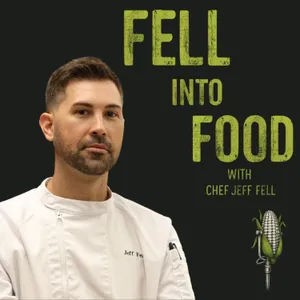
The Fell Into Food Podcast, where culinary craft meets the evolving world of kitchen innovation. Hosted by Chef Jeff Fell, each episode pulls back the curtain on the tools, technology, business strategies, and human stories shaping how modern kitchens actually work. If you’re a chef, operator, manufacturer, educator, or anyone obsessed with where food and technology intersect, this podcast gives you the conversations you won’t hear anywhere else. Real talk. Real expertise. Real innovation—served with the curiosity and candor. It’s the future of the kitchen, one conversation at a time.
Latest Episodes
The most recent episodes — sign up to get AI-powered summaries of each one.
- 6 days ago40 min
Ken MacKenzie: Fresh Victor / Quitting Tequila To Go Fresh
Ken MacKenzie is the visionary founder and CEO of Fresh Victor, a premium line of all-natural, cold pressed, refrigerated mixers for effortlessly delicious cocktails, low-alcohol and spirit-free drinks. With over 20 years of experience in thecreation, import, and distribution of spirits and craft beverages, Ken is a successful serial entrepreneur with a rich history in the industry. Before launching Fresh Victor, Ken co-founded Republic Tequila and Republic Spirit Blends. His impressive career also includes the import, development, and launch of unique spirits like Onyx Coffee Liqueurs and his highly demanded 100% agave tequila brand, Amate.Ken's journey in the spirits industry began in 1997, when he apprenticed in Guadalajara, learning the premium pure agave tequila business from the ground up. He soon launched his consultancy, La Mission, S.A. de C.V., dedicating the next decade to pioneering the importation of high-end 100% agave tequila into the United States. After returning to the U.S., Ken founded Travesia Import Group, continuing to import, distribute, and consult on premium liquor brands. He then expanded his portfolio to include bespoke Texas spirits and mixers, distributed by Republic National Distributors. Ken is a frequent and respected speaker at high-profile industry events, educating the beverage market and hospitalityindustry on 100% agave tequila. His Republic and Amate tequila brands have garnered over 15 top industry accolades, including recognition from Wine Enthusiast magazine and numerous medals at the San Francisco World Spirits Competition and Denver International Spirits Competition.In this conversation, I talk with Ken about what actually convinced him tequila wasn't a phase — and why he never went home. He walks through how agave tequila is really made, from an eight-to-twelve-year growing cycle to a single glass carrying over 300 distinct flavor compounds, and how that same discipline shaped everything about Fresh Victor. We get into why he refused every piece of advice to make it shelf-stable, what it cost him to spend 18 months chasing the right acid balance on one flavor, and the early stretch where the company was pouring out almost as much product as it was selling because the shelf life was too short to survive distribution.We also get into where the non-alcoholic and zero-proof movement is really headed, and why Ken built Fresh Victor so the same drink works whether or not there's alcohol in it. Nine flavors in, he says they've barely scratched the surface of where this goes next. Website: Freshvictor.comInstagram / Facebook / Linkedin / Tiktok: @freshvictorcocktails.comX: @freshvictormixFor being a listener Ken has decided to give everyone 20% off their next order from their website freshvictor.com using promo code FELL2FOOD20. No minimum purchase requirement. Can’t combine with other discounts. Active from today until Dec 31, 20260:00 From Tequila to Fresh Mixers — How the Pivot Started2:23 Why Food and Drink Actually Bring People Together5:42 Following Love to Guadalajara — and Never Leaving8:19 How Tequila Is Actually Made, From Agave to Bottle13:55 What You Should Actually Be Tasting For17:24 Building Fresh Victor — Four Ingredients, No Shortcuts19:00 Refusing to Go Shelf-Stable24:56 The 18-Month Fight for the Right Acid Balance28:21 The Hurdles That Almost Ended It34:44 Zero-Proof, Connection, and What's Next for Fresh VictorListen to the full episode and more! It would mean the world to me if you could leave a 5 star review on your listening platform to help grow and expand the Podcast.Spotify - https://open.spotify.com/show/55qBuFe9dQh5jLLdg0KLoL?si=08455ef88e554b91Apple Podcast - https://apple.co/41RoTm4YouTube: https://youtube.com/@FellIntoFoodLinkedin: https://www.linkedin.com/company/fell-into-food/Instagram: http://instagram.com/fell_into_foodFacebook: https://facebook.com/fellintofood<a href="https://dashboard.simplecast.com/a
- 2 weeks ago34 min
Nicole Bentler: Pocono Maple, Before The Syrup
I sat down with Nicole Bentler this week — a health and wellness pro turned maple farmer, who bought a run-down, two-hundred-year-old farm in the Pocono Mountains of Pennsylvania back in 2019 with no real plan beyond having a place to bring her family.That farm is now Pocono Maple Water, a farm-to-bottle maple water and maple syrup brand, and Nicole's one of only a handful of female-owned maple farms in the country. We got into what maple water actually is before it ever becomes syrup, the finding about our water supply that made her trademark the phrase "What's In Your Water," and why she's turned down Target and Walmart more than once to stay direct-to-consumer.Website:www.poconomaplewater.comInstagram: @poconomaplewaterInstagram: @poconomountainmapleListen to the full episode and more! It would mean the world to me if you could leave a 5 star review on your listening platform to help grow and expand the Podcast.Spotify - https://open.spotify.com/show/55qBuFe9dQh5jLLdg0KLoL?si=08455ef88e554b91Apple Podcast - https://apple.co/41RoTm4YouTube: https://youtube.com/@FellIntoFoodLinkedin: https://www.linkedin.com/company/fell-into-food/Instagram: http://instagram.com/fell_into_foodFacebook: https://facebook.com/fellintofoodFellintoFood.comCHAPTERS / TIMESTAMPSTimestamps pulled from raw transcript markers — confirm exact in/out points against the edited cut before publishing.00:00 — Cold open: cracking a maple water on mic, and the question everyone asks first00:44 — What maple water actually is, and how it's different from syrup02:57 — Buying a run-down farm in 2019 with zero plans to build a beverage brand05:19 — Six to eight miles a day tapping trees in the snow06:27 — The estrogen finding behind the "What's In Your Water" trademark09:53 — Big bottled water brands, spring-water lawsuits, and knowing where your water comes from14:08 — Three bears, a raided bee yard, and building a team in a corner of agriculture with almost nobody under 4018:17 — The six-week harvest, the subscription model, and turning down Target and Walmart on purpose20:32 — The cans-vs-cartons-vs-glass packaging fight with her partner Dante25:10 — What maple water actually does for the body, and the empty-stomach testAdvertising Inquiries: https://redcircle.com/brandsPrivacy & Opt-Out: https://redcircle.com/privacy
- 3 weeks ago42 min
Jason Olinik: Discernment / The Dining Room Disagrees
Jason Olinik is Senior Vice President of Operations & Partnerships at Rudy's Hospitality Group, where he leads growth strategy and every client relationship across workplace dining, markets, and restaurant concepts. He's spent 23 years in hospitality — starting at sixteen scrubbing grease off the back dock of a Chili's in Brighton, Michigan, then running a limited-service hotel in Naples, building restaurant concepts inside an airport, and working luxury resorts in Florida before landing at Rudy's. He's also the author of Discernment: Seeing Through the Narrative Economy.I sat down with him to talk about the gap between what a report says and what's actually happening on the floor — and why the leaders who stay close to the floor are the ones who catch it before it costs them. Jason talks about the meeting culture that crept in after the pandemic, the seventeen systems his teams were juggling just to load a menu, and the moment he realized he'd drifted too far from the work that built him. He also tells me about a ledge in the Jemez Mountains outside Albuquerque, and the jump that changed how he's approached every hard decision since.Book & author site: jasonolinik.comRudy's Hospitality Group: rudyshospitality.comLinkedIn: linkedin.com/in/jason-olinik-57355464Instagram: @j.olinik_authorBook: Discernment: Seeing Through the Narrative EconomyTIMESTAMPED CHAPTERS0:00 Intro0:10 The Chili's Loading Dock, Age Sixteen2:22 What Makes a Great Operator11:07 Why Workplace Dining Needs Restaurant Standards16:10 Thin Center, Strong Field18:15 AI, Automation, and Where It Actually Helps26:41 Writing Discernment33:41 The Meeting Culture Rant36:06 The Jemez Mountains Jump41:30 Where to Find JasonListen to the full episode and more! It would mean the world to me if you could leave a 5 star review on your listening platform to help grow and expand the Podcast.Spotify - https://open.spotify.com/show/55qBuFe9dQh5jLLdg0KLoL?si=08455ef88e554b91Apple Podcast - https://apple.co/41RoTm4YouTube: https://youtube.com/@FellIntoFoodLinkedin: https://www.linkedin.com/company/fell-into-food/Instagram: http://instagram.com/fell_into_foodFacebook: https://facebook.com/fellintofoodFellintoFood.comAdvertising Inquiries: https://redcircle.com/brandsPrivacy & Opt-Out: https://redcircle.com/privacy
- Aug 17, 202646 min
Jeff Tonidandel & Jamie Brown Making Charlotte the “City of Hospitality”
Jeff Tonidandel and Jamie Brown are the husband-and-wife owners of the Tonidandel-Brown Restaurant Group (TBRG) in Charlotte, NC — six restaurants (Supperland, Haberdish, Ever Andalo, Growlers Pourhouse, Leluia Hall, Olivelli Deli), three of them Michelin Guide American South recommended. They co-host the podcast Jeff and Jamie Feed and the national PBS series Fork & Hammer, recently nominated for a Daytime Emmy in Outstanding Culinary/Cultural Series. Jamie's first book, Eleven Tables: A Wild Ride Through Food, Failure, and Figuring It Out, is out now.Jeff Tonidandel and Jamie Brown left corporate jobs at the peak of the economy, backpacked across Europe and Asia for eight months with paper maps and a burner phone, and came home to the 2008 recession with an idea and no restaurant experience. They found their first space in Charlotte's NoDa neighborhood because of a pink slip taped to the door — an unpaid gas bill. That eleven-table crepe shop is now Tonidandel-Brown Restaurant Group: six concepts, three of them Michelin Guide American South recommended, a national PBS series (Fork & Hammer, just nominated for a Daytime Emmy), a weekly podcast, and Jamie's first book.In this conversation, Jeff and Jamie talk about why Jeff is campaigning to brand Charlotte the "City of Hospitality," what the city's food scene was already doing right before Michelin ever showed up, and what it actually takes to turn a 100-year-old church into a working restaurant kitchen. They get honest about the harder calls too — closing a thirteen-year, still-profitable restaurant to become Ever Andalo, and retiring their doughnut shop after one too many equipment failures. Plus: running a 330-person team across six kitchens, two shows, and three kids, and what's next — dry-aged fish, a new commissary, and hotel projects on the horizon for 2029.Website: tonidandel-brown.comPodcast: Jeff and Jamie FeedPBS series: Fork & HammerBook: Eleven Tables — Amazon / Barnes & NobleRestaurants:Supperland Haberdish Ever Andalo Growlers Pourhouse Leluia Hall Olivelli Deli Wyatt's Superfine (coming soon)Chapters0:00 Welcome, Jeff & Jamie1:01 The one thing they want listeners to take away2:29 Why Jeff is campaigning for Charlotte as the "City of Hospitality"5:03 Transplants, small-city warmth, and Bible Belt hospitality7:48 What Charlotte's food scene was already doing right before Michelin arrived10:02 Charlotte as a culinary crossroads — and the 200-farm network behind it12:07 Turning churches, a clothing store, and a general store into restaurants14:25 Supperland's 14-foot fire grill, and blending old-school with tech17:30 Why they closed a profitable restaurant to become Ever Andalo20:22 The 82-square-foot doughnut shop that broke one too many times23:02 The eight-month backpacking trip — and the pink slip that found their first space27:05 Where the entrepreneurial fortitude actually came from29:15 Jamie's six years working a day job to fund the dream32:56 Running six restaurants, two shows, and three kids with a 330-person team36:26 How Fork & Hammer landed on PBS — and just picked up a Daytime Emmy nomination42:08 Jamie's book, Eleven Tables43:58 What's next: dry-aged fish, a new commissary, and 2029 hotel plansListen to the full episode and more! It would mean the world to me if you could leave a 5 star review on your listening platform to help grow and expand the Podcast.Spotify - https://open.spotify.com/show/55qBuFe9dQh5jLLdg0KLoL?si=08455ef88e554b91Apple Podcast - https://apple.co/41RoTm4YouTube: https://youtube.com/@FellIntoFoodLinkedin: https://www.linkedin.com/c
- Jul 27, 202637 min
Matthew Cutolo: Gargiulo’s & The Last Cannoli Recipe
Matthew Cutolo is the Executive Pastry Chef and third-generation chef at Gargiulo's Restaurant, a Coney Island institution since 1907. He helps oversee both front and back of house, preserving rare Italian-American dishes seldom found elsewhere. A sought-after culinary voice, Cutolo has been featured on the Today Show, CBS's The Dish, The New York Times, NBC New York, PIX11, and Fox's Good Day NY. Beyond the kitchen, he creates content championing classic Italian traditions and is now building his own digital platform dedicated to his culinary philosophy, signature recipes, and entrepreneurial ventures, establishing himself as a culinary entrepreneur for the next generation of food lovers.Chef Matthew Cutolo was halfway through an accounting degree when his uncle called and asked one question — you coming to work when you're done? That was it. No speech, no pitch. He's been in the kitchen at Gargiulo's ever since, third generation now, running a Coney Island restaurant his family's had since 1965 in a building that's been slinging Italian food since 1907. A hundred and nineteen years in one spot.I've had guys work under me for years before I'd actually show them anything real — call it selfish, call it survival, but you learn fast who wants to be great and who just wants the paycheck. Matthew's version of that is a guy named Mike the Bake, forty years as Gargiulo's pastry chef, the only man alive who ever had the cannoli recipe. He didn't just hand it to Matthew. Months of watching, no bowl, no measuring, nothing written down — and there's a theory on why Mike kept walking away mid-recipe for years that's got nothing to do with baking. It's about figuring out who's serious and who's just talking.SocialsWebsiteInstagram @MatthewcutoloListen to the full episode and more! It would mean the world to me if you could leave a 5 star review on your listening platform to help grow and expand the Podcast.Spotify - https://open.spotify.com/show/55qBuFe9dQh5jLLdg0KLoL?si=08455ef88e554b91Apple Podcast - https://apple.co/41RoTm4YouTube: https://youtube.com/@FellIntoFoodLinkedin: https://www.linkedin.com/company/fell-into-food/Instagram: http://instagram.com/fell_into_foodFacebook: https://facebook.com/fellintofoodFellintoFood.comCHAPTERS / TIMESTAMPSTimestamps pulled from raw transcript paragraph-start markers — confirm exact in/out points against the edited cut before publishing.00:00 — Cold open: a family business, a phone call, and the third generation who said yes01:25 — Mike the Bake — the pastry chef who trained Matthew for over 40 years06:28 — Was disappearing mid-recipe actually a test of whether Matthew really wanted it08:57 — The pressure of running solo, and why no two written versions of the same recipe matched12:16 — The phone call from Uncle Louie that pulled him out of an accounting degree16:23 — Working with family — who wins the argument when the food's on the line17:50 — Staying true to tradition while everyone else chases what's viral20:28 — From an internship on The Chew to his first solo TV hit27:22 — Jarring the sauce, shipping nationwide, and the real math on freight cost29:17 — The Gargiulo wine on the way, and why he keeps building past the restaurantAdvertising Inquiries: https://redcircle.com/brandsPrivacy & Opt-Out: https://redcircle.com/privacy
- Jul 13, 202636 min
Rameking / The GlobalNova Growth | Michael Smith
I had Michael Smith back on the podcast this week — round two with the guy behind Rameking, the only pre-filled portion cup dispenser out there, still running the whole operation with one other person out of Ohio. And yes, that jingle is still stuck in my head. It plays at the end of this episode too. You've been warned.This episode is less about the product and more about what happens once you actually start posting. Michael went from 200 followers to a video sitting at three million views — no music, no editing, nothing polished about it, and the same thing that made people mad about it is the reason it worked. We get into that, and then into the real meat of the conversation: a private group he built called Global Nova, forty-some business owners trading warm introductions instead of competing for the same cold leads. No dues, no catch. Sounds like a nice idea in theory until you realize it's actually working for him.Somewhere in the middle of all that we also cover why the standard sauce cup isn't cutting it anymore — blame the chicken tender for that one — and the one-word email trick that actually gets telemarketers to leave you alone. That's how these conversations go with Michael.If you're trying to figure out what to actually do with the people already watching you, or you just want that Rameking song stuck in your head for the rest of the week — this one's for you.Michael Smith / Rameking: rameking.com — available through US Foods, Sysco, and Amazon. LinkedIn: Rameking / Michael SmithInstagram @ramekingdomFacebook @theramekingTikTok @ramekingdomListen to the full episode and more! It would mean the world to me if you could leave a 5 star review on your listening platform to help grow and expand the Podcast.Spotify - https://open.spotify.com/show/55qBuFe9dQh5jLLdg0KLoL?si=08455ef88e554b91Apple Podcast - https://apple.co/41RoTm4YouTube: https://youtube.com/@FellIntoFoodLinkedin: https://www.linkedin.com/company/fell-into-food/Instagram: http://instagram.com/fell_into_foodFacebook: https://facebook.com/fellintofoodFellintoFood.comCHAPTERS / TIMESTAMPS00:00 — Welcome back Michael Smith, and the jingle nobody can get out of their head01:00 — What Rameking is, and the new 3.5–4oz cup coming because of chicken tender culture02:59 — Rebuilding social media from 200 followers, and switching to an educational content style05:20 — Recording 30–60 fifteen-second videos in a day, and the jingle sign-off on every one06:33 — The Robopost CSV trick for scheduling a week of posts at once09:45 — The raw, no-music TikTok video that hit 3 million views13:25 — Why he built Global Nova instead of just growing a following21:22 — What surprised him most about who joined — a Bar Rescue celebrity chef and Dart Containers26:46 — Warm intros vs. cold outreach, and the trick to get telemarketers to actually leave you alone29:03 — Audience vs. community vs. support group — the real differenceRESOURCES MENTIONEDRameking (rameking.com) — portion cup dispenser, available through US Foods, Sysco, and AmazonRobopost — social media scheduling app Michael uses to batch content, including CSV bulk uploadsGlobal Nova Group — private LinkedIn networking group Michael founded, ~42 members, free to joinGeorge / Grill Advantage — mentor who helped shape Michael's educational content styleBrian Duffy — celebrity chef (Bar Rescue), Global Nova memberDart Containers — sustainability lead is a Globa
- Jul 6, 202646 min
Oryx Desert Salt / Hydration From Ancient Underground Lake | Samantha Skyring
Samantha Skyring is the founder and CEO of Oryx Desert Salt, a mineral-rich salt sourced from an ancient underground lake beneath Africa's Kalahari Desert — now stocked by Whole Foods and Woolworths, served in more than 3,500 restaurants, and supplied to JetBlue Airlines. We get into desert salt versus sea salt, the sodium and hydration science most people get backwards, and what's actually sitting in the "natural" sea salt in your pantry.This one starts with Samantha walking 75 miles across the Skeleton Coast in Namibia in her twenties — the trip that put her face-to-face with the oryx antelope the brand is named after — and gets a lot more intense from there. Fifteen years ago, with a toddler to care for and no guarantee any of it would sell, she sold her house, bought 34 tonnes of desert salt, stored it in a garage unit, and started bottling it herself at her dining room table. That's how Oryx Desert Salt began. She'll also tell you, on tape, that table salt was invented as an industrial product around 1910 for paint and textiles, and that the chemicals added to make it "flow freely" are still in the shaker on your table today.We cover what's actually harvested out of the ocean when a bag says "sea salt" — plastics, sewage, and in some cases radioactive waste from decades-old ocean dumping. Samantha walks through why sodium and hydration are more connected than most people realize, why she thinks "salt is bad for you" might be one of the more persistent food myths out there, and how she landed a national Whole Foods listing off three cold emails to a category buyer. We also get into the plastic-free, ceramic-mechanism grinder that kept over 894,500 plastic grinders out of landfill in 2024 alone.Website: https://oryxdesertsalt.com/Facebook: https://www.facebook.com/oryxdesertsalt/Instagram: https://www.instagram.com/oryxdesertsalt/?hl=enYoutube: https://www.youtube.com/@oryxdesertsalt4081Oryx Desert Salt can be found atAmazonWhole FoodsDirect on websiteCHAPTERS / TIMESTAMPS00:00 — Cold open: the five-month desert journey that started it all01:18 — What Oryx Desert Salt is, and why an antelope is the logo05:42 — She sold her house to buy 34 tons of desert salt06:25 — Inside the Kalahari salt pan: 55 million tons, bigger than Texas10:00 — What's actually in your sea salt (plastics, sewage, radioactive waste)12:27 — Table salt's origin story: an industrial product from 191017:15 — "Salt is bad for you" — dismantling the biggest nutrition myth on the planet26:26 — How she landed a national Whole Foods listing with three emails32:15 — Getting on JetBlue and Amtrak37:12 — The "tequila fist" taste test and what chefs are sayingListen to the full episode and more! It would mean the world to me if you could leave a 5 star review on your listening platform to help grow and expand the Podcast.Spotify - https://open.spotify.com/show/55qBuFe9dQh5jLLdg0KLoL?si=08455ef88e554b91Apple Podcast - https://apple.co/41RoTm4YouTube: https://youtube.com/@FellIntoFoodLinkedin: https://www.linkedin.com/company/fell-into-food/Instagram: http://instagram.com/fell_into_foodFacebook: https://facebook.com/fellintofoodFellintoFood.comAdvertising Inquiries: https://redcircle.com/brandsPrivacy & Opt-Out: https://redcircle.com/privacy
- Jun 29, 202655 min
Chris Valdes: The Chef Storyteller / BAM / Smell—O-Vision
Chris Valdes is a Miami-based chef and TV personality best known for Food Network Star, who's spent the last eleven years building a media career out of catering, storytelling, and refusing to let anyone else write his story for him.This one didn't feel like a normal chef interview. We got into what it actually takes to build a brand before you have a team, how much of yourself you let a producer or a platform write for you versus protecting your own voice, and where AI actually earns a place in a professional kitchen instead of just taking over. Chris talks about grit in a way that doesn't feel like a quote on a slide — it's lived in.We also ended up in Miami's Latin fusion food scene, the right way to cook a pot of black beans, and somehow my own Father's Day cookout. That's how these conversations go.ConnectWebsiteInstagram YoutubeListen to the full episode and more! It would mean the world to me if you could leave a 5 star review on your listening platform to help grow and expand the Podcast.Spotify - https://open.spotify.com/show/55qBuFe9dQh5jLLdg0KLoL?si=08455ef88e554b91Apple Podcast - https://apple.co/41RoTm4YouTube: https://youtube.com/@FellIntoFoodLinkedin: https://www.linkedin.com/company/fell-into-food/Instagram: http://instagram.com/fell_into_foodFacebook: https://facebook.com/fellintofoodFellintoFood.com4. CHAPTERS / TIMESTAMPSTimestamps pulled from the final edited transcript (with intro narration) — these supersede the earlier raw-recording chapter list.00:00 — Cold open: how Chris built a media brand on purpose04:17 — Starting a catering company at 19 — the -$267 first event08:06 — Staying authentic vs. playing a character on TV11:31 — When cooking turned into storytelling (the Le Cordon Bleu essay & Emeril's "BAM")15:54 — Why people actually connect with his content23:20 — Jeff's own jump from corporate to entrepreneur26:23 — The bride who almost didn't hire him — and 11 years of loyalty since32:12 — Miami's Latin fusion food scene + the black beans recipe42:13 — AI, tech, and what's actually changing in food media53:22 — What's next: the next chapter as a storytellerAdvertising Inquiries: https://redcircle.com/brandsPrivacy & Opt-Out: https://redcircle.com/privacy
Get Fell Into Food Podcast summaries in your inbox
Free AI-powered daily recaps. Key takeaways, quotes, and mentions — in a 5-minute read.
Get Free Summaries →Free forever for up to 3 podcasts. No credit card required.
You Might Also Like
Listeners also like.

Walk-In Talk Podcast
Raw conversations with food industry professionals about restaurant operations, culinary leadership, and the business of hospitality.

The Splendid Table: Conversations & Recipes For Curious Cooks & Eaters
Explores food through cooking, culture, and conversation with chefs, writers, and experts.

The Sporkful
Explores how food shapes human experiences, identities, and connections through curious, everyday eating.

Gastropod
Explores the science and history behind food and farming, from ancient feasts to modern aquaculture and everything in between.

Christopher Kimball’s Milk Street Radio
Explores global food stories, interviews with renowned chefs, and unusual culinary topics, from food science to cultural traditions.
The Chef's Cut
Adrienne Cheatham and Joe Flamm explore cooking techniques and kitchen stories with celebrity chefs, sharing tips and humor for food lovers.

Shop Sounds Podcast
A woodworking podcast hosted by Jason Hibbs and Keith Johnson.

The Kevin Rose Show
Conversations with experts in tech, science, and performance to uncover unconventional wisdom for personal and professional growth.

Food Friends: Home Cooking Made Easy
Two former personal chefs share easy, seasonal recipes and kitchen tips to help home cooks prepare quick, delicious meals.

Search Engine
Explores curious questions about the world with investigative storytelling and thoughtful analysis.

Just Ingredients
Explores whole, non-toxic ingredients for nutrition, wellness, and daily living with expert guests discussing health and natural product choices.

The Doctor's Kitchen Podcast
Discusses how diet, lifestyle, and nutrition affect health and wellbeing, with expert guests offering practical advice.
About Fell Into Food Podcast
The Fell Into Food Podcast, where culinary craft meets the evolving world of kitchen innovation. Hosted by Chef Jeff Fell, each episode pulls back the curtain on the tools, technology, business strategies, and human stories shaping how modern kitchens actually work. If you’re a chef, operator, manufacturer, educator, or anyone obsessed with where food and technology intersect, this podcast gives you the conversations you won’t hear anywhere else. Real talk. Real expertise. Real innovation—served with the curiosity and candor. It’s the future of the kitchen, one conversation at a time.
Customized Recaps
AI-powered recaps with compact key takeaways, quotes, and insights.
Straight to Your Inbox
Get key takeaways from Fell Into Food Podcast in a 5-minute read.
Save Hours Every Week
Stay current on your favorite podcasts without falling behind.
Frequently Asked Questions
What is Podzilla's Fell Into Food Podcast daily summary?
It's a free AI-powered email that summarizes new episodes of Fell Into Food Podcast as soon as they're published. You get the key takeaways, notable quotes, and links & mentions — all in a quick read.
How does the Fell Into Food Podcast podcast summary work?
When a new episode drops, our AI transcribes and analyzes it, then generates a personalized summary tailored to your interests and profession. It's delivered to your inbox every morning.
Is this an official Fell Into Food Podcast product?
No. Podzilla is an independent service that summarizes publicly available podcast content. We're not affiliated with or endorsed by Jeff Fell.
Can I get summaries of other podcasts too?
Absolutely! The free plan covers up to 3 podcasts. Upgrade to Pro for 15, or Premium for 50. Browse our full catalog at /podcasts.
How often does Fell Into Food Podcast release new episodes?
Fell Into Food Podcast publishes weekly. Our AI generates a summary within hours of each new episode.
What topics does Fell Into Food Podcast cover?
Fell Into Food Podcast covers topics including Arts, Food. Our AI identifies the specific themes in each episode and highlights what matters most to you.
Start getting Fell Into Food Podcast summaries tomorrow morning.
Free forever for up to 3 podcasts. No credit card required.
Free forever for up to 3 podcasts. No credit card required.