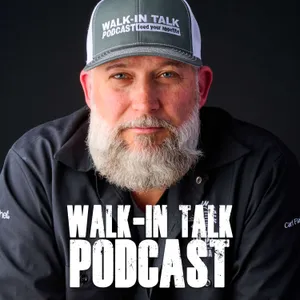
Free Daily Podcast Summary
Walk-In Talk Podcast: Daily Summaries Delivered
by Carl Fiadini
Where the food industry comes to life. Hosted by Carl Fiadini, founder of Walk-In Talk Media, the Walk-In Talk Podcast is a B2B restaurant, foodservice and hospitality industry podcast featuring the chefs, restaurateurs, operators, manufacturers, distributors, farmers, suppliers and industry leaders shaping the business of food. From restaurant operations, foodservice distribution and sourcing to culinary leadership, food safety, equipment, technology and the realities of running a hospitality business, Walk-In Talk delivers raw, unfiltered conversations with the people who make this industry move. We go beyond the pass and beyond the studio—covering major restaurant and foodservice trade shows, producing original culinary films and mini-documentaries, and sitting down with the people influencing where the industry is headed. With more than 200 episodes and recognition across major podcast platforms, Walk-In Talk connects the entire foodservice ecosystem through conversations built for hospitality professionals—and anyone who wants to understand the people, businesses and ideas behind the food industry.
Latest Episodes
The most recent episodes — sign up to get AI-powered summaries of each one.
- 1 weeks ago44 min
Chef Clayton Parrett: A Student for Life
*]:pointer-events-auto R6Vx5W_threadScrollVars scroll-mb-[calc(var(--scroll-root-safe-area-inset-bottom,0px)+var(--thread-response-height))] scroll-mt-[calc(var(--header-height)+min(200px,max(70px,20svh)))]" dir="auto" data-turn-id= "request-6951710a-0184-832c-9d32-bda2c450a8ea-1" data-turn-id-container= "request-6951710a-0184-832c-9d32-bda2c450a8ea-1" data-testid= "conversation-turn-14" data-turn="assistant"> Chef Clayton Parrett has spent more than two decades in kitchens, but he still considers himself a student. Growing up in rural South Louisiana, Clayton's earliest education came from the land. Hunting, fishing, livestock, agriculture and eventually working around a slaughterhouse taught him where food came from long before he understood that cooking would become his life. That path eventually took him offshore, cooking on drilling operations in the Gulf for weeks at a time. The isolation and relentless routine taught him patience, discipline and responsibility, lessons that would follow him through restaurants, universities, convention centers and hotels before ultimately bringing him to the historic Fenway Hotel in Dunedin, Florida. But Clayton says one of the biggest turning points in his career came when he learned something entirely different: How to fail. Accepting failure gave him permission to experiment, take chances and become more curious about food. It also helped shape a philosophy he still carries today. Clayton doesn't particularly believe in mastery. There are too many cultures, ingredients, techniques and traditions he hasn't experienced yet. "I prefer to say I'm a student for life." That curiosity is now helping drive the culinary direction at Fenway, where Clayton and his team are exploring global beef, ingredient provenance and the kind of luxury dining experience capable of competing on a much larger stage. One of their long-term ambitions is earning consideration among the world's leading steakhouses. And Clayton brought that same curiosity into the Walk-In Talk studio. Using wild boar tenderloin from studio partner Shogun Farms, Clayton created a dish rooted deeply in memories of Louisiana, incorporating field peas, persimmon, satsuma, sumac and produce from Cahaba Club. It's a plate built around the landscape and flavors that helped shape him as a chef. He followed it with an entirely different exploration: an antelope croquette with smoked Gouda and three vibrant sauces, combining classical French technique with an ingredient many diners rarely encounter. And then came the beef. Japanese A5 Wagyu rated BMS 12, representing the level of sourcing, education and product knowledge Clayton and his team are working to bring to Fenway. <h3 data-section-i
- 1 weeks ago38 min
Who's Really Responsible for Food Safety? | Inside Food Safety EP.6
Brought to you by Testo North America When contaminated produce enters the food supply, finding where it came from is only the beginning. On this episode of Inside Food Safety, Eric Moore is joined by returning guest Kiley Harper-Larsen to examine recent Cyclospora and Salmonella investigations involving lettuce, jalapeños and the growing list of finished products affected when a single ingredient moves through a complex supply chain. The conversation goes beyond the recalls themselves. What food-safety standards apply to produce grown outside the United States? What are importers actually required to verify? How does an investigation move forward when laboratory testing doesn't provide a clear answer? Why can a recall continue expanding long after the original problem is discovered? And how much can a chef or restaurant operator realistically know about where their ingredients came from? Eric and Kiley break down the realities of foreign supplier verification, FDA oversight, third-party audits, processing, repacking and traceability, while examining where vulnerabilities remain in both domestic and imported food systems. Because when an ingredient can travel from a farm to a packing house, importer, processor, distributor and eventually a restaurant kitchen, one question becomes increasingly important: Who is responsible for making sure it's safe? Inside Food Safety with Eric Moore Presented by Walk-In Talk Media Featuring returning guest Kiley Harper-Larsen Key Takeaways • Food safety responsibility is shared across the supply chain. Growers, packers, importers, processors, distributors, restaurants and regulators all play a role. • Domestic and imported food are legally expected to meet the same U.S. safety standards. The difference can be how those standards are verified and enforced throughout the supply chain. • Recalls often expand because investigators are discovering where the original ingredient went. An expanding recall does not necessarily mean new contamination is being found each time. • Cyclospora and Salmonella can present very different investigative challenges. Testing speed, incubation periods, epidemiology and traceability can significantly affect how quickly investigators identify the source. • A laboratory result is only one part of an outbreak investigation. Epidemiological evidence and traceback can still help investigators identify a likely source when product testing does not provide a definitive answer. • Repacking creates major traceability challenges. Once products from multiple farms, lots or suppliers are combined and repacked, identifying the original source can become significantly more difficult. • Restaurants cannot realistically know every farm behind every ingredient. Strong relationships with reputable suppliers and approved vendor systems become critical when problems emerge. • Traceability remains one of the biggest challenges. Faster, clearer product tracking could help investigators identify affected products and remove them from the food supply sooner. • The biggest vulnerability may be the system itself. Food safety depends on many interconnected parts working correctly at the same time, from farming and water management to processing, importing, distribution and restaurant operations. For chefs and operators, the practical question is simple: Know who you're buying from. Ask where products are coming from. Understand how seriously your suppliers take food safety and traceability. About Inside Food Safety Inside Food Safety examines the food-safety issues affecting restaurants, foodservice operators, manufacturers, distributors and consumers, bringing industry professionals into the conversation to separate regulation, headlines and real-world food safety. Featuring Eric Moore Food Safety Expert | Testo North America Kiley Harper-Larsen Food and Produce Safety Professional | Ag Safety Lady Inside Food Safety is brought to you by Testo North America. A Walk-In Talk Media production. From the industry. For the industry.
- 2 weeks ago47 min
Chef Olivia Geisler: The Kitchen Made More Sense
Chef Olivia Geisler never planned on becoming a chef. Growing up in Ohio, medicine seemed like the logical path. She studied biology and chemistry with plans for a career in healthcare. But an experience in Costa Rica at seventeen, followed by an opportunity inside Mitchell's Ocean Club, introduced her to a completely different world. The kitchen won. Olivia went all in: culinary school, competition teams, restaurant openings, long days, motherhood and eventually the challenge of becoming Executive Chef of The Pearl in Tampa. Today, The Pearl has been recognized by the Michelin Guide three consecutive years. But Olivia doesn't measure success by plaques, titles or what comes next. For her, it's about the journey. The people who believed in her. The cooks she now gets to mentor. The team beside her. And the relentless pursuit of getting a little better every day. In this episode of Walk-In Talk, Chef Olivia Geisler talks about choosing the kitchen over medicine, traveling to Costa Rica at seventeen, becoming a mother while building a culinary career, opening The Pearl, Michelin recognition, mentorship, leadership and why hospitality has always been about people. "The guide isn't what defines us. It's the journey." — Chef Olivia Geisler Takeaways: She didn't grow up planning to be a chef. Medicine was the expected path, but the kitchen was where she felt alive. Costa Rica at 17 was a pivotal experience. It exposed her to food, culture, travel, risk and independence at a formative age. She is wired for challenge. She repeatedly describes herself as relentless, competitive and energized by discomfort. Her career was built through immersion. Culinary school, full-time work, competitions, volunteering, store openings, mentorship. Mentorship is one of the emotional cores of the episode. People invested in her early, and now she feels responsible for doing the same for younger cooks. Motherhood reshaped her ambition without killing it. She learned there are seasons when family has to come first and seasons when she can go full throttle professionally. Opening The Pearl was one of the hardest things she's done. First Executive Chef role, new concept, new team, opening pressures, construction, hiring, systems, all at once. Michelin recognition matters, but it doesn't define her. She is proud of it, but her identity is not built around awards. Her philosophy is rooted in hospitality. The biggest throughline is people, care, intention and giving others a great experience. Her cooking philosophy is deliberate. Nothing is on the plate by accident, down to the carrots, egg, acid, garnish and texture. Her best line may actually be this: "I'm relentlessly passionate about life." Another excellent line is: "The guide isn't what defines us; it's the journey." The Companies Helping Shape Hospitality <p id="ember22
- Aug 21, 202656 min
More Than a Kitchen: Chefs David Reyes & Nelly Buleje
*]:pointer-events-auto R6Vx5W_threadScrollVars scroll-mb-[calc(var(--scroll-root-safe-area-inset-bottom,0px)+var(--thread-response-height))] scroll-mt-[calc(var(--header-height)+min(200px,max(70px,20svh)))]" dir="auto" data-turn-id="70dbbc54-1218-44cc-9842-197557209da4" data-turn-id-container="70dbbc54-1218-44cc-9842-197557209da4" data-testid="conversation-turn-10" data-turn="assistant"> Two chefs. Two friends. One of them is getting ready to leave Florida and begin a new chapter. Chefs David Reyes and Nelly Buleje join Walk-In Talk for a conversation about something that goes far beyond what happens on the plate: mental health in the kitchen, camaraderie, and what it really means to show up for the people beside you. With Nelly preparing to move to North Carolina, the two friends look back at how their relationship developed through the industry, the pressures chefs often carry without talking about them, and why having people who recognize when you're not okay can matter as much as anything you learn in a kitchen. Of course, we still cook. Both chefs put their own spin on Crab Island Seafood Dip. David creates fried taquitos featuring Mexican Street Corn Crab Dip and shrimp, with salsa falsa, mole amarillo, salsa macha, charred corn, pickled onion and cilantro. Nelly brings his culinary perspective to a Causa à la Limeña featuring Crab Rangoon Dip, crab, avocado, pickled onion, quail egg, ají ricoto and olives. It's part farewell, part celebration and a conversation about the friendships this industry creates—and how those relationships can continue long after two chefs stop sharing the same kitchen or the same city. The Companies Helping Shape Hospitality Metro Foodservice Solutions - Commercial-grade storage, transport, and workflow systems that help professional kitchens operate efficiently. RAK Porcelain USA - Professional tableware built for performance, durability, and presentation at the highest level. TriMark USA - North America's largest foodservice design, equipment, and supplies provider, helping operators build smarter, more efficient kitchens. <a class="RVDFChJswVRnGfgfLGuwQIqBPRqoGHOWSrA" tabindex="0" href= "https://w
- Aug 14, 202653 min
Chef Anthony Santos: What I Survived Didn't Define Me
Content Advisory: This episode contains a candid conversation about childhood abuse, domestic violence, trauma, and a past suicide attempt. Some listeners may find portions of this discussion difficult. Listener discretion is advised. For the first time publicly, Chef Anthony Santos tells the story behind the man and chef he has become. Anthony grew up in a home marked by years of physical and emotional abuse. As a child, he stepped between his stepfather and his mother and younger siblings, often becoming the target himself. The violence eventually escalated to an attack with a machete. At 15, Anthony left home, at one point sleeping outside in the rain with nowhere safe to go. Food became an unexpected way forward. After seeing the joy his uncle's cooking brought to his mother, Anthony began to understand food as something more than a meal—it could bring comfort, connection and, even briefly, a sense of safety. That realization eventually led a teenage Anthony, soaked from walking through the rain, through the doors of a Chinese restaurant looking for work. In this deeply personal conversation, Anthony talks about surviving abuse, leaving home, mental health, therapy, faith, the lasting effects of trauma and the relentless drive that helped shape his career. He also shares what he would tell a young person living through abuse today and why he believes what happened to him can be part of his story without becoming his identity. From the WITM kitchen: Anthony prepared a charred Spanish octopus inspired by his Portuguese roots, followed by a Wagyu ribeye with Japanese purple sweet potato, charred broccolini and a red wine truffle sauce finished with 24-karat gold. The sweet potato incorporated butter, black garlic, fresh garlic and Maldon smoked sea salt, creating layers of sweet, savory, smoky and umami flavor. Today, Anthony Santos is a private chef, entrepreneur, mentor and culinary competitor. But this isn't simply a story about becoming a chef. It's a story about survival, purpose, faith and what one person chose to build from what he endured. Takeaways Survival is part of Anthony's story—not his identity. He speaks openly about nine years of abuse and the long process of separating who he is today from what happened to him as a child. At 15, he chose to get out. Anthony worked multiple jobs, stayed with friends and began building a life outside the home he had grown up in. Food represented something violence couldn't. Watching his uncle cook and seeing his mother smile gave Anthony an early realization that food could create joy, comfort and connection. As he says, cooking looked like a "superpower." The trauma didn't disappear when the abuse ended. Anthony discusses therapy, triggers, relationships, anger, fight-or-flight and the years it took to understand how childhood trauma continued affecting his adult life. His drive and his trauma are connected. When asked how much of the ambition people see in him comes from what he survived, Anthony's answer is striking: "all of it." Faith wasn't a straight line. Anthony speaks candidly about being angry with God as a child, losing his faith and eventually returning to it with a very different understanding of what he survived. His definition of success has changed. After cooking for celebrities, millionaires and billionaires and building a successful career, Anthony says his real pursuit isn't money or possessions—it's a peaceful, purposeful and happy life. He's turning experience into mentorship. Antho
- Aug 7, 202644 min
Chef Felicia Lacalle: Addiction, Faith & Rebuilding Her Life
Chef Felicia Lacalle's story is about much more than food. The Tampa chef and partner at Quiote Tequilaria sits down with Walk-In Talk Podcast for an unfiltered conversation about addiction, divorce, single motherhood, failed partnerships, financial hardship, faith, and the long road back to herself. Felicia began cooking at a young age, inspired by her mother, her Mexican and Cuban heritage, and even childhood afternoons watching Julia Child. She went on to graduate from Johnson & Wales, spend more than a decade at Roy's, and eventually earn national recognition at Hemingway's—including a first-place win at the 2018 International Cuban Sandwich Festival. But behind the accolades were years of setbacks and painful choices. Felicia opens up about substance abuse, losing businesses, destructive relationships, rebuilding as a single mother, returning to faith, and learning how to recognize the patterns that nearly derailed her life. Today, she is entering a new chapter as a partner at Quiote Tequilaria, where her Mexican roots, Cuban influence, and decades of kitchen experience come together in food that is deeply personal. The episode also features two dishes prepared in the Walk-In Talk Media studio: duck enmoladas with Oaxacan cheese and a wild boar pork belly dish with boniato mash, charred baby leeks, and pickled mustard seeds. This is a conversation about resilience, accountability, faith, mental health, restaurant life, and what it takes to rebuild when the life you imagined falls apart. Featured Dishes During her Walk-In Talk Media studio session, Chef Felicia prepared two deeply personal dishes that reflect both sides of her culinary heritage. The first was Duck Enmoladas—house-made corn tortillas filled with duck confit, topped with pistachio mole, Oaxacan cheese from Salerno Dairy, crema, and chile de árbol pickled onions. Her second dish showcased Shogun Farms wild boar pork belly, slowly braised with sour orange, garlic and spices, served over brown butter boniato purée with charred baby leeks and pickled mustard seeds—a modern interpretation inspired by her Cuban roots. Special thanks to our newest studio partner, Shogun Farms, for supplying the premium wild boar pork belly featured in this episode. Their commitment to responsible farming and exceptional specialty proteins helped bring this remarkable dish to life. Key Takeaways Success isn't about avoiding failure—it's about refusing to let failure define who you become. Faith became the foundation that helped Felicia rebuild her life after addiction, divorce, financial hardship, and personal loss. The restaurant industry can be incredibly rewarding, but it can also magnify mental health struggles, addiction, burnout, and unhealthy lifestyles. Self-reflection, accountability, and therapy were essential in breaking destructive personal and generational patterns. Every setback—from failed partnerships to losing businesses—became preparation for the opportunity she has today. Roy's shaped Felicia's discipline, leadership, and respect for kitchen culture, providing the foundation for her career. Great food is deeply personal. Life experiences, heritage, and emotional growth ultimately influence what ends up on the plate. Leadership begins with culture. Felicia believes respect, accountability, and creating a healthy kitchen environment are just as important as culinary skill. Building something meaningful often requires walking away from situations—even successful ones—that no longer align w
- Aug 5, 202640 min
Cyclospora, Taylor Farms and the Produce Safety Crisis | Inside Food Safety EP.5
One of the largest Cyclospora outbreaks in U.S. history has placed fresh produce safety under the national spotlight. In this episode of Inside Food Safety, presented by Testo North America, Carl Fiadini and co-host Eric Moore are joined by nationally recognized produce safety expert Kiley Harper-Larsen, M.S., Owner of The Ag Safety Lady and a food safety executive with more than two decades of experience spanning farms, processing facilities, audits, crisis management and regulatory compliance. She has spent her career working everywhere from farms and packing houses to boardrooms, recalls and FDA inspections. Together, they examine the ongoing Cyclospora outbreak linked to Taylor Farms and discuss what is currently known, what remains unknown, and why outbreaks like this are among the most difficult events for the produce industry to investigate. Topics include: • What Cyclospora is and how it spreads • Why produce outbreaks are uniquely challenging to trace • Farm-to-table food safety systems • Supply chain accountability • Worker hygiene and agricultural water • Consumer risk and practical guidance • The role of technology and testing • What the industry must do to prevent future outbreaks Rather than assigning blame, this conversation explores the science, the systems and the lessons that can help strengthen food safety across the entire supply chain. Guest: Kiley Harper-Larsen, M.S. Owner & Lead Consultant, The Ag Safety Lady Former Corporate Safety Director, A. Duda & Sons Former Vice President of Product & Personnel Safety, J&J Family of Farms Presented by Testo North America
- Jul 30, 202627 min
Inside Food Safety Ep.4 | LIVE from New Orleans | Bocuse d'Or, LRA, IAFP & the Future of Hospitality
Recorded live in New Orleans during an unprecedented week that brought together the Louisiana Restaurant Association Expo, Bocuse d'Or USA, and the International Association for Food Protection (IAFP), this special edition of Inside Food Safety explores the unseen systems that protect some of the world's greatest restaurants. Host Carl Fiadini is joined by Chef Sean "Pooch" Rivera and Eric Moore of Testo North America for a conversation on why food safety has become one of the most critical ingredients in modern hospitality. From New Orleans' centuries-old restaurant buildings and aging infrastructure to large-scale convention center operations serving thousands of guests, the discussion examines the real-world challenges chefs and operators face every day. The team also explores how technology is helping restaurants monitor refrigeration, cooking oil quality, food temperatures, and inventory—protecting both guests and businesses from costly failures. Along the way, Carl reflects on the incredible opportunity to film the world's top chefs during Bocuse d'Or, including icons like Emeril Lagasse, Daniel Boulud, and many of today's most celebrated culinary professionals, while highlighting the often-overlooked role food safety plays in supporting culinary excellence. Whether you own a restaurant, work in hospitality, or simply want a behind-the-scenes look at what keeps world-class kitchens operating safely, this episode offers valuable insights from the heart of one of America's greatest food cities. Topics include: Food safety in historic restaurant cities Why New Orleans presents unique operational challenges Temperature monitoring and refrigeration protection How automation helps reduce human error Protecting inventory during storms and power outages Cooking oil management and food quality The connection between culinary excellence and food safety Behind the scenes at Bocuse d'Or, LRA Expo, and IAFP 2026 Inside Food Safety is hosted by Carl Fiadini and presented in partnership with Testo North America, exploring the people, technology, and best practices shaping safer kitchens across the foodservice industry.
Get Walk-In Talk Podcast summaries in your inbox
Free AI-powered daily recaps. Key takeaways, quotes, and mentions — in a 5-minute read.
Get Free Summaries →Free forever for up to 3 podcasts. No credit card required.
You Might Also Like
Listeners also like.
The Chef's Cut
Adrienne Cheatham and Joe Flamm explore cooking techniques and kitchen stories with celebrity chefs, sharing tips and humor for food lovers.

The Splendid Table: Conversations & Recipes For Curious Cooks & Eaters
Explores food through cooking, culture, and conversation with chefs, writers, and experts.

Christopher Kimball’s Milk Street Radio
Explores global food stories, interviews with renowned chefs, and unusual culinary topics, from food science to cultural traditions.

Takin' A Walk - Music History with Buzz Knight
Artist interviews and stories exploring music history across rock, pop, country, jazz, and reggae.

The Sporkful
Explores how food shapes human experiences, identities, and connections through curious, everyday eating.

The Dog Walk
A daily conversational podcast covering random topics like conspiracies, jobs, and everyday life with a casual, midday vibe.

Gastropod
Explores the science and history behind food and farming, from ancient feasts to modern aquaculture and everything in between.

We Need To Talk with Paul C. Brunson
Hosted conversations about relationships, vulnerability, and personal growth through real-life stories and emotional breakthroughs.
Tales from the pits, a Texas BBQ podcast featuring trendsetters, leaders, and icons from the barbecue industry
A Texas BBQ podcast exploring the food, people, and traditions behind the state's smoked meats.

Talk Easy with Sam Fragoso
Intimate weekly conversations with artists, authors, and politicians, featuring candid and human discussions.

Just Ingredients
Explores whole, non-toxic ingredients for nutrition, wellness, and daily living with expert guests discussing health and natural product choices.

The Walking Dead 'Cast
Rewatching and analyzing The Walking Dead and its spinoffs with hosts and guests who explore its characters, themes, and pivotal moments.
About Walk-In Talk Podcast
Where the food industry comes to life. Hosted by Carl Fiadini, founder of Walk-In Talk Media, the Walk-In Talk Podcast is a B2B restaurant, foodservice and hospitality industry podcast featuring the chefs, restaurateurs, operators, manufacturers, distributors, farmers, suppliers and industry leaders shaping the business of food. From restaurant operations, foodservice distribution and sourcing to culinary leadership, food safety, equipment, technology and the realities of running a hospitality business, Walk-In Talk delivers raw, unfiltered conversations with the people who make this industry move. We go beyond the pass and beyond the studio—covering major restaurant and foodservice trade shows, producing original culinary films and mini-documentaries, and sitting down with the people influencing where the industry is headed. With more than 200 episodes and recognition across major podcast platforms, Walk-In Talk connects the entire foodservice ecosystem through conversations built for hospitality professionals—and anyone who wants to understand the people, businesses and ideas behind the food industry.
Customized Recaps
AI-powered recaps with compact key takeaways, quotes, and insights.
Straight to Your Inbox
Get key takeaways from Walk-In Talk Podcast in a 5-minute read.
Save Hours Every Week
Stay current on your favorite podcasts without falling behind.
Frequently Asked Questions
What is Podzilla's Walk-In Talk Podcast daily summary?
It's a free AI-powered email that summarizes new episodes of Walk-In Talk Podcast as soon as they're published. You get the key takeaways, notable quotes, and links & mentions — all in a quick read.
How does the Walk-In Talk Podcast podcast summary work?
When a new episode drops, our AI transcribes and analyzes it, then generates a personalized summary tailored to your interests and profession. It's delivered to your inbox every morning.
Is this an official Walk-In Talk Podcast product?
No. Podzilla is an independent service that summarizes publicly available podcast content. We're not affiliated with or endorsed by Carl Fiadini.
Can I get summaries of other podcasts too?
Absolutely! The free plan covers up to 3 podcasts. Upgrade to Pro for 15, or Premium for 50. Browse our full catalog at /podcasts.
How often does Walk-In Talk Podcast release new episodes?
Walk-In Talk Podcast publishes weekly. Our AI generates a summary within hours of each new episode.
What topics does Walk-In Talk Podcast cover?
Walk-In Talk Podcast covers topics including Arts, Food. Our AI identifies the specific themes in each episode and highlights what matters most to you.
Start getting Walk-In Talk Podcast summaries tomorrow morning.
Free forever for up to 3 podcasts. No credit card required.
Free forever for up to 3 podcasts. No credit card required.