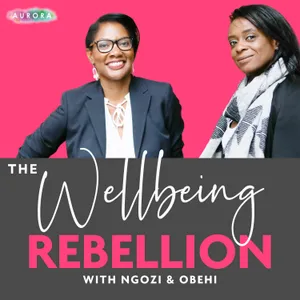
Free Daily Podcast Summary
The Wellbeing Rebellion: Daily Summaries Delivered
by Ngozi Weller & Obehi Alofoje
Get key takeaways, quotes, and insights from The Wellbeing Rebellion in a 5-minute read. Delivered straight to your inbox.
Latest Episodes
The most recent episodes — sign up to get AI-powered summaries of each one.
- 2 weeks ago26 min
Fixing the Leaky Pipeline: A Practical Guide for Leaders on Race Equity
A lot of organisations still explain the lack of racial diversity in leadership as a pipeline problem. It sounds neat, but it doesn’t hold up.In this episode, I unpack why progress on race equity so often stalls the further up an organisation you move, even when there’s effort, investment, and a genuine desire to improve.I look at what the data actually shows, why the pipeline story keeps sticking around, and what’s really happening to ethnically diverse talent once it enters the workplace. From affinity bias to who gets backed, seen, and described as having potential, this is about the systems that quietly shape progression.If you’re serious about moving from good intentions to real change, this will give you something much more useful than another vague conversation about representation.Highlights: Why the “pipeline problem” story keeps coming up What the data says about talent and leadership How professional racism hides in plain sight Why affinity bias keeps shaping progression What trickle-down equity looks like in practice The harder question leaders need to ask themselvesConnect with us here:Website: https://aurorawellnessgroup.co.uk/Ngozi: https://www.linkedin.com/in/ngozi-weller-aurora/Obehi: https://www.linkedin.com/in/obehi-alofoje-psychologist-aurora/Aurora Company Profile 2025Book a Call here: https://aurorawellnessgroup.co.uk/#book-meeting
- Apr 16, 202649 min
The Quiet Power of Learning: How Leaders Build Capability for an Uncertain Future with Kerri O’Neill
Learning can’t be treated like an extra anymore. Not when the pace of change is this high.Kerri O’Neill, Chief People Officer at Ipsos UK & Ireland, joins me this week, and we look at what it takes to build capability in an intentional and useful way, especially when strategies, markets, and tools keep shifting.We talk about why organisations need to focus less on big learning programmes and more on clear outcomes, everyday practice, and the human skills that still matter no matter how much technology changes.This episode is a useful one for leaders, HR teams, and anyone thinking seriously about how people keep learning, adapting, and making good decisions when the future feels anything but settled.Highlights: Why capability building starts with commitment Focusing on outcomes instead of fixed learning plans Why learning with others matters, especially around AI The human skills that still matter in an uncertain future The risk of relying too heavily on AI for people decisionsConnect with us here:Website: https://aurorawellnessgroup.co.uk/Ngozi: https://www.linkedin.com/in/ngozi-weller-aurora/Obehi: https://www.linkedin.com/in/obehi-alofoje-psychologist-aurora/Aurora Company Profile 2025Book a Call here: https://aurorawellnessgroup.co.uk/#book-meeting
- Apr 2, 202642 min
Global Culture, Real Accountability: How Leaders Turn Values into Performance with Aaisha Knights-Ihediwa
Accountability sounds simple, but it gets complicated quickly in fast-paced, global organisations.In this conversation with Aaisha Knights-Ihediwa, we talk about what accountability actually looks like in practice. From hiring the right people to creating space for individuals to speak up when something isn’t working.We also explore how values hold up under pressure, and what happens when there’s a gap between what’s said and what’s lived.There’s a focus on leadership too. Managing global teams, navigating trade-offs, staying aligned when expectations are high and conditions keep shifting, and figuring out what that actually looks like in practice.Highlights: What accountability really looks like in practice Values in principle vs values in execution Navigating global teams and cultural differences Leadership pressure, budgets, and difficult trade-offs Why leaders need to stay connected to their “why”Connect with us here:Website: https://aurorawellnessgroup.co.uk/Ngozi: https://www.linkedin.com/in/ngozi-weller-aurora/Obehi: https://www.linkedin.com/in/obehi-alofoje-psychologist-aurora/Aurora Company Profile 2025Book a Call here: https://aurorawellnessgroup.co.uk/#book-meeting
- Mar 19, 202643 min
From Intent to Access: How Leaders Turn Inclusion into Opportunity with Elham Fardad
Career progression is often presented as straightforward. Work hard, perform well, and opportunities will follow. For many professionals, especially women and migrants, the path is rarely that simple.In this conversation, I’m joined by Elham Fardad, founder of Migrant Leaders. We explore the hidden barriers that shape career mobility and why talent alone does not always translate into opportunity.Elham reflects on her journey from investment banking to building a global leadership platform supporting migrants and diverse talent. We talk about confidence, visibility, and the difference between mentorship and sponsorship.We also explore how organisations can recognise potential earlier and create cultures where people from every background can step into leadership.Highlights: Elham’s journey from banking to founding Migrant Leaders Why talent alone doesn’t always lead to opportunity The difference between mentorship and sponsorship Confidence, visibility and leadership identity Building organisations where diverse talent thrivesConnect with Migrant Leaders: https://www.migrantleaders.org.uk/Connect with us here:Website: https://aurorawellnessgroup.co.uk/Ngozi: https://www.linkedin.com/in/ngozi-weller-aurora/Obehi: https://www.linkedin.com/in/obehi-alofoje-psychologist-aurora/Aurora Company Profile 2025Book a Call here: https://aurorawellnessgroup.co.uk/#book-meeting
- Mar 5, 202653 min
Business As a Force for Good with Anwar Ali
Can business genuinely be a force for good, and if so, what does that actually require in practice?In this conversation, I’m joined by Anwar Ali OBE, CEO and co-founder of Upturn Enterprise. We explore what sustainable impact really looks like when you’re trying to balance commercial discipline with social purpose.Anwar shares how his upbringing shaped his values, from growing up in a family of ten in a three-bedroom house to leaving a successful private sector career to build a social enterprise rooted in opportunity and dignity. We talk about why social good must stack up commercially, what’s broken in procurement systems, and why passion alone is never enough. We also reflect on leadership in a divided society, the courage it takes to speak up, and what it means to be a visible role model for the next generation.This is a conversation about responsibility, resilience, and believing that business can still be used as a tool for collective good.Highlights: Growing up in a family of ten and the roots of purpose Leaving a global IT career to build a social enterprise Why social good must be commercially sustainable Immigration, belonging, and leadership in today’s climate Advice for purpose-driven entrepreneursConnect with Anwar:LinkedIn: https://www.linkedin.com/in/anwar-ali-obe-6335811a/Upturn Enterprise: https://www.upturn.org.uk/en/Connect with us here:Website: https://aurorawellnessgroup.co.uk/Ngozi: https://www.linkedin.com/in/ngozi-weller-aurora/Obehi: https://www.linkedin.com/in/obehi-alofoje-psychologist-aurora/Aurora Company Profile 2025Book a Call here: https://aurorawellnessgroup.co.uk/#book-meeting
- Feb 19, 202638 min
Leadership, Culture and Responsibility in Further Education with Hayley Ross
Further education sits under constant pressure, balancing funding constraints, public scrutiny, safeguarding responsibilities, and rising learner need. This conversation explores what leadership really looks like inside that reality, not in theory, but in day-to-day decisions that shape culture.I’m joined by Hayley Ross, Head of HR and Organisational Development at Salford City College Group, to talk about the emotional load leaders carry in vocational systems, where people care deeply about outcomes and responsibility doesn’t end at the job description.Our discussion looks at culture as the result of small, consistent choices. From onboarding and workload management to accountability, values, and difficult conversations, Hayley shares how leadership teams can protect wellbeing while still delivering under sustained pressure.This episode is for anyone leading in complex systems, especially where the stakes are human and the margin for error is small.Highlights: Why leadership decisions shape culture in further education The emotional weight carried by leaders in mission-driven systems How small operational choices influence wellbeing Accountability, values, and difficult conversations Pride, belonging, and what makes people stayConnect with us here:Website: https://aurorawellnessgroup.co.uk/Ngozi: https://www.linkedin.com/in/ngozi-weller-aurora/Obehi: https://www.linkedin.com/in/obehi-alofoje-psychologist-aurora/Aurora Company Profile 2025Book a Call here: https://aurorawellnessgroup.co.uk/#book-meeting
- Feb 5, 202652 min
Born of Two Worlds: Leadership, Identity & The Future of Neonatal Care with Dr Ngozi Edi-Osagie
This conversation felt deeply personal. Not just because Dr Ngozi Edi-Osagie and I share a name, but because her story touches on identity, leadership, resilience, and what it really means to navigate systems that were never designed with you in mind.We talk about growing up between the UK and Nigeria, the impact of family belief, and the early messages she received about what was and wasn’t possible. Dr Edi-Osagie reflects honestly on being told not to come to the UK because success would be unlikely, and the quiet determination it took to keep going anyway.The conversation moves into leadership, fairness, and the reality of working in systems like the NHS where bias is often subtle, embedded, and backed by data. We explore what good leadership looks like under pressure, why visibility matters, and how integrity, optimism, and calm can shape outcomes in the most high-stakes environments.This episode is about more than career success. It’s about belief, responsibility, and what we pass on to the next generation when we choose to keep showing up.Highlights:03:00) Identity, names, and belonging in professional spaces Growing up between the UK and Nigeria Being told not to come to the UK and choosing to try anyway Bias, meritocracy, and what the data actually shows What good leadership looks like under pressureConnect with us here:Website: https://aurorawellnessgroup.co.uk/Ngozi: https://www.linkedin.com/in/ngozi-weller-aurora/Obehi: https://www.linkedin.com/in/obehi-alofoje-psychologist-aurora/Aurora Company Profile 2025Book a Call here: https://aurorawellnessgroup.co.uk/#book-meeting
- Dec 12, 202525 min
Winding Down for Christmas Without Burning Out
As Christmas approaches, it’s easy to keep pushing even when you’re already exhausted. This episode is about slowing down when your energy is already low, not forcing yourself to power through just because it’s the end of the year.I talk about why rest doesn’t need to be earned, how boundaries can help before the break begins, and what it might actually be helpful to stop doing over the holidays.There’s also space here for neurodivergent people and parents of neurodivergent children, because this season can feel especially intense. I share ways to reduce overload, keep some structure, and be clearer about what you need from others.Leadership comes into the conversation too, particularly the signals we send about availability, rest, and burnout at this time of year. This episode is an invitation to approach Christmas with less pressure and more care for yourself.Highlights: You don’t need to earn rest Setting boundaries before Christmas Reducing sensory overload and protecting routines Managing emotional noise during the holidays What leaders unintentionally signal about rest and burnout Connect with us here:Website: https://aurorawellnessgroup.co.uk/Ngozi: https://www.linkedin.com/in/ngozi-weller-aurora/Obehi: https://www.linkedin.com/in/obehi-alofoje-psychologist-aurora/Aurora Company Profile 2025Book a Call here: https://aurorawellnessgroup.co.uk/#book-meeting
Get The Wellbeing Rebellion summaries in your inbox
Free AI-powered daily recaps. Key takeaways, quotes, and mentions — in a 5-minute read.
Get Free Summaries →Free forever for up to 3 podcasts. No credit card required.
You Might Also Like
Listeners also like.
WELL INTEL: making wellbeing work for business
Anni Hood (wellbeing for business specialist)
The Evolve Workplace Wellbeing Podcast
Evolve Workplace Wellbeing Team
9 to 5 Wellness
Aesha Tahir
Are We Well?
Neelam Chand
The Thriving Workplace Podcast
Jason Marshall and Lauren McGee
Well Workplaces
Tom Bosna
Rebel HR Podcast: Life and Work on Your Terms
Kyle Roed, The HR Guy
Be Well, Do Well.
Amin Ahmed
Outlier's Edge Podcast with Niiamah Ashong
Niiamah Ashong
IMPACTFUL Teamwork
Julia Felton
The Workplace Wellbeing Podcast
Ian Hogg
Wellbeing at Work
Workplace Options
About The Wellbeing Rebellion
Welcome to The Wellbeing Rebellion, an award-winning podcast! We are Ngozi Weller, a corporate wellbeing and productivity consultant, and Obehi Alofoje, a psychologist and behavioural change specialist.We are the founders of Aurora, a corporate culture consultancy that specialises in creating psychologically safe workplaces that enable employees to thrive, and for us, wellbeing is personal. The problem with employee wellbeing support, in most workplaces, is that it puts the responsibility on the person struggling to seek help. And when you are unwell, that is just too big a burden to bear.It's not enough to say that your door is always open. We need to get better at supporting our employees, and that is precisely what this podcast is about.The rebellion is here, and it is long overdue. So this podcast is specifically for the HR or business leader who wants to make a difference to their employees. And the bottom line is we want to create psychologically safe workplaces where employ
Customized Recaps
AI-powered recaps with compact key takeaways, quotes, and insights.
Straight to Your Inbox
Get key takeaways from The Wellbeing Rebellion in a 5-minute read.
Save Hours Every Week
Stay current on your favorite podcasts without falling behind.
Frequently Asked Questions
What is Podzilla's The Wellbeing Rebellion daily summary?
It's a free AI-powered email that summarizes new episodes of The Wellbeing Rebellion as soon as they're published. You get the key takeaways, notable quotes, and links & mentions — all in a quick read.
How does the The Wellbeing Rebellion podcast summary work?
When a new episode drops, our AI transcribes and analyzes it, then generates a personalized summary tailored to your interests and profession. It's delivered to your inbox every morning.
Is this an official The Wellbeing Rebellion product?
No. Podzilla is an independent service that summarizes publicly available podcast content. We're not affiliated with or endorsed by Ngozi Weller & Obehi Alofoje.
Can I get summaries of other podcasts too?
Absolutely! The free plan covers up to 3 podcasts. Upgrade to Pro for 15, or Premium for 50. Browse our full catalog at /podcasts.
How often does The Wellbeing Rebellion release new episodes?
The Wellbeing Rebellion publishes biweekly. Our AI generates a summary within hours of each new episode.
What topics does The Wellbeing Rebellion cover?
The Wellbeing Rebellion covers topics including Education, Business, Management, Fitness, Health & Fitness, Mental Health, Self-Improvement. Our AI identifies the specific themes in each episode and highlights what matters most to you.
Start getting The Wellbeing Rebellion summaries tomorrow morning.
Free forever for up to 3 podcasts. No credit card required.
Free forever for up to 3 podcasts. No credit card required.