Free Daily Podcast Summary
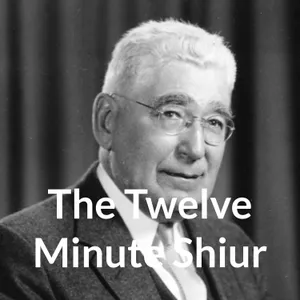
The Twelve Minute Shiur: Daily Summaries Delivered
by Freehof Institute
Byte-sized audio learning from the Freehof Institute of Progressive Halakhah
Latest Episodes
The most recent episodes — sign up to get AI-powered summaries of each one.
- 1 weeks ago11 min
#96 - The Introduction to Rambam's Mishneh Torah, Part 1
We begin our close reading of Rambam's הקדמה (Hakdamah), the Introduction to the Mishneh Torah, his great compilation of Jewish law and arguably *the* most impressive work of halakhah ever written. In this installment: Rambam on the origin and the history of the תורה שבעל פה (Torah sheb`al peh), the "Oral Torah."Get the source sheet at www.freehofinstitute.org/podcast.
- 3 weeks ago12 min
#95 - Rabbi Moshe Feinstein: The Theory of Halakhic Decision, Part 2
The second and concluding installment of our look at Rabbi Moshe Feinstein's introduction to his collected responsa, where he sets forth his theory of why the contemporary posek (halakhic authority) is entitled - and even obligated - to undertake the daunting task of speaking in the name of Torah and halakhah. Does his view of the matter have anything to teach us? Does it have anything in common with our own progressive outlook? Get the source sheet at www.freehofinstitute.org/podcast.
- Sep 22, 202612 min
#94 - Rabbi Moshe Feinstein: The Theory of Halakhic Decision, Part 1
Rabbi Moshe Feinstein, one of the leading Orthodox poskim(halakhic authorities) of the 20th century, was certainly no liberal or progressive. But his theory of halakhic decision has much to teach us. At least… we think so, and in the next several episodes we’re going to explore that theory, which he sets forth in the הקדמה (introduction, preface) to his collected responsa. Part 1: why maybe I shouldn’t have been a posek! Download the source sheet at www.freehofinstitute.org/podcast.
- Aug 23, 202612 min
#93 - Just Who Is a "Kosher" Witness?
Most Orthodox poskim will tell you that, to be a valid ("kosher") witness, a person must be an Orthodox Jew, that is, observant of ritual halakhah according to Orthodox standards. So: a Jewish wedding ceremony is valid kiddushin only if it is witnessed by two Orthodox Jews. We have two questions: 1) how do they know this? and 2) is it true?Download the source sheet at www.freehofinstitute.org/podcast
- Jul 10, 202612 min
#92 - A Family Trauma in the Halakhic Literature?
It's a typical halakhic discussion among the rishonim (medieval Talmudic scholars): an analysis of texts concerning the laws of aninut, the period of time that extends from the death of a loved one to the moment of burial. Typical? Could there be more to it? Does this back-and-forth over seemingly dry and technical details conceal an emotional dispute among members of a grieving family?An exercise in reading between the lines of our halakhic texts.Download the source sheet at www.freehofinstitute.org/podcast.
- Jun 18, 202612 min
#91 - Piyyutim and Creative Worship
Do you like creative liturgy - poems and thought-pieces and readings that add to or replace the traditional siddur text ? If you do, you probably know that Orthodox Jews claim that such creativity with the liturgy is a violation of the halakhah.Hmm - it seems that we've been through all this before.A look at how today's innovations in public prayer are simply the latest round in a centuries-old halakhic controversy.
- May 13, 202612 min
#90 - Standing Up and Sitting Down for the Sh'ma
Reform congregations make a point to recite Sh'ma on their feet: they either rise or remain standing, if able. Most everybody else recites it in a seated position. Many say (wouldn't you know it?) that the Reform practice violates the halakhah. Here's an argument to the contrary.
- Apr 20, 202612 min
#89 - Why Must We Use a Plain Wedding Ring?
It's a well-known minhag (custom) to require that the wedding ring be a plain band, with no precious stones. But is this a requirement of halakhah? Most authorities say "yes," but their argument is open to... well, argument!Download the source sheet at www.freehofinstitute.org/podcast
Get The Twelve Minute Shiur summaries in your inbox
Free AI-powered daily recaps. Key takeaways, quotes, and mentions — in a 5-minute read.
Get Free Summaries →Free forever for up to 3 podcasts. No credit card required.
You Might Also Like
Listeners also like.
Da Mah Shetashiv
Rabbi Aaron Lopiansky

On the Other Hand: Ten Minutes of Torah
ReformJudaism.org

5-Minute Daf Yomi with Rabbi Shmuel Herzfeld
Daily insights into the Talmud’s page of the day with Rabbi Shmuel Herzfeld.

The Jewish History Podcast - With Rabbi Yaakov Wolbe
A podcast featuring Rabbi Yaakov Wolbe's lectures on Jewish history.

Among Chassidim
Explores Chassidic life and thought through candid, in-depth conversations with members of the community.
Chosen People Problems
Two women—one secular, one Haredi—explore faith, tradition, and modern life through candid conversations.

Jewish Stories to Inspire: Motivational & Spiritual Stories Based on the Torah's Ethics, Values and Wisdom
Inspirational Jewish stories drawn from the Torah, sages, and chassidic tradition that convey spiritual and ethical lessons.

Into the Verse - A Parsha Podcast
Aleph Beta
Chumash Rashi
Rabbi Moshe Rothman

Jewish History Soundbites
A deep exploration of pre-war Eastern European Jewish life through historical figures, communities, and events.

Tehilim by Meaningful Minute
Meaningful Minute

Text-Based Tanya
Rabbi Shais Taub
About The Twelve Minute Shiur
Byte-sized audio learning from the Freehof Institute of Progressive Halakhah
Customized Recaps
AI-powered recaps with compact key takeaways, quotes, and insights.
Straight to Your Inbox
Get key takeaways from The Twelve Minute Shiur in a 5-minute read.
Save Hours Every Week
Stay current on your favorite podcasts without falling behind.
Frequently Asked Questions
What is Podzilla's The Twelve Minute Shiur daily summary?
It's a free AI-powered email that summarizes new episodes of The Twelve Minute Shiur as soon as they're published. You get the key takeaways, notable quotes, and links & mentions — all in a quick read.
How does the The Twelve Minute Shiur podcast summary work?
When a new episode drops, our AI transcribes and analyzes it, then generates a personalized summary tailored to your interests and profession. It's delivered to your inbox every morning.
Is this an official The Twelve Minute Shiur product?
No. Podzilla is an independent service that summarizes publicly available podcast content. We're not affiliated with or endorsed by Freehof Institute.
Can I get summaries of other podcasts too?
Absolutely! The free plan covers up to 3 podcasts, any in the catalog. Basic raises that to 15, Pro to 40 and Max to 100. Browse our full catalog at /podcasts.
How often does The Twelve Minute Shiur release new episodes?
The Twelve Minute Shiur publishes monthly. Our AI generates a summary within hours of each new episode.
What topics does The Twelve Minute Shiur cover?
The Twelve Minute Shiur covers topics including Religion & Spirituality, Spirituality, Judaism. Our AI identifies the specific themes in each episode and highlights what matters most to you.
Start getting The Twelve Minute Shiur summaries tomorrow morning.
Free forever for up to 3 podcasts. No credit card required.
Free forever for up to 3 podcasts. No credit card required.