Free Daily Podcast Summary
Among Chassidim: Daily Summaries Delivered
by A Chassidisher Derher
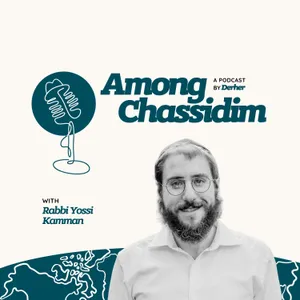
Welcome to Among Chassidim: a Podcast by Derher. Hosted by Rabbi Yossi Kamman, director of A Chassidisher Derher, this podcast captures the vibrancy and vitality of dor hashvi’i through immersive, heart-to-heart discussions on meaningful topics, shared in raw, unedited conversations.
Latest Episodes
The most recent episodes — sign up to get AI-powered summaries of each one.
- Yesterday1h 39m
[Re-release] Tishrei With The Rebbe with Rabbi Yisroel Noach Vogel
** We’re revisiting this special conversation in honor of Yomtov. Regular programming will continue after Simchas Torah**In this episode, Rabbi Yisroel Noach Vogel, a Mashpia in Queens, shares his personal memories of spending Yom Kippur, Sukkos, & Simchas Torah in the Rebbe’s presence. It will surely draw the listener in to experience the holiness of Yom Kippur, as well "the Rebbe’s Yom Tov," where every moment was alive with unparalleled joy, connection, and chassidishe warmth.
- 1 weeks ago3h 12m
Ep. 65: You Want To Be Shpitz Chabad? with Rabbi Zushe Winner
In this episode, Rabbi Zushe Winner of Brighton Beach, NY, shares the remarkable story of how his parents became connected to the Rebbe and to Lubavitch, and the special kiruv the Rebbe showed his mother, especially after the passing of his father.He takes us back to his formative years in the Chofs and Lameds, sharing his experiences by the Rebbe during those years and beyond.In this interview, every story brings with it an insight, an anecdote, and a heartfelt farbrengen.
- 2 weeks ago3h 9m
Ep. 64: A Man In A Girls School Is A Bidieved with Rabbi Nochem Kaplan
In this episode, Rabbi Nochem Kaplan of Crown Heights traces his family’s remarkable journey-from Chassidim dating back to the Alter Rebbe on his mother’s side to his father’s Litvishe roots and eventual connection to Lubavitch. Born in the Soviet Union, he recalls his family’s escape from U.S.S.R, life in the DP camps in Germany, their close connection with Rebbetzin Chana, and their eventual move to England and later New York.Rabbi Kaplan shares memories of the Frierdiker Rebbe’s histalkus and the early years of the Rebbe’s nesius, as well as his own formative years growing up around 770 in the small Lubavitch community of the 1950s and ’60s. He describes the great Chassidim and mashpi’im who influenced him during his years learning in Kfar Chabad and 770.Following the Rebbe’s guidance, Rabbi Kaplan devoted his life to chinuch, serving communities in Virginia, Lakewood, Philadelphia, and New York. He shares fascinating, little-known accounts of teaching Chassidus in Lakewood and his close relationships with Reb Schneur and Reb Meir Kotler, a”h. He also recounts the extraordinary story of a portrait he painted of the Rebbe Rashab—including the input he received from Reb Avrohom Mayor, Reb Mendel Futerfas, and ultimately the Rebbetzin—and the Rebbe’s satisfaction with the finished portrait.
- 3 weeks ago2h 41m
Ep. 63: The CIA of Lubavitch with Rabbi Avrohom Shmuel Levine
In this episode, Reb Avraham Shmuel Levine of Eretz Yisroel discusses his family’s Litvishe background, including his grandfather’s position as a rav near Yekaterinoslav and his interactions with the Rebbe’s father, Harav Levi Yitzchak. He describes how his father came to learn in Tomchei Temimim and eventually escaped from Russia, as well as his own birth and upbringing in New England and his years in the yeshiva at Bedford and Dean.Reb Avraham Shmuel recalls his early encounters with the Rebbe, his journey to learn in Kfar Chabad, the yechidus he had beforehand, and the letters he received from the Rebbe while he was there. He also shares memories of the famed mashpia Reb Shlomo Chaim Kesselman and the profound influence he had on him.Upon returning to America, Reb Avraham Shmuel unexpectedly became involved with Ezras Torah, eventually serving as secretary of Agudas Harabanim—a position he held for many years, until moving to Eretz Yisroel. Through this role, he developed close relationships with many of the leading non-Lubavitch Rabbanim of the previous generation, including Reb Moshe Feinstein, Rav Yosef Eliyahu Henkin, Rabbi Simcha Elberg, Rav Yosef Dov Soloveitchik, and Reb Gedalia Schorr.At the same time, he served as a discreet Lubavitch liaison, keeping Rabbi Hodakov and the Rebbe informed and working behind the scenes to advance many of the Rebbe’s initiatives. He shares story after story of fascinating encounters and the remarkable things he was able to accomplish—including how Reb Moshe Feinstein came to be mesader kiddushin at his wedding and had a yechidus with the Rebbe during that visit.This is only a glimpse of a fascinating episode filled with history, personalities, and firsthand memories. Listen and enjoy!
- 4 weeks ago2h 51m
Ep. 62: Look For A Shidduch and Go On Shlichus with Rabbi Tzvi Grunblatt
In this episode, Rabbi Tzvi Grunblatt, Head Shliach of Argentina, takes us through his remarkable journey that led him to become Lubavitch and eventually the Rebbe’s Shliach.Rabbi Grunblatt grew up in Argentina in a Yekkishe kehillah. During his youth, he became very close to the Rebbe’s Shliach to Argentina, Rabbi Berel Baumgarten. Although Rabbi Baumgarten did not formally teach him Chassidus, simply being around him opened Rabbi Grunblatt to a world of Chassidus and Lubavitch, eventually leading him to join a Lubavitch Yeshiva in New York.He shares what it was like arriving from Argentina with virtually no familiarity with Lubavitch culture, and how he quickly acclimated and developed a deep connection to the Rebbe.As his involvement grew, Rabbi Grunblatt describes the tremendous effort he invested in understanding the Rebbe’s farbrengens. This eventually led him to become involved in chazara and in the work of transcribing the Rebbe’s maamorim.He shares fascinating anecdotes and insights into certain maamorim that the Rebbe was magihah, and elaborates on them.The episode then turns to the passing of Rabbi Berel Baumgarten, and how that ultimately led to Rabbi Grunblatt being sent as a Shliach to Argentina- at the same time as the Rebbe instructed him to get look for a Shidduch.Rabbi Grunblatt recounts the dramatic story of his arrival in Argentina and goes on to share fascinating episodes from his decades of Shlichus, including remarkable moments in which the Rebbe was directly involved.
- Aug 16, 20262h 2m
Ep. 61: Living In The Rebbe & Rebbetzin's Apartment Building with Rabbi Chaim Levi Goldstein
In this episode, Rabbi Chaim Levi Goldstein of Crown Heights, a veteran mechanech, shares his family background, including the story of how his father, 'Uncle Yossi', became close to Lubavitch and spent time around the Frierdiker Rebbe in America.He recalls his early childhood, including fascinating anecdotes from the years his family lived in the same apartment building as the Rebbe and Rebbetzin, his upbringing in the then-small Lubavitch community, and some up-close moments with the Rebbe.Rabbi Goldstein discusses his years in yeshiva, horaos he received from the Rebbe in yechidus, and his time studying in Brunoy, France, where he came to know many renowned Chassidim.He also shares the story of his involvement with Mesibas Shabbos and the Rebbe’s satisfaction with his work, as well as important lessons in chinuch that he learned from Rabbi Hodakov.In a fascinating twist, Rabbi Goldstein describes how questions that arose through his work as a teacher were brought to the Rebbe, with some later addressed by the Rebbe at farbrengens. One question he posed ultimately led to an entire Likkutei Sichos being developed around the subject.Drawing on a lifetime in chinuch, Rabbi Goldstein also shares practical approaches and insights based on the Rebbe’s teachings that are deeply relevant to educators and parents, and much more.
- Aug 9, 20262h 49m
Ep. 60: How American Chassidim Were Made with Rabbi Leibel Altein
In this episode, Rabbi Leibel Altein of Crown Heights shares fascinating stories and memories spanning generations of Chabad.He speaks about his grandfather, Reb Yisroel Jacobson, his early years in Lubavitch and his close involvement with the Frierdiker Rebbe and the Rebbe, as well as his pioneering askanus in the early years of Chabad in America. He also discusses his father’s becoming close to Lubavitch through his future father in law, Reb Yisroel Jacobson, his various Shlichus’n, and especially his shlichus in the Bronx.Rabbi Altein shares the fascinating story of the esrogim from Calabria that his grandfather began preparing for the Frierdiker Rebbe and later the Rebbe, including unique details about the Rebbe’s esrog purchases.He discusses his own upbringing and shlichus in Australia, and especially his remarkable work preparing Likkutei Sichos for the Rebbe to edit. He shares details of this unique zchus, along with personal stories and interactions with the Rebbe.The episode also explores Rabbi Altein’s lifelong involvement in Hafatzas Hamayanos, including Heichel Menachem and Chassidus Mevu’eres.
- Aug 2, 20261h 56m
Ep. 59: The ‘Fail’ That Became A Success with Rabbi Dovid Weitman
In this episode, Rabbi Dovid Weitman, Shliach to S. Paulo Brazil, shares the story of his childhood and journey to becoming a Chossid. He recounts remarkable stories and personal horaos from the Rebbe, along with unique encounters between the Rebbe and baalei batim that he witnessed over the years in Brazil and beyond.Throughout the conversation, Rabbi Weitman shares powerful messages that are both timeless and deeply relevant to every Chossid and Shliach.
About Among Chassidim
Welcome to Among Chassidim: a Podcast by Derher. Hosted by Rabbi Yossi Kamman, director of A Chassidisher Derher, this podcast captures the vibrancy and vitality of dor hashvi’i through immersive, heart-to-heart discussions on meaningful topics, shared in raw, unedited conversations.
Customized Recaps
AI-powered recaps with compact key takeaways, quotes, and insights.
Straight to Your Inbox
Get key takeaways from Among Chassidim in a 5-minute read.
Save Hours Every Week
Stay current on your favorite podcasts without falling behind.
Frequently Asked Questions
What is Podzilla's Among Chassidim daily summary?
It's a free AI-powered email that summarizes new episodes of Among Chassidim as soon as they're published. You get the key takeaways, notable quotes, and links & mentions — all in a quick read.
How does the Among Chassidim podcast summary work?
When a new episode drops, our AI transcribes and analyzes it, then generates a personalized summary tailored to your interests and profession. It's delivered to your inbox every morning.
Is this an official Among Chassidim product?
No. Podzilla is an independent service that summarizes publicly available podcast content. We're not affiliated with or endorsed by A Chassidisher Derher.
Can I get summaries of other podcasts too?
Absolutely! The free plan covers up to 3 podcasts. Upgrade to Pro for 15, or Premium for 50. Browse our full catalog at /podcasts.
How often does Among Chassidim release new episodes?
Among Chassidim publishes weekly. Our AI generates a summary within hours of each new episode.
What topics does Among Chassidim cover?
Among Chassidim covers topics including Religion & Spirituality, Spirituality, Judaism. Our AI identifies the specific themes in each episode and highlights what matters most to you.
Start getting Among Chassidim summaries tomorrow morning.
Free forever for up to 3 podcasts. No credit card required.
Free forever for up to 3 podcasts. No credit card required.