Free Daily Podcast Summary
The Struggling Scientists: Daily Summaries Delivered
by Suzanne and Jayron
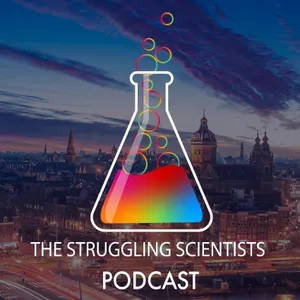
Welcome everyone to the Struggling Scientists Podcast. This is a podcast by Scientists, for Scientists. But also for aspiring Scientists, anyone science adjacent, and perhaps even hobbyists. Together we will be trying to bring back the fun in science. We all know the scientific field can be difficult and hard at times and it is easy to lose sight of our passion and enthusiasm. In this podcast, we will talk about Science and the people behind Science. Website: www.thestrugglingscientists.com
Latest Episodes
The most recent episodes — sign up to get AI-powered summaries of each one.
- 3 weeks ago30 min
Leaving Academia: How She Became a Scientist in Industry
Leaving academia can be intimidating. You've spent years training as a researcher, but what jobs can you actually do outside academia? And how do you even get started? 🎓Welcome to the first episode of After Academia: Coffee With…, our new interview series where we explore different careers beyond academia, together with the people who've made the transition. ☕In this episode, we're joined by Maria, a Senior Lab Operations Scientist in the pharmaceutical industry, who shares how she transitioned from academia to industry after her PhD.We talk about what her job actually involves, how she found her first opportunity in industry, which skills from her PhD turned out to be valuable, and what surprised her most about working outside academia.Maria also shares practical advice for PhD students and postdocs considering a similar career change, including how to approach networking, what to put on your LinkedIn profile, and why understanding the pharmaceutical industry can make finding the right job a lot easier.Whether you're actively planning to leave academia or simply curious about what else is out there, we hope this conversation helps you explore your options! 🙂⏰ Chapters00:00 🎓 Why transitioning from academia to industry is difficult00:25 ☕ Meet Maria: What does a Senior Lab Operations Scientist do?03:08 💼 A typical working day in the pharmaceutical industry05:26 🔄 Why Maria decided to leave academia07:00 🔎 Finding an industry opportunity through a fellowship09:07 🧠 Transferable PhD skills that are valuable in industry11:37 📚 Industry fellowships, training and leadership skills15:33 🤔 What Maria had to unlearn after her PhD18:02 🏢 The biggest surprises of working in industry20:24 💡 What she wishes she'd known before applying23:54 🚀 Practical advice for PhDs looking for industry jobs25:59 🧪 What is GMP, and why is it useful to know?29:08 ☕ Final thoughts and a small coffee confession🔬 About After Academia: Coffee With…There are many career paths beyond academia, but it isn't always easy to understand what these jobs actually involve or how to get into them.In this series, we sit down with former academics working in different fields to talk about their career transitions, their day-to-day work, the skills they use, and the advice they would give to researchers considering a similar path.Our goal is to make exploring careers beyond academia just a little bit less of a struggle.💬 Which career should we explore next?Are you considering leaving academia? Or have you come across a job outside academia that sounds interesting, but you have absolutely no idea what someone in that position actually does?Let us know in the comments! We'd love to hear your suggestions for future guests and careers to explore.🔔 Subscribe to The Struggling Scientists for more career conversations, research tools, and practical advice for PhD students and researchers.🌐 Find more from The Struggling Scientists:https://thestrugglingscientists.com#LeavingAcademia #PhDCareers #IndustryCareersAdvertising Inquiries: https://redcircle.com/brandsPrivacy & Opt-Out: https://redcircle.com/privacy
- Sep 21, 20268 min
How to Use Research Rabbit to Explore a Research Field
ResearchRabbit gives researchers a different way to explore scientific literature by visualising the connections between papers, citations and authors. 🐇🔎In this walkthrough, we show you how we use ResearchRabbit to explore a research field. We start with just one paper and gradually build a collection, before showing how you can start with an existing Zotero library or BibTeX file and explore a much larger body of literature. 📚We also look at how ResearchRabbit can help you discover connected papers, identify influential research, explore author networks and find connections that can be difficult to spot in a traditional list of search results. 🕸️🐇 Try ResearchRabbithttps://thestrugglingscientists.com/ResearchRabbitChapters00:00 👋 Introduction00:56 🐇 How ResearchRabbit changes literature discovery01:51 📄 Starting with one paper03:58 📚 Starting with Zotero or an existing collection04:31 🕸️ Understanding the literature map05:41 🔎 Refining your literature search06:20 ⚠️ Research alerts and retracted references06:49 👩🔬 Exploring authors and collaborations07:23 💭 Final thoughts and takeaways📚 More research tools and tutorials:https://youtube.com/playlist?list=PLz6aXl5V5V77ziE8Leh9IuMB4yY4m0Yjq&si=OaQLB5nKrTQdyNwJAdvertising Inquiries: https://redcircle.com/brandsPrivacy & Opt-Out: https://redcircle.com/privacy
- Jul 15, 202620 min
Can SciSpace Simplify Your Entire Research Workflow? | PhD Toolkit
SciSpace has become much more than a tool for chatting with PDFs. In this episode of the PhD Toolkit, we put it through a real research workflow to find out whether it actually deserves a place in your research toolkit.We test how well it helps with literature discovery, understanding papers, note-taking, writing and overall workflow before scoring it on our PhD Toolkit leaderboard.⭐ Try SciSpaceThis video isn't sponsored, but we do use affiliate links. If you decide SciSpace is right for you, using our link helps support the channel at no extra cost.🔗 Affiliate link:https://thestrugglingscientists.com/Scispace🎁 Discount codes:JNSS20 = 20% off monthly plansJNSS40 = 40% off annual plans, best for heavy users or systematic reviews___________________________________________________________________Chapters00:00 Introduction01:10 Setting up the test01:51 Finding papers04:56 Understanding papers05:38 Saving ideas10:23 Writing14:32 Research Impact15:37 Ease of Use16:31 Value for Money17:30 Workflow Integration18:35 Would we recommend it?19:09 Leaderboard update___________________________________________________________________📚 Watch the rest of the PhD Toolkit here:https://youtube.com/playlist?list=PLz6aXl5V5V77ziE8Leh9IuMB4yY4m0Yjq&si=OaQLB5nKrTQdyNwJAdvertising Inquiries: https://redcircle.com/brandsPrivacy & Opt-Out: https://redcircle.com/privacy
- May 25, 202617 min
Why You Struggle to Do Deep Work During Your PhD and how to fix your focus
Learn how to apply the core ideas from Deep Work by Cal Newport to your life as a PhD student, postdoc, or early-career researcher.In this episode, we break down what Deep Work actually is, why shallow work can take over your best energy, and how to use the four Deep Work methods: monastic, bimodal, rhythmic, and journalistic.If you want to protect more focused time for writing, reading, analysis, or research thinking, this episode will help you choose the Deep Work method that fits your academic life best.🎓 About our channelWe are The Struggling Scientists. We make honest videos about PhD life, academia, and how to make your research journey a little bit easier.If that sounds helpful, consider subscribing.-------------------------------------------------------------------------------------------------------------------------👉 We’ve created a free AI prompt to help you apply the Deep Work methods to your own research:https://thestrugglingscientists.com/deepwork-------------------------------------------------------------------------------------------------------------------------👉 We also created a full AI Tools for Academics Masterclass, where we walk through how to use AI ethically and effectively throughout the research process:https://thestrugglingscientists.com/MasterclassAI---------------------------------------------------------------------------------------------------------------------------⏰ TIMESTAMPS00:00 Introduction01:22 What is Deep work03:37 Four methods of Deep work04:26 Monastic method06:22 Bimodal method08:18 Rhythmic method10:22 Journalistic method13:43 Conclusion15:08 AI prompt for Deep work17:02 Final thoughts📱 Follow us for more contenthttps://thestrugglingscientists.com/newsletterhttps://www.instagram.com/thestrugglingscientistspodcast/https://www.linkedin.com/company/the-struggling-scientists-podcast/https://bsky.app/profile/thestrugglings4.bsky.socialhttps://www.tiktok.com/@struggling.scientistshttps://www.threads.com/@thestrugglingscientistspodcast#academia #phdlife #research #scientificresearch #gradschool #academiclife #deepworkAdvertising Inquiries: https://redcircle.com/brandsPrivacy & Opt-Out: https://redcircle.com/privacy
- May 7, 20268 min
The Worst AI Mistakes in Published Research
AI is already being used in academic research, and some of it is going very wrong.In this video, we break down real cases where the misuse of AI led to serious problems in published scientific papers. This includes fake references, copy pasted AI text, and completely incorrect AI generated figures that somehow made it through peer review.From a hospital librarian discovering that most references in a paper did not even exist, to a viral paper with biologically impossible AI images, these examples highlight a growing issue in modern science.But this is not just about researchers using AI incorrectly. It also raises bigger questions about peer review, journal responsibility, and how these mistakes are slipping through the system.________________________________________________________________👉 We are The Struggling Scientists, a channel for all struggling scientists out there.We share honest experiences, practical advice, and real stories to help make your life in academia just a little bit less of a struggle.🎓 Want to learn how to use AI properly in your research?We created a full AI for Academics Masterclass where we show you how to use AI tools ethically and effectively, without risking your work or credibility:https://thestrugglingscientists.com/MasterclassAI__________________________________________________________________⏰ TIME STAMPS00:00 AI is already breaking research00:50 Copy pasted ChatGPT in a published paper02:55Fake references discovered by a librarian04:40 AI generated figures that make no sense6:55 What this means for science7:50 Final thoughts📱 Follow us for more contenthttps://thestrugglingscientists.com/newsletterhttps://www.instagram.com/thestrugglingscientistspodcast/https://www.linkedin.com/company/the-struggling-scientists-podcast/https://bsky.app/profile/thestrugglings4.bsky.socialhttps://www.tiktok.com/@struggling.scientistshttps://www.threads.com/@thestrugglingscientistspodcast#academia #phdlife #research #ai #chatgpt #scientificresearch #gradschool #academiclife #researchintegrityAdvertising Inquiries: https://redcircle.com/brandsPrivacy & Opt-Out: https://redcircle.com/privacy
- Apr 23, 202617 min
Questions That Destroyed Years of Research (Academia Stories)
Academia can go wrong… very quickly.In this episode of Academic Tea, we react to real stories from researchers where a single question at a conference, lab meeting, or thesis defense completely changed — or even destroyed — someone’s research.From missing control variables… to flawed assumptions… to realizing your entire project might not be based on the right idea — these are the kinds of moments every scientist secretly fears.If you’ve ever presented your work, worked on a PhD, or sat through a brutal Q&A session… you’ll definitely recognize some of these.💬 Have you ever had a question completely throw you off during a presentation or meeting?Let us know in the comments — we might feature your story in a future episode!☕ Academic Tea is our series where we react to real academic stories — the good, the bad, and the painfully relatable.-------------------------------------------------------------------------------------------------------------------------👉 We’re The Struggling Scientists — a channel for all struggling scientists out there.We share honest experiences, practical advice, and real stories to help make your life in academia just a little bit less of a struggle.----------------------------------------------------------------------------------------------------------⏰ TIME STAMPS00:00 When one question destroys your research00:50 The wrong prey species experiment04:10 The variable mistake08:15 “Protein X isn’t even expressed”10:40 21,500 papers already exist…13:50 The missing control variable17:00 Final thoughts------------------------------------------------------------------------------------------------------------------🎓 Want to use AI tools in your research (ethically and effectively)?Check out our full AI Tools for Academics Masterclass:https://thestrugglingscientists.com/MasterclassAI---------------------------------------------------------------------------------📱 Follow us for more content!#academia #phdlife #research #gradschool #scientist #academiclife #phdstruggles #researchlife #academictwitterAdvertising Inquiries: https://redcircle.com/brandsPrivacy & Opt-Out: https://redcircle.com/privacy
- Apr 2, 20269 min
Episode 87: How to Actually Focus During Your PhD (Without Burning Out)
Most PhD students don’t struggle with focus because they’re lazy.They struggle because their attention is constantly being pulled in ten different directions.In this episode, we break down a simple framework to help you actually focus again — without burning out or relying on motivation.If you’ve been feeling scattered, stuck, or mentally drained, this will help you lock back in.-------------------------------------------------------------------------------------------------------------------------🎓 About our channelWe are The Struggling Scientists. We make honest videos about PhD life, academia, and how to make your research journey a little bit easier.If that sounds helpful, consider subscribing.-------------------------------------------------------------------------------------------------------------------------👉 We’ve created a free AI prompt to help you apply the LOCK framework to your own PhD:https://thestrugglingscientists.com/lock-------------------------------------------------------------------------------------------------------------------------👉 We also created a full AI Tools for Academics Masterclass, where we walk through how to use AI ethically and effectively throughout the research process:https://thestrugglingscientists.com/MasterclassAI---------------------------------------------------------------------------------------------------------------------------⏰ TIMESTAMPS00:00 Why You Can’t Focus01:30 The LOCK Framework02:21 Limit the Horizon04:00 Output Over Effort05:32 Cut Decisions07:18 Know What You’re Avoiding09:13 How to Lock InAdvertising Inquiries: https://redcircle.com/brandsPrivacy & Opt-Out: https://redcircle.com/privacy
- Mar 20, 20269 min
Episode 86: What a Dutch PhD Defense is Actually Like
Did you know that in the Netherlands, by the time you defend your PhD… you’ve already passed?Unlike in many other countries, the Dutch PhD defense is usually not the final exam that determines whether you get your degree. Your thesis has already been approved, failing is extremely rare, and the defense itself feels more like a formal and historic ceremony than an exam.In this video, I take you behind the scenes of my own Dutch PhD defense, exactly one year after it happened. I explain:Why the Dutch system is so differentWhat “Hora Est” meansWhy you have to defend in DutchThe historic role of paranymphsWhat the 45 minutes of questioning are really likeAnd how it felt to finally become DoctorIf you’re working toward your own PhD defense, curious about academic traditions in different countries, or simply wondering what a Dutch PhD ceremony looks like, this video is for you.-------------------------------------------------------------------------------------------------------------------------🎓 About our channelWe are The Struggling Scientists. We make honest videos about PhD life, academia, and how to make your research journey a little bit easier.If that sounds helpful, consider subscribing.-------------------------------------------------------------------------------------------------------------------------👉 We also created a full AI Tools for Academics Masterclass, where we walk through how to use AI ethically and effectively throughout the research process:https://thestrugglingscientists.com/MasterclassAI---------------------------------------------------------------------------------------------------------------------------⏰ TIME STAMPS00:00 You’ve Already Passed? (How the Dutch System Works)01:08 Strict PhD Requirements in the Netherlands04:08 What Defense Day Actually Looks Like05:19 Historic Traditions, Dutch Language & Paranymphs06:43 The 45 Minutes of Questioning07:32 Hora Est & Becoming Doctor08:40 One Year Later Reflection---------------------------------------------------------------------------------------------------------------------------Advertising Inquiries: https://redcircle.com/brandsPrivacy & Opt-Out: https://redcircle.com/privacy
Get The Struggling Scientists summaries in your inbox
Free AI-powered daily recaps. Key takeaways, quotes, and mentions — in a 5-minute read.
Get Free Summaries →Free forever for up to 3 podcasts. No credit card required.
You Might Also Like
Listeners also like.
Seeking A Scientist
A chemist hosts conversations with scientists to explore futuristic scientific possibilities and their real-world implications.
ScienceSphere
A weekly exploration of scientific discoveries across physics, biology, astronomy, and technology, explained clearly for all listeners.
Science Vs
A show that investigates popular topics and myths by analyzing scientific evidence to determine what’s fact, fiction, or uncertain.
The World, the Universe and Us
Explores big scientific questions about life, consciousness, climate, and the cosmos with expert scientists and New Scientist journalists.
Stanford Psychology Podcast
Students interview psychologists about recent research and its real-world applications.

The Rest Is Science
Hannah Fry and Michael Stevens explore puzzling scientific questions that challenge everyday assumptions about reality.

Science Magazine Podcast
Weekly episodes covering original scientific research, global science news, and expert commentary.

Surprisingly Brilliant
Seeker
The Life Scientific
A scientist discusses their research, inspirations, and career with physicist Jim Al-Khalili.
Bringing Chemistry to Life
Talks with leading chemists about their discoveries, careers, and the science shaping our world.

SolveItForKids Science podcast
Jennifer Swanson/Jeff Gonyea

Science Stuff To Blow Your Mind
Podgo
About The Struggling Scientists
Welcome everyone to the Struggling Scientists Podcast. This is a podcast by Scientists, for Scientists. But also for aspiring Scientists, anyone science adjacent, and perhaps even hobbyists. Together we will be trying to bring back the fun in science. We all know the scientific field can be difficult and hard at times and it is easy to lose sight of our passion and enthusiasm. In this podcast, we will talk about Science and the people behind Science. Website: www.thestrugglingscientists.com
Customized Recaps
AI-powered recaps with compact key takeaways, quotes, and insights.
Straight to Your Inbox
Get key takeaways from The Struggling Scientists in a 5-minute read.
Save Hours Every Week
Stay current on your favorite podcasts without falling behind.
Frequently Asked Questions
What is Podzilla's The Struggling Scientists daily summary?
It's a free AI-powered email that summarizes new episodes of The Struggling Scientists as soon as they're published. You get the key takeaways, notable quotes, and links & mentions — all in a quick read.
How does the The Struggling Scientists podcast summary work?
When a new episode drops, our AI transcribes and analyzes it, then generates a personalized summary tailored to your interests and profession. It's delivered to your inbox every morning.
Is this an official The Struggling Scientists product?
No. Podzilla is an independent service that summarizes publicly available podcast content. We're not affiliated with or endorsed by Suzanne and Jayron.
Can I get summaries of other podcasts too?
Absolutely! The free plan covers up to 3 podcasts, any in the catalog. Basic raises that to 15, Pro to 40 and Max to 100. Browse our full catalog at /podcasts.
How often does The Struggling Scientists release new episodes?
The Struggling Scientists publishes biweekly. Our AI generates a summary within hours of each new episode.
What topics does The Struggling Scientists cover?
The Struggling Scientists covers topics including Science, News, Education, Fitness, Commentary, Health & Fitness, Society & Culture. Our AI identifies the specific themes in each episode and highlights what matters most to you.
Start getting The Struggling Scientists summaries tomorrow morning.
Free forever for up to 3 podcasts. No credit card required.
Free forever for up to 3 podcasts. No credit card required.