Free Daily Podcast Summary
The Sector Debrief: Daily Summaries Delivered
by The Sector Debrief
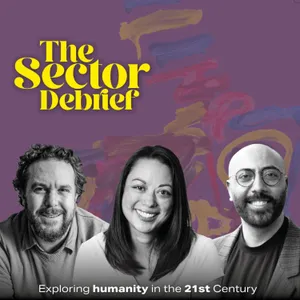
The Sector Debrief brings you inside the real conversations that shape the humanitarian and development world. No polished lines. No scripted answers. Just honest discussions about politics, funding, power, localization, pressure, and the future of crisis response. Hosted by Ali Al Mokdad, Kim Kucinskas, and Thomas Jepson Lay, the show opens the door to the side of this sector that rarely appears in public. If you want to understand what is truly happening beneath the surface, this is your seat at the table.For more: thesectordebrief.com
Latest Episodes
The most recent episodes — sign up to get AI-powered summaries of each one.
- 6 days ago56 min
E13: The Justification Fatigue
"Many leaders know the language of change. They know the language that they're supposed to say. They understand the rhetoric that is supposed to come out. Their actions don't back it up."Ahmed Ibrahim, twenty years in the NGO sector in East Africa, joins Kim Kucinskas and Thomas Jepson-Lay. He puts trust at the centre of leading through cuts, and names the gap between the people who set the strategy and the operations, finance and HR teams who have to carry it. He describes a region where the money has fallen to a fraction of what it was while displacement has gone from half a million people to more than three million, and organisations that cut from the bottom up. Donor fatigue is the popular word; what he lives with is justification fatigue and change fatigue. His rule: when you ask me to do more, tell me also what to stop. Thomas on why everyone agrees something has to drop until it is their thing, why the funding cuts were the trigger and not the cause, and why leaders who know the language of change still have to back it up with what they do. Kim on the moment money gets scarce and the mission and your own people end up at odds. It lands on trust, and on why trust is expensive.Honest thinking, challenging assumptions, shared without scripts and without talking points.Chapters: Cold open Ahmed Ibrahim joins East Africa, then and now What fills the gap Cutting from the bottom up Stuck in the middle Tell me what to stop Change, but not my part Leading through it Strategy and the back office One incident, new rules Strategic operations When values clash Alignment and attunement The trigger, not the cause Everything is going right? Trust and emotional labour Trust is expensive Reflections The Hot Debrief
- 3 weeks ago51 min
E12: Acting, or Acting?
"Are you actually comfortable with change, or are you just familiar with running change processes?"Kim Kucinskas comes back from three conferences in two weeks, the UNGA side events in New York, the WINGS Forum in Montreal and the InterAction annual conference in Washington, with a notebook full of the same words: trust, solidarity, collaboration, humility. One line from the WINGS opening stuck with her: act, as a verb, has two meanings. You can take action, or you can be an actor in a performance. Kim Kucinskas, Thomas Jepson-Lay and Ali Al Mokdad work through what those words are doing, and whether the sector is walking the talk or performing a part it thinks it is supposed to play.Ali Al Mokdad hears the same talking points recycled in Brussels, watches them lose their meaning in translation, and asks whether an NGO class has grown up that lives in the abstract while everything real happens outside it. Thomas Jepson-Lay asks whether this season will look like a pivot in hindsight, and brings a pole and a group of people holding it, attuned to one person's breathing, to show how collaboration works and how small things become scale. For him, the leaders thriving now are the ones stepping out of familiar discomforts into unknown ones. Kim Kucinskas argues that collaboration is a discipline rather than a sentiment, that there is no risk-free choice at a crucible moment, and that the hopeful shift is towards relational and moral language.It closes where these conversations tend to land: on leadership, with moral purpose at the centre of it.Honest thinking, shared without scripts and without talking points.Chapters: Cold open Kim's conference season Same words in every room? What do the words mean in practice? Is anything different this year? Is the language changing? Has the sector built its own class? Who was missing from the room? Is collaboration a skill? Comfortable with change, or familiar with it? How do you act when no choice is risk-free? Who is struggling on the other side? Why does the pole go up? How does small become scale? Can money and moral purpose share a table? Where do we leave it?
- Sep 20, 20261h 5m
E11: The Joy of Collaboration Over Control
"Not having the control is actually quite liberating."In this episode, Kim Kucinskas, Thomas Jepson-Lay, and Ali Al Mokdad are joined by Susan le Jeune d'Allegeershecque, Secretary General of St John International, to talk about leadership and localisation inside an organisation that has been locally rooted from the start, with a long investment in local leadership. Today it is a federation of 44 independent charities and nearly 200,000 volunteers drawn from the communities they serve.Susan mentions the joy of not controlling and shares the opportunities and challenges she has witnessed in the journey of leading St John International.Thomas Jepson-Lay presses on localisation and the leadership trap of rushing to fix. Kim Kucinskas separates small-t from big-T transformation, and names the tension: not everyone can be brought along. Ali Al Mokdad argues that the electric light did not come from continuous improvement of the candle, and that leadership requires rethinking systems while also learning from past experience.Honest thinking, shared without scripts and without talking points.Chapters: Cold open Meet Susan le Jeune and St John Locally led by design Lessons from an organisation built that way What headquarters and regions are for The joy of leading without control Tough decisions and living the values Not everyone comes along Investment in leadership, donors and funding Changing leaders in a federation What leaders of tomorrow need Courage, curiosity and the electric light Small t and big T transformation One question back to the hosts Hot debrief: the hosts on the conversation Thank you
- Aug 28, 20261h 4m
E10: Inside the Impact Alliance
"We are practising our way into what the future will look like."In this episode, Kim Kucinskas, Thomas Jepson-Lay, and Ali Al Mokdad are joined by Vanessa Self, Project Director of the Impact Alliance, the collaboration between CARE, Mercy Corps, and Save the Children, created when three CEOs, Michelle Nunn, Tjada D'Oyen McKenna, and Janti Soeripto, came together aiming for deeper collaboration and efficiency.Vanessa Self is honest about the initiative: collaboration is slower, harder, and less intuitive than the slogans suggest. And about what it opened: while the sector talked about what to cut, this became a space for what could be. She walks through the three workstreams that survived the testing of 81 possibilities: collaborative procurement, with potential savings she puts at around ten million dollars over the coming year, a community insights engine she calls accountability, but not as you know it, and scale works, which takes interventions that already have an evidence base and helps governments scale them. Along the way, partnership mapping revealed the organisations share only around 2% of their partners.Ali Al Mokdad asks what it takes to scale the collaboration that already exists at country and field level, and draws the line between efficiency and transformation. Kim Kucinskas presses on how change happens in a system designed to keep organisations fragmented. Thomas Jepson-Lay calls the Alliance a canary in the coal mine, and asks why agility still needs a CEO.And when the conversation ends, the microphones stay on. Kim, Thomas, and Ali stay behind for a debrief: what excited them, what frustrated them, and what the Impact Alliance really signals about how willing the sector is to change.Honest thinking, shared without scripts and without talking points.-------------------Learn more about the Impact Alliance:The three CEOs on why they are uniting (Devex): https://www.devex.com/news/we-are-uniting-to-change-the-future-of-aid-and-hope-funders-will-follow-112655CARE: https://www.care.org/about-us/strategic-partners/impact-alliance/Mercy Corps: https://www.mercycorps.org/who-we-are/impact-allianceChapters: Cold open Where the Impact Alliance began How the idea landed with staff Practising, not theorising Is this a merger? From 81 possibilities to three workstreams What it looks like at country level The Somalia procurement story Not survivalism Just starting to start Efficiency and transformation Small-t transformation A canary in the coal mine The message to funders Taking the Alliance to UNGA The Hot Debrief Panarchy and feedback loops Wishing the Alliance well
- Jul 10, 202650 min
E9: What Do You Tell the Next Generation?
"As educators, we need to start thinking about what we're educating people on."In this episode, Kim Kucinskas, Thomas Jepson-Lay, and Ali Al Mokdad work through a question all three keep getting asked. What do you tell a student, an emerging leader, or a colleague who just lost their job, about a career in humanitarian and development work, when the old pathway into it no longer exists the way it used to?The conversation moves between the personal and the structural. Ali Al Mokdad shares what he hears from students and early career leaders across the Global South and Global North, and returns to a distinction that shapes how he thinks about artificial intelligence: purpose versus task. The task, writing the email, taking the notes, is disappearing into artificial intelligence. The purpose behind it, overseeing a project, building judgement, learning how an organisation actually works, should not. Kim Kucinskas presses harder still. If entry-level roles disappear, where does the next generation get the hard-won judgement leadership actually requires? And if a seat at the table survives, does it just teach them the same power structures everyone says need to change?Ali Al Mokdad speaks about the hat he wears as a humanitarian diplomat: building bridges, keeping the door open when others choose to close it. Thomas Jepson-Lay closes on leadership identity, and the strange advantage emerging leaders have: they don't need to unlearn a version of leadership built for a world that no longer exists.Honest thinking, shared without scripts and without talking points.
- Jun 9, 202651 min
E8: Rethinking Risk Management in the Humanitarian and Development Sector
In this episode, Kim Kucinskas, Thomas Jepson-Lay, and Ali Al Mokdad are joined by Sabrina M. Segal, Director of The Risk Collaborative, who has spent years working on how organisations in the humanitarian and development sector actually think about risk. Her argument: risk is not compliance. It is the effect of uncertainty on objectives, and most of the sector has been doing it backwards, starting from a list of everything that might go wrong instead of from what the work is trying to achieve.The conversation moves between the practical and the structural, and Sabrina does not stop at the critique. She offers the tools. Start from the objective, then treat risk as a two-sided coin of threats and opportunities, because a sector that only looks at the downside loses half its creativity. Do the analysis upstream while the objective is still being designed, so the numbers can defend a budget when a funder reaches for the red pen. Run a three plus three strategy instead of a five year plan nobody can escape two years in. Replace endless prediction with organisational fragility work, her phrase is "don't predict, prepare", because over-reliance on one big funder sat on every risk register for years and the registers saved no one. And use the three P framework, Project, Partner, Patron, which reframes a women's organisation in Sudan judged high risk for lacking an insurance market that does not exist, and plots funders on a line from command and control to trust to see how far they will actually bend.Ali Al Mokdad reflects on how risk gets branded to win attention from headquarters, and why what a process leaves out often says more than what it includes. Kim Kucinskas builds on this with the idea of risk as a crack of opportunity, a language people in power actually listen to. Thomas Jepson-Lay presses on competing objectives and the fear of failure, and what happens when protecting the organisation quietly replaces protecting its purpose. It lands on what Ali calls the generational fight: clearing out the inherited compliance, outdated governance, and habits that drain the sector's energy, so the people who come next can spend theirs on the things that actually matter, climate, hunger, health, rather than the machinery around them.Honest thinking, shared without scripts and without talking points.
- May 27, 202649 min
E7: Donations, Collaboration, and AI in the Room
"This is not just a funding problem. It is a social contract problem."A mother and two children spend their Sunday knocking on doors, collecting donations for an NGO. Ali's brain goes straight to overhead costs and financial flows. Then he stops. What he is actually watching is people practicing values, not talking about them. Showing their children what solidarity looks like. Asking strangers to be part of something bigger than themselves. The social contract, in its simplest form.That moment sets the tone for the whole conversation.From there, Ali Al Mokdad, Kim Kucinskas, and Thomas Jepson-Lay move through two of the sector's most overused and under-examined ideas. Collaboration, which gets declared as a value but rarely built as a discipline. When organisations face complex problems, they cannot afford simple tools. Collaboration in the humanitarian and development sector requires a specific skill set, intentional leadership, and structures that most organisations have never built. And artificial intelligence, which is generating requirements on one side and generating compliance on the other, while the humans in between are still the ones holding it together. Artificial intelligence agents can process, produce, and automate. But they do not coordinate with each other, they do not question whether what they are building is real, and they do not replace the human judgment that makes any of it meaningful.Three practitioners. No script. Thinking out loud about the sector they work in, what is breaking down, and what might actually be worth building next.
- May 7, 202650 min
E6: The Sector Is Changing. How Do You Make Sense Of It?
“This is not just a funding problem. It's a social contract problem." Kim Kucinskas came back from a month on the road and needed to think out loud. This episode is that conversation.By using Kim’s experiences at a curated gathering of bridge builders and network weavers in Buenos Aires, and the Skoll World Forum in Oxford as real examples, Ali Al Mokdad, Kim Kucinskas, and Thomas Jepson-Lay work through what it means to make sense of a sector in transition, what is civil society actually for, and why aren't people experiencing it as a public good anymore?They talk about the difference between assimilating information and actually shifting your frame. About why staff in aid organisations are grieving the loss of an idea, not just the loss of colleagues or funding. About identity: who global south leaders are being told they are versus who they are choosing to become. And about the Three Horizons model: why the future will not be one new dominant system, and why that is actually the good news.
Get The Sector Debrief summaries in your inbox
Free AI-powered daily recaps. Key takeaways, quotes, and mentions — in a 5-minute read.
Get Free Summaries →Free forever for up to 3 podcasts. No credit card required.
You Might Also Like
Podcasts in similar categories.

The Jamie Kern Lima Show
Entrepreneur Jamie Kern Lima interviews experts and celebrities about overcoming self-doubt and building self-belief.

Coffeez with Joe Shalaby
Conversations with entrepreneurs, investors, and cultural figures reveal the real strategies, struggles, and costs behind success.

Unblinded with Sean Callagy
A legally blind entrepreneur shares insights on ethical influence, peak performance, and mastering hidden patterns in business and life.

The Room Podcast
Tech founders and funders share behind-the-scenes stories from pivotal moments in their careers.

All-In with Chamath, Jason, Sacks & Friedberg
Four tech investors discuss technology, markets, politics, and poker with candid, in-depth analysis.

The Money Mondays
Business discussions on investments, side hustles, and entrepreneurship with experts, athletes, and influencers in personal settings.

The Code To Winning
Interviews with business leaders, entrepreneurs, and CEOs reveal strategies and insights for success in the modern business world.

The Level Up Podcast w/ Paul Alex
A former detective shares real stories and practical strategies on building passive income, financial freedom, and entrepreneurial success.

From Underdog to Entrepreneur: Building Dreams with Pat Miller
A former underdog interviews successful entrepreneurs to share strategies for overcoming odds and building businesses from the ground up.

REAL AF with Andy Frisella
Andy Frisella and guests debate trending topics and controversial issues with unfiltered honesty.

The Home Service Expert Podcast
Home service business strategies from industry entrepreneurs and experts on growth, marketing, and scaling.

The Diary Of A CEO with Steven Bartlett
Raw, unfiltered conversations with influential figures and experts exploring personal growth, mindset, and the realities of success.
About The Sector Debrief
The Sector Debrief brings you inside the real conversations that shape the humanitarian and development world. No polished lines. No scripted answers. Just honest discussions about politics, funding, power, localization, pressure, and the future of crisis response. Hosted by Ali Al Mokdad, Kim Kucinskas, and Thomas Jepson Lay, the show opens the door to the side of this sector that rarely appears in public. If you want to understand what is truly happening beneath the surface, this is your seat at the table.For more: thesectordebrief.com
Customized Recaps
AI-powered recaps with compact key takeaways, quotes, and insights.
Straight to Your Inbox
Get key takeaways from The Sector Debrief in a 5-minute read.
Save Hours Every Week
Stay current on your favorite podcasts without falling behind.
Frequently Asked Questions
What is Podzilla's The Sector Debrief daily summary?
It's a free AI-powered email that summarizes new episodes of The Sector Debrief as soon as they're published. You get the key takeaways, notable quotes, and links & mentions — all in a quick read.
How does the The Sector Debrief podcast summary work?
When a new episode drops, our AI transcribes and analyzes it, then generates a personalized summary tailored to your interests and profession. It's delivered to your inbox every morning.
Is this an official The Sector Debrief product?
No. Podzilla is an independent service that summarizes publicly available podcast content. We're not affiliated with or endorsed by The Sector Debrief.
Can I get summaries of other podcasts too?
Absolutely! The free plan covers up to 3 podcasts, any in the catalog. Basic raises that to 15, Pro to 40 and Max to 100. Browse our full catalog at /podcasts.
What topics does The Sector Debrief cover?
The Sector Debrief covers topics including Business, Non-Profit. Our AI identifies the specific themes in each episode and highlights what matters most to you.
Start getting The Sector Debrief summaries tomorrow morning.
Free forever for up to 3 podcasts. No credit card required.
Free forever for up to 3 podcasts. No credit card required.