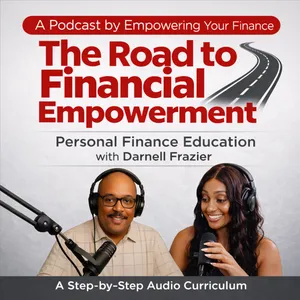
Free Daily Podcast Summary
The Road to Financial Empowerment | Personal Finance Education with Darnell Frazier: Daily Summaries Delivered
by Darnell Frazier
Get key takeaways, quotes, and insights from The Road to Financial Empowerment | Personal Finance Education with Darnell Frazier in a 5-minute read. Delivered straight to your inbox.
Latest Episodes
The most recent episodes — sign up to get AI-powered summaries of each one.
- Aug 12, 202516 min
Are College Degrees Losing Value? Gen Z & the Shifting Job Market
Are Four-Year Degrees Still the Best Path to Success?The job market is changing — and Gen Z is responding differently than previous generations.In this episode of The Road to Financial Empowerment, we explore how rising tuition costs, student debt, automation, and shifting labor demand are reshaping education and career decisions.Are college degrees still worth it? Or are alternative paths becoming more practical?What You’ll Learn• Why college costs continue to rise• How AI is impacting entry-level jobs• Why some degrees offer diminished returns• The growth of skilled trades• Economic opportunities outside traditional college paths• Employment trends among young men and women• What this shift means for future workforce developmentThe Bigger Economic PictureToday’s employment landscape reflects:• Higher education debt burdens• Slower white-collar job growth• Increased demand for technical and skilled labor• Technological disruption across industriesUnderstanding these trends helps young professionals make smarter education and career decisions.Alternative Career PathwaysSkilled trades and technical certifications are attracting more Gen Z workers because they offer:• Lower education costs• Faster workforce entry• Competitive income potential• Entrepreneurial opportunitiesCareer strategy now requires flexibility and awareness of economic demand.Related Episodes• Student Loan Garnishment Resumes• Student Loan Default & Wage Garnishment• Financial Education: A GuideContinue LearningRead the full article:www.roadtofinancialempowerment.com/blog/gen-z-grads-shifting-employment/Podcast Website:www.roadtofinancialempowerment.comFinancial Education Platform:www.empoweringyourfinance.comNewsletter:www.roadtofinancialempowerment.com/newsletter/FAQAre college degrees losing value? Some degrees offer lower returns due to rising tuition, student debt, and evolving labor demand. Outcomes depend on the field and economic conditions.Why are skilled trades gaining popularity? They offer lower education costs, strong job demand, and competitive earnings without large student debt.How is AI affecting Gen Z employment? Automation and AI tools are reshaping entry-level work and changing the demand for certain skill sets.Follow the show for weekly insights on careers, economic trends, investing, and building long-term financial independence.Financial empowerment means adapting to economic change — not resisting it.
- Aug 7, 202521 min
Is the FDIC in Danger? What Bank Failures Mean for Your Money
Are Your Bank Deposits Safe?Recent bank failures have raised questions about the safety of savings accounts.In this episode of The Road to Financial Empowerment, we separate fact from fear and explain how FDIC and NCUA insurance protections work — and what they actually cover.Understanding deposit insurance is essential during uncertain economic times.What You’ll Learn• What the FDIC is and how it works• How deposit insurance protects up to $250,000 per depositor• The difference between banks and credit unions• What NCUA insurance covers• What happens during a bank failure• Strategies to protect savings above insured limits• The risks and realities of keeping cash at home• Alternatives like money market accounts and CDsWhy This MattersFinancial headlines can create panic.But informed decisions require clarity, not fear.Knowing how federal deposit insurance works helps you:• Protect your savings• Reduce financial anxiety• Avoid unnecessary withdrawals• Make smarter banking decisionsPractical Protection StrategiesUnderstand FDIC insurance limits.Spread funds across institutions if necessary.Consider credit unions (NCUA insured).Review account ownership categories.Avoid panic-based financial moves.Protection starts with knowledge.Related Episodes• Retirement Planning: Can You Afford to Retire• What is Financial Empowerment• Big Beautiful Bill Policy EpisodeContinue LearningRead the full article:www.roadtofinancialempowerment.com/blog/fdic-in-danger-what-it-means/Podcast Website:www.roadtofinancialempowerment.comFinancial Education Platform:www.empoweringyourfinance.comNewsletter:www.roadtofinancialempowerment.com/newsletter/FAQIs the FDIC in danger?The FDIC insures deposits up to $250,000 per depositor per institution. While bank failures occur, insured deposits remain protected within coverage limits.How much money does FDIC insurance cover?Up to $250,000 per depositor, per insured bank, per ownership category.Are credit unions protected the same way?Yes. Credit unions are federally insured through the NCUA with similar coverage limits.Follow the show for weekly guidance on protecting your savings, understanding financial policy, and building long-term financial security.Financial empowerment includes protecting what you’ve worked hard to earn.
- Aug 5, 202521 min
What Is Financial Empowerment? How to Take Control of Your Money & Future
What Does Financial Empowerment Really Mean?Financial empowerment goes beyond budgeting.It is the ability to manage your money confidently, make informed decisions, and build long-term financial independence.In this episode of The Road to Financial Empowerment, we explore what financial empowerment looks like in practice — and how it transforms your financial future.What You’ll Learn• The true definition of financial empowerment• The difference between financial education and empowerment• How budgeting builds financial awareness• Why confidence matters in money decisions• Barriers that limit financial access globally• How empowerment creates independence• Steps to take control of your financial storyWhy Financial Empowerment MattersWithout empowerment, financial knowledge remains unused.With empowerment, you gain:• Confidence in decision-making• Control over spending and saving• Long-term wealth-building clarity• Reduced financial stress• Greater independenceEmpowerment turns information into action.Practical Steps Toward EmpowermentUnderstand your income and expenses.Create a realistic budget.Eliminate high-interest debt.Build an emergency fund.Invest consistently for the future.Stay informed about economic changes.Small actions build financial confidence.Practical Steps Toward EmpowermentUnderstand your income and expenses.Create a realistic budget.Eliminate high-interest debt.Build an emergency fund.Invest consistently for the future.Stay informed about economic changes.Small actions build financial confidence.Related Episodes• Financial Education: A Guide• Retirement Planning: Can You Afford to Retire• FDIC in Danger? What It Means for Your MoneyContinue LearningRead the full article: www.roadtofinancialempowerment.com/blog/what-is-financial-empowerment/Podcast Website: www.roadtofinancialempowerment.comFinancial Education Platform: www.empoweringyourfinance.comNewsletter: www.roadtofinancialempowerment.com/newsletter/FAQWhat is financial empowerment? Financial empowerment is the ability to confidently manage, control, and grow your finances to achieve independence.How is financial empowerment different from financial education? Education provides knowledge. Empowerment applies that knowledge to take action and build financial control.Why is financial empowerment important? It reduces financial stress, improves decision-making, and increases long-term financial stability.Follow the show for weekly insights on budgeting, investing, retirement planning, and building lasting wealth.Financial empowerment begins with clarity — and grows through action.
- Aug 3, 202514 min
Student Loan Default & Wage Garnishment: How to Protect Your Paycheck
What Happens When Student Loans Go Into Default?Missing payments on federal student loans can trigger serious consequences.After 270 days of nonpayment, loans enter default status — which can lead to:• Wage garnishment• Tax refund seizure• Social Security offsets• Damaged credit• Collection feesIn this episode, we explain what default means and how to protect your income before enforcement begins.What You’ll Learn• When a loan officially enters default• How wage garnishment works• How much can be withheld• How default affects your credit• What the Fresh Start program offered• How to exit default through rehabilitation• When consolidation may help• How Income-Driven Repayment (IDR) can prevent future defaultWhy This MattersDefault does not happen overnight — but once it happens, enforcement can move quickly.Without action, borrowers risk:• Reduced take-home pay• Increased financial stress• Long-term credit damage• Higher borrowing costsUnderstanding your options gives you leverage.Steps to Take If You’re at RiskCheck your loan status immediately.Contact your loan servicer.Explore rehabilitation options.Consider consolidation if appropriate.Review IDR eligibility.Respond quickly to any garnishment notice.Early action protects your paycheck.Related Episodes• Student Loan Garnishment Resumes 2025• Social Security Benefit Cuts & Defaulted Student Loans• Gen Z Grads: Shifting Employment LandscapeContinue LearningRead the full article:www.roadtofinancialempowerment.com/blog/student-loan-wage-garnishment/Podcast Website:www.roadtofinancialempowerment.comFinancial Education Platform:www.empoweringyourfinance.comNewsletter:www.roadtofinancialempowerment.com/newsletter/FAQWhen do student loans go into default? After 270 days of missed payments on most federal student loans.How much can be garnished from wages? Up to 15% of disposable income for defaulted federal loans.Can I stop wage garnishment? Yes. Options include rehabilitation, consolidation, enrollment in an IDR, or responding to the garnishment notice before enforcement.Follow the show for weekly guidance on debt management, retirement planning, and protecting your financial future.Financial empowerment means taking action before enforcement begins.
- Jul 18, 202510 min
Can You Afford to Retire? A Practical Guide to Retirement Planning
Can You Afford to Retire?Retirement is not just about reaching a certain age — it’s about reaching financial readiness.In this episode of The Road to Financial Empowerment, we break down the essential components of retirement planning and help you evaluate whether you are truly prepared for long-term financial stability.Whether you are approaching retirement or already retired, understanding your income sources and financial habits is critical.What You’ll Learn• What retirement planning really means• How to evaluate your retirement readiness• Key sources of retirement income• The role of Social Security• The importance of savings and investments• Healthcare and longevity considerations• How to transition into retirement confidentlyWhy This MattersRetirement planning impacts:• Your monthly income stability• Healthcare affordability• Investment strategy• Tax planning• Long-term financial independenceWithout a clear retirement plan, financial uncertainty increases.With the right strategy, retirement can become sustainable and secure.Core Retirement Income Sources• Social Security benefits• Employer-sponsored retirement plans (401(k), pension)• IRAs and investment accounts• Personal savings• Part-time or supplemental incomeUnderstanding how these sources work together determines whether you can afford to retire.Related Episodes• Social Security Overpayment Withholding Rate• What is Financial Empowerment• FDIC in Danger? What It Means for Your MoneyContinue LearningRead the full article:www.roadtofinancialempowerment.com/blog/can-you-afford-to-retire/Podcast Website:www.roadtofinancialempowerment.comFinancial Education Platform:www.empoweringyourfinance.comNewsletter:www.roadtofinancialempowerment.com/newsletter/FAQHow do I know if I can afford to retire?You must evaluate income sources, expenses, healthcare costs, savings, and projected longevity.What is the biggest mistake in retirement planning?Underestimating expenses and overestimating guaranteed income.How much money do I need to retire?It depends on lifestyle, location, healthcare needs, and expected lifespan — but planning early increases flexibility.Follow the show for weekly guidance on retirement planning, investing, policy updates, and building long-term financial security.Financial empowerment means retiring with clarity — not uncertainty.
- Jul 12, 202514 min
The “Big Beautiful Bill” Explained: Taxes, Medicaid Cuts & What It Means for Your Finances
What Does the “Big Beautiful Bill” Actually Change?A sweeping 887-page tax and spending bill has passed Congress and been signed into law.This legislation:• Permanently extends most 2017 tax cuts• Adds an estimated $3.3–$3.4 trillion to the federal deficit• Reduces Medicaid funding (impacting millions)• Tightens SNAP eligibility requirements• Adjusts SALT deductions (up to $40,000 cap)• Introduces new deductions for tips and seniors• Cuts certain clean energy incentives• Raises the debt ceiling by $5 trillionIn this episode, we break down what these changes mean for your taxes, healthcare access, and long-term financial future.What You’ll Learn• Who benefits most from extended tax cuts• How Medicaid reductions may affect households• What changes to SALT deductions mean• How the deficit increase impacts future policy• Why debt ceiling increases matter• How this bill may shape future taxes and spendingWhy This Matters for YouMajor tax and spending legislation influences:• Personal tax planning• Healthcare access• Retirement projections• Long-term inflation risks• Federal debt levelsUnderstanding policy shifts allows you to make informed financial decisions — regardless of political affiliation.Related Episodes• FDIC in Danger? What It Means for Your Money• Retirement Planning: Can You Afford to Retire• Gen Z Grads: Shifting Employment LandscapeContinue LearningRead the full breakdown: www.roadtofinancialempowerment.com/blog/trumps-big-beautiful-bill/Podcast Website: www.roadtofinancialempowerment.comFinancial Education Platform: www.empoweringyourfinance.comNewsletter: www.roadtofinancialempowerment.com/newsletter/FAQWhat is the “Big Beautiful Bill”?It is a comprehensive tax and spending package that extends prior tax cuts and adjusts federal spending programs.Does the bill affect Medicaid?Yes. The legislation includes funding reductions that may impact eligibility and coverage levels.How does raising the debt ceiling affect individuals?It allows the federal government to borrow more, potentially influencing future fiscal policy, interest rates, and inflation.Follow the show for weekly analysis of economic policy, taxes, retirement planning, and strategies to protect your financial future.Financial empowerment requires understanding how legislation affects your money.
- Jun 11, 202511 min
Student Loan Garnishment Resumes 2025: How to Protect Your Wages
Student Loan Garnishment Returns in 2025 — Are You at Risk?Federal student loan collections officially resume on May 5, 2025.After a five-year pause, millions of borrowers — including nearly 10 million in default — face the risk of:• Wage garnishment (up to 15%) • Tax refund seizures • Social Security offsetsWith 42.7 million Americans carrying $1.6 trillion in student debt, this policy shift affects households nationwide.This episode explains what is happening and how to protect your income.What You’ll Learn• Why federal collections are restarting• How wage garnishment works• Who is most at risk• What does the default status mean?• Income-Driven Repayment (IDR) options• Loan rehabilitation strategies• Consolidation pathways• How to avoid financial hardshipWhy This MattersWage garnishment can reduce take-home pay and create serious financial strain.Without action, borrowers may face:• Reduced income• Damaged credit• Increased financial stress• Long-term financial setbacksUnderstanding your rights and repayment options is critical.Immediate Steps to ConsiderCheck your loan status at StudentAid.gov.Explore Income-Driven Repayment plans.Consider rehabilitation if in default.Evaluate consolidation options.Contact your loan servicer immediately.Taking action early protects your wages.Related Episodes• Student Loan Default & Wage Garnishment Update• Social Security Benefit Cuts & Defaulted Student Loans• Gen Z Grads: Shifting Employment LandscapeContinue LearningRead the full article: www.roadtofinancialempowerment.com/blog/student-loan-garnishment-25/Podcast Website: www.roadtofinancialempowerment.comFinancial Education Platform: www.empoweringyourfinance.comNewsletter: www.roadtofinancialempowerment.com/newsletter/FAQWhen does student loan garnishment resume? Federal collections resume May 5, 2025.How much can be garnished from wages? Up to 15% of disposable income for defaulted federal student loans.How can I stop wage garnishment? Options include Income-Driven Repayment, rehabilitation, consolidation, or resolving default before garnishment begins.Follow the show for weekly guidance on debt management, retirement policy updates, and protecting your financial future.Financial empowerment includes defending your income and taking proactive action.
- Jun 2, 202510 min
Social Security Overpayment Update 2025: 50% Withholding Rate Explained
Why Is Social Security Withholding 50% of Benefits?The Social Security Administration (SSA) has updated its overpayment recovery rules.As of April 25, 2025, the default withholding rate for certain Social Security overpayments has been reduced from 100% to 50% for new Title II overpayment notices.While this is an improvement from a full 100% withholding, losing half of a monthly benefit can still create serious financial strain.This episode explains what changed — and what you should do if you receive an overpayment notice.What You’ll Learn• What a Social Security overpayment is • Why the SSA previously withheld 100% • Why the default rate is now 50% • Who the new rule applies to (Title II benefits) • What remains capped at 10% (SSI and prior cases) • Your 90-day window to respond • How to request a lower withholding rate • How to file an appeal or request a waiverWhy This MattersTitle II benefits include:• Retirement benefits • Survivor benefits • Social Security Disability Insurance (SSDI)A 50% withholding can significantly reduce income for retirees and individuals with disabilities who rely on these benefits.Understanding your options is essential to protecting your financial stability.If You Receive an Overpayment NoticeDo not ignore it.Contact the SSA within 90 days.Request a lower withholding rate if needed.Consider filing an appeal.Explore requesting a waiver of recovery.Taking action quickly protects your income.Related Episodes• Social Security Benefit Cuts & Defaulted Student Loans• Retirement Planning: Can You Afford to Retire• Student Loan Garnishment Resumes 2025Continue LearningRead the full article: www.roadtofinancialempowerment.com/blog/social-security-overpayment/Podcast Website: www.roadtofinancialempowerment.comFinancial Education Platform: www.empoweringyourfinance.comNewsletter: www.roadtofinancialempowerment.com/newsletter/FAQWhat is a Social Security overpayment? An overpayment occurs when the SSA determines that a beneficiary received more benefits than they were eligible for.Why is Social Security withholding 50% in 2025? The SSA reduced the default recovery rate from 100% to 50% for new Title II overpayment notices issued on or after April 25, 2025.Can I reduce the withholding amount? Yes. You can request a lower rate, file an appeal, or request a waiver depending on your financial situation.Follow the show for weekly updates on retirement policy changes, Social Security rules, debt management, and protecting your financial future.Financial empowerment includes understanding how policy changes affect your income.
Get The Road to Financial Empowerment | Personal Finance Education with Darnell Frazier summaries in your inbox
Free AI-powered daily recaps. Key takeaways, quotes, and mentions — in a 5-minute read.
Get Free Summaries →Free forever for up to 3 podcasts. No credit card required.
You Might Also Like
Listeners also like.
Optimal Finance Daily - Financial Independence and Money Advice
Optimal Living Daily | Diania Merriam

Real Talk Personal Finance's Podcast
RealTalkPersonalFinance
Financial Freedom Junkie
Adam Fernandez

Earn & Invest
Jordan Grumet (Doc G)

Follow the Money: Master the Markets, Build Wealth, and Achieve Financial Freedom
Follow the Money Podcast

Financial Feminist
Her First $100K
Financial Freedom Podcast
Steven J. Richardson, Esq.

Finance Fitness Finesse
Jaelyn Vickery
Financial Autonomy
Guidance Financial Services

Real Personal Finance
Scott Frank
Everyday Money Heroes
Nik Johnson

Money Glow Up with Tiffany Aliche
Yahoo Finance
About The Road to Financial Empowerment | Personal Finance Education with Darnell Frazier
The Road to Financial Empowerment is a structured, step-by-step personal finance education podcast hosted by Darnell Frazier, founder of Empowering Your Finance.Designed as a practical financial literacy curriculum, this show guides listeners through budgeting, credit strategy, debt elimination, investing fundamentals, retirement planning, and long-term wealth building.Each episode builds on foundational principles, helping you develop financial clarity, confidence, and control.This is not a trend-driven finance show. It is an educational roadmap for individuals who want structured financial knowledge and long-term independence.
Customized Recaps
AI-powered recaps with compact key takeaways, quotes, and insights.
Straight to Your Inbox
Get key takeaways from The Road to Financial Empowerment | Personal Finance Education with Darnell Frazier in a 5-minute read.
Save Hours Every Week
Stay current on your favorite podcasts without falling behind.
Frequently Asked Questions
What is Podzilla's The Road to Financial Empowerment | Personal Finance Education with Darnell Frazier daily summary?
It's a free AI-powered email that summarizes new episodes of The Road to Financial Empowerment | Personal Finance Education with Darnell Frazier as soon as they're published. You get the key takeaways, notable quotes, and links & mentions — all in a quick read.
How does the The Road to Financial Empowerment | Personal Finance Education with Darnell Frazier podcast summary work?
When a new episode drops, our AI transcribes and analyzes it, then generates a personalized summary tailored to your interests and profession. It's delivered to your inbox every morning.
Is this an official The Road to Financial Empowerment | Personal Finance Education with Darnell Frazier product?
No. Podzilla is an independent service that summarizes publicly available podcast content. We're not affiliated with or endorsed by Darnell Frazier.
Can I get summaries of other podcasts too?
Absolutely! The free plan covers up to 3 podcasts. Upgrade to Pro for 15, or Premium for 50. Browse our full catalog at /podcasts.
How often does The Road to Financial Empowerment | Personal Finance Education with Darnell Frazier release new episodes?
The Road to Financial Empowerment | Personal Finance Education with Darnell Frazier publishes 2x weekly. Our AI generates a summary within hours of each new episode.
What topics does The Road to Financial Empowerment | Personal Finance Education with Darnell Frazier cover?
The Road to Financial Empowerment | Personal Finance Education with Darnell Frazier covers topics including Education, Business, Investing, How To. Our AI identifies the specific themes in each episode and highlights what matters most to you.
Start getting The Road to Financial Empowerment | Personal Finance Education with Darnell Frazier summaries tomorrow morning.
Free forever for up to 3 podcasts. No credit card required.
Free forever for up to 3 podcasts. No credit card required.