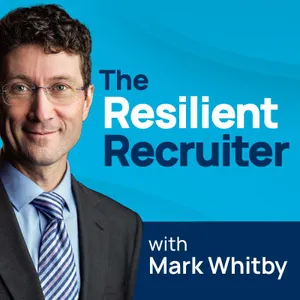
Free Daily Podcast Summary
The Resilient Recruiter: Daily Summaries Delivered
by Recruitment Coach Mark Whitby
Join "the Recruitment Coach" Mark Whitby as he and his guests unpack the secrets of what it takes to be a profitable and long-lived professional in the recruitment industry.
Latest Episodes
The most recent episodes — sign up to get AI-powered summaries of each one.
- 2 days ago57 min
The 10x Recruiter: Hand the Admin to AI and Make More Placements, with Tycho De Saeytyd
This episode is sponsored by Spott. Tycho De Saeytyd was enjoying his career at McKinsey when his former colleague Manu called about joining Spott. Ty told him there was less than a 1% chance he’d leave. He took the chance anyway, and today he is Head of US at Spott, which has raised US$21 million in Series A funding. Ty walks Mark through a recruiter’s workflow, from taking a client brief to presenting a shortlist. He shows where the admin piles up after every call, how an agency’s existing database can surface the right candidates for a new search, and how AI can help identify new opportunities with clients you already know. Mark also shares what his research taught him about AI and recruiter jobs, including why communication, influencing, qualifying and negotiation skills matter more as routine tasks become automated. If your team spends more time updating the system than talking to people, this one is worth your time. In this episode: Why Ty left McKinsey after saying there was less than a 1% chance Two ways legacy tech stacks cost agencies money Why some top billers leave their records incomplete How a client briefing call can become a search with suggested database matches Why the recruiter should always see the reasons behind each suggested candidate Turning one department at a client into an introduction to another Using hiring growth and funding signals to identify opportunities How a client portal shows the work behind your shortlist Why AI is mostly replacing tasks rather than whole roles The one question to ask any ATS or CRM vendor Timestamps 00:00 The admin that doesn’t increase your GP 01:22 Leaving McKinsey for Spott 06:31 How legacy tech stacks cost agencies money 08:17 Making candidate conversations searchable 10:12 The 10x recruiter 14:34 From client brief to database matches 24:27 Why top billers skip their admin 30:55 Opening a new department with an existing client 32:09 Hiring and funding signals 37:26 Preparing candidate presentations 39:20 Client portals that show your work 45:20 AI, tasks and recruiter skills 54:29 The one question to ask an ATS vendor About Tycho De Saeytyd Tycho De Saeytyd is Head of US at Spott, an AI-native ATS and CRM for recruitment and staffing agencies. He moved from Antwerp to New York to build out Spott’s US business. Before Spott, he was a Senior Engagement Manager at McKinsey, working with technology and private equity clients. Connect with Tycho LinkedIn: https://www.linkedin.com/in/desaeytydtycho/ Spott: https://spott.io/ Free Resources Recruitment Business Scorecard: https://recruitmentcoach.com/scorecard Free 30-minute strategy call: https://recruitmentcoach.com/strategy-session/ Connect with Mark Whitby LinkedIn: https://www.linkedin.com/in/mwhitby/ Twitter: @MarkWhitby Facebook: https://www.facebook.com/TheRecruitmentCoach/ Instagram: @RecruitmentCoach Subscribe to The Resilient Recruiter for new episodes every week.
- 1 weeks ago1h 7m
The Employee-Owned Recruitment Agency: How to Turn Recruiters Into Owners, with Mark Waschek and Scott Wedel
A top biller wants equity in your recruitment firm. Can you offer them a future as an owner? At Integra Partners, recruiters who generate $240,000 in placement revenue over 12 months become eligible for an invitation to buy shares. Eight of the firm’s 16 employees are shareholders. They receive distributions based on profitability, have access to the financials and have a defined arrangement for selling their shares when they leave. My guests, Mark Waschek and Scott Wedel, lead Integra Partners, the employee-owned company behind Ag1Source and Career1Source. Before becoming President and COO, they were competing billers in different parts of the business. Taking over from the founder meant learning to lead together, agreeing on where to invest and helping the founder prepare to let go. They explain why outside support, including a business psychologist, was so important to that process. Mark and Scott explain how employee ownership works in practice, what it changes about recruiting and retaining your own team, and the tension between shareholder payouts and investing in growth. In this episode: How recruiters qualify for an invitation to buy shares Why employees purchase shares with their own after-tax money How share prices, profit distributions and exit payments work What financial transparency demands of the leadership team How a retiring shareholder’s priorities can conflict with growth How two rival billers learned to lead one business Why clearer roles helped improve employee engagement Episode highlights: [01:32] Why the founders built an employee-owned recruitment firm [05:13] The $240K threshold and how recruiters buy shares [06:55] Leading when shareholders can see the P&L [09:42] The disagreement that brought the founder’s exit into focus [12:54] What happens to your shares when you leave [16:18] Balancing shareholder returns with investment [23:23] How a psychologist helped with the leadership transition [28:03] Dividing leadership responsibilities around their strengths About Mark Waschek and Scott Wedel Mark Waschek is President of Integra Partners. He joined Ag1Source in 2006 and brings a background in agriculture, executive recruitment and business development. Scott Wedel is Chief Operating Officer. He joined as a sourcer, became a search consultant and recruited in banking before moving into leadership. He has since handed over most of his recruiting desk to focus on developing the team and running the business. Connect with our guests: Mark Waschek’s profile and contact details Scott Wedel’s profile and contact details Ag1Source Career1Source Podcast Partner This episode is brought to you by Recruiterflow, an AI-native ATS and CRM built for recruitment agencies and executive search firms. Learn more: https://recruitmentcoach.com/recruiterflow Free Resources Recruitment Business Scorecard Free 30-minute strategy session with Mark Connect with Mark Whitby LinkedIn Facebook Instagram: @RecruitmentCoach Twitter: @MarkWhitby Subscribe to The Resilient Recruiter If one of your top billers is asking about equity and you don’t have an answer yet, this one is worth your time.
- 2 weeks ago50 min
Recruitment Principles: How a Contingent Agency Fills 84.6% of Jobs with Greg Benadiba
A contingent agency filling 84.6% of its jobs? I wanted to know how. That was Bilingual Source’s search-assignment fill rate in 2023. Every assignment comes with mandatory exclusivity. And Greg Benadiba has a way of earning that commitment even when the client is already working with other agencies. After taking a detailed brief, he asks how confident the client is that those other agencies really understand the role. In 25 years of coaching recruiters, I hadn’t heard that question used in this way. Greg is President and CEO of Bilingual Source and the author of Recruitment Principles. In this conversation, he explains the standards behind his team’s results, from choosing clients who will cooperate to making sure personal commission doesn’t get in the way of the best placement. He also shares a mistake: a candidate he didn’t call back, the bad review that followed and the potential referral it put at risk. It’s a practical example of what keeping your word means in a business built on trust. If you’re spending hours on jobs that never turn into placements, Greg’s approach will give you plenty to rethink. What you’ll learn: How Greg earns exclusivity through a more detailed job intake. What asking for interview slots upfront reveals about client commitment. How consistent business development gives you the confidence to turn work down. How he tackles internal competition over candidates and commissions. Where to start with allocating 10% of your time to improving the business. How he uses AI to track the commitments he makes on calls. How his Recruitment Principles GPT helped an account executive get a response after six weeks of client silence. Episode highlights: [01:56] The numbers behind Bilingual Source’s fill rate [05:47] Two questions that help Greg earn exclusivity [17:56] Testing client commitment before sending CVs [26:28] Why colleagues are each other’s number one customers [30:59] Making time to work on your business [43:42] The missed callback and the cost of broken trust [49:16] Getting a silent client to respond with the Recruitment Principles GPT About Greg Benadiba Greg Benadiba is President and CEO of Bilingual Source, a Toronto-based French and English recruitment firm. He started his career in customer service at Dell, joined Bilingual Source as a recruiter, and now owns the company. More than half of the firm’s placements come from network referrals, and it holds a 4.9-star Google rating. Greg is the author of Recruitment Principles: Timeless Truths in the Age of AI, which is required reading for everyone on his team. He first appeared on The Resilient Recruiter as guest number 14 in March 2020. Connect with Greg: Website and newsletter: https://gregbenadiba.com/ Recruitment Principles book: https://gregbenadiba.com/book/ Recruitment Principles Companion GPT: https://gregbenadiba.com/gpt/ LinkedIn: https://www.linkedin.com/in/gbenadiba/ Bilingual Source: https://bilingualsource.com/ Podcast Partner: This episode is brought to you by Recruiterflow, an an AI-native ATS and CRM with built-in AI agents that structure your data, monitor job changes and capture call notes into your CRM. Learn more: https://recruitmentcoach.com/recruiterflow Free Resources: Recruitment Business Scorecard: https://recruitmentcoach.com/scorecard Get your FREE 30-minute strategy call: https://recruitmentcoach.com/strategy-session/ Connect with Mark Whitby: LinkedIn: https://www.linkedin.com/in/mwhitby/ Twitter: @MarkWhitby https://twitter.com/markwhitby Facebook: https://www.facebook.com/TheRecruitmentCoach/ Instagram: @RecruitmentCoach https://www.instagram.com/recruitmentcoach/ Follow The Resilient Recruiter for weekly conversations with recruitment leaders about building a profitable business and a life you enjoy.
- 3 weeks ago1h 0m
How Recruiters Go From Dabbling With AI to Real Results, with Vanessa Raath
Vanessa Raath recently trained a team in Canada who thought they were using AI quite well. They all had the paid version. They just didn’t know what it could do. Vanessa helps recruitment teams put AI to work on their desks. She was already known worldwide for talent sourcing training when ChatGPT launched in November 2022. Within six months, she recognized how much sourcing work it could support and began training recruiters on AI. Today, she works with teams around the world from a small town on the South African coast. In this conversation, Vanessa walks Mark through a repeatable workflow that combines a raw CV, interview notes and a LinkedIn profile into a formatted CV and executive summary in under five minutes. She explains how she gets AI to help write her sourcing prompts, organizes client information, and teaches it to sound like her. They also discuss what recruiters need to do with the time they save. Vanessa explains why she ignores headhunters she can’t find online, and why a visible presence in your market gives clients and candidates a reason to trust you. If your team pays for AI but is still dabbling with it, this episode will help you decide what to set up first. In this episode: How to identify a recurring recruitment task for AI to help with Building a reusable skill for candidate CVs and executive summaries Why Claude gave Vanessa the best results when she tested three tools Removing sensitive personal information before uploading candidate documents Using Exa for candidate research and Tavily for competitor intelligence Getting AI to ask questions before it writes your sourcing prompt Using skills, projects and examples of your writing to improve the output Building the personal brand that helps clients and candidates trust you Episode highlights: [06:22] Getting up to speed with the right guidance [08:38] CVs and executive summaries in under five minutes [12:03] Testing the same workflow in Copilot, ChatGPT and Claude [25:55] Getting AI to help write your sourcing prompt [30:56] Dictating email replies with Copilot in Outlook [34:11] How Vanessa uses skills alongside projects [48:44] Why she checks the person behind a recruiter’s message [59:25] Start with an end goal and work towards it with AI About Vanessa Raath Vanessa Raath is a South Africa-based recruitment trainer who works with recruitment teams worldwide on AI and talent sourcing. She was already known internationally for sourcing training before expanding into AI following ChatGPT's launch. Her first course focused on helping recruiters build a personal brand. Connect with Vanessa LinkedIn: https://www.linkedin.com/in/vanessaraath/ Website: https://www.vanessaraath.com/ Tried and Tested AI Tools: https://start.me/p/l6bkk7/vanessa-raaths-tried-tested-ai-tools Podcast Partner This episode is brought to you by Recruiterflow, an AI-native ATS and CRM with built-in data enrichment for recruiting businesses. Learn more: https://recruitmentcoach.com/recruiterflow Free Resources Recruitment Business Scorecard: https://recruitmentcoach.com/scorecard Free 30-minute strategy session with Mark: https://recruitmentcoach.com/strategy-session/ Connect with Mark LinkedIn: https://www.linkedin.com/in/mwhitby/ Twitter: @MarkWhitby Facebook: https://www.facebook.com/TheRecruitmentCoach/ Instagram: @RecruitmentCoach Subscribe to The Resilient Recruiter for new episodes every week: https://plinkhq.com/i/1489513354
- Oct 7, 20261h 1m
Scaling: How to Build a $65M Recruiting Business That is Sellable, with Mike Kelly
For the first five to six years of his first recruiting business, Mike Kelly did everything himself. Cold calls, interviews, client meetings, even payroll. He began handing off the work when he asked himself: what's the highest and best use of my time? Mike is the Founder and CEO of Conexus Advisors and has grown and exited three professional services businesses. In this conversation, he shares how Conexus reached $65M in revenue, with 50 internal team members and 230 consultants working on client projects. The firm generates over $750,000 in gross profit per desk, including researchers. About 85% of the business is project consulting and interim advisory. Mike explains how that revenue supports growth and walks through the division of work between researchers, screeners, recruiters, and account executives. Two people work on the database all year so fee earners can spend their time talking to clients and candidates. Mike also explains how he develops managers who can take over coaching and grow their own teams. He shares why top billers don't always make good managers, how overrides and equity reward leadership, and what allowed him to hand over his own book of business for the first time in 28 years. In this episode: How to identify the work you should hand off first Why Mike and his partners went nine months without a paycheck How a split desk works from research through to offer Why account executives personally prepare candidates for interviews How staying within a clear niche improves desk productivity The conversion targets Mike uses to assess recruiting performance How to develop and reward team leaders What makes a recruiting firm sellable Episode highlights: [09:24] Building a business instead of owning a job [12:15] Protecting recruiter time and generating $750K GP per desk [14:20] The fear that keeps owners doing everything [16:33] Funding the team before paying yourself [19:24] How the split desk works [38:25] Conversion targets and the daily call report [48:54] What makes a recruiting firm sellable [54:49] Developing managers who take over coaching About Mike Kelly: Mike Kelly is the Founder and CEO of Conexus Advisors, an advisory, interim and executive search firm focused on the Office of the CFO. A former CPA, Mike began his career at Ernst & Young. Over the course of his career, he has founded, scaled and sold three professional services firms, including Spinnaker Financial Resources, Beacon Resources and Tactical Cloud. Connect with Conexus: https://conexusadvisors.com/ Podcast Partners: This episode is brought to you by Recruiterflow, an AI-native ATS and CRM built for serious recruiting businesses. Learn more: https://recruitmentcoach.com/recruiterflow It is also brought to you by Juicebox, the modern AI platform for recruiting. Juicebox combines more than 30 datasets with AI models to support search, outreach and pipeline management in one workflow. Learn more: https://recruitmentcoach.com/juicebox Free Resources: Book your FREE 30-minute strategy call: https://www.recruitmentcoach.com/strategy-session/ Take the Recruitment Business Scorecard: https://recruitmentcoach.com/scorecard Listen to more episodes: https://recruitmentcoach.com/podcast/ Connect with Mark Whitby: Mark on LinkedIn Mark on Twitter: @MarkWhitby Mark on Facebook Mark on Instagram: @RecruitmentCoach Subscribe to The Resilient Recruiter so you never miss an episode.
- Oct 1, 20261h 3m
How a $4M Recruiting Firm Rebuilt After a Brutal Year, with Josh Volinsky
A hot market can hide a lot of problems. Josh Volinsky and his partners launched Synergy Search in September 2020, and the accounting and finance recruiting firm has reached as high as $6M in revenue. When the market normalized, recruiters who had learned to work transactionally struggled to adapt, a run of hires didn't work out, and the founders recognized that they weren't tracking the activity behind their results. "We got sloppy. And when you aren't tracking activity in any way, you can't see it coming." In August 2025, a breakfast conversation between the three founders became the start of what Josh calls the reboot. That October, three recruiters each billed over $100K in a single month. At the time of recording, Synergy has 15 employees and revenue in the mid- to upper-$4 M range. Josh explains how they introduced accountability into a firm built on freedom, what their scorecard now measures, and why shared office days became part of the reset. He also discusses supporting the team following the death of their colleague Cara, and the training process that has helped accountants become successful recruiters. In this episode: How a strong market can disguise weaknesses in your recruiting business The breakfast question that prompted Synergy's reboot How conversion data encouraged a top biller to improve Why Josh prioritizes client interviews, job orders and calls How a Bullhorn-connected phone system reduced manual administration Why Synergy hires accountants and trains them to recruit How a written blueprint and regular role plays support new recruiters Episode highlights: [01:24] Hiring accountants as recruiters [07:28] Preparing financially to launch the business [18:11] Dividing responsibilities between three founders [22:32] Building the recruiting blueprint [25:29] Practical role plays that involve the whole team [43:58] The market shift that exposed transactional habits [48:31] The breakfast conversation that started the reboot [54:06] The three recruiting metrics Josh prioritizes About Josh Volinsky Josh is a co-founder of Synergy Search, an accounting and finance recruiting firm with offices in Maryland and Nashville. He began recruiting in 2007 and launched Synergy with Mark Hammond and Gary Palank in September 2020. He remains an active biller and joined The Pinnacle Society in spring 2025. Connect with Josh LinkedIn: https://www.linkedin.com/in/joshvolinsky/ Synergy Search: https://synergysearch.com/ Podcast Partners Recruiterflow: The AI-native ATS and CRM built for serious recruiting businesses. https://recruitmentcoach.com/recruiterflow Juicebox: The modern AI platform for recruiting search, outreach and pipeline management. https://recruitmentcoach.com/juicebox Free Resources Take the 7-Figure Freedom Scorecard: https://recruitmentcoach.com/scorecard Get your FREE 30-minute strategy call: https://recruitmentcoach.com/strategy-session/ Connect with Mark Whitby LinkedIn: https://www.linkedin.com/in/mwhitby/ Twitter: https://twitter.com/markwhitby Facebook: https://www.facebook.com/TheRecruitmentCoach/ Instagram: https://www.instagram.com/recruitmentcoach/ Subscribe to The Resilient Recruiter: https://plinkhq.com/i/1489513354 What would you change if you could start your recruitment firm again today?
- Sep 23, 20261h 0m
Rainmaker: The Business Development Machine That Feeds a 22-Person Team, with Kimberly Laipple
In 2023, Kim Laipple led a 28-person team at Scientific Search and personally billed $1.4 million. Since then, the biotech market has been volatile. Between the downturn, retirements and other changes, the team dropped to about 16. Kim was also promoted to President after the previous owner retired. Today, Scientific Search is back to around 22 people. Kim is running the business while still spending 30% to 50% of her week generating new business. In this episode, Kim walks through the five channels feeding her pipeline: SEO that took nearly a year to produce consistent results, LinkedIn content built around the company and her personal brand, signal-based outbound using intent data, email marketing that depends on timing and relevance, and visibility through Claude and ChatGPT. She also explains the 90-day training program she created for four new hires. Instead of giving inexperienced recruiters immediate ownership of live searches, the program allows them to build confidence on the phone while supporting established recruiters and protecting existing client relationships. Kim is candid about the hardest part of becoming President. It is not learning new responsibilities. It is stepping back from the work that made her successful and allowing other people to do things differently. In this episode, you’ll discover: How Scientific Search contracted from 28 people to 16 and rebuilt to 22 Why do new hires spend their first 30 days building confidence on the phone The five channels behind Kim’s business development machine Why SEO took nearly a year to produce consistent leads How ZoomInfo intent data changes who gets called and when Why Kim tracks gross profit per fee earner across three groups What it takes to move from placements into longer-term strategy Why Kim launched a podcast interviewing life sciences leaders Episode Highlights: [00:00] Why Kim still calls herself “the rainmaker” [01:22] Scientific Search goes from 28 people to 16 and rebuilds to 22 [05:24] Moving from placements into longer-term strategy [12:08] Dividing the week between rainmaking, coaching and training [24:36] Why the first 30 days center on phone work [39:48] The five channels behind Kim’s business development machine [42:54] SEO produces five to seven qualified company leads a month [45:36] Timing outreach with ZoomInfo intent data Podcast Partners: This episode is brought to you by Recruiterflow, an AI-native ATS and CRM built for serious recruiting businesses. Learn more: https://recruitmentcoach.com/recruiterflow It is also brought to you by Juicebox, the modern AI platform for recruiting. Juicebox combines more than 30 datasets with AI models to support search, outreach and pipeline management in one workflow. Learn more: https://recruitmentcoach.com/juicebox About Kim: Kimberly Laipple is President of Scientific Search. Alongside her operational responsibilities, she continues to run a full desk while managing 18 recruiters and researchers. Kim has more than 30 years of recruitment experience and has personally billed more than $1.4 million in a single year. She is also Vice President of the Pinnacle Society, a consortium of 80 leading recruiters. During her 18 years with Scientific Search, Kim has placed professionals across clinical and commercial operations, manufacturing, engineering, R&D and analytics. She holds an MBA and a BS in Business Management from Rowan University. Connect with Kim: Kim Laipple on LinkedIn Scientific Search Inside the Industry with Kim Laipple Connect with Mark: Free 30-minute strategy call: recruitmentcoach.com/strategy-session Mark on LinkedIn: linkedin.com/in/mwhitby Instagram: @RecruitmentCoach Subscribe to The Resilient Recruiter for a new conversation with a top recruitment leader every week.
- Sep 16, 202659 min
She Sold Her Firm to Give Her Team a Bigger Ceiling, with Charlie Saffro
Every December, Charlie Saffro caught up with a friendly competitor at Hirewell to compare notes on the recruiting market. At the end of their 2024 call, after four difficult years, she said something almost as a joke: if you know anyone looking to buy a supply chain recruiting firm, let me know. About a week later, Hirewell's owner called her. Charlie founded CS Recruiting in 2010 and spent 15 years building a specialist logistics, supply chain and transportation firm. She had no exit plan. What changed was a prolonged downturn and two rounds of layoffs, the first in the company's history. Charlie explains why she rejected buyers who wanted her client book without her people, and what she was looking for instead. She also talks through the part most owners never hear about: almost 12 months of confidential negotiation, running the business while both her senior leaders were on leave, and what closing day actually looked like from the 8am signature to the 3pm welcome meeting. The second half of the conversation is about what happened next. Charlie walks through how her recruiters moved from a split desk into full desk work one account at a time, what that did for accountability and ownership, and why the best source of new business was already sitting in their database. If you are weighing an exit, or you want your recruiters to own more of the work, Charlie's experience is worth an hour of your time. In this episode: Why Charlie sold to protect her team rather than to cash out The three types of buyer she rejected and what disqualified each one What almost 12 months of confidential negotiation actually involves How she handled due diligence while two senior leaders were on leave What closing day looked like, hour by hour The advantages and disadvantages of full desk and split desk How recruiters can move into business development one account at a time Why past candidates may be your best source of new clients Episode highlights: [02:31] CS Recruiting joins Hirewell and Charlie's entire team comes with her [04:16] Fifteen years in business with no formal exit plan [12:07] The buyer conversations that failed Charlie's test [15:14] Keeping the deal secret while running the business [18:30] The offhand comment that led to a call one week later [21:19] Two senior leaders go on leave during the negotiation [26:41] Signing at 8am and telling the team at 10am [31:35] Moving recruiters toward full desk one account at a time [33:23] Full desk versus split desk and the accountability trade-off [39:14] Providing value on a retained search without a placement [42:14] Why past candidates can become your best source of business [49:33] Using recorded calls and AI feedback to coach recruiters Podcast Partners: This episode is brought to you by Recruiterflow, an AI-native ATS and CRM built for serious recruiting businesses. Learn more: https://recruitmentcoach.com/recruiterflow It is also brought to you by Juicebox, the modern AI platform for recruiting. Juicebox combines more than 30 datasets with AI models to support search, outreach and pipeline management in one workflow. Learn more: https://recruitmentcoach.com/juicebox Free Resources: 7-Figure Freedom Scorecard: https://recruitmentcoach.com/scorecard About Charlie Saffro: Charlie Saffro founded CS Recruiting, a specialist recruitment firm serving logistics, supply chain and transportation. She started the company in 2010 and led it for 15 years before it joined Hirewell in December 2025. CS Recruiting now operates as a Hirewell company, giving its clients access to a broader nationwide recruiting team while retaining the specialist brand and team Charlie built. Connect with Charlie Saffro: LinkedIn: https://www.linkedin.com/in/charliesaffro CS Recruiting: https://www.cs-recruiting.com/ Hirewell: https://hirewell.com/ Connect with Mark Whitby: Get your FREE 30-minute strategy call: https://recruitmentcoach.com/strategy-session/ LinkedIn: https://www.linkedin.com/in/mwhitby/ Twitter: https://twitter.com/markwhitby Facebook: https://www.facebook.com/TheRecruitmentCoach/ Instagram: https://www.instagram.com/recruitmentcoach/ Subscribe to The Resilient Recruiter: https://plinkhq.com/i/1489513354
Get The Resilient Recruiter summaries in your inbox
Free AI-powered daily recaps. Key takeaways, quotes, and mentions — in a 5-minute read.
Get Free Summaries →Free forever for up to 3 podcasts. No credit card required.
You Might Also Like
Listeners also like.

Hunters and Unicorns
Explores the strategies and journeys of top tech leaders and sales innovators shaping the software industry.

Coaching Inc with Tom Krol
Teaches coaches and consultants how to generate consistent leads and increase income using proven, efficient marketing strategies.

Success Profiles Radio
Explores diverse aspects of success through interviews with experts in leadership, business, health, relationships, and personal growth.

Right About Now - Legendary Business Advice
Raw business insights from founders and industry leaders, revealing real wins, failures, and actionable strategies without the fluff.

The Entrepreneur DNA
Entrepreneurs share lessons on building businesses and personal growth through real experiences and mistakes.

Your Brand Amplified
Explores the strategies and mindsets of successful entrepreneurs in business growth, marketing, and personal branding.
Consulting Success Podcast
Strategies for building a profitable, scalable consulting business, from client acquisition to team management and marketing that works.

The Uncommon Career: Job Search & Career Coaching for Mid-career Women
Helps mid-career women improve their job search by refining personal branding, communication, and negotiation strategies.

The Balanced, Beautiful and Abundant Show - Rebecca Whitman
A coach helps high-achieving women overcome burnout using a framework centered on spiritual, emotional, physical, and financial well-being.

Wantrepreneur to Entrepreneur | Start and Grow Your Own Business
Teaches aspiring entrepreneurs how to start and grow customer-focused businesses using proven marketing strategies and systems.

Business MVP
Athletes and sports entrepreneurs discuss how their experiences shape leadership, business, and community impact.

The Abundant Accountant Podcast: Sales & Business Growth for Accounting, Tax, and Bookkeeping Firm Owners
Teaches accounting, tax, and bookkeeping firm owners how to raise fees, improve sales, and build profitable firms without burnout.
About The Resilient Recruiter
Join "the Recruitment Coach" Mark Whitby as he and his guests unpack the secrets of what it takes to be a profitable and long-lived professional in the recruitment industry.
Customized Recaps
AI-powered recaps with compact key takeaways, quotes, and insights.
Straight to Your Inbox
Get key takeaways from The Resilient Recruiter in a 5-minute read.
Save Hours Every Week
Stay current on your favorite podcasts without falling behind.
Frequently Asked Questions
What is Podzilla's The Resilient Recruiter daily summary?
It's a free AI-powered email that summarizes new episodes of The Resilient Recruiter as soon as they're published. You get the key takeaways, notable quotes, and links & mentions — all in a quick read.
How does the The Resilient Recruiter podcast summary work?
When a new episode drops, our AI transcribes and analyzes it, then generates a personalized summary tailored to your interests and profession. It's delivered to your inbox every morning.
Is this an official The Resilient Recruiter product?
No. Podzilla is an independent service that summarizes publicly available podcast content. We're not affiliated with or endorsed by Recruitment Coach Mark Whitby.
Can I get summaries of other podcasts too?
Absolutely! The free plan covers up to 3 podcasts, any in the catalog. Basic raises that to 15, Pro to 40 and Max to 100. Browse our full catalog at /podcasts.
How often does The Resilient Recruiter release new episodes?
The Resilient Recruiter publishes weekly. Our AI generates a summary within hours of each new episode.
What topics does The Resilient Recruiter cover?
The Resilient Recruiter covers topics including Business, Careers, Entrepreneurship. Our AI identifies the specific themes in each episode and highlights what matters most to you.
Start getting The Resilient Recruiter summaries tomorrow morning.
Free forever for up to 3 podcasts. No credit card required.
Free forever for up to 3 podcasts. No credit card required.