Free Daily Podcast Summary
The One Inside: An Internal Family Systems (IFS) podcast: Daily Summaries Delivered
by Tammy Sollenberger
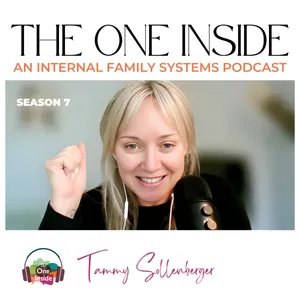
The One Inside: An Internal Family Systems (IFS) podcast is for anyone looking to find balance and harmony. IFS can help you understand the tug-of-war within your mind and rediscover your natural calm, creativity, and clarity. IFS can also heal the parts of you who hold pain. Hosted by certified IFS therapist, Tammy Sollenberger, this show aims to educate, support, and encourage those who are curious about IFS model of psychotherapy. Join Tammy each episode for a fun, warm, engaging conversation with various members of the IFS community.
Latest Episodes
The most recent episodes — sign up to get AI-powered summaries of each one.
- 2 weeks ago41 min
IFS Health Therapy with Nancy Sowell
Episode Description This week I welcome Nancy Sowell to the podcast to kick off Season 8. She spearheaded the intervention program behind the landmark study with medical patients that helped establish IFS as a promising treatment, and she wrote a book about what IFS has to offer our physical health. This one also feels like a full circle moment. Nancy was my lead trainer when The One Inside was just getting started. In this episode we talk about how chronic stress, childhood adversity, perfectionism, and burdened parts affect our physical health, and what IFS can offer. Takeaways Parentification, taking on adult roles or becoming an emotional support for parents in childhood, shows up again and again in the trauma histories of people with autoimmune disease Our health is influenced by our genome and our exposome - the collection of everything we've been exposed to throughout our lives, from gestation forward Chronic internal stress from parts carrying burdens, like "I'm not good enough," has a measurable effect on the body Nancy realized her body had been her guide all along, she just hadn't been tuning in Admitting you're wrong is a relief to your protectors. It's worth considering what it costs them to keep you from doing it Parts that don't want to connect to the body often have very good reasons. Start there About Nancy Nancy Sowell, LICSW, is a Senior Trainer for the IFS Institute and a Harvard Medical School Teaching Associate. She spearheaded the intervention program behind the landmark study with medical patients that helped establish IFS as a promising treatment. She has spent her career exploring how chronic stress, trauma, and unmet emotional needs--especially during childhood--affect our physical health throughout our lives, and what IFS offers for deep, sustainable well-being. Her new book, IFS Health Therapy, co-authored with Martha Sweezy and Richard Schwartz, is available now. Episode Sponsor This episode is sponsored by the IFS Institute. This October, join the IFS Institute for the 2026 IFS Annual Conference, happening fully online October 15th and 16th. Over two days, you'll hear from over 45 voices from across the IFS community exploring the theme of Self in Relationship: From Inner Healing to Collective Repair. This year's workshops will cover topics from clinical practice and emerging research to Self-leadership, relationships, culture, and the challenges we're navigating in the world today. Because this year's conference is fully virtual, you can join the IFS community from wherever you are. Early Bird pricing is available through September 30th. Visit ifs-institute.com/conference to learn more and register. About The One Inside I started this podcast to help spread IFS out into the world and make the model more accessible to everyone. Eight years later, that's still at the heart of all we do. Join The One Inside Substack community for bonus conversations, extended interviews, meditations, and more. Find Self-Led merch at The One Inside store. Listen to episodes and watch clips on YouTube. Follow me on Instagram @ifstammy or on Facebook at The One Inside with Tammy Sollenberger. I co-create The One Inside with Jeff Schrum, a Level 2 IFS practitioner, coach, and creativity consultant. Resources New to IFS? My book, The One Inside: Thirty Days to Your Authentic Self, is a great place to start. Want a free meditation? Sign up for my email list and get "Get to Know a Should Part" right away. Sponsorship <p di
- Aug 20, 202638 min
Living Into Divine Essence with Brian Jaudon (Season 7 Finale)
Brian Jaudon is back on the podcast to help us wrap up Season 7. We talk about soul alignment, what it means to organize your life around your divine essence, and what happens when a chapter closes and something new wants to emerge. Takeaways The question Brian has asked clients for 30 years: what has your life been organized around, and what would you like to reorganize it around? Invitation is a spiritual state. Have you invited what you want into your consciousness, your body, and your whole being? Soul misalignment shows up as a felt sense, and the body knows when something is off Once you've experienced a state of consciousness, you have access to it Live into what is and what wants to be, not what was or what should be Anything not aligned with your divine essence will surface to be examined, released, or renegotiated Brian's medicine journey revelation: we get to exist on this planet without being of service; we can choose how we want to show up and share our gifts with the world Relationship first, task second About Brian Brian Jaudon is a sacred witness to the divine unfolding of one's life. After 30 years as a coach, including his early role as a pioneer in the integration of IFS and coaching, Brian is embracing a new path and calling that is more vibrational and spiritual in nature. For the first time in his professional life, he is inviting individuals and couples to work with him in person at his home (Turtle Ridge) in the Blue Ridge Mountains of western North Carolina. Brian's new website is www.divinebecoming.love Episode Sponsor This episode is sponsored by Therapy Training Boston. Therapy Training Boston offers live, in-person, and online workshops, plus consultation for therapists and other helping professionals, designed to support you as a whole person while satisfying your CE requirements. All of their offerings are taught with an eye toward context, power, and relational justice, and draw on the family systems theories and best practices that shaped the IFS model. They also offer an Intensive Certificate Program in Couples and Family Therapy to help you build confidence and capacity in community. About The One Inside I started this podcast to help spread IFS out into the world and make the model more accessible to everyone. Eight years later, that's still at the heart of all we do. Join The One Inside Substack community for bonus conversations, extended interviews, meditations, and more. New to IFS? My book, The One Inside: Thirty Days to Your Authentic Self, is a great place to start. Listen to episodes and watch select clips on YouTube. Follow me on Instagram @ifstammy or on Facebook at The One Inside with Tammy Sollenberger. I co-create The One Inside with Jeff Schrum, a Level 2 IFS practitioner, coach, and creativity consultant. Sponsorship Want to sponsor an episode of The One Inside? Email Tammy.
- Jul 30, 202654 min
Self Unbroken with Robert Falconer
On today's episode we welcome Bob Falconer back to the podcast. Bob is an IFS teacher, consultant, and author who has devoted decades to trauma healing and the study of mind and spirit. He co-authored Many Minds, One Self with Dick Schwartz and wrote The Others Within Us. His memoir, Self Unbroken, is out now. It's hard to pick a favorite "Bob" episode, but this one might be my favorite so far. We talk about his daily practice of dialoguing with Spirit, the sewer path to wisdom, what skeptical parts need, and the monk who changed everything for him Takeaways Self may be less like a particle and more like a field. The high road to wisdom is lined with people waving shiny objects. Bob suggests trudging through the sewer instead. Skeptical parts don't need to be shut down, they need to be invited in. Not knowing is the beginning of knowledge When a spirit dialogue starts making you feel superior to others, it's your clue the signal has been hijacked Understanding a past life isn't what heals it. Witnessing and unburdening the emotional charge is what changes things Use your client's language instead of imposing yours Here's a link to The One Inside Audio Guides I mentioned in the intro. About Robert Falconer: For the early decades of his career, Bob focused on work with men who had histories of major sexual and physical abuse as Bob had. He used various forms of parts work (Ego State Therapy, Gestalt, and Pia Mellody's work among others) but some 16 years ago he discovered Internal Family Systems Therapy (IFS) and is now focused exclusively on IFS, which he finds to be the most respectful and powerful modality. His own recovery is the deep basis for all his work. Bob has taught IFS extensively and internationally online and has led classes and trainings in Pakistan, China, South Korea, Mexico, Poland , Spain, Canada, the UK, and for the Fort Belknap reservation. He has also been on the staff of over 20 of the official IFS institute trainings. Bob has been actively involved with psychedelics since 1967 and continues to view them as a powerful pathway. He is the author of six books related to IFS, spirituality and inner healing: Many Minds, One Self (2017), co-authored with Richard C. Schwartz, founder of IFS; The Others Within Us (2023); When Going Through Hell… Keep Going (2024); Opening the Inner World (2025), co-authored with two experts on Emanuel Swedenborg; Spirit (2025), a compilation drawn from journals of his daily dialogues with Spirit, and Self Unbroken a memoir of the beginnings of his recovery from childhood sexual abuse (2026). Now at in his late seventies, Bob mostly teaches and leads supervision classes, only occasionally seeing individuals, often with their therapist. Episode Sponsor This episode is sponsored by Souliology. Souliology offers retreats and immersive learning experiences for IFS professionals, many led by IFS Senior Lead Trainers and eligible for continuing education credits. Their programs support deep professional and personal growt
- Jun 25, 202631 min
Connection After Loss with Liz Brenner
This episode didn't go as planned, and I'm grateful it didn't. I invited Liz Brenner on the podcast to talk about the Family Process article on the family systems roots of IFS she co-authored with Dick Schwartz and Carol Becker in 2023. Instead, we found ourselves talking about grief. A month before we recorded, my dad died unexpectedly. Liz lost her partner, Dan, in 2018, just six weeks after his cancer diagnosis. We both came into the conversation still processing our losses, and grief was the conversation we needed to have. Takeaways Grief can break you, and it can also heal you. Both can be true at once A felt connection to someone who has died can be a real and ongoing relationship When the spiritual dimension of Self gets left out, the Self-to-part relationship can feel smaller than it actually is Constraint release, an idea from family systems therapy, asks what pattern isn't working rather than what's broken Meaning-making is an often-overlooked stage of grief A part that's afraid of losing connection to someone you love can be asked to step back (Liz learned that during a session with Dick Schwartz) Family systems theory shaped IFS more than we realize We'll have Liz back on to finish the conversation about the family systems article. About Liz Brenner Liz Brenner, LICSW, is the director of Therapy Training Boston, the continuing legacy of the Family Institute of Cambridge. She is the primary instructor of their Intensive Certification Program in Couples and Family Therapy and co-author, with Richard Schwartz and Carol Becker, of the 2023 Family Process article on the development of the IFS model (email Liz for access to the article). Follow Therapy Training Boston on Facebook or Instagram. Links: Therapy Training Boston Courses and Workshops Episode Sponsor This episode is sponsored by Souliology. Souliology offers retreats and immersive learning experiences for IFS professionals, many led by IFS Senior Lead Trainers and eligible for continuing education credits. Their programs support deep professional and personal growth, offering space to step away from the demands of daily life so you can return to your practice more present and resourced for the clients you serve. Souliology: Where growth meets depth. Learn more at souliology.com About The One Inside I started this podcast to help spread IFS out into the world and make the model more accessible to everyone. Seven years later, t
- Jun 9, 202649 min
Trauma Coaching and Addiction Recovery with Achara Tarfa
My guest on today's episode is Achara Tarfa. She is a certified IFS practitioner, co-founder of the Global Trauma Institute, and director of the PATH program. We talk about finding IFS, what trauma coaching offers that therapy often doesn't, and why she and her co-founders built GTI to create the spaces they needed but couldn't find. Takeaways IFS gave Achara language for her own anger for the first time When the people you turn to for help fail you, the harm compounds. Achara experienced this firsthand and it shaped everything she built Trauma coaching isn't replacing therapy. It's reaching people the system has missed Healing isn't just individual. It's about dismantling the systems, cultural, institutional, hierarchical, that created the harm PATH meetings use IFS to address addiction and its underlying trauma together AA teaches you how to survive; PATH teaches you how to live. If you're in protection mode, there's no room to feel. That's not a flaw, it's survival Catch my extended interview with Achara and our Audio Guides meditations over on Substack. About Achara Achara Tarfa is a certified IFS practitioner, co-founder of the Global Trauma Institute, and director of the PATH program. Connect with her on Substack and Instagram. Episode Sponsor This episode is sponsored by Souliology. Souliology offers retreats and immersive learning experiences for IFS professionals, many led by IFS Senior Lead Trainers and eligible for continuing education credits. Their programs support deep professional and personal growth, offering space to step away from the demands of daily life so you can return to your practice more present and resourced for the clients you serve. Souliology: Where growth meets depth. Learn more at souliology.com About The One Inside I started this podcast to help spread IFS out into the world and make the model more accessible to everyone. Seven years later, that's still at the heart of all we do. Join The One Inside Substack community for bonus conversations, extended interviews, meditations, and more. Find Self-Led merch at The One Inside store. Listen to episodes and watch clips on YouTube. Follow me on Instagram @ifstammy or on Facebook at <em data-start="968" data-end="1009"
- May 19, 202635 min
Parts and Perimenopause with Melissa Monahan — IFS for the Transition Nobody Warned Us About
I didn't know frozen shoulder was a perimenopause symptom. Neither did Melissa Monahan, this week's podcast guest, and she's a therapist living through it herself. This week Melissa joins me on the podcast to talk about the mental health side of perimenopause and menopause, and what IFS can offer women going through it. She's an IFS Level 2 therapist and host of Mindfully Meni, a podcast and Substack for women in this chapter of life -- and the people who love them. In this episode we talk about the changes happening in our inner worlds during this transition, and how IFS can help us make sense of and befriend parts whose burdens we may be noticing for the first time. Takeaways Perimenopause is as much an identity transition as a physical one. As estrogen drops, the manager parts lose their primary tool. Anger, anxiety, and old wounds may surface. Parts that were managed and exiled for years may now need additional care and compassion I share about my angry part around hot flashes, and what happened when I got curious instead of contemptuous. Anger in women going through this transition is often the first time they've allowed themselves to feel it. The polarization between shrinking completely and blowing everything up is a parts pattern, not a personality flaw. Melissa went to PT for weeks for a frozen shoulder that kept getting worse. A surgeon finally told her it was common in women her age. Nobody had connected it to perimenopause. That's the gap she's trying to close. Community is not optional. It is medicine. Be sure to check out my extended interview with Melissa over on The One Inside on Substack About Melissa Melissa Monahan is a licensed mental health counselor and IFS Level 2 therapist specializing in perimenopause and menopause. She integrates IFS, EMDR, and Brainspotting to support women through the hormonal and emotional dimensions of this transition, with a focus on the mental health conversation perimenopause deserves. She hosts Mindfully Meni, a podcast and Substack community for women in this chapter and for the people who love them. Melissa also offers clinical consultation for therapists working with this population and is building resources for clinicians. Episode Sponsor This episode is sponsored by Therapy Training Boston. Therapy Training Boston offers live, in-person, and online workshops, plus consultation for therapists and other helping professionals, designed to support you as a whole person while satisfying your CE requirements. All of their offerings are taught with an eye toward context, power, and relational justice, and draw on the family systems theories and best practices that shaped the IFS model. They also offer an Intensive Certificate Program in Couples and Family Therapy to help you build confidence and capacity in community. About The One Inside <p data-start=
- May 12, 202636 min
When Good Moms Feel Bad with Jessica Tomich Sorci
On today's episode I welcome Jessica Tomich Sorci to the podcast. She's a therapist, perinatal mental health specialist, and creator of the Mom Parts Method. She's spent 15 years working with moms and noticed the same parts showing up, so she began naming them, then created a methodology and a new book. Her Mom Parts Method is a five-step IFS-based process specifically for mothers. It starts with a meditation to connect with a triggering experience, then moves through naming which parts showed up, speaking truths on their behalf, noticing underlying shame or grief, and identifying what those parts actually need. She identified 29 mom parts that kept appearing across 15 years of practice--things like anger, resentment, anxiety, destroyer, blame--and named them so moms could recognize themselves without feeling alone in it. Her Mom Parts cards are a physical tool to support the process. Takeaways The parts that make us such attuned mothers are the same parts that make it hard to let go as kids grow Grief is a through line in motherhood, from the 12-month clothes replacing the 6-month ones all the way to high school graduation. We don't talk about it enough. The good mom/bad mom flip is parts thinking, not Self. It's black and white, and it's exhausting. Motherhood is as much your developmental journey as your child's. You have every right to grow, struggle, fail, and try again too Twenty percent of moms are diagnosed with a perinatal mood or anxiety disorder. Jessica's take: that's a cultural failure rate "I've never heard anyone say they're screwed up because their mom took such good care of herself" Team Kid and Team What About Mom are both in your system. Both are trying to help. Catch my extended interview with Jessica over on Substack. And while you're there, be sure to try one of our new Audio Guides meditations. About Jessica Jessica Tomich Sorci, LMFT is a Level 3 Certified Internal Family Systems Therapist, Certified Perinatal Mental Health Professional, and creator of the groundbreaking Mothercentered approach. She developed the innovative Mom Parts Method—a revolutionary application of IFS to motherhood that helps moms transform guilt, anxiety, and anger into self-compassion and confidence. Jessica's book When Good Moms Feel Bad: An Empowering Guide for Transforming Guilt, Anxiety and Anger into Compassion, Confidence and Connectedness presents her paradigm-shifting vision that reframes maternal mental health struggles not as disorders, but as natural responses to the profound transformation of matrescence, in a world that provides insufficient support. Through her training programs, she empowers therapists to understand mothers through a non-pathologizing lens that normalizes the full spectrum of maternal experience while accessing every mom's own Inner Mom wisdom. Connect with Jessica at momparts.com She is also a singer-songwriter, and you can listen to her music here. Episode Sponsor <p data-start="2461
- May 4, 202636 min
Grieving Wholeheartedly with Audrey Davidheiser
Today I welcome Dr. Audrey Davidheiser back to the podcast. Her latest book, Grieving Wholeheartedly: Bringing Healing for Every Part of Your Soul, is an IFS guide to loss that views grief as a collection of parts, each carrying something specific, each needing to be met. Audrey is a licensed psychologist, certified IFS therapist, and founder of the Los Angeles Dream Center, where she specializes in trauma and religious trauma. She's also someone who lost her father suddenly seven years ago and rebuilt her practice and her inner life from the ground up. Takeaways Grief doesn't disappear. Avoided, it piles up. You can negotiate with parts about how much grief feels manageable Every grief is different, and every system responds differently to the same loss Legacy burdens shape how we grieve Faith can support grief or be used to bypass it Parts that yearn for a person who's gone can be met by Self Avoiding grief work is felt as another abandonment for our parts The Book Grieving Wholeheartedly: Bringing Healing for Every Part of Your Soul Find Audrey Instagram & Facebook: @DrAudreyD, Substack and website About The One Inside I started this podcast to help spread IFS out into the world and make the model more accessible to everyone. Seven years later, that's still at the heart of all we do. Join The One Inside Substack community for bonus conversations, extended interviews, meditations, and more. Find Self-Led merch at The One Inside store. Listen to episodes and watch clips on YouTube. Follow me on Instagram @ifstammy or on Facebook at The One Inside with Tammy Sollenberger. I co-create The One Inside with Jeff Schrum, a Level 2 IFS practitioner and coach. Resources New to IFS? My book, The One Inside: Thirty Days to Your Authentic Self, is a great place to start. Want a free meditation? Sign up for my email list and get "Get to Know a Should Part" right away. Sponsorship Want to sponsor an episode of The One Inside? Email Tammy.
Get The One Inside: An Internal Family Systems (IFS) podcast summaries in your inbox
Free AI-powered daily recaps. Key takeaways, quotes, and mentions — in a 5-minute read.
Get Free Summaries →Free forever for up to 3 podcasts. No credit card required.
You Might Also Like
Listeners also like.

The One You Feed | Personal Growth, Emotional Resilience & Purpose
Insightful conversations with leading thinkers on personal growth, emotional resilience, and living with purpose.
Good Inside with Dr. Becky
A clinical psychologist provides practical guidance for handling common parenting challenges and improving parent-child relationships.

Psychiatry & Psychotherapy Podcast
Explores psychiatry and psychotherapy through interviews with experts, trainees, and individuals sharing lived mental health experiences.
Being Well with Forrest Hanson and Dr. Rick Hanson
Explores the science of lasting well-being through psychology, neuroscience, and mindfulness with expert guests.
The Psychology Podcast
Explores human potential and possibility through conversations with scientists, thinkers, and self-actualized individuals.

Something For Everybody
A former athlete explores mental health and human potential through personal stories and conversations about resilience and connection.

All In The Mind
Explores the psychology behind human behavior, emotions, and mental health through expert interviews and personal stories.

The 1000 Hours Outside Podcast
A podcast exploring how spending time outdoors helps children and adults thrive by choosing real-world experiences over screen-based ones.

The R Spot with Iyanla
A spiritual life coach guides callers through personal relationship challenges in live sessions aimed at healing and growth.
We're Out of Time
Discusses the fentanyl crisis, mental health, and resilience through interviews with recovery experts, survivors, and public figures.

A Really Good Cry
Radhi Devlukia hosts intimate, emotional conversations exploring life's challenges, vulnerabilities, and growth with guests and listeners.

The Biology of Trauma With Dr. Aimie
Explores how trauma affects the body on a cellular level and offers a new model for healing in the modern world.
About The One Inside: An Internal Family Systems (IFS) podcast
The One Inside: An Internal Family Systems (IFS) podcast is for anyone looking to find balance and harmony. IFS can help you understand the tug-of-war within your mind and rediscover your natural calm, creativity, and clarity. IFS can also heal the parts of you who hold pain. Hosted by certified IFS therapist, Tammy Sollenberger, this show aims to educate, support, and encourage those who are curious about IFS model of psychotherapy. Join Tammy each episode for a fun, warm, engaging conversation with various members of the IFS community.
Customized Recaps
AI-powered recaps with compact key takeaways, quotes, and insights.
Straight to Your Inbox
Get key takeaways from The One Inside: An Internal Family Systems (IFS) podcast in a 5-minute read.
Save Hours Every Week
Stay current on your favorite podcasts without falling behind.
Frequently Asked Questions
What is Podzilla's The One Inside: An Internal Family Systems (IFS) podcast daily summary?
It's a free AI-powered email that summarizes new episodes of The One Inside: An Internal Family Systems (IFS) podcast as soon as they're published. You get the key takeaways, notable quotes, and links & mentions — all in a quick read.
How does the The One Inside: An Internal Family Systems (IFS) podcast podcast summary work?
When a new episode drops, our AI transcribes and analyzes it, then generates a personalized summary tailored to your interests and profession. It's delivered to your inbox every morning.
Is this an official The One Inside: An Internal Family Systems (IFS) podcast product?
No. Podzilla is an independent service that summarizes publicly available podcast content. We're not affiliated with or endorsed by Tammy Sollenberger.
Can I get summaries of other podcasts too?
Absolutely! The free plan covers up to 3 podcasts. Upgrade to Pro for 15, or Premium for 50. Browse our full catalog at /podcasts.
How often does The One Inside: An Internal Family Systems (IFS) podcast release new episodes?
The One Inside: An Internal Family Systems (IFS) podcast publishes biweekly. Our AI generates a summary within hours of each new episode.
What topics does The One Inside: An Internal Family Systems (IFS) podcast cover?
The One Inside: An Internal Family Systems (IFS) podcast covers topics including Education, Fitness, Health & Fitness, Mental Health, Self-Improvement. Our AI identifies the specific themes in each episode and highlights what matters most to you.
Start getting The One Inside: An Internal Family Systems (IFS) podcast summaries tomorrow morning.
Free forever for up to 3 podcasts. No credit card required.
Free forever for up to 3 podcasts. No credit card required.