Free Daily Podcast Summary
The Loan Officer Podcast: Daily Summaries Delivered
by Dustin Owen
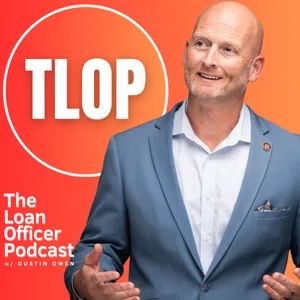
This show makes the boring FUN! Imagine if Joe Rogan and Dave Ramsey had a baby. That’s this show! These guys teach the sh*t they don’t teach in school. Their goal is to simplify topics that range from personal finance, purchasing real estate & obtaining home loans to being a successful mortgage originator, running a business and finding success as a sales professional. The mission is simple; to invite you into the room where it happens. They strive to teach you how to create opportunities even when it can be a struggle to get your foot in the door. While there is a lot of content geared specifically towards mortgage professionals, the majority of the episodes will resonate with all audience members. (Not just mortgage lenders!) D.O. (Dustin Owen) is the creator & host. He is a 20+ year veteran of the mortgage industry, a real estate investor, business coach and angel investor. J.C. (John Coleman) is the co-host / producer of the show. J.C. has 15+ years’ experience as an Emmy Award-Winning Content Creator & Marketer.
Latest Episodes
The most recent episodes — sign up to get AI-powered summaries of each one.
- 3 days ago38 min
How Arcasa’s FHA Down Payment Assistance Works w/ Cole Bestgen | Ep.678
A solar system that might cost $20,000 can balloon to $60,000 after financing fees and sales commissions, a history that left mortgage host Dustin Owen wary of solar. In this episode, he presses Cole Bestgen of Arcasa on how the company’s FHA-based program aims to do it differently: offer 3.5%–5% down payment assistance while adding solar costs to the first mortgage, not a separate lien. They discuss potential utility-bill savings, why those savings vary by location and household, and how loan officers may combine the assistance with seller concessions to lower a buyer’s upfront costs and monthly payment. The conversation also explores how the program is structured, who may qualify, and what buyers and loan officers should understand before presenting solar as part of a home purchase. Bestgen explains how financing the system through the first mortgage can differ from taking out a separate solar loan, while Owen probes the tradeoffs: a larger mortgage balance, the long-term cost of financing, and whether projected energy savings are realistic for a particular home. They consider why a system’s value depends on more than the panels themselves, including local electricity rates, sun exposure, household energy use, and the details of the installation. Owen and Bestgen also discuss the role of down payment assistance and seller concessions in making the numbers work at closing. Used together, those options may help reduce a buyer’s cash-to-close and potentially ease the impact of adding solar costs to the mortgage, though the final payment and savings will depend on the loan terms and the property. For mortgage professionals, the episode offers a closer look at how to explain the program clearly, compare the full costs with other financing options, and help buyers evaluate whether solar makes sense for their budget and location. Loan officer looking for a new place to call home? 👉🏼 https://specials.lower.com/tlop Roam: https://ro.am/influencer/marks-office TLOP's Originator Coaching: 👉🏼 https://tloponline.com/mlo-coaching-programs/
- 1 weeks ago14 min
The Right Homebuying Number Is the One Built Around Your Finances | Ep. 42
The Atlanta Fed’s $127,000 income figure for buying a median-priced home sounds like a hard cutoff, but it is not a mortgage qualification rule. In this episode, mortgage veteran Dustin Owen explains what the statistic actually measures, what assumptions go into the calculation, and why it does not mean buyers must earn that amount to qualify for a mortgage. He also explores how people are still getting into homes despite the affordability gap, including the strategies that can change the math: combining incomes, buying below the median price, using down-payment assistance, negotiating seller-paid rate buydowns, and choosing a property with rental potential. Dustin also highlights the growing divide between first-time buyers, who may be starting without home equity, and existing homeowners who can use equity from a current property toward their next purchase. Along the way, he offers a practical starting point for figuring out what homeownership could realistically cost you based on your income, savings, and local housing market, rather than relying on one headline number. Let our team connect you with a Real Estate Expert local to you! https://tloponline.com/real-estate-help/
- 1 weeks ago44 min
Five Ways to Make a Home Listing More Attractive to Buyers | Ep. 677
A seller’s equity can do more than cover closing costs. In the right transaction, it may help solve some of the buyer’s biggest affordability challenges, too. On a VA purchase, for example, seller concessions may be structured to pay off a buyer’s car loan or credit-card debt, potentially reducing monthly obligations and helping the buyer qualify. Equity might also help make room for something the seller wants to include in the deal, such as a boat or golf cart. These options depend on the loan program, underwriting guidelines, and how the transaction is structured but they can open up possibilities when a property has been sitting on the market. In this conversation, Dustin Owen, Mike Siciliano, and Karina Mojica explore five practical strategies for making stale listings more affordable and easier to sell. They discuss reverse offers, rate buydowns, repair holdbacks, renovation loans, and creative ways to use seller equity to address the issues standing between a buyer and a purchase. Rather than treating price as the only lever, they look at how agents, sellers, and loan officers can adjust the overall terms of a transaction to better fit a buyer’s needs. They also explain how to help buyers see a home’s potential before they can picture it for themselves. Instead of describing a property as an “investor special” and leaving buyers to guess what repairs might involve, the team discusses presenting contractor bids, outlining possible renovation costs, and using visual renderings to show what the finished home could look like. Clearer information can make a project feel less intimidating, help buyers evaluate the opportunity, and turn a home’s unfinished condition into a more concrete plan. For sellers, agents, and loan officers, this conversation offers a practical playbook for renewing buyer interest, addressing affordability concerns, and finding creative paths to a deal. It’s a look at how thoughtful financing strategies, specific repair information, and a willingness to structure an offer differently can help move a difficult listing closer to a successful sale. Loan officer looking for a new place to call home? 👉🏼 https://specials.lower.com/tlop Roam: https://ro.am/influencer/marks-office TLOP's Originator Coaching: 👉🏼 https://tloponline.com/mlo-coaching-programs/
- 1 weeks ago46 min
The AI Assistant That Learns Your Business with Holt Butler & Chad Middleton | Ep. 676
AI fatigue is real, but mortgage entrepreneurs Holt Butler and Chad Middleton believe AI can do more than generate another chatbot or add another task to a loan officer’s day. They’re building tools designed to take routine work off the plates of mortgage professionals, giving them more time to focus on borrowers and decisions that require human judgment. The pair trace their path from discovering ChatGPT while living in Costa Rica and Peru to creating Aila, an AI loan partner built to support the mortgage process. Aila can review loan documents, calculate income, flag missing items, and prepare files for processing. Butler and Middleton explain how they identified the practical problems they wanted to solve, then used AI to help build software despite having no coding backgrounds. They also discuss the questions that come with using AI in a highly sensitive industry, including why they trust it to work with personal data and how they think about putting the technology to work responsibly. Beyond mortgage operations, they describe how everyday AI agents can take on recurring tasks and help people manage routine work. Along the way, they challenge a familiar assumption about getting useful results from AI. With today’s models, they argue, prompt engineering may matter less than clearly understanding the work you want done and the outcome you need. Loan officer looking for a new place to call home? 👉🏼 https://specials.lower.com/tlop Roam: https://ro.am/influencer/marks-office TLOP's Originator Coaching: 👉🏼 https://tloponline.com/mlo-coaching-programs/
- 2 weeks ago38 min
Does the New Housing Executive Order Actually Make Homeownership More Affordable? | Ep. 675
Dustin Owen may have finished his first Ironman in 16 hours, but the race was a lot tougher and longer than he expected. He had planned to cross the finish line three hours sooner, until fierce headwinds added an hour to the bike and another hour to the marathon. Back in the studio with Marketing Mike and Karina Mojica, Dustin trades one endurance test for another: unpacking the Trump administration’s housing executive order and asking what it could actually mean for homebuyers. The crew examines the order’s proposals on private mortgage insurance (PMI), title costs, manufactured homes, and government-backed loans, separating potential changes from the limits of what an executive order can accomplish. They also look at the larger costs that shape monthly payments and access to homeownership, including FHA mortgage insurance, credit-report fees, and the guarantee fees charged by Fannie Mae and Freddie Mac and discuss how changes in those areas might affect borrowers. But lower fees alone won’t fix the affordability problem. Even meaningful savings could leave many buyers struggling if home prices remain high and the supply of affordable homes stays limited. The conversation looks beyond the headline proposals to the broader question at the heart of housing policy: which changes could ease the costs buyers face, and what will it take to make more homes available in the first place? Executive order teaser and podcast introduction Team reunion and Ironman recap Executive order discussion setup Sponsor message: Lower Mortgage Executive order reception and automatic PMI removal Title insurance and refinancing costs Manufactured and modular housing Government direct-loan pricing Sponsor message: Roam Ways to improve housing affordability: FHA mortgage insurance Credit report costs and credit-score competition Guarantee fees and mortgage rates Condo financing challenges Title costs and mortgage-industry pressures Streamlined conventional refinancing Final assessment and advice to mortgage professionals Closing and listener call to action Loan officer looking for a new place to call home? 👉🏼 https://specials.lower.com/tlop Roam: https://ro.am/influencer/marks-office TLOP's Originator Coaching: 👉🏼 https://tloponline.com/mlo-coaching-programs
- 2 weeks ago29 min
Go to Bed Tired. Wake Up Hungry: Michael Burt on Staying Driven | Ep. 674
At 22, Michael Burt took over a struggling girls’ basketball program and helped lead it to its first state championship. He didn’t do it by following the conventional playbook. Burt brought business principles to coaching, focused on developing players as whole people, and introduced serious strength training at a time when girls rarely lifted weights. The experience shaped the way he thinks about performance: talent matters, but so do daily habits, confidence, preparation, and the willingness to adapt when the old approach stops working. On The Loan Officer Podcast, Burt explains his idea of “prey drive”, the instinct to pursue an opportunity rather than wait for one to appear. He discusses how fear of loss can jolt complacent salespeople into action, why he’d rather help people discover their skill than “find their why,” and how coaches and leaders can create an environment where people are challenged without being reduced to a single outcome. He also reflects on the lessons he learned coaching through three recessions: master the daily basics, recognize when circumstances have changed, and try differently, not just harder. As Burt puts it, “Today doesn’t care about yesterday.” Loan officer looking for a new place to call home? 👉🏼 https://specials.lower.com/tlop Roam: https://ro.am/influencer/marks-office TLOP's Originator Coaching: 👉🏼 https://tloponline.com/mlo-coaching-programs
- 3 weeks ago51 min
“Single Source of Truth”: Four Words Mortgage Leaders Can’t Ignore | Ep. 673
Neena Vlamis switched her mortgage company’s loan origination system for the first time in 24 years and completed the change in just five weeks. She joins Megastar Financial founder Anita Padilla and host Dustin Owen to explain how her team made a transition of that scale possible, what they learned along the way, and why choosing a new LOS was only one part of the work. At the center of the conversation is a simple but demanding idea: mortgage companies need a single source of truth for loan data, from the initial application through closing. When information is entered, updated, and stored across disconnected systems, teams can end up working from conflicting versions of the same loan. That fragmentation can create bad data, repeated work, delays, and uncertainty about which information is accurate. Vlamis and Padilla discuss why improving the flow and consistency of data matters not only for operational efficiency, but also for the quality of decisions made throughout the loan process. They also explore the growing role of artificial intelligence in mortgage lending and the limits of relying on it. AI tools can only be as dependable as the data they receive, so governance, clear processes, and human oversight remain essential. The group considers where AI agents may be able to help, including reviewing income and assets, while emphasizing the importance of knowing when people need to verify the work and step in. Along the way, Vlamis reflects on the decisions that shaped her business. She shares how she pivoted away from subprime lending after the market crash and adapted to a changed lending environment. She also explains why she views refinance income as “gravy,” not a business plan: a lender needs a durable foundation that can support the business beyond favorable refinance cycles. Together, the conversation offers a candid look at technology, data discipline, leadership, and building a mortgage operation prepared for changing markets. Loan officer looking for a new place to call home? 👉🏼 https://specials.lower.com/tlop TLOP's Originator Coaching: 👉🏼 https://tloponline.com/mlo-coaching-programs
- 3 weeks ago48 min
How Brady Thomas Built a $200M Mortgage Business From 3,000 Miles Away | Ep. 672
When his wife’s 2020 job move took him 3,000 miles from the California business he’d built through face-to-face relationships, Brady Thomas had to rethink how he stayed connected to the people who made that business possible. Instead of letting distance weaken his presence, he found a new way to stay top of mind and grew his team to nine while producing roughly $200 million a year. On The Loan Officer Podcast, Brady joins Dustin Owen to explain his “referral gravity” framework: make it clear exactly when referral partners should call you, build authority by sharing useful content and memorable stories, and ensure your team can deliver on the promises you make. He shares how the “two home tango” became his calling card, why he sends regular updates to thousands of real estate agents and past clients, and how consistent communication helps keep relationships strong, even from 3,000 miles away. Brady also reflects on the transition from building a business face to face to leading it at a distance, the systems and people that make growth possible, and the family priority he’s still learning to protect. Loan officer looking for a new place to call home? 👉🏼 https://specials.lower.com/tlop TLOP's Originator Coaching: 👉🏼 https://tloponline.com/mlo-coaching-programs/
Get The Loan Officer Podcast summaries in your inbox
Free AI-powered daily recaps. Key takeaways, quotes, and mentions — in a 5-minute read.
Get Free Summaries →Free forever for up to 3 podcasts. No credit card required.
You Might Also Like
Listeners also like.

The Way with Dino Katsiametis
Mortgage advisors share proven systems for client retention, team leadership, and building lasting businesses in the lending industry.
The Owner Meeting
Real estate investors share proven strategies and costly mistakes to help others build wealth and achieve financial freedom.
The MORE Show
Real estate investing education focused on multifamily properties and passive income through expert interviews and practical guidance.

Coffeez with Joe Shalaby
Conversations with entrepreneurs, investors, and cultural figures reveal the real strategies, struggles, and costs behind success.

How to Money
Two friends break down personal finance topics like debt payoff and investing in simple, practical terms for everyday listeners.

Wake Up to Wealth
Real estate and entrepreneurship strategies for building wealth and financial independence.

Coaching Inc with Tom Krol
Teaches coaches and consultants how to generate consistent leads and increase income using proven, efficient marketing strategies.

BiggerPockets Business Podcast
Real entrepreneurs share practical advice on starting, growing, and selling businesses, covering hiring, marketing, and raising capital.
The David Guttman Podcast
Conversations with top leaders on building wealth, integrity, and a meaningful life through real-world lessons and authentic mentorship.

BiggerPockets Real Estate Podcast
Real estate investing strategies and wealth-building insights from experienced investors.

Team Lead Talks
Andrew Becker and guests discuss real estate business strategies, scaling, and market trends with industry leaders.

NerdWallet's Smart Money Podcast
Finance experts answer real-world money questions on budgeting, investing, credit cards, and financial planning with clear, research-backed advice.
About The Loan Officer Podcast
This show makes the boring FUN! Imagine if Joe Rogan and Dave Ramsey had a baby. That’s this show! These guys teach the sh*t they don’t teach in school. Their goal is to simplify topics that range from personal finance, purchasing real estate & obtaining home loans to being a successful mortgage originator, running a business and finding success as a sales professional. The mission is simple; to invite you into the room where it happens. They strive to teach you how to create opportunities even when it can be a struggle to get your foot in the door. While there is a lot of content geared specifically towards mortgage professionals, the majority of the episodes will resonate with all audience members. (Not just mortgage lenders!) D.O. (Dustin Owen) is the creator & host. He is a 20+ year veteran of the mortgage industry, a real estate investor, business coach and angel investor. J.C. (John Coleman) is the co-host / producer of the show. J.C. has 15+ years’ experience as an Emmy Award-Winning Content Creator & Marketer.
Customized Recaps
AI-powered recaps with compact key takeaways, quotes, and insights.
Straight to Your Inbox
Get key takeaways from The Loan Officer Podcast in a 5-minute read.
Save Hours Every Week
Stay current on your favorite podcasts without falling behind.
Frequently Asked Questions
What is Podzilla's The Loan Officer Podcast daily summary?
It's a free AI-powered email that summarizes new episodes of The Loan Officer Podcast as soon as they're published. You get the key takeaways, notable quotes, and links & mentions — all in a quick read.
How does the The Loan Officer Podcast podcast summary work?
When a new episode drops, our AI transcribes and analyzes it, then generates a personalized summary tailored to your interests and profession. It's delivered to your inbox every morning.
Is this an official The Loan Officer Podcast product?
No. Podzilla is an independent service that summarizes publicly available podcast content. We're not affiliated with or endorsed by Dustin Owen.
Can I get summaries of other podcasts too?
Absolutely! The free plan covers up to 3 podcasts, any in the catalog. Basic raises that to 15, Pro to 40 and Max to 100. Browse our full catalog at /podcasts.
How often does The Loan Officer Podcast release new episodes?
The Loan Officer Podcast publishes 2x weekly. Our AI generates a summary within hours of each new episode.
What topics does The Loan Officer Podcast cover?
The Loan Officer Podcast covers topics including Education, Business, How To. Our AI identifies the specific themes in each episode and highlights what matters most to you.
Start getting The Loan Officer Podcast summaries tomorrow morning.
Free forever for up to 3 podcasts. No credit card required.
Free forever for up to 3 podcasts. No credit card required.