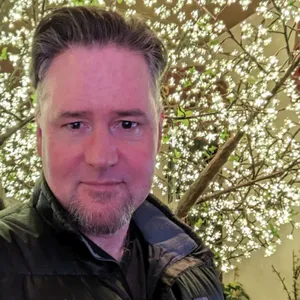
Free Daily Podcast Summary
The KMO Show: Daily Summaries Delivered
by KMO
Join veteran podcaster, interviewer, and artist, KMO, as he and his guests explore how we know what we know and how we can use that knowledge to address societal challenges and create a more prosperous and equitable world. The KMO Show features conversations with interdisciplinary thinkers and innovators on topics like artificial intelligence, evolutionary psychology, social dynamics, and more.
Latest Episodes
The most recent episodes — sign up to get AI-powered summaries of each one.
- 5 days ago1h 16m
C-Realm Podcast 554 - History is a Prankster with James Howard Kunstler
Originally released March 24, 2020, C-Realm Podcast episode 554 features a conversation with James Howard Kunstler, recorded just as the COVID-19 pandemic was overturning ordinary life in the United States.The ostensible occasion was the publication of Kunstler’s new book, Living in the Long Emergency, his follow-up to 2005’s The Long Emergency. The book looks back at the predictions and assumptions of the Peak Oil era and profiles people Kunstler sees as adapting to a future of economic contraction and institutional instability. KMO is among the people profiled in the book.But the timing made it impossible to talk about the book in isolation. The conversation took place during the first weeks of the COVID shutdowns, when an abstract discussion about disruption, fragility, and “the long emergency” had suddenly acquired a very immediate context.The title comes from Kunstler’s observation that history is a prankster: events rarely unfold in the form we expect, even when some of the underlying stresses are real.I’m revisiting this and other older C-Realm conversations as part of Getting Over Collapse, a project in which I’m going back through the Peak Oil and collapse worldview that strongly influenced the C-Realm Podcast, reconsidering what we thought we knew, what held up, what didn’t, and how my own thinking changed.More about the project:https://c-realm.org/#goc
- 1 weeks ago1h 1m
C-Realm Podcast #120: The Long Descent with John Michael Greer
C-Realm Podcast 120: The Long Descent — John Michael GreerOriginally released September 17, 2008, this C-Realm conversation between KMO and John Michael Greer is being reposted nearly eighteen years later because a recent essay on Greer’s Ecosophia blog revisits many of the same arguments.In “Economics: The Y2K Fallacy Revisited,” Greer looks back at his early Peak Oil writing and argues that fast-collapse scenarios repeatedly fail because they take genuine vulnerabilities—resource depletion, economic instability, energy constraints—and assume that governments, businesses, and individuals will simply fail to adapt. He also returns to the psychological attraction of apocalypse: the tendency to convert real problems into expectations of an imminent, cleansing rupture.Read John Michael Greer’s “Economics: The Y2K Fallacy Revisited”What makes this 2008 conversation especially interesting now is how fully those ideas were already developed. Greer rejects the sudden “Mad Max” collapse then common in Peak Oil circles and instead describes civilizational decline as a long, uneven descent: crisis, stabilization, partial recovery, and further decline. KMO, who was still substantially inside the Peak Oil milieu at the time, explicitly raises the emotional investment some collapse advocates had in technological solutions not working.The episode also preserves an early version of a debate that looks considerably more consequential in 2026: the Singularity versus resource depletion.Greer treats Ray Kurzweil’s technological Singularity as another secularized apocalyptic narrative and doubts that exponential technological progress can simply outrun physical limits. KMO is more ambivalent. He recognizes the quasi-religious character of some Singularitarian thinking while continuing to take seriously the possibility that advances in artificial intelligence could rapidly and radically reshape the world.Eighteen years later, that disagreement has aged in interesting ways. The Peak Oil movement largely disappeared as a coherent cultural scene, while AI became a major technological and political force. At the same time, the questions Greer raised about resource limits, adaptation, apocalyptic psychology, and the mythology of endless progress remain very much alive.This episode captures those competing futures while they were still largely speculative—and before anyone knew which parts of either story would survive contact with the next eighteen years.Full, polished transcript available on the C-Realm Blogspot page.
- Apr 20, 20261h 11m
035 - Anit-AI Backlash with Kenneth Harrell
Date: April 20, 2026 Host: KMO Guest: Kenneth E. HarrellEpisode SummaryA 20-year-old throws a Molotov cocktail at the home of Sam Altman, then heads to OpenAI headquarters and escalates. He’s arrested within the hour.That’s not an isolated story. It’s a signal.KMO and Kenneth E. Harrell use the incident as a starting point to examine the emerging backlash against AI—where real grievances (job loss, data extraction, infrastructure strain) collide with confused narratives about existential risk.The result is a volatile mix: people reacting to something they use every day but don’t understand, directed by elites who either can’t or won’t explain what’s happening in terms that land.From there, the conversation moves outward:Intelligence as environment-mapping, not a human monopolyWhy the “stochastic parrot” critique no longer holdsAI as a tool that talks back—and why that mattersThe failure of science fiction to prepare us for this momentThe widening gap between capability and comprehensionMid-Interview Break“Cream of the Slop” by SkyebrowsA fast, layered track built around Manjaro Linux, VTuber aesthetics, and a barrage of younger online cultural references. Dense, unserious, and very much of its moment.ReferencesMaggie Vail On why “stochastic parrot” is a weak frame—and why both humans and machines are better understood as probabilistic systems.Skyebrows AI-assisted music and video built from stacked internet references and persona-driven presentation.The backlash to AI isn’t about AI alone.It’s what happens when a system changes faster than the stories people use to make sense of it—and faster than institutions can respond.That gap doesn’t stay abstract for long.
- Mar 24, 20261h 15m
Conversations On Collapse Retrospective
KMO revisits a sampler created during the original assembly of Conversations on Collapse and uses it to open a new project: Getting Over Collapse.Featuring excerpts from:Dmitri OrlovAlbert K. BatesThomas Homer-DixonSharon AstykAlbert BartlettCornelia Butler FloraBill McKibbenJames Howard KunstlerColin TudgeJoe BageantDaniel Pinchbeck (appearing in a trialogue with Dmitri Orlov)this episode returns to the Peak Oil era with a more critical but still appreciative eye. The result is part archive artifact, part historical reflection, and part inquiry into what collapse discourse got right, what it got wrong, and why it mattered.
- Mar 16, 202658 min
Public Projections of Private Despair - C-Realm Vault #89
C-Realm Vault Episode 89 — originally released April 20, 2014This episode, recorded on KMO's 46th birthday two weeks after the suicide of Michael C. Ruppert, is one of the clearest early documents of KMO's departure from the Peak Oil collapse milieu — and one of the most personally candid things he ever put on tape.After closing out a conversation with Ilargi of the Automatic Earth on European sovereign debt and the student loan crisis, KMO turns to Ruppert's death. He begins with his own history — his father's suicide in 1998, the damage it did to his family — before recounting his single unpleasant encounter with Ruppert, who contacted him in 2010 proposing an interview and then erupted at a minor miscommunication.The real subject of the episode, though, is Guy McPherson. KMO identifies the Ruppert-McPherson relationship as a case study in how collapse figures amplify one another's certainty, flatten complex adaptive systems into simple doom trajectories, and build audiences among people too angry at genuine injustice to scrutinize the claims being made on their behalf. He names this — explicitly — as the creation of a death cult.For listeners of the Getting Over Collapse project: this is the episode where the vocabulary was already in place. The analysis developed across subsequent years, but the core diagnosis is here, in real time, twelve years before KMO sat down to write the book.
- Mar 10, 20261h 2m
C-Realm Vault 345 - Doug Lain on Universal Basic Income
KMO is reposting this C-Realm Vault episode from 2019 because it captures a transitional moment that eventually fed into the project now called Getting Over Collapse.The conversation with Doug Lain took place in late September of 2019—back when we were all still living in the carefree twilight of our pre-COVID innocence, blissfully unaware that the next few years would deliver a crash course in narrative management, institutional legitimacy crises, and global weirdness.The episode opens with a bit of backstage context. KMO had recently traveled to Lancaster, Pennsylvania to record a professionally shot, on-camera interview with John Michael Greer about the sudden media deployment of the term eco-fascism and the broader question of narrative management in the media. The studio shoot required professional lighting, cameras—and yes—on-camera makeup.When KMO mentioned that experience at the beginning of the conversation, Doug interpreted the setup differently and assumed the topic was the hypocrisy of celebrity environmentalists flying around in private jets while urging everyone else to cut their carbon footprint. The conversation briefly veered in that direction before eventually circling back to the actual intended topic: Andrew Yang, automation, and Universal Basic Income.That pivot happens partway through the recording when KMO formally introduces Doug for a segment intended for the OuttaMyHead YouTube channel.Listening now, the episode captures a moment when KMO was already beginning to move beyond collapse certainty and toward the broader set of concerns that would later become Getting Over Collapse: automation, narrative control, institutional legitimacy, and the shifting psychological landscape of public discourse.For more context, see the Getting Over Collapse Notebook at the refreshed C-Realm Blogspot, along with the John Michael Greer studio interview that set up the makeup anecdote that accidentally derailed the opening of this conversation.Getting Over Collapse Notebook: https://c-realm.blogspot.com/John Michael Greer interview: https://www.youtube.com/watch?v=gMBYJa6ribg
- Mar 3, 20261h 50m
COVID Conversation with Brent Badnarak
This bonus episode combines portions of C-Realm Podcast episode 555: It's Complicated and C-Realm Vault Podcast episode 361, both of which feature a conversation with Brent Badnarak. You'll also hear a bit of James Howard Kunstler there at the end. If you'd like to hear more of my early COVID conversation with JHK, check out C-Realm Podcast episode 554: History is a Prankster.
- Mar 1, 20261h 8m
C-Realm Vault 323
This is a conversation from 2019 when I was privately uncomfortable with the Peak Oil narrative I'd been articulating for several years but hadn't turned against it publically. In this conversation with Bob Brown, I let the curtain drop.KMO returns to the long-neglected C-Realm topic of Peak Oil in this conversation with Bob Brown of the Investing with Nature blog. Much of the conversation turns on comments made by Chris Martensen and Dmitry Orlov in a YouTube video called Electric Cars and Happy Motoring.
Get The KMO Show summaries in your inbox
Free AI-powered daily recaps. Key takeaways, quotes, and mentions — in a 5-minute read.
Get Free Summaries →Free forever for up to 3 podcasts. No credit card required.
You Might Also Like
Listeners also like.

Mysterious Universe
Explores fringe science, UFOs, cryptozoology, and alternative history with a mix of curiosity and humor.

The Kevin Rose Show
Conversations with experts in tech, science, and performance to uncover unconventional wisdom for personal and professional growth.

The UnMute Podcast
Philosophers discuss current social and political issues with insight, humor, and a drive for change.

The Jordan Harbinger Show
Conversations with top performers across fields, distilling actionable insights on success, relationships, and personal growth.

Forum Borealis
In-depth interviews with authors and thinkers on unconventional topics in history, science, philosophy, and politics.

Inquiring Minds
Explores the intersection of science and society through critical thinking and in-depth analysis.

Aubrey Marcus Podcast
Conversations on mindset, spirituality, and human optimization with a focus on psychedelics, health, and personal growth.

Cool People Who Did Cool Stuff
Revolutions, rebellions, and resistance movements throughout history, told through the stories of the people who lived them.
Inner Cosmos with David Eagleman
Neuroscientist David Eagleman examines how the brain interprets reality through science, stories, and interviews.
Commune with Jeff Krasno
Explores practices and ideas for healthy, purposeful living through conversations on wellness, spirituality, and societal well-being.
"The Cognitive Revolution"
Interviews with AI developers and researchers exploring the transformative impact of artificial intelligence on society and technology.
The Origins Podcast with Lawrence Krauss
Long-form conversations with experts across science, arts, and journalism exploring ideas shaping the 21st century.
About The KMO Show
Join veteran podcaster, interviewer, and artist, KMO, as he and his guests explore how we know what we know and how we can use that knowledge to address societal challenges and create a more prosperous and equitable world. The KMO Show features conversations with interdisciplinary thinkers and innovators on topics like artificial intelligence, evolutionary psychology, social dynamics, and more.
Customized Recaps
AI-powered recaps with compact key takeaways, quotes, and insights.
Straight to Your Inbox
Get key takeaways from The KMO Show in a 5-minute read.
Save Hours Every Week
Stay current on your favorite podcasts without falling behind.
Frequently Asked Questions
What is Podzilla's The KMO Show daily summary?
It's a free AI-powered email that summarizes new episodes of The KMO Show as soon as they're published. You get the key takeaways, notable quotes, and links & mentions — all in a quick read.
How does the The KMO Show podcast summary work?
When a new episode drops, our AI transcribes and analyzes it, then generates a personalized summary tailored to your interests and profession. It's delivered to your inbox every morning.
Is this an official The KMO Show product?
No. Podzilla is an independent service that summarizes publicly available podcast content. We're not affiliated with or endorsed by KMO.
Can I get summaries of other podcasts too?
Absolutely! The free plan covers up to 3 podcasts. Upgrade to Pro for 15, or Premium for 50. Browse our full catalog at /podcasts.
How often does The KMO Show release new episodes?
The KMO Show publishes monthly. Our AI generates a summary within hours of each new episode.
What topics does The KMO Show cover?
The KMO Show covers topics including Philosophy, Culture, Society & Culture. Our AI identifies the specific themes in each episode and highlights what matters most to you.
Start getting The KMO Show summaries tomorrow morning.
Free forever for up to 3 podcasts. No credit card required.
Free forever for up to 3 podcasts. No credit card required.