Free Daily Podcast Summary
The Invisible Ingredient: Daily Summaries Delivered
by Farmer’s Footprint
Get key takeaways, quotes, and insights from The Invisible Ingredient in a 5-minute read. Delivered straight to your inbox.
Latest Episodes
The most recent episodes — sign up to get AI-powered summaries of each one.
- Jan 20, 20261h 22m
Episode 12: Cultivating Possibility: Glyphosate and the Way Forward with Blair Beattie and Alana Mooi
In the final episode of The Invisible Ingredient, host Blair Beattie sits down with Farmer’s Footprints own Alana Mooi to step back and reflect on where the journey has led and what comes next. Together, they explore the urgent need to move beyond chemical dependency in agriculture, reframing the conversation away from simply removing toxins and toward embracing biological possibility. They discuss how working with living systems can restore soil function, strengthen ecosystems, and support human health in parallel. This conversation urges us to consider food as more than fuel by examining its cultural, relational, and place-based dimensions, and the risks of relying solely on Western agricultural frameworks. Drawing attention to small-scale farmers and long-held practices across diverse bioregions, they highlight the value of local knowledge, biodiversity, and context-specific approaches. This closing episode affirms that there is no single solution, only many pathways shaped by land, culture, and community, and that meaningful change emerges through shared learning and collective effort. --- Special thanks to the incredible teams at farmersfootprint.us and farmersfootprint.org.au as well as podbyron.com.au for their amazing support in producing the show. Disclaimer: The views and opinions expressed in The Invisible Ingredient podcast are those of the speakers and do not necessarily reflect the official policy or position of Farmer’s Footprint or any affiliated organisation. This podcast is for informational and educational purposes only and should not be considered as medical, legal, or professional advice. Listeners are encouraged to conduct their own research and consult qualified professionals before making decisions relating to health, farming practices, or environmental management. The Invisible Ingredient shares conversations that awaken awareness of how our food systems, environment, and health are intertwined. We invite you to listen with curiosity, explore the research, and carry forward what resonates on your own path toward healthier people, land, and communities.
- Jan 6, 20261h 22m
Episode 11: The Turning Point - Glyphosate and a Farmer’s Truth with Nick Dugmore
In this episode, we sit down with Nick "Duggie" Dugmore - vigneron and founder of Stoke Wines - for a deeply human conversation that moves between vineyard rows and the inner terrain of the body. At 39, Duggie was diagnosed with stage three bowel cancer. As he traced his health journey backwards, he began questioning the invisible exposures shaping both land and body, including glyphosate and its disruption of critical biological pathways. Speaking without blame, Duggie reflects on the parallels between soil health and mental health, the pressures farmers face within chemical-dependent systems, and how illness reshaped his understanding of presence, purpose, and connection. The episode offers a grounded exploration of how the stories of land and human health are inseparably woven. Social Handles: Instagram: @stokewines_au Website: stokewines.au Bio: Nick ‘Duggie’ Dugmore is the winemaker behind Stoke Wines on Kangaroo Island, recognised nationally as a Young Gun of Wine for his care for land, craft, and community. At 39, a stage 3 bowel cancer diagnosis set him on a path he never expected. When his surgeon estimated the tumour’s growth at around 16 months, Nick began tracing his exposure with precision — a process that led him to glyphosate and a series of hard truths about the chemicals embedded in modern agriculture. Determined to understand the science and speak openly about what he uncovered, Nick has documented his journey in a series of essays and personal reflections on his website, offering both rigor and vulnerability. He also co-hosts The Power of Awareness podcast, where he supports others navigating cancer with clarity and compassion. In this conversation, Duggie brings a rare and necessary voice — a farmer and winemaker living the consequences of exposure, willing to share what he’s learned, and calling for a future where health, farming, and honesty sit at the centre of our choices. Website: theinvisibleingredient.org Citations: Here Special thanks to the incredible teams at farmersfootprint.us and farmersfootprint.org.au as well as podbyron.com.au for their amazing support in producing the show. Disclaimer: The views and opinions expressed in The Invisible Ingredient podcast are those of the speakers and do not necessarily reflect the official policy or position of Farmer’s Footprint or any affiliated organisation. This podcast is for informational and educational purposes only and should not be considered as medical, legal, or professional advice. Listeners are encouraged to conduct their own research and consult qualified professionals before making decisions relating to health, farming practices, or environmental management. The Invisible Ingredient shares conversations that awaken awareness of how our food systems, environment, and health are intertwined. We invite you to listen with curiosity, explore the research, and carry forward what resonates on your own path toward healthier people, land, and communities.
- Dec 30, 202551 min
Episode 10: The Next Generation - Glyphosate and Emerging Changemakers with Sheina Crystal
In this episode, Sheina Crystal, Co-Director of Re:wild Your Campus, joins us to explore the growing youth-led movement to eliminate toxic herbicides from school grounds. She shares her journey from awareness to activism, revealing how pesticides harm both human health and local ecosystems, and what it takes to transition campuses to organic land care. Together, we unpack the power of students, parents, and groundskeepers working side by side to create healthier, more biodiverse learning environments—with a bold vision to make every U.S. school pesticide-free by 2030. Social Handles Instagram: @rewildyourcampus Facebook: rewildyourcampus YouTube: rewildyourcampus Website: rewildyourcampus.org/ TikTok: tiktok.com/@rewildyourcampus Bio: Sheina Crystal is the Co-Director of Re:wild Your Campus, a national, youth-led movement working to eliminate toxic herbicides and reimagine school grounds as living systems of biodiversity, beauty, and health. As a student at UC Santa Barbara, Sheina began by listening and learning—walking grounds with restoration crews, building relationships with campus staff, and asking what change might look like from the soil up. She went on to help lead a successful campaign to ban glyphosate across all 10 University of California campuses, and co-developed the Green Grounds Certification, a program supporting ecological landscaping practices in educational institutions. Sheina now works directly with students across the country, mentoring the next generation of changemakers who are transforming lawns into habitats and campuses into catalysts for systemic change. With insight, courage, and a deep sense of possibility, Sheina joins this conversation to speak to the power of grassroots advocacy—and the role young people are playing in shaping healthier, more life-affirming futures. Website: theinvisibleingredient.org Citations: Citations Link Special thanks to the incredible teams at farmersfootprint.us and farmersfootprint.org.au as well as podbyron.com.au for their amazing support in producing the show. Disclaimer: The views and opinions expressed in The Invisible Ingredient podcast are those of the speakers and do not necessarily reflect the official policy or position of Farmer’s Footprint or any affiliated organisation. This podcast is for informational and educational purposes only and should not be considered as medical, legal, or professional advice. Listeners are encouraged to conduct their own research and consult qualified professionals before making decisions relating to health, farming practices, or environmental management. The Invisible Ingredient shares conversations that awaken awareness of how our food systems, environment, and health are intertwined. We invite you to listen with curiosity, explore the research, and carry forward what resonates on your own path toward healthier people, land, and communities.
- Dec 23, 20251h 7m
Episode 9: Pathways to Justice - Glyphosate and Legal Reform with Brent Wisner
In this episode, attorney R. Brent Wisner shares his frontline experience taking on Monsanto and exposing the dangers of glyphosate. He traces the herbicide’s origins, the corruption behind its approval, and the legal battles that revealed its links to cancer and other health risks. Through landmark verdicts, Wisner highlights how these cases have shifted public awareness and sparked a reckoning for the future of agriculture—calling for a cultural shift toward valuing farming and food production that support healthy communities. Social Handles Instagram: @wisnerbaum LinkedIn (personal): www.linkedin.com/in/r-brent-wisner-94046458/ LinkedIn (organization): Wisner Baum: www.linkedin.com/company/wisnerbaum/ Website: wisnerbaum.com Bio: Brent Wisner is the managing partner and lead trial attorney at Wisner Baum, known for challenging some of the world’s most powerful corporations and winning landmark cases that have reshaped public awareness. A formidable presence in the courtroom, Brent has secured billions in verdicts and settlements, including a $2 billion jury verdict against Monsanto on behalf of the Pilliod family in a case linking Roundup to cancer. He was not yet 40 at the time, making him the youngest attorney in American history to achieve a multi-billion-dollar jury win. But Brent’s work reaches beyond the courtroom. He believes the law is a tool for truth and transformation. As one of the driving forces behind the release of the Monsanto Papers, Brent helped expose internal documents that revealed how science was manipulated and health risks were downplayed. These revelations reached regulators and institutions worldwide, sparking new scrutiny and conversations about glyphosate’s place in our food system. With a Juris Doctor and a Master of Public Policy from Georgetown University, Brent brings both sharp legal acumen and a broader view of how justice can shape systems. He joins this series to reflect on what it takes to stand up to entrenched power, and why transparency is essential for public trust and planetary health. Website: theinvisibleingredient.org Citations: https://www.notion.so/COMING-SOON-Ep-9-Pathways-to-Justice-Glyphosate-and-Legal-Reform-295b38c5b1e2809d951dd4e6e2c0dbb7?source=copy_link Special thanks to the incredible teams at farmersfootprint.us and farmersfootprint.org.au as well as podbyron.com.au for their amazing support in producing the show. Disclaimer: The views and opinions expressed in The Invisible Ingredient podcast are those of the speakers and do not necessarily reflect the official policy or position of Farmer’s Footprint or any affiliated organisation. This podcast is for informational and educational purposes only and should not be considered as medical, legal, or professional advice. Listeners are encouraged to conduct their own research and consult qualified professionals before making decisions relating to health, farming practices, or environmental management. The Invisible Ingredient shares conversations that awaken awareness of how our food systems, environment, and health are intertwined. We invite you to listen with curiosity, explore the research, and carry forward what resonates on your own path toward healthier people, land, and communities.
- Dec 16, 202554 min
Episode 8: Living Knowledge - Glyphosate and Food Sovereignty with Dr. Jessica Hutchings
In this episode, Dr. Jessica Hutchings — a leading voice in Indigenous food sovereignty— shares how Māori knowledge and the Hua Parakore organic framework are reshaping the future of food. She explores the deep connections between land, spirit, and community, and how reclaiming Indigenous growing practices can heal both people and planet. Through themes of kai sovereignty, environmental justice, and collective consciousness, this conversation offers a powerful invitation to reimagine our relationship with food, nature, and one another. Social Handles Instagram: @papawhakaritorito_trust Facebook: @PapawhakaritoritoCharitableTrust Facebook: @yogahanewzealand LinkedIn (personal): www.linkedin.com/in/jessica-hutchings-6759462b1 LinkedIn (organization): www.linkedin.com/company/papawhakaritorito-trust/ Bio: Dr Jessica Hutchings is a leading voice in Indigenous food sovereignty whose work bridges mātauranga Māori, environmental justice, and whānau wellbeing. A Hua Parakore–verified grower and longtime advocate for Māori organics, Jessica stewards both land and knowledge on her 12-acre farm, where she grows kai with her family. With more than three decades of experience, Jessica has shaped national and global conversations on soil, food systems, and the future of Indigenous-led regeneration. Her books Te Mahi Māra Hua Parakore and Te Mahi Oneone Hua Parakore are widely recognised guides to growing and living in harmony with whenua. In 2023, she was named one of Aotearoa’s Top 50 Women in Food and Drink and a finalist for New Zealander of the Year (Environment). In this series, Jessica brings grounded clarity, cultural depth, and a fierce commitment to restoring our relationship with land through Indigenous wisdom and collective action. Website: theinvisibleingredient.org Citations: Citations Here Special thanks to the incredible teams at farmersfootprint.us and farmersfootprint.org.au as well as podbyron.com.au for their amazing support in producing the show. Disclaimer: The views and opinions expressed in The Invisible Ingredient podcast are those of the speakers and do not necessarily reflect the official policy or position of Farmer’s Footprint or any affiliated organisation. This podcast is for informational and educational purposes only and should not be considered as medical, legal, or professional advice. Listeners are encouraged to conduct their own research and consult qualified professionals before making decisions relating to health, farming practices, or environmental management. The Invisible Ingredient shares conversations that awaken awareness of how our food systems, environment, and health are intertwined. We invite you to listen with curiosity, explore the research, and carry forward what resonates on your own path toward healthier people, land, and communities.
- Dec 9, 20251h 26m
Episode 7: The Long Game: Glyphosate and Practice Change with Dr. Charles Benbrook
In this episode, Dr. Charles Benbrook, agricultural economist and former policy advisor, traces how corporate influence shaped pesticide regulation and food policy—and what it will take to change course. Drawing from decades inside U.S. agriculture and public health, he explains how glyphosate became embedded in our food system and offers a grounded, hopeful vision for rebuilding it: breaking up factory farms, restoring healthy rotations, and putting animals back on the land. This is a call to rethink what’s possible—from healthier soil and food to a fairer future for farmers and families. Social Handles Website: Hygeia Analytics - https://hygeia-analytics.com/ Website: Heartland Health Research Alliance - https://hh-ra.org/ Bio: Dr Charles Benbrook is an agricultural economist whose career spans over four decades of research into the relationships between food production systems, public health, and ecological outcomes. His work has helped illuminate how policy, technology, and economic incentives shape the realities faced by farmers, regulators, and eaters alike. With a PhD in agricultural economics from the University of Wisconsin–Madison and a background in both academic and applied research, Charles has authored more than 70 peer-reviewed papers covering pesticide use, nutritional density, regulatory frameworks, and pathways toward healthier agricultural models. He served as Chief Scientist for The Organic Center and has worked across sectors to inform decisions grounded in data, transparency, and public good. Charles brings to this conversation a rare blend of technical depth and systems thinking, grounded in years of expert testimony, field research, and a commitment to health in its broadest sense: soil, food, and people. Website: theinvisibleingredient.org Citations: Here Special thanks to the incredible teams at farmersfootprint.us and farmersfootprint.org.au as well as podbyron.com.au for their amazing support in producing the show. Disclaimer: The views and opinions expressed in The Invisible Ingredient podcast are those of the speakers and do not necessarily reflect the official policy or position of Farmer’s Footprint or any affiliated organisation. This podcast is for informational and educational purposes only and should not be considered as medical, legal, or professional advice. Listeners are encouraged to conduct their own research and consult qualified professionals before making decisions relating to health, farming practices, or environmental management. The Invisible Ingredient shares conversations that awaken awareness of how our food systems, environment, and health are intertwined. We invite you to listen with curiosity, explore the research, and carry forward what resonates on your own path toward healthier people, land, and communities.
- Dec 2, 202559 min
Episode 6: Close to Home - Glyphosate and Relocalizing Food with Helena Norberg-Hodge
In this episode, Helena Norberg-Hodge, founder of Local Futures and pioneer of the localization movement, zooms out to reveal the deeper roots of our chemical-dependent food system. Drawing from decades of experience in Ladakh and beyond, Helena connects glyphosate to globalization—tracing how industrial agriculture, free trade, and corporate power have separated people from the land and each other. She makes a powerful case for localization as the antidote: rebuilding local food systems, restoring community, and rekindling our relationship with nature. This conversation is both a history lesson and a hopeful roadmap toward reconnection, resilience, and real food sovereignty. Social Handles Personal: Instagram: @helenanorberghodge LinkedIn: linkedin.com/in/helena-norberg-hodge Website: helenanorberghodge.com/ Local Futures: Instagram: @localfutures Facebook: @LocalFutures.TheEconomicsofHappiness YouTube: @ISECeconofhappiness Vimeo: @theeconomicsofhappiness Website: www.localfutures.org Bio: Helena Norberg-Hodge is a linguist, filmmaker, and global thought leader whose work champions the renewal of local food systems and the cultural wisdom they carry. As founder of Local Futures, Helena has spent decades working alongside Indigenous communities in Ladakh, Bhutan, and beyond, gathering insights that speak to the root causes of ecological and societal disconnection. She is the author of Ancient Futures and Local is Our Future, and producer of acclaimed films including The Economics of Happiness and Planet Local. Through these works, she invites a reimagining of progress, one that places wellbeing, relationship, and biodiversity at the heart of economic life. In this series, Helena brings a deeply grounded view of how global systems impact local resilience, and why reclaiming the right to shape our food and farming futures is one of the most powerful actions we can take. Website: theinvisibleingredient.org Citations: Here Special thanks to the incredible teams at farmersfootprint.us and farmersfootprint.org.au as well as podbyron.com.au for their amazing support in producing the show. Disclaimer: The views and opinions expressed in The Invisible Ingredient podcast are those of the speakers and do not necessarily reflect the official policy or position of Farmer’s Footprint or any affiliated organisation. This podcast is for informational and educational purposes only and should not be considered as medical, legal, or professional advice. Listeners are encouraged to conduct their own research and consult qualified professionals before making decisions relating to health, farming practices, or environmental management. The Invisible Ingredient shares conversations that awaken awareness of how our food systems, environment, and health are intertwined. We invite you to listen with curiosity, explore the research, and carry forward what resonates on your own path toward healthier people, land, and communities.
- Nov 25, 202559 min
Episode 5: Labels, Evidence, Oversight: Glyphosate & Governance with Carey Gillam
In this episode, Carey Gillam — veteran investigative journalist — draws on decades of reporting on Monsanto, glyphosate, and the corruption of science to reveal how corporate power has shaped policy, silenced truth, and endangered human health. From courtroom battles to the growing movement for accountability, she connects the dots between glyphosate, government, and public health—while offering hope through farmers and communities leading the shift toward a chemical-free future. Social Handles Facebook: https://www.facebook.com/CareyGillamAuthor Bluesky: @careygillam.bsky.social Instagram: @thenewlede Website: careygillam.com Bio: Carey Gillam is an investigative journalist with over 30 years of experience tracking the story behind our food. As Editor in Chief of The New Lede and a former senior correspondent with Reuters, Carey has spent decades following the paper trail—from corporate boardrooms to courtroom depositions—to uncover how agriculture is shaped by influence, oversight, and omission. She is the author of Whitewash: The Story of a Weed Killer, Cancer, and the Corruption of Science, which received the Rachel Carson Book Award, and The Monsanto Papers, a behind-the-scenes account of landmark legal battles that brought glyphosate into public scrutiny. In this series, Carey offers a steady hand through a complex terrain, inviting us to examine the systems that govern what ends up in our soil, food, and bodies. Her voice brings clarity, evidence, and a deep respect for the public’s right to know. Episode website: theinvisibleingredient.org Citations: Podcast Citations Special thanks to the incredible teams at farmersfootprint.us and farmersfootprint.org.au as well as the podbyron.com.au for their amazing support in producing the show. Disclaimer: The views and opinions expressed in The Invisible Ingredient podcast are those of the speakers and do not necessarily reflect the official policy or position of Farmer’s Footprint or any affiliated organisation. This podcast is for informational and educational purposes only and should not be considered as medical, legal, or professional advice. Listeners are encouraged to conduct their own research and consult qualified professionals before making decisions relating to health, farming practices, or environmental management. The Invisible Ingredient shares conversations that awaken awareness of how our food systems, environment, and health are intertwined. We invite you to listen with curiosity, explore the research, and carry forward what resonates on your own path toward healthier people, land, and communities.
Get The Invisible Ingredient summaries in your inbox
Free AI-powered daily recaps. Key takeaways, quotes, and mentions — in a 5-minute read.
Get Free Summaries →Free forever for up to 3 podcasts. No credit card required.
You Might Also Like
Listeners also like.
The Farmer's Share
Andy Chamberlin
Let Them Eat Grass
Austin Williams
Mind, Body, and Soil
Kate Kavanaugh
Real Organic Podcast
Real Organic Project
Land Food Life
Kara Kroeger, Nutrition Coach, Agroecology Educator, and Food System Consultant
The Market Gardener Podcast
JM Fortier
GreenplanetFM Podcast
Tim Lynch
The Urban Farm Podcast with Greg Peterson
Urban Farm Team
Impact Farming
Farm Marketer
Beyond Labels Clips
Joel Salatin & Dr. Sina McCullough
Dr. Ben Tapper's Podcast
Ben Tapper
Fair Hill Farmstead Life
Judith Horvath, Fair Hill Farm
About The Invisible Ingredient
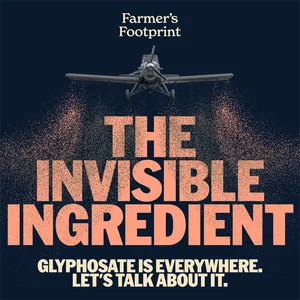
Glyphosate is everywhere, let's talk about itA podcast series by Farmer’s FootprintHosted by Blair Beattie of Farmer’s Footprint, the podcast brings together widely respected voices whose work is trusted by communities and supported by evidence. Across eleven episodes, farmers, researchers, legal minds, journalists, youth organisers, and community leaders examine how glyphosate took hold, what it touches across land and society, and how oversight, markets, and culture shape its use. We place records and research beside testimony from the field, asking careful questions and listening for clear answers.Season themes include residues and risk, GM crops and control, farmer wellbeing, regulation and accountability, food sovereignty and Indigenous knowledge, the long arc of practice change, and youth-led reform in shared spaces. Along the way you will hear from guests such as Zach Bush MD,
Customized Recaps
AI-powered recaps with compact key takeaways, quotes, and insights.
Straight to Your Inbox
Get key takeaways from The Invisible Ingredient in a 5-minute read.
Save Hours Every Week
Stay current on your favorite podcasts without falling behind.
Frequently Asked Questions
What is Podzilla's The Invisible Ingredient daily summary?
It's a free AI-powered email that summarizes new episodes of The Invisible Ingredient as soon as they're published. You get the key takeaways, notable quotes, and links & mentions — all in a quick read.
How does the The Invisible Ingredient podcast summary work?
When a new episode drops, our AI transcribes and analyzes it, then generates a personalized summary tailored to your interests and profession. It's delivered to your inbox every morning.
Is this an official The Invisible Ingredient product?
No. Podzilla is an independent service that summarizes publicly available podcast content. We're not affiliated with or endorsed by Farmer’s Footprint.
Can I get summaries of other podcasts too?
Absolutely! The free plan covers up to 3 podcasts. Upgrade to Pro for 15, or Premium for 50. Browse our full catalog at /podcasts.
How often does The Invisible Ingredient release new episodes?
The Invisible Ingredient publishes weekly. Our AI generates a summary within hours of each new episode.
What topics does The Invisible Ingredient cover?
The Invisible Ingredient covers topics including Education. Our AI identifies the specific themes in each episode and highlights what matters most to you.
Start getting The Invisible Ingredient summaries tomorrow morning.
Free forever for up to 3 podcasts. No credit card required.
Free forever for up to 3 podcasts. No credit card required.