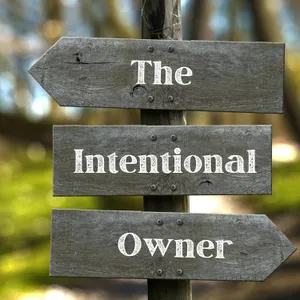
Free Daily Podcast Summary
The Intentional Owner: Daily Summaries Delivered
by Kaustubh Deo & Sam Rosati
The Intentional Owner provides an in-depth & personal look at life as a small business owner. We discuss how to acquire, operate, and grow small businesses in ways that achieve positive impacts for yourself, for your family, for your employees, and for your community. We love everything to do with small business acquisitions & entrepreneurship and want to support our fellow small business owners in having a fulfilling life.
Latest Episodes
The most recent episodes — sign up to get AI-powered summaries of each one.
- 3 days ago53 min
Acquiring Businesses Without Bank Debt: The Bolt On Blueprint
In this episode of The Intentional Owner, hosts Sam Rosati and Kaustubh Deo are joined by Link Moser, author of The Bolt On Blueprint and owner of the web development company Windhill Design. Moser explains how he grew his small business by buying his competitors' customer books, completing 12 deals while taking on no bank debt. The conversation covers how he sourced sellers through direct mail, how he structured low-risk deals, and what he learned from a bigger acquisition that didn't work out. Rosati and Deo also compare Moser's experience to their own add-ons in fence rental and tree care. They discuss: - Why handwritten letters on company letterhead reach micro-business owners that email and private equity outreach miss - How a 12-month revenue share of about 50% shields a buyer from downside while giving the seller a fair outcome - Why small deals build confidence and negotiating experience before larger bets - What the Denver acquisition taught Moser about fixed overhead, client attrition, and the protection of owning no debt - Why the relationship-building side of acquisitions is hard to outsource Owners of small service businesses who are weighing their first add-on will find a practical, low-risk approach to growing through acquisition. Topics: - Intro - Meet Link and the Bolt On Blueprint - From web design to missing the seat - Buying competitors' books of business - The direct mail letter playbook - Structuring the first deal: rev share - Add-ons in trade businesses - Small deals, no bank debt, big reps - Staying disciplined on the buy box - The Denver acquisition that didn't last - Can you still find zero-down deals? - Can you outsource the relationship? - Closing thoughts and where to find Link Speaker Profiles: Sam Rosati LinkedIn — https://www.linkedin.com/in/sam-rosati-68787a8/ Twitter / X — https://x.com/Sam_Rosati Website — https://www.samrosatismb.com/ Kaustubh Deo LinkedIn — https://www.linkedin.com/in/kaustubh-deo/ Twitter / X — https://x.com/guessworkinvest Substack - https://bigdealsmallbusiness.substack.com/ Link Moser LinkedIn: https://www.linkedin.com/in/linkmoser/ Website: https://www.linkmoser.com/
- 2 weeks ago47 min
How to Implement a Business Operating System After Buying a Company
Sam Rosati and Kaustubh Deo explore the value of implementing a structured business operating system as a first-time owner on The Intentional Owner. Many entrepreneurs navigate the chaos of early ownership without clear long-term objectives or a framework to break them down into manageable steps. The conversation centers on how tools like the Entrepreneurial Operating System can help owners move from reactive firefighting to intentional execution, even if a lighter version makes more sense for smaller teams. They discuss: - Why most new owners operate rudderless for months or years without written objectives - How core values function as daily decision-making rubrics for hiring, firing, and operations - The difference between aspirational three-year goals and achievable one-year plans - Whether weekly accountability meetings make sense before you have a real leadership team - How defining your ideal customer profile prevents the trap of chasing every opportunity This episode offers practical insight for small business owners trying to bring structure to chaos without overwhelming their already stretched teams. Topics: - Intro - Why first-time owners need an operating system - Breaking down EOS and goal-setting frameworks - When to implement a vision for your business - Learning vision the hard way - Core values as decision-making tools - The BHAG debate - Defining your target market - Pure EOS versus EOS lite - Weekly L10s and quarterly rocks - Three-year vision and cascading goals - Making the framework work for you - Tampa happy hour announcement Speaker Profiles: Sam Rosati LinkedIn — https://www.linkedin.com/in/sam-rosati-68787a8/ Twitter / X — https://x.com/Sam_Rosati Website — https://www.samrosatismb.com/ Kaustubh Deo LinkedIn — https://www.linkedin.com/in/kaustubh-deo/ Twitter / X — https://x.com/guessworkinvest Substack - https://bigdealsmallbusiness.substack.com/
- Oct 15, 202650 min
Change Management in the SMB World | The Intentional Owner
Sam Rosati and Kaustubh Deo explore the realities of managing change in small businesses on The Intentional Owner. The conversation begins with Kaustubh sharing recent observations about business owners who've grown rapidly through relentless change implementation, prompting a discussion about sustainable versus aggressive growth strategies. Sam and Kaustubh examine how an owner's tolerance for chaos shapes team capacity and business trajectory, using real examples from the home services industry. They discuss: - How personality determines whether fast-paced change or methodical implementation works better for a given business - The tradeoffs between sequential process improvements and ripping the Band-Aid on major transitions - Why acquiring companies at maximum capacity requires building systems before pursuing growth - Kaustubh's experience testing four-tens versus five-eights schedules across two locations during an integration - The relationship between M&A activity and a team's bandwidth for other operational projects This episode offers practical perspective for owners balancing growth ambitions with team stability and sustainable operations. Topics: - Intro - Tampa happy hour and upcoming conference plans - Change management in small business - Portfolio approach vs full focus - How much change can a team handle - Why fast growers operate differently - Tolerance for chaos - Team churn and aggressive growth - Different growth stages need different skill sets - Communicating change internally - Predictability and team participation - Leading the team through acquisition integration - M&A as a constant overlay - Maintaining idle capacity for deals - Building ahead of the next acquisition - Thoughtful change enables more change - Would you decline a transformative deal - Slow is smooth smooth is fast - Early years transformation at Blooma - Removing yourself from every step - Why first years are chaotic for new owners - The four tens vs five eights experiment - Wrap up and EOS preview Speaker Profiles: Sam Rosati LinkedIn — https://www.linkedin.com/in/sam-rosati-68787a8/ Twitter / X — https://x.com/Sam_Rosati Website — https://www.samrosatismb.com/ Kaustubh Deo LinkedIn — https://www.linkedin.com/in/kaustubh-deo/ Twitter / X — https://x.com/guessworkinvest Substack - https://bigdealsmallbusiness.substack.com/
- Oct 1, 202649 min
Could Your Business Survive Without You for Two Weeks?
Kaustubh Deo and Sam Rosati explore what it takes to build a small business that can function without its owner at the center of every decision. They compare the early days of operating owner-dependent businesses with the systems, people, and processes that gradually create more independence. The conversation covers everything from payroll and pricing approvals to staffing redundancy, employee performance, and the challenge of letting go of responsibilities. They also discuss using time away from the business as a practical test for identifying weak systems and remaining bottlenecks. They discuss: How owner-dependent businesses evolve as responsibilities move from the owner to the team Why building redundancy creates the capacity to handle turnover and performance issues Using extended time away from the business to expose broken processes and bottlenecks Why owners often hold onto underperforming employees longer than they should How to approach conferences more intentionally through prearranged meetings and stronger industry relationships This episode offers small business owners a practical framework for reducing owner dependency, strengthening their teams, and building companies that can operate more effectively without constant intervention. Topics: - Intro - The value of peer advisors - Buying a house as a business owner - Can your business survive without you - What broke at day one - Building excess capacity into the team - Taking time off to test systems - The superpower of firing people - Using conferences strategically Speaker Profiles: Sam Rosati LinkedIn — https://www.linkedin.com/in/sam-rosati-68787a8/ Twitter / X — https://x.com/Sam_Rosati Website — https://www.samrosatismb.com/ Kaustubh Deo LinkedIn — https://www.linkedin.com/in/kaustubh-deo/ Twitter / X — https://x.com/guessworkinvest Substack - https://bigdealsmallbusiness.substack.com/
- Sep 17, 202653 min
EOS Implementation, Quarterly Planning and Setting Revenue Objectives | The Intentional Owner
Sam Rosati and Kaustubh Deo discuss quarterly planning, team structure, and financial transparency on The Intentional Owner. Kaustubh is preparing for Blooma's first multi-person quarterly planning session, bringing together functional leaders who previously weren't involved in strategic projects. Sam shares how PSG has implemented EOS across multiple locations, including full-day quarterly sessions and weekly level 10 meetings. The conversation explores when to share P&L data with leadership teams, how to balance special projects with revenue objectives, and why small business financials can be too noisy for monthly reviews. They discuss: - How PSG structures quarterly planning sessions from taking stock through identifying 30 to 40 issues and prioritizing five to seven as quarterly rocks - Why connecting special projects to measurable KPIs helps leadership teams understand their impact on the broader business - Managing seasonality by timing operational improvements for slow periods while relationship-building happens year-round - The trade-offs between staffing up aggressively during peak season versus artificially throttling growth to maintain team stability This episode offers practical frameworks for owners managing seasonal businesses who want to involve their teams in strategic planning without overwhelming them with financial noise. Topics: - Intro - Q4 planning and quarterly rocks - Implementing EOS across multiple locations - Breaking down strategy into weekly goals - Building a leadership team at Blooma - Planning the offsite agenda - P&L visibility for the team - Managing noisy small business financials - The quarterly planning structure - Issue identification and prioritization - Planning around seasonal business cycles - Special projects in slow seasons - Revenue as an output versus input - Reacting to slow quarters - Sales cycles and seasonal timing - Managing growth and staffing seasonallySpeaker Profiles: Sam Rosati LinkedIn — https://www.linkedin.com/in/sam-rosati-68787a8/ Twitter / X — https://x.com/Sam_Rosati Website — https://www.samrosatismb.com/ Kaustubh Deo LinkedIn — https://www.linkedin.com/in/kaustubh-deo/ Twitter / X — https://x.com/guessworkinvest Substack - https://bigdealsmallbusiness.substack.com/
- Sep 3, 202655 min
Red Flags in Searchers + Building Operational Systems | The Intentional Owner
Sam Rosati and Kaustubh Deo explore what makes a capable searcher and business owner on The Intentional Owner. They examine a recent tweet from investor Grant Hensel about green flags and red flags in assessing searchers—and quickly discover how difficult these qualities are to articulate. The conversation shifts to Kaustubh's operational journey at Blooma, where he's doubled revenue while building out a leadership team that now includes an operations manager, a production supervisor, and offshore support staff. They discuss: - Why raw intellectual horsepower matters less than learning ability and decision-making stamina - How Blooma transformed from a 10-to-3 crew-to-office ratio into a nearly one-to-one structure, creating operating leverage for the next million in revenue - The mechanics of skinning up working capital through systematic collections and managing a seasonal backlog against crew capacity - Why Kaustubh reduced prices for the first time to keep crews efficiently full, and how that trade-off affects profitability - The reality of refinancing seller notes and SBA debt when cash flow is tight and EBITDA hasn't yet caught up to headcount This episode offers a candid look at the operational maturity required to scale a services business while managing leverage and seasonal demand. 00:00 - Intro 05:25 - Intelligence and small business success 08:25 - Managing people as an introvert owner 10:01 - Assessing searchers: green and red flags 12:09 - The it factor for searchers 16:42 - AI-generated materials and underwriting 22:26 - Backing into decisions you've already made 25:09 - Blooma update: operational maturity 26:39 - Building layers and delegating work 32:21 - Promoting yourself as the owner 34:27 - The cost of operational growth 37:07 - Step functions in scaling overhead 41:36 - Managing cash flow with leverage 42:02 - Skinning up working capital 45:02 - Considering a refinance 49:31 - Sales funnel and backlog management 53:54 - Understanding seasonality patterns Speaker Profiles: Sam Rosati LinkedIn — https://www.linkedin.com/in/sam-rosati-68787a8/ Twitter / X — https://x.com/Sam_Rosati Website — https://www.samrosatismb.com/ Kaustubh Deo LinkedIn — https://www.linkedin.com/in/kaustubh-deo/ Twitter / X — https://x.com/guessworkinvest Substack - https://bigdealsmallbusiness.substack.com/
- Aug 20, 202654 min
The Trap Size Business: Why $2-5 Million Revenue Is the Hardest Stage
Sam Rosati and Kaustubh Deo explore a question many small business owners face but rarely discuss: what size business should you actually build toward? The conversation examines the trade-offs between revenue growth, quality of life, and the evolving skill sets required at each stage of scale. Rather than assuming bigger is always better, they map out the distinct lifestyle and operational realities of running businesses at different revenue thresholds—from under $2 million to national multi-location operations. They discuss: - Why the $2–5 million revenue range often becomes a "trap size" where complexity outpaces profitability and the owner gets stuck in both visionary and integrator roles - How buying a sub-$1 million business with minimal debt can yield $300–400K in annual owner earnings without the stress of scaling beyond local operations - The specific operational and leadership transitions required to move from a single-location operator to a regional or national player, and why those transitions don't suit every owner's strengths or interests - How debt structure and investor expectations fundamentally change what end state is realistic or desirable for a given acquisition This episode, from The Intentional Owner, offers a framework for operators thinking honestly about where growth creates value and where it simply creates work. - Intro - Tampa meetup and fitness bet payoff - Small business owner attention to detail - The frame shop mistake story - How kindness works with small businesses - Managing priorities as a small business owner - Setting business size goals - The small local operator path - The trap size business dilemma - From revenue producer to manager - Getting out of trap size - The small business path without debt - Buying under one million in revenue - Two to five million as an end goal - Inflation and the changing trap size - Growing from five to fifteen million - PSG's geographic expansion strategy - Staying regional versus going national - Final thoughts on growth paths Speaker Profiles: Sam Rosati LinkedIn — https://www.linkedin.com/in/sam-rosati-68787a8/ Twitter / X — https://x.com/Sam_Rosati Website — https://www.samrosatismb.com/ Kaustubh Deo LinkedIn — https://www.linkedin.com/in/kaustubh-deo/ Twitter / X — https://x.com/guessworkinvest Substack - https://bigdealsmallbusiness.substack.com/ Sponsors: Bay Business Group — https://bay-biz.com/
- Aug 6, 202652 min
Why Operator Skills Matter More Than Deal Quality in Small Business Acquisition - Adam Markley
Sam Rosati, Kaustubh Deo, and Adam Markley explore the realities of small business ownership through the lens of investor pattern recognition on The Intentional Owner. Markley, who has spent a decade navigating the ETA ecosystem as a searcher, operator, and now investor, brings perspective from both sides of the transaction. The conversation challenges conventional wisdom about dealmaking and operator success, emphasizing that execution after closing determines outcomes far more than deal structure alone. While economic alignment matters, small businesses remain fundamentally owner-dependent, making operator capability the critical variable in creating value. They discuss: - Why strong communication during search signals future operational performance with customers and employees - How seller financing and proper capitalization from the start change trajectory for first-time owners - The difference between playing business and actually executing sales, employee retention, and revenue growth - Why going bigger with less ownership can compound better than owning more of a smaller, undercapitalized business - How irrational optimism gets people into deals but realistic expectation-setting determines who survives the first few years This episode offers practical insight for anyone evaluating the gap between acquiring a business and successfully operating one over the long term. Topics: - Intro - Adam Markley's ETA journey - UK acquisition dynamics and tax arbitrage - Lessons from buying and operating businesses - Operator fit versus deal quality - Why operators matter more in small business - Economic alignment in self-funded search - Investor case studies from 2024 - Assessing operator quality and playbook depth - Post-close expectations and communication - Sales skills as a red flag indicator - Rapid fire: advice and resources - What Adam would do differently Show Platforms: YouTube — https://www.youtube.com/channel/UCnQQ0EBtTcZmNieNf0trvDw Apple Podcasts — https://podcasts.apple.com/us/podcast/the-intentional-owner/id1797346741?uo=4 Spotify — https://open.spotify.com/show/0H5n91PR3c9RqyNAbh1AH9 Speaker Profiles: Sam Rosati LinkedIn — https://www.linkedin.com/in/sam-rosati-68787a8/ Twitter / X — https://twitter.com/Sam_Rosati Website — https://www.samrosatismb.com/ Kaustubh Deo LinkedIn — https://www.linkedin.com/in/kaustubh-deo/ Twitter / X — https://x.com/kaustdeo Adam Markley LinkedIn — https://www.linkedin.com/in/adammarkley/ Twitter / X — https://x.com/adammarkleysmb Companies: NewCo Risk — https://www.newcorisk.com/ Bay Business Group — https://bay-biz.com/
Get The Intentional Owner summaries in your inbox
Free AI-powered daily recaps. Key takeaways, quotes, and mentions — in a 5-minute read.
Get Free Summaries →Free forever for up to 3 podcasts. No credit card required.
You Might Also Like
Podcasts in similar categories.
The Jamie Kern Lima Show
Entrepreneur Jamie Kern Lima interviews experts and celebrities about overcoming self-doubt and building self-belief.
Coffeez with Joe Shalaby
Conversations with entrepreneurs, investors, and cultural figures reveal the real strategies, struggles, and costs behind success.
Unblinded with Sean Callagy
A legally blind entrepreneur shares insights on ethical influence, peak performance, and mastering hidden patterns in business and life.

The Money Mondays
Business discussions on investments, side hustles, and entrepreneurship with experts, athletes, and influencers in personal settings.

The Code To Winning
Interviews with business leaders and entrepreneurs reveal strategies and insights for achieving success in the modern corporate world.
The Room Podcast
Tech founders and funders share behind-the-scenes stories from pivotal moments in their careers.

The Level Up Podcast w/ Paul Alex
A former detective shares real stories and practical strategies on building passive income, financial freedom, and entrepreneurial success.

From Underdog to Entrepreneur: Building Dreams with Pat Miller
A former underdog interviews successful entrepreneurs to share strategies for overcoming odds and building businesses from the ground up.
The Home Service Expert Podcast
Home service business strategies from industry entrepreneurs and experts on growth, marketing, and scaling.

REAL AF with Andy Frisella
Andy Frisella and guests debate trending topics and controversial issues with unfiltered honesty.
The Diary Of A CEO with Steven Bartlett
Raw, unfiltered conversations with influential figures and experts exploring personal growth, mindset, and the realities of success.
Mick Unplugged
A leadership podcast exploring the deep personal motivations behind high achievers’ success by asking what drives them at their core.
About The Intentional Owner
The Intentional Owner provides an in-depth & personal look at life as a small business owner. We discuss how to acquire, operate, and grow small businesses in ways that achieve positive impacts for yourself, for your family, for your employees, and for your community. We love everything to do with small business acquisitions & entrepreneurship and want to support our fellow small business owners in having a fulfilling life.
Customized Recaps
AI-powered recaps with compact key takeaways, quotes, and insights.
Straight to Your Inbox
Get key takeaways from The Intentional Owner in a 5-minute read.
Save Hours Every Week
Stay current on your favorite podcasts without falling behind.
Frequently Asked Questions
What is Podzilla's The Intentional Owner daily summary?
It's a free AI-powered email that summarizes new episodes of The Intentional Owner as soon as they're published. You get the key takeaways, notable quotes, and links & mentions — all in a quick read.
How does the The Intentional Owner podcast summary work?
When a new episode drops, our AI transcribes and analyzes it, then generates a personalized summary tailored to your interests and profession. It's delivered to your inbox every morning.
Is this an official The Intentional Owner product?
No. Podzilla is an independent service that summarizes publicly available podcast content. We're not affiliated with or endorsed by Kaustubh Deo & Sam Rosati.
Can I get summaries of other podcasts too?
Absolutely! The free plan covers up to 3 podcasts, any in the catalog. Basic raises that to 15, Pro to 40 and Max to 100. Browse our full catalog at /podcasts.
What topics does The Intentional Owner cover?
The Intentional Owner covers topics including Business, Careers. Our AI identifies the specific themes in each episode and highlights what matters most to you.
Start getting The Intentional Owner summaries tomorrow morning.
Free forever for up to 3 podcasts. No credit card required.
Free forever for up to 3 podcasts. No credit card required.