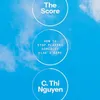
Welcome back to The Honest Broker interview series —also available on our new YouTube channel. You can also find it on Apple Podcasts and other podcasting platforms.Today, I’m pleased to share my conversation with C. Thi Nguyen.Please support The Honest Broker by taking out a premium subscription (just $6 per month).Nguyen is a former food writer who became a philosopher. He’s now an Associate Professor of Philosophy at the University of Utah, where he also teaches in the Division of Games. His first book, Games: Agency as Art, won the 2021 Book Prize from the American Philosophical Association. In January, Nguyen released The Score: How to Stop Playing Somebody Else’s Game. It’s an exploration of the philosophy of games and a critical examination of the detrimental effects of gamification and institutional metrics. (I wrote a review of The Score on my own Substack.) Jennifer Szalai described The Score in a review at The New York Times: “This may be the only book in existence that discusses the game of Twister, the ethics of Aristotle and the mechanics of bureaucracies.” Below are highlights from my interview. For the rest of our conversation, check out the video at the top of the page.Highlights from the C. Thi Nguyen InterviewJared: Thi, thank you for joining me.Thi: I’m happy to be here.Jared: I want to start off with a big broad question: why are games fun?Thi: There are so many answers to that. I’ve given much more complicated answers, but maybe the dumbest answer is one of the deepest. Games are actually designed to be fun. Not all games, but a lot of the games we find fun are not accidents. It’s an ultra-careful fine-tuning process. Designing for fun is so delicate. If you just tweak a few little bits in the incentive structure or tweak a few little rules, the fun will fall out of things. People think fun is mysterious — it’s not for game designers. There are micro-issues of exactly how you pace the timing and exactly how you pace the rules that seem to emerge. A lot of people are most impressed by the game designs that are elaborate and complicated, but what a lot of game designers are most impressed by is a five-rule party game that’s fun, because that’s the hardest thing to build.I think it’s important to acknowledge that these things are designed objects that have been subject to brutal design cycles.Jared: If I’m playing games, I have two very different preferences. One of them is that I really like cozy games, like Stardew Valley. But then my other love is roguelikes, which are so frustrating. I played Slay the Spire last night, and I never made it to the last level. It was an intentionally frustrating experience, and I went to bed happy. I think that’s weird. The challenge is why you want to keep playing, and it makes it more satisfying. Thi: Roguelikes are probably the center of my video game universe. But when you asked about fun, I immediately thought about laughter, the social part of fun. In game design circles, ‘fun’ is used a little more technically, where they are talking about ‘fun games.’ I have the same experience as you that most of what I love is intensely, gruelingly difficult and mostly involves failure and pushing your way intensely to get tiny moments of success. I have a theory about why that is deeply enjoyable for us. In games, unlike ordinary life, you can seek exactly the balance of difficulty, frustration, skill, and success that suits you. That’s unlike the world, which says ‘Now you must work on this thing at this difficulty.’ The choice structure is that you get to choose whether you’re playing Stardew Valley or Slay the Spire, and that ability to adapt the challenge environment to you makes it much more possible to find the deliciousness wherever it may lie for you. Jared: This is probably related to our mutual love of rock climbing. Thi: Rock climbing taught me a lot. Climbing is what taught me to pay attention to my body and the way my body moves, and part of it was exactly the difficulty scale. It gave me feedback. Godfrey Devereaux, who is one of my favorite yoga writers, has thi
Podzilla Summary coming soon
Sign up to get notified when the full AI-powered summary is ready.
Free forever for up to 3 podcasts. No credit card required.
Listen to This Episode




Get summaries like this every morning.
Free AI-powered recaps of The Honest Broker Podcast and your other favorite podcasts, delivered to your inbox.
Free forever for up to 3 podcasts. No credit card required.